Plot Explained Spoilers guaranteed!
Plot Explained

Browse by genre

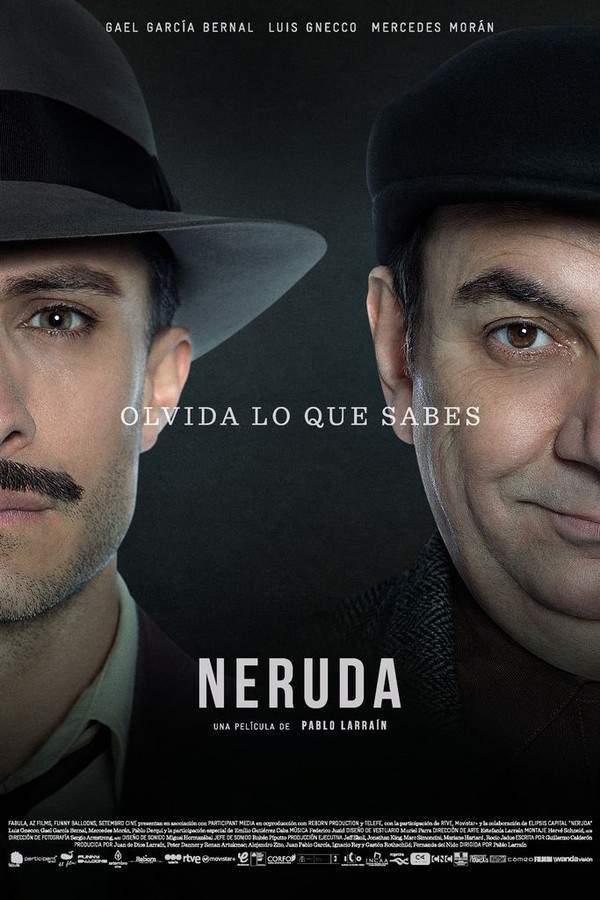
Neruda (2016) movie poster

Timeline

Neruda (2016) Timeline Explained – Every Event in Order

Release, runtime and language
2016 · 107 min · Spanish
Loading streaming availability…
Directed by
Pablo Larraín
Starring
Gael García Bernal, Luis Gnecco

In post-World War II Chile, the celebrated poet Pablo Neruda unexpectedly finds himself a fugitive, pursued by a determined police inspector. Rather than seeking refuge, Neruda cleverly transforms the chase into a unique and artistic challenge. The pursuit attracts international attention, revealing the poet's strength and resilience. Through this game of cat and mouse, Neruda evolves into a symbol of freedom and a lasting literary icon.

On this page (6)
  1. 1 Where to watch
  2. 2 Events in order (12)
  3. 3 Timeline questions answered
  4. 4 Movie threads
  5. 5 Movies like Neruda
  6. 6 Every angle
Loading streaming availability…

12 events in order · contains spoilers

Neruda Timeline: Events in Chronological Order

Every key event of Neruda (2016) in order, scene by scene, with when and where it takes place. Use it to untangle flashbacks, time jumps and parallel storylines, to refresh your memory before the sequel or to find the exact scene you are thinking of.

  1. 1946: Videla's victory and crackdown

    In 1946, Chile's president Gabriel González Videla wins the election with Communist support. He soon betrays that alliance, banning the Communist Party and ordering mass arrests. The move plunges Neruda and his allies into danger and sets the stage for a national crackdown.

    When
    1946
    Where
    Chile
  2. Neruda and Delia flee toward Argentina

    Senator Pablo Neruda and his wife Delia attempt to escape the repression by crossing toward Argentina through the mountains. They are turned back at the border and forced into hiding, disrupting their plans and escalating the cat-and-mouse dynamic of the story.

    When
    Late 1940s
    Where
    Andes Mountains, Chile–Argentina border
  3. Peluchonneau is assigned to capture Neruda

    Oscar Peluchonneau, a young policeman, is assigned to capture Neruda. To understand his target, Peluchonneau studies Neruda's life and poetry, trying to anticipate his moves and motivations. This research begins the strategic cat-and-mouse game that drives the pursuit.

    When
    Late 1940s
    Where
    Chile
  4. Neruda uses poetry to mobilize resistance

    Neruda makes surprise appearances and leaves volumes of poetry to mobilize resistance. His actions disrupt the authorities and fuel public memory, while Peluchonneau stays one step behind. The chase becomes as much about ideas and symbols as it is about people.

    When
    Ongoing during crackdown
    Where
    Various locations across Chile
  5. Smugglers prepare Neruda's border crossing

    Neruda's allies arrange for smugglers to carry him across the border on horseback. The plan aims to outpace the police and preserve Neruda's safety as the net tightens. The crossing symbolizes a last bid for freedom before imprisonment becomes inevitable.

    When
    Approaching border
    Where
    Chile–Argentina border
  6. Delia's capture and the interrogation

    Delia is captured and interrogated by Peluchonneau. She asserts that Neruda's story is bigger than the hunter, claiming the policeman is secondary. Her remark unsettles Peluchonneau and hints that Neruda's legacy will endure beyond his pursuer.

    When
    During pursuit
    Where
    Border region, Chile
  7. Snowy forest trek toward the border

    Neruda and his group traverse snow-covered forests as they press toward the border. Peluchonneau relentlessly pursues but cannot yet close the gap. The harsh landscape intensifies the sense of peril and inevitability.

    When
    During chase
    Where
    Snowy Andes / border forests
  8. Peluchonneau dies on a mountaintop

    On a high, icy mountaintop, Peluchonneau dies after being abandoned by his indigenous guides. His death marks a staggering turn in the hunt and foreshadows the collapse of the pursuit's reality into myth.

    When
    During final pursuit
    Where
    Snowy mountaintop, Andes
  9. Neruda finds Peluchonneau's body

    Neruda later discovers the body of Peluchonneau, a poignant moment where fiction and reality collide. The hunter becomes a memory in the hunted man's world, highlighting the permeable line between enmity and artistry.

    When
    After death
    Where
    Andes mountains
  10. Peluchonneau's reality dissolves into fiction

    As events unfold, Peluchonneau's grip on reality dissolves and he becomes part of the fiction he once pursued. The pursuit transcends biography, entering Neruda's legend and public imagination. The boundary between the observer and the observed collapses.

    When
    After death
  11. Neruda escapes to Paris

    Neruda escapes to Paris, where he is welcomed by Pablo Picasso. In exile, he becomes a media sensation and a symbol of resistance. The new life in Paris reframes his legacy and distances him from the pursuit.

    When
    Post-escape
    Where
    Paris, France
  12. Press conference keeps Peluchonneau's memory alive

    At a press conference in exile, Neruda mentions Peluchonneau, ensuring the hunter is remembered in Neruda's own narrative. The act blurs the line between pursuit and tribute, giving the game a lasting cultural footprint. Peluchonneau's name becomes inseparable from Neruda's legend.

    Where
    Paris, France (press conference)

Last updated: February 24, 2026 at 14:20

Was this helpful?

Timeline questions answered

Neruda Timeline Explained: Your Questions Answered

When does it happen, and why in that order? The questions people ask about the chronology of Neruda (2016): time jumps, flashbacks, cause and effect between scenes and the correct order of events, each answered with spoilers.

Q1

Why does Inspector Peluchonneau study Neruda's poetry instead of just capturing him?

Peluchonneau becomes intellectually obsessed with understanding Neruda as a person rather than simply apprehending him as a fugitive. He reads Neruda's poetry and studies his life, trying to anticipate the poet's moves and motivations. This psychological fascination transforms his pursuit from a standard manhunt into a cat-and-mouse game where he seeks to comprehend the mind of his target. His obsession ultimately blinds him to the reality that he is being manipulated by Neruda's public performances.

Foreshadowing: Early in the film, Peluchonneau's superior assigns him the case, but he chooses to research Neruda deeply rather than following standard police procedure.

  • peluchonneau
  • neruda poetry
  • capture
  • obsession
  • investigation
Q2

What happens to Peluchonneau at the end of the movie?

Peluchonneau dies alone on a snowy mountaintop after being abandoned by his indigenous guides during the final pursuit. He freezes to death while trying to cross the Andes to catch Neruda. Neruda later discovers his body, a stark moment where the hunter becomes part of the landscape he once stalked. This death marks the collapse of the pursuit and creates a melancholic counterpoint to Neruda's eventual triumph in Paris.

Foreshadowing: The timeline shows Peluchonneau dying on a mountaintop after the guides abandon him, foreshadowed by his increasingly obsessive and detached behavior throughout the chase.

  • peluchonneau death
  • mountaintop
  • freeze
  • neruda discovers body
Q3

What did Delia mean when she told Peluchonneau he was 'secondary' to the story?

When Delia is captured and interrogated by Peluchonneau, she tells him he is 'secondary' to the story's larger truth. This remark suggests that Neruda's legacy and the political cause he represents are more significant than the individual who pursues him. Delia implies that history will remember Neruda as a symbol of resistance, while Peluchonneau will fade into obscurity. This prophecy haunts Peluchonneau and ultimately proves accurate, as Neruda immortalizes him in his Paris press conference.

Foreshadowing: Delia's line during interrogation plants the seed for Peluchonneau's eventual realization that he has become part of Neruda's narrative rather than its author.

  • delia
  • interrogation
  • secondary
  • peluchonneau
  • legacy
Q4

How does Neruda manage to escape Chile?

Neruda escapes with the help of allies who arrange for smugglers to ferry him across the Chile-Argentina border on horseback. The group traverses snowy forests in the Andes Mountains, with Neruda's supporters coordinating the dangerous journey. This escape plan represents a last bid for freedom before inevitable imprisonment. After successfully crossing, Neruda makes his way to Paris, where he is welcomed by Pablo Picasso and becomes a symbol of resistance.

Foreshadowing: Earlier in the film, Neruda and Delia are turned back at the border, establishing the danger of the crossing. The smugglers arranged by allies provide a second, more successful attempt.

  • escape
  • paris
  • border
  • smugglers
  • horseback
  • andres
Q5

Why does Neruda mention Peluchonneau at his Paris press conference?

At a press conference in Paris, Neruda references Peluchonneau, granting his former pursuer a kind of immortality within the narrative Neruda controls. This act transforms Peluchonneau from a failed detective into a character within Neruda's legend. By mentioning him, Neruda ensures that the policeman is remembered, but on Neruda's own terms, as part of the story of the poet's escape and triumph. This moment blurs the line between pursuit and tribute.

Foreshadowing: Delia's earlier remark about Peluchonneau being 'secondary' foreshadows this moment, where Neruda decides to elevate the policeman into his story despite being the hunted party.

  • paris press conference
  • peluchonneau
  • immortality
  • neruda legend
Q6

What is the meaning of Peluchonneau becoming 'fiction'?

The film suggests that Peluchonneau's grip on reality dissolves as he becomes consumed by his obsession with Neruda. He transitions from hunter to hunted, absorbed into the narrative that Neruda controls. His death and subsequent mention in Paris solidify this transformation, he becomes a character in the poet's story rather than a real person who existed independently. The meta-fictional layer shows how Neruda's artistic legacy absorbs and transcends those who opposed him.

Foreshadowing: Peluchonneau's increasingly obsessive behavior and his study of Neruda's poetry hint at his psychological dissolution before the literal events unfold.

  • fiction
  • reality
  • meta
  • peluchonneau absorbed
  • legend
Q7

Why was Neruda forced into hiding in 1946?

In 1946, Chilean President Gabriel González Videla won an election with Communist support but then betrayed that alliance by banning the Communist Party and ordering mass arrests. As a senator and prominent Communist, Neruda openly condemned the repression, placing himself in direct danger from the regime. He and his wife Delia attempted to flee to Argentina but were turned back at the border, forcing them into precarious hiding while the hunt intensified.

Foreshadowing: The film establishes early that Neruda's political stance against Videla's regime makes him a target, setting the entire cat-and-mouse narrative in motion.

  • videla regime
  • communism
  • senator
  • hiding
  • arrest threat
Q8

What happens to Delia during the pursuit?

Delia, Neruda's wife, is captured by Peluchonneau and interrogated about Neruda's whereabouts. During this interrogation, she delivers the pivotal line about Peluchonneau being 'secondary' to the larger story. The summary does not specify her exact fate after capture, but she is separated from Neruda during the chase. Her capture represents a psychological victory for Peluchonneau but ultimately proves meaningless in the larger context of Neruda's escape and legacy.

Foreshadowing: The capture occurs during the pursuit when Neruda's group is moving toward the border, creating tension about whether Delia's interrogation will compromise the escape.

  • delia capture
  • interrogation
  • peluchonneau
  • wife
Q9

Why does Peluchonneau die alone on the mountaintop?

Peluchonneau dies because his indigenous guides abandon him during the final pursuit through the Andes Mountains. The harsh winter conditions and treacherous terrain leave him stranded. His single-minded obsession with catching Neruda overrides practical judgment, leading him to continue the chase in impossible conditions. His death underscores the futility of his mission and the way Neruda's symbolic power transcends physical capture.

Foreshadowing: The timeline establishes that Peluchonneau dies after being abandoned by guides, a consequence of pursuing someone through remote, dangerous territory beyond his practical limits.

  • peluchonneau death
  • indigenous guides
  • abandoned
  • mountaintop
  • andres
Q10

Why does Neruda turn the pursuit into a game instead of simply hiding?

Neruda transforms the cat-and-mouse chase into an artistic challenge as a form of resistance against the regime. Rather than simply fleeing or hiding, he makes surprise appearances, leaves volumes of poetry, and deliberately taunts the authorities. This approach serves multiple purposes: it maintains his public presence as a symbol of resistance, mobilizes supporters through his poetry, and ultimately creates the narrative that outlasts both himself and his pursuer. The game becomes his legacy.

Foreshadowing: Early in the pursuit, Neruda begins making unexpected appearances that undermine Peluchonneau's certainty, establishing the pattern of turning the hunt into a personal challenge.

  • neruda resistance
  • game
  • poetry as weapon
  • public appearances
Q11

How does the relationship between Peluchonneau and Neruda evolve?

Initially a standard hunter-prey dynamic, the relationship evolves into something more complex as Peluchonneau becomes obsessed with understanding Neruda intellectually. Neruda recognizes this fascination and exploits it, using his public persona and poetry to stay one step ahead. The roles gradually reverse: Peluchonneau loses himself in the chase while Neruda controls the narrative. By the end, the hunter has become part of the hunted man's story, fulfilling Neruda's artistic vision.

Foreshadowing: Peluchonneau's decision to study Neruda's poetry rather than simply pursuing him sets up this reversal from the beginning.

  • hunter prey relationship
  • obsession
  • intellectual duel
  • reverse roles

Movie threads

More Movies Like Neruda, by Mood & Story

Curated lists built around what makes Neruda tick: the same mood, the same kind of story or the same emotional payoff. Each list explains why these movies belong together.

Artistic Manhunt Dramas like Neruda

Politically charged chases where the artist turns the hunt into art. If you enjoyed Neruda, discover more movies like it. This list features films about artists and writers on the run, where a political manhunt becomes a canvas for exploring art, legacy, and resistance.

  • political
  • suspenseful
  • literary
  • reflective
  • thought-provoking
  • existential
  • Tone: melancholic, political, reflective
  • Pacing: steady, character-driven
Why these movies?

The story pattern: The narrative follows a creative figure pursued by oppressive forces. The pursuit itself becomes a catalyst for their art, blurring the lines between their life and their work. The antagonist is often consumed by the artist's narrative, leading to a reflective and morally complex cat-and-mouse game.

Why they belong together: These films are grouped together because they share a unique blend of political thriller tension with deep literary and artistic themes. They explore how persecution can fuel creativity, resulting in thoughtful, character-driven stories with a melancholic yet intellectually triumphant tone.

Metafictional Manhunts and Identity Crises like Neruda

Cat-and-mouse chases where reality and narrative begin to blur. Looking for movies with a narrative twist like Neruda? These films feature chases where the hunter's identity becomes tangled with the prey's story, exploring themes of fiction versus reality in a steady, thought-provoking way.

  • meta
  • existential
  • suspenseful
  • thought-provoking
  • identity crisis
  • psychological
  • Tone: thought-provoking, suspenseful, existential
  • Pacing: steady, deliberate
Why these movies?

The story pattern: The plot centers on a pursuit, but the psychological battle is paramount. The protagonist's crafted narrative begins to overpower objective reality, often causing the pursuer to lose their sense of self. The story unfolds with a steady pace, focusing on existential questions and the power of storytelling.

Why they belong together: This thread connects movies that share a specific intellectual and narrative pattern: the deconstruction of a chase through meta-fictional elements. They prioritize philosophical inquiry over pure action, creating a suspenseful yet deeply reflective experience centered on identity and creation.

If you liked this

Movies Like Neruda

Similar movies to Neruda: the same genre, themes or kind of story. Each one comes with its own plot summary, timeline and ending explained.

Browse all movie summaries

Every angle

Neruda (2016) Explained: Plot, Timeline & Characters

Everything about Neruda in one place: what happens in the plot summary, the timeline in chronological order, the characters and meaning and a spoiler-free summary. What's After the Movie adds the cast, box office and post-credit scenes.

Coming soon on iOS and Android

The Plot Explained Movie Summary App

Plot summaries, endings explained and timelines on your phone. Catch up on any movie in minutes, save your favorites and never miss a twist again.

Be the first to know when we launch. Your email stays private, always.

Learn more about the app