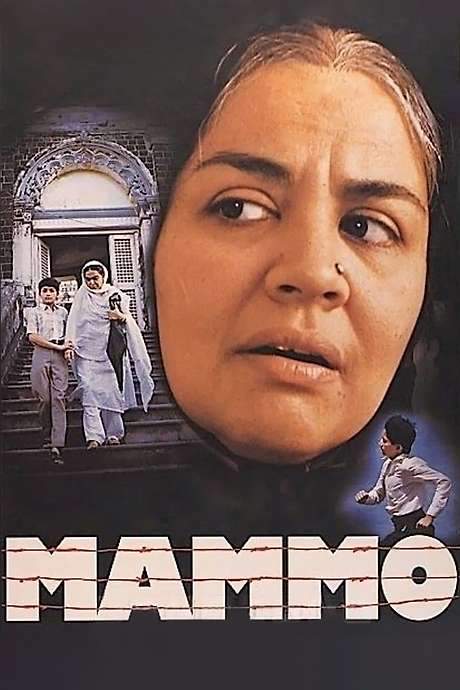
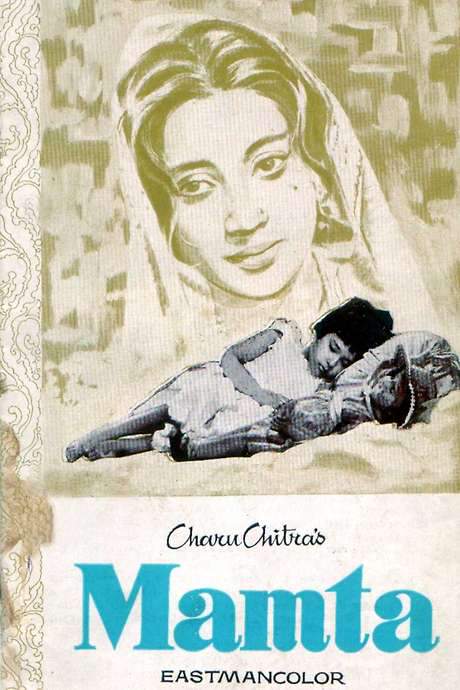
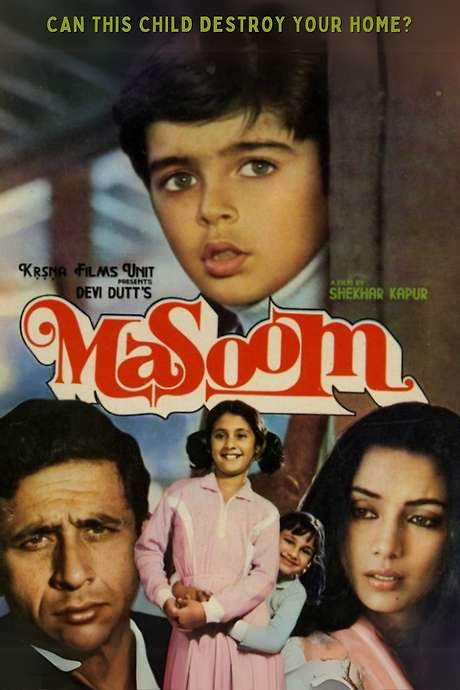
In a quiet, intimate drama set against the bustle of Bombay, Riyaz, a 13-year-old boy, grows up in a cramped, loving but often tense world. He shares his life with his grandmother Fayyazi and her sister, Mammo, a bold, outspoken figure who fiercely guards the little sanctuary they’ve built amid the city’s chaos. Riyaz’s circle is small, and he moves through daily life with a rollercoaster of frustrations and small joys, his sense of belonging tempered by his father’s abandonment and his one true friend, Rohan, who stands by him through the ordinary ups and downs of childhood.
A spark of resentment flares when Mammo arranges a surprise birthday party that Riyaz initially perceives as a joke at his expense. The moment exposes the fragility of their fragile household: Fayyuzi and Riyaz argue with Mammo, and Mammo steps out, only to return after they apologize. This tangle sets the stage for a larger backstory that shapes the entire film. Mammo’s history is a tapestry of displacement and endurance. Born in Panipat during the British Raj, she and her husband eventually become Pakistani citizens after Partition. The couple, childless but deeply connected, share a loving partnership until his death, after which her relatives push her out over property disputes.
With nowhere to go, Mammo travels to Bombay to stay with her widowed sister on a temporary visa. Her daily reality becomes a routine of visiting the police station each month to renew her status, a slow grind that finally leads to a harsh breakthrough: she pays Rs.4800 as a bribe to secure a permanent visa. The fragile thread of security she has woven begins to pull when Inspector Apte declines to protect her status. After Apte is transferred, a new police inspector takes over, misreads her papers as proof of illegal immigration, and orchestrates a brutal deportation. At Bombay Central Railway Station, Mammo is forced onto the Frontier Mail, destined to be sent back to Pakistan.
What follows is a spare, moving chase through memory and longing. Riyaz and Fayyuzi throw themselves into tracing Mammo, to little avail, as borders and bureaucratic coldness stand in their way. Two decades slip by, and Riyaz has grown into a young man who writes a book about Mammo in the hope that, somewhere, somehow, she might be found and a reunion could occur. The film uses these seasons—childhood pain, the aching ache of separation, and quiet acts of perseverance—to explore emotional life in everyday terms, showing how political decisions can overshadow humanitarian needs.
As the narrative unfolds, the movie paints a portrait of resilience: the everyday acts of care that bind family even when the world seems to push them apart. It is a story about longing, memory, and the stubborn hope that family ties can endure, even across borders. The tension between policy and people remains at the heart of the drama, a reminder that human warmth often travels the long road between two distant places.
Despite the forces that push Mammo away, the film doesn’t leave her out in the cold. In a carefully staged arc of reconciliation, Mammo returns to the city where her sister and Riyaz live. The emotional payoff is vetted with restraint, culminating in a delicate resolution where Mammo’s presence rekindles the sense of family that once anchored Riyaz’s world. To preserve the quiet dignity of the ending, the story reveals that Mammo chooses to continue staying in India, even pretending to be dead at one point, allowing her to remain near those she loves.
Throughout, the cast threads through the emotional fabric with warmth and nuance. The story is grounded by the intimate performances of the family and the officials who intersect their lives, including Riyaz's father and Riyaz's mother, whose perspectives cast additional light on the choices that shape Riyaz’s adolescence. The police arc is carried by Inspector Apte and Inspector Sapre, whose interactions with Mammo illuminate the peril and power of state authority. The film also rests on the quiet strength of Mammo’s sister, who has stood by her through the years, and the broader ensemble that brings to life the small, human moments that define a life lived between two nations.
The ending lands with a restrained, hopeful gentleness: Mammo returns to the fold, not as a perfect reunion of past wounds, but as a healing presence that allows Riyaz to complete the arc of his memory and his book. It leaves viewers with a sense that love, memory, and a stubborn will to belong can outlive even the most rigid lines drawn by politics. The film invites reflection on what it means to belong, who gets to stay, and how families survive when the world seems designed to pull them apart.