Plot Explained Spoilers guaranteed!
Plot Explained

Browse by genre

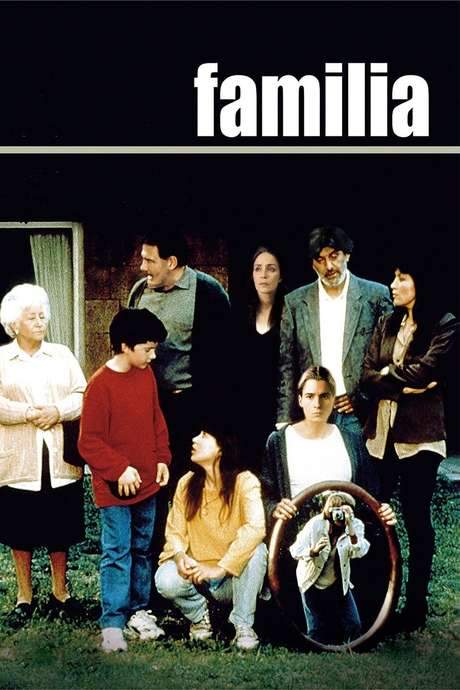
Family Law (2006) movie poster

Plot Summary

Family Law (2006) Plot Summary Explained

Release, runtime and language
2006 · 102 min · Spanish
Directed by
Daniel Burman
Starring
Arturo Goetz, Daniel Hendler, Julieta Díaz

Ariel Perelman, a sharp Argentine lawyer, grapples with the pressure of his family’s prestigious legal legacy. He worries about losing his individuality while trying to live up to his father’s renowned career. As he handles challenging family law cases, Perelman confronts the delicate balance between his own ambitions and the expectations placed upon him, ultimately seeking to define himself beyond his father’s shadow.

On this page (5)
  1. 1 What happens: full plot
  2. 2 Plot questions answered
  3. 3 Movie threads
  4. 4 Movies like Family Law
  5. 5 Every angle

Full plot summary · contains spoilers

What Happens in Family Law: Full Plot Summary

The whole story of Family Law (2006) explained, from the opening scene to the final frame: every key event, every twist and what it all adds up to. Read it as a quick recap before the sequel, to check a scene you missed, or to finally understand what really happened.

Ariel Perelman Daniel Hendler is a relaxed, inquisitive law professor in Buenos Aires, drifting through life with a quiet sense of purpose as he searches for his path in a city that mirrors his easygoing mood. The movie opens with a long, intimate narration that sketches the rhythm of his days and introduces his father, Bernardo Perelman Arturo Goetz, a popular public defender who meets his clients where they are—whether at work, in a restaurant, or on the street—to gauge what they’re really about. This bond is reinforced by Perelman’s close relationship with his secretary, a connection that persists since his wife’s death fifteen years earlier. It’s clear from the outset that work and family anchors drive his world, and he’s often perceived as full of energy, even when life feels routine.

As the story unfolds, a spark of desire leads Ariel toward Sandra Julieta Díaz, an attractive woman who teaches the Pilates class he starts attending. After lusting after her, he pursues a relationship, stepping into a scene that blends personal longing with professional risk. The first real test comes when Sandra is sued for teaching Pilates without the proper rights from the company that controls the rights to teach Pilates in Argentina. Julieta Díaz is shown in a pivotal role as this complication arises, and Ariel, who is known as Perelman to Sandra, reaches out to his father for help and ultimately wins the lawsuit, highlighting the father-son dynamic at the core of the narrative.

In the wake of the courtroom victory, Sandra falls in love with the younger Perelman and the couple marries. Their home fills with growing warmth as they decorate and settle into family life, welcoming a child named Gastón. The film thoughtfully traces the shifts in Ariel’s life as he balances professional success with personal change, all while the family builds a home that reflects their evolving bond. Yet quiet upheavals lie ahead. When the university building housing Ariel’s department collapses, the school is shut down for a month, and he is granted time off—though he chooses not to share this news with his wife. This pause becomes a turning point, as his father begins spending more deliberate time with him, prompting Ariel to confront something unsettled beneath the surface.

The story deepens as a Swiss kindergarten where Gastón attends invites Ariel to participate in a father-driven play and in swim classes with the other dads. He initially resists this intrusion into his routine but ultimately agrees to join, allowing a new layer of reflection to unfold. Through these moments, the film examines memory, responsibility, and the quiet reckonings that shape a man in his 30s. The closing chapters return to the themes of legacy and introspection as Bernardo Perelman’s death and burial bring Ariel to a long, contemplative look at the path his life has taken and the person he has become.


Last updated: November 22, 2025 at 15:57

Was this helpful?

Plot questions answered

Family Law Plot Explained: Your Questions Answered

The questions people ask most about Family Law (2006): what happens in the confusing scenes, why the characters do what they do, the twists, hidden details and what the ending means. Each answer contains spoilers.

Q1

Why does Ariel pursue Sandra when she's his Pilates instructor?

Ariel is drawn to Sandra because she represents something new and outside his established routine. After years of living a controlled life focused on work and his father's legacy, Sandra offers a chance at genuine personal connection. He signs up for her class specifically to get closer to her, showing how the lawsuit that follows is merely a catalyst that accelerates a connection that was already forming based on attraction and curiosity.

Foreshadowing: Early scenes establish Ariel's routine as deliberately maintained, he teaches at the university, visits clients with his father, and relies on his secretary, making his sudden interest in Sandra a notable departure from his pattern.

  • sandra
  • pilates
  • romance
  • attraction
  • ariel
Q2

Why doesn't Ariel tell Sandra about the university closing?

Ariel keeps the university closure secret because it represents an unexpected break in his carefully managed identity. As a professor, his professional role defines him within the family dynamic, and admitting he has sudden free time might force a reckoning with questions he's been avoiding about who he is outside his career. The silence also hints at underlying tension in his marriage, he's maintaining the appearance of normalcy while internally unsettled.

Foreshadowing: The film establishes early on that Ariel keeps his professional world 'in constant motion,' suggesting he uses work as a buffer against deeper personal reflection.

  • university
  • secret
  • sandra
  • marriage
  • identity
Q3

Why does Ariel's father spending more time with him make him anxious?

Bernardo's sudden attention triggers Ariel's deepest fear: that something is seriously wrong with his father, and by extension, with the family legacy he has been trying to escape while also live up to. Throughout the film, Ariel has defined himself partly in opposition to his father's shadow, so increased closeness feels threatening, it forces him to confront unresolved feelings about whether he is living up to or merely surviving his father's expectations.

Foreshadowing: The opening narration establishes the father-son dynamic as complex, showing Bernardo as a popular figure whom Ariel both admires and feels pressured by.

  • bernardo
  • father
  • anxiety
  • family
  • legacy
Q4

Why does Ariel initially resist participating in the kindergarten play and swim classes?

Ariel resists because these activities force him into a public display of fatherhood, a role he hasn't fully examined. Being a father to Gastón has been somewhat passive; he provides and exists within the family structure but hasn't consciously confronted what fatherhood means to him. The kindergarten invitation demands active participation and vulnerability, which clashes with his tendency to observe and maintain distance rather than fully engage.

Foreshadowing: Early scenes show Ariel as a watcher and analyst of life rather than an active participant in emotional moments, setting up his resistance to the kindergarten invitation.

  • gaston
  • kindergarten
  • fatherhood
  • participation
  • swim class
Q5

What causes Ariel's deep introspection after his father's death?

Bernardo's death forces Ariel to confront mortality, legacy, and his own unexamined choices. With his father gone, Ariel must reconcile the competing impulses that defined their relationship: the pressure to continue the family legacy versus his desire to define himself on his own terms. The introspection isn't just grief, it's a fundamental reassessment of whether his life's path represents authentic choices or mere reaction to his father's expectations.

Foreshadowing: The film foreshadows this reckoning when Ariel's father begins spending more time with him during the university closure, creating tension that remains unresolved until the father's death.

  • bernardo
  • death
  • introspection
  • legacy
  • self-examination
Q6

How does the Pilates lawsuit affect Ariel and Sandra's relationship?

The lawsuit becomes the crucible that transforms their attraction into serious commitment. When Sandra is sued, Ariel is forced to act, he reaches out to his father, takes an active role in her defense, and demonstrates genuine investment in her wellbeing. This is the first time he acts decisively outside his defined roles as professor or son. Sandra sees this as evidence of his character, and their shared victory creates a bond that leads directly to marriage.

Foreshadowing: The lawsuit follows immediately after Ariel signs up for her class, showing the legal trouble as an acceleration of their romantic trajectory rather than an obstacle.

  • lawsuit
  • sandra
  • marriage
  • victory
  • defense
Q7

Why does the film emphasize Ariel's relationship with his secretary?

The secretary represents stability and continuity in Ariel's life since his wife's death fifteen years earlier. Their bond shows Ariel's capacity for loyalty and sustained connection, while also highlighting what has been missing in his life, genuine intimacy has been replaced by professional functionality. This relationship establishes that Ariel forms deep attachments but keeps them at a comfortable distance, a pattern that echoes throughout his marriage and his reluctance to fully engage with fatherhood.

Foreshadowing: The opening immediately establishes this relationship as central to Ariel's world, mentioning it alongside his bond with his father as the two anchors of his life.

  • secretary
  • wife
  • death
  • loyalty
  • support
Q8

Why does Ariel become a law professor like his father instead of forging his own path?

Ariel's choice to become a law professor mirrors his father's career because, despite his stated desire to find his own path, he's drawn to the familiar world where he can measure himself against his father's legacy. The film suggests his 'drifting' isn't truly directionless, it's a form of quiet rebellion conducted within safe boundaries. His work as a public defender, like his father's, shows he has internalized the family value of legal service while still grappling with whether the choice was truly his.

Foreshadowing: The opening establishes that Ariel works in the same professional world as his father and maintains similar ethical approaches, setting up the central tension between following and forging his own path.

  • law
  • professor
  • bernardo
  • career
  • legacy

Movie threads

More Movies Like Family Law, by Mood & Story

Curated lists built around what makes Family Law tick: the same mood, the same kind of story or the same emotional payoff. Each list explains why these movies belong together.

Quietly melancholic family dramas like Family Law

Thoughtful dramas exploring family dynamics, legacy, and bittersweet self-discovery. Movies like Family Law that delve into family relationships and personal legacy with a gentle, thoughtful hand. If you appreciated the quiet drama and bittersweet introspection of Family Law, you'll find similar stories here about fathers, sons, and the weight of expectation.

  • contemplative
  • melancholic
  • gentle
  • nostalgic
  • introspective
  • warm
  • Tone: melancholic, contemplative, bittersweet
  • Pacing: slow, reflective
Why these movies?

The story pattern: The narrative pattern typically follows a protagonist, often mid-life, as they grapple with their place within a family structure. The conflict is internal and relational, driven by unspoken expectations, past grief, or the quiet pressure of a family legacy, leading to a contemplative and often bittersweet resolution.

Why they belong together: Movies are grouped here for their shared gentle mood, melancholic tone, and focus on the emotional complexities of family life. They prioritize character development and atmospheric storytelling over plot-heavy drama, creating a similarly reflective and warmly human viewing experience.

Movies about midlife introspection and identity like Family Law

Stories of professionals re-evaluating their lives and searching for meaning. If you liked the journey of self-discovery in Family Law, explore these similar films about professionals grappling with identity and purpose. These stories capture the bittersweet feeling of re-evaluating one's life and legacy, often with a contemplative and hopeful tone.

  • introspective
  • contemplative
  • midlife crisis
  • self-discovery
  • professional identity
  • bittersweet
  • Tone: contemplative, bittersweet, quietly optimistic
  • Pacing: slow, character-driven
Why these movies?

The story pattern: The narratives center on a protagonist, typically established in their career, who begins to question the meaning and direction of their life. The central conflict is an internal one—a midlife reckoning—that is often catalyzed by a personal or professional event, leading to a journey of redefinition that is more about acceptance than radical change.

Why they belong together: These films share a focus on the internal journey of self-discovery, a moderate emotional weight, and a bittersweet, quietly optimistic conclusion. They are united by their contemplative mood and the relatable theme of seeking individuality and purpose within the structures of career and family.

If you liked this

Movies Like Family Law

Similar movies to Family Law: the same genre, themes or kind of story. Each one comes with its own plot summary, timeline and ending explained.

Browse all movie summaries

Every angle

Family Law (2006) Explained: Plot, Timeline & Characters

Everything about Family Law in one place: what happens in the plot summary, the timeline in chronological order, the characters and meaning and a spoiler-free summary. What's After the Movie adds the cast, box office and post-credit scenes.

Coming soon on iOS and Android

The Plot Explained Movie Summary App

Plot summaries, endings explained and timelines on your phone. Catch up on any movie in minutes, save your favorites and never miss a twist again.

Be the first to know when we launch. Your email stays private, always.

Learn more about the app