Plot Explained Spoilers guaranteed!
Plot Explained

Browse by genre

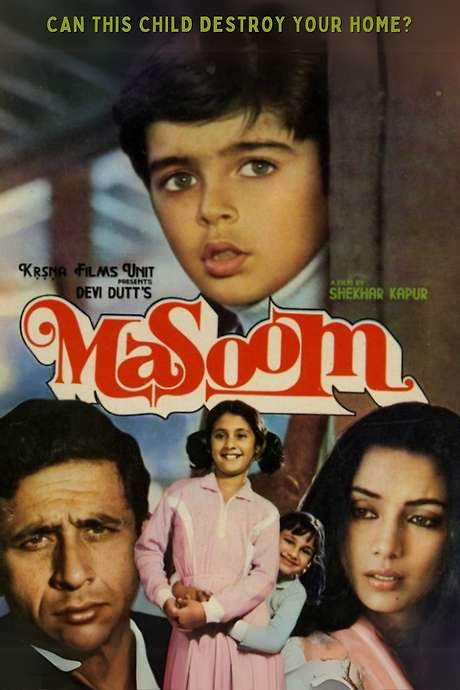
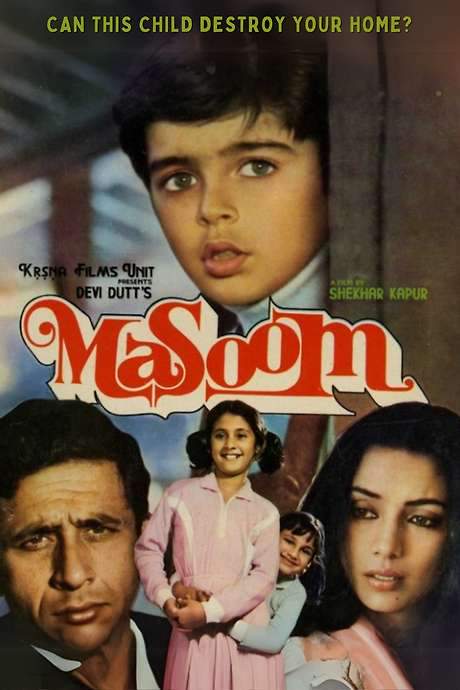
Masoom (1983) movie poster

Plot Summary

Masoom (1983) Plot Summary Explained

Release, runtime and language
1983 · 138 mins · Hindi
Loading streaming availability…
Directed by
Shekhar Kapur
Starring
Shabana Azmi, Satish Kaushik, Saeed Jaffrey, Naseeruddin Shah, Jugal Hansraj, Supriya Pathak

DK Malhotra lives with wife Indu and daughters Pinky and Minni. A call brings home Rahul, a schoolboy who is DK’s son from the late Bhavana, shocking Indu. The girls accept Rahul, though he feels unwelcome. DK sends him to a boarding school in Nainital, but truth of his parentage emerges, causing turmoil as Rahul disappears and family confronts bonds.

On this page (6)
  1. 1 Where to watch
  2. 2 What happens: full plot
  3. 3 Plot questions answered
  4. 4 Movie threads
  5. 5 Movies like Masoom
  6. 6 Every angle
Loading streaming availability…

Full plot summary · contains spoilers

What Happens in Masoom: Full Plot Summary

The whole story of Masoom (1983) explained, from the opening scene to the final frame: every key event, every twist and what it all adds up to. Read it as a quick recap before the sequel, to check a scene you missed, or to finally understand what really happened.

Indu D. Malhotra and D.K. Malhotra share a peaceful, stable life in Delhi, where they raise their two daughters, Pinky D. Malhotra and Minni D. Malhotra in a warm, familiar home. The everyday rhythm of their marriage—shared meals, quiet conversations, and the simple joys of family—gives the family a sense of calm that feels sturdy and true. The story gently tracks how a hidden past can quietly surface and test that stability, even when everyone believes the surface is smooth.

The tranquility is shaken when the truth about DK’s past comes to light: he learns he has a son, Rahul D. Malhotra, born from an affair with Bhavna during a 1973 visit to Nainital, a trip that occurred just as Indu was about to give birth to Pinky. Bhavna kept the secret to herself to protect DK’s otherwise settled family life. With Bhavna’s death, her guardian Master Ji steps in to inform DK that Rahul, then nine years old, needs a home. This revelation places DK in a difficult position: how to integrate a child who is not part of Indu’s memories into a family that has built its happiness on trust and harmony?

DK chooses to bring Rahul into their Delhi home, and the boy forms an immediate bond with his new father and with the two sisters. Yet Indu struggles to reconcile the image of a loving father with the knowledge of DK’s past infidelity. The presence of Rahul becomes a living reminder of DK’s previous mistake, and Indu’s heart must navigate a path between hurt and compassion. The family dynamic shifts as they try to accommodate a child who is both welcomed and unsettled by the new reality.

To manage the situation, DK makes a practical choice rooted in care for Rahul’s future: he arranges for Rahul to attend St. Joseph’s College in Nainital, a boarding option that Rahul accepts with quiet reluctance. The plan is for Rahul to move there permanently, stepping into a life that might feel more fitting for him, given the circumstances. Before that permanent move takes place, Rahul returns to Delhi, and a moment of painful clarity emerges—he realizes that DK is truly his father. This realization triggers a runaway impulse, and he leaves home, only to be escorted back by a police officer.

The turning point comes when Rahul, now poised at a crossroads, confesses to Indu that he knows the truth about his paternity. Indu absorbs this confession with a complex mix of heartbreak and tenderness, recognizing the humanity of everyone involved. Rather than sever the ties that bind them, she chooses to forgive and invite Rahul into the family, signaling a renewed sense of trust and belonging. In the end, the family returns home together, carrying with them a deeper understanding of forgiveness and love, and a shared resolve to move forward as one unit. The story closes on a note of quiet reconciliation, emphasizing that family bonds can endure even when they are tested by the past.
Last updated: February 18, 2026 at 23:45

Was this helpful?

Plot questions answered

Masoom Plot Explained: Your Questions Answered

The questions people ask most about Masoom (1983): what happens in the confusing scenes, why the characters do what they do, the twists, hidden details and what the ending means. Each answer contains spoilers.

Q1

Why did DK decide to send Rahul to boarding school in Nainital?

DK sent Rahul to St. Joseph's College in Nainital because the family tension had become unbearable. Indu struggled to accept Rahul as her husband continued his affair with his past, making daily life difficult for everyone. DK believed that separating Rahul from the household would give Indu time to heal and allow the family to eventually reunite on better terms. The boarding school was also meant to give Rahul a stable environment where he could continue his education without being caught in the middle of adult conflicts.

Foreshadowing: Earlier, Indu found it hard to look at Rahul because he reminded her of DK's betrayal, foreshadowing the need for physical separation.

  • boarding school
  • Nainital
  • DK decision
  • family separation
  • Rahul's future
Q2

Why did Rahul run away from home after discovering DK was his father?

Rahul ran away because learning that DK was his real father shattered his understanding of his entire life. He had been living in the Malhotra household as if he were an outsider, and discovering the truth made him feel like a burden who had been thrust into a family that didn't truly want him. The realization that everyone had been keeping this secret from him triggered panic and rejection, causing him to flee in emotional turmoil. The police eventually escorted him back home, but the incident forced the family to confront the hidden truth openly.

Foreshadowing: The timeline shows Rahul's discovery happened just before his planned move to Nainital, making him feel even more isolated.

  • Rahul runs away
  • paternity discovery
  • emotional breakdown
  • police
  • family crisis
Q3

How was Indu able to forgive DK and accept Rahul into the family?

Indu's forgiveness came when she intercepted Rahul before his train to Nainital and realized the pain he carried as a child who felt unwanted. Hearing Rahul confess that he already knew DK was his father broke through her resentment, showing her that he too was a victim of the situation. She chose compassion over bitterness, understanding that punishing Rahul for his father's mistake would only perpetuate suffering. Her acceptance marked the family's turning point, as she invited Rahul to stay and offered forgiveness to DK for his past infidelity.

Foreshadowing: Indu's initial heartbreak when she learned of DK's affair set the stage for her later transformation into a forgiving figure.

  • Indu forgiveness
  • family acceptance
  • Rahul becomes family
  • mercy
  • reconciliation
Q4

Why was Indu initially unable to accept Rahul in the household?

Indu struggled to accept Rahul because his presence was a constant reminder of her husband's betrayal. Every time she looked at Rahul, she saw evidence of DK's infidelity during her pregnancy with Pinky, which wounded her deeply. While she recognized Rahul was an innocent child, emotionally she could not separate the boy from the betrayal itself. Her resistance was not cruelty but a natural response to having her trust destroyed by discovering a child from her husband's past affair.

Foreshadowing: The revelation that DK's affair occurred in 1973, just as Indu was about to give birth, intensified her sense of betrayal.

  • Indu's pain
  • betrayal
  • emotional struggle
  • accepting stepson
  • marital trust
Q5

How did Rahul realize that DK was his real father?

The exact mechanism of Rahul's discovery is not detailed in the provided data, but the timeline indicates it happened during his return visit to Delhi before moving to Nainital. During this period, he came to understand the truth about his parentage. This realization occurred after he had already bonded with DK and was preparing to leave for boarding school, making the discovery even more emotionally destabilizing. The combination of his growing attachment to his father and suddenly learning the biological truth created the perfect storm that led to his running away.

Foreshadowing: Rahul had already formed a bond with DK before learning the truth, which made the revelation more painful.

  • Rahul discovers truth
  • paternity revelation
  • emotional impact
  • realization moment
Q6

Why did Bhavna keep Rahul's existence a secret until her death?

Bhavna kept Rahul hidden to protect DK's existing family and marriage. She knew that revealing the child would destroy the peaceful life DK had built with Indu and their daughters. Rather than disrupt a settled family, she chose to raise Rahul alone with help from Master Ji, sacrificing her own comfort for the sake of others. Her selflessness meant that DK only learned of his son after Bhavna passed away, when Master Ji came forward to inform him that Rahul needed a home.

Foreshadowing: Bhavna's secret-keeping established the hidden dimension of DK's past that would later surface.

  • Bhavna secret
  • sacrifice
  • protective lies
  • affair hidden
  • Master Ji guardian
Q7

What role did Master Ji play in bringing Rahul to the Malhotra family?

Master Ji was Bhavna's guardian who stepped forward after her death to inform DK about Rahul's existence. Since Bhavna had died, Master Ji became the person responsible for the nine-year-old boy's welfare and needed to find him a proper home. This role made Master Ji the catalyst for the entire story's conflict, as he delivered the news that changed the Malhotra family's dynamics forever. Without Master Ji's intervention, Rahul would never have joined the family and the story's central conflict would not have unfolded.

Foreshadowing: Master Ji's appearance marks the pivotal moment when the hidden past becomes unavoidable.

  • Master Ji
  • Bhavna guardian
  • Rahul's caretaker
  • revelation catalyst
  • family introduction
Q8

What caused the major family crisis after DK brought Rahul home?

The crisis was caused by the sudden collision between Indu's understanding of her marriage and the hidden reality of DK's past affair. For years, Indu believed her family life was built on trust and fidelity, only to learn her husband had fathered a child with another woman during her pregnancy. Bringing Rahul home forced Indu to confront this betrayal daily, making it impossible to ignore or move past. The tension between Indu's pain, DK's guilt, and Rahul's uncertain status created an emotional standoff that threatened the family's stability.

Foreshadowing: The peaceful opening scenes establish the trust that makes the revelation so devastating.

  • family crisis
  • affair revelation
  • trust broken
  • Indu emotional turmoil
  • household tension
Q9

Why did Rahul feel unwelcome even though the family tried to accept him?

Rahul felt unwelcome because he could sense Indu's emotional distance and the underlying tension in the household. Despite DK's affection and the daughters' acceptance, Rahul picked up on the fact that his presence caused pain to Indu, who struggled to look at him without seeing his father's betrayal. This emotional undercurrent made Rahul feel like an intruder rather than a true family member. His realization of the truth about his paternity only amplified this feeling, confirming his suspicion that he did not truly belong.

Foreshadowing: The text notes that Indu found it hard to look at Rahul, which the boy would have noticed.

  • Rahul feeling unwanted
  • emotional isolation
  • family tension
  • child's perspective
  • belonging
Q10

Why did DK bring Rahul into his existing family despite knowing it would cause conflict?

DK brought Rahul home because, as his biological father, he felt responsible for the child's welfare after learning of his existence. Bhavna had kept Rahul hidden, leaving DK unaware he had a son, but now that the truth was out, he could not abandon the boy. His sense of duty and paternal love drove him to integrate Rahul into his family, even knowing it would cause pain to Indu. DK likely believed his children, even from different mothers, deserved to be together and that he could manage the family adjustment.

Foreshadowing: DK's initial peaceful family life made his decision to add Rahul more complex and disruptive.

  • DK responsibility
  • father duty
  • bringing son home
  • family integration
  • parental obligation
Q11

Why was DK's 1973 trip to Nainital significant to the story?

DK's 1973 trip to Nainital was significant because that is where his affair with Bhavna occurred, resulting in Rahul's conception. The timing was particularly painful for Indu because it coincided with her pregnancy with Pinky, making DK's infidelity feel like a direct betrayal during a vulnerable period. Nainital continued to matter because DK sent Rahul to boarding school there, completing a circle where the secret began and where Rahul would eventually be sent away. The location became symbolic of both the family's origin and its attempt to separate from the past.

Foreshadowing: The return to Nainital for boarding school echoes the location where Rahul's story began.

  • Nainital 1973
  • affair location
  • timeline
  • Pinky pregnancy
  • circular story

Movie threads

More Movies Like Masoom, by Mood & Story

Curated lists built around what makes Masoom tick: the same mood, the same kind of story or the same emotional payoff. Each list explains why these movies belong together.

Movies about family secrets like Masoom

When a buried truth resurfaces, forcing a family to confront forgiveness. If you liked the emotional journey of Masoom, explore other films where a family secret comes to light. These movies share themes of forgiveness, domestic crisis, and the bittersweet path to rebuilding trust.

  • domestic drama
  • emotional conflict
  • heartbreaking
  • hopeful
  • introspective
  • tense
  • Tone: bittersweet, emotionally resonant
  • Pacing: steady, character-focused
Why these movies?

The story pattern: These stories typically begin with a stable domestic life that is fractured by the revelation of a past mistake or hidden truth. The plot follows the family's emotional turmoil, internal conflict, and the gradual, often painful, process of reconciliation and acceptance.

Why they belong together: Movies are grouped here because they share a core narrative of a domestic facade shattered by a secret, focusing on emotional realism, character-driven drama, and a tone that balances pain with the hope of forgiveness.

Bittersweet family dramas similar to Masoom

Emotional stories of family life, where pain and hope coexist. Find more movies like Masoom that deliver a poignant look at family life. These films master the bittersweet tone, blending emotional hardship with an underlying sense of hope and resolution.

  • bittersweet
  • melancholic
  • hopeful
  • domestic
  • heartfelt
  • introspective
  • Tone: bittersweet, melancholic, hopeful
  • Pacing: steady, deliberate
Why these movies?

The story pattern: Narratives in this thread focus on everyday family struggles—betrayal, belonging, reconciliation—presented with a steady pace. They avoid melodrama, instead building tension from realistic emotional conflicts that ultimately lead to a hopeful, if not perfectly happy, conclusion.

Why they belong together: These films are connected by their dominant bittersweet tone, medium emotional intensity, and focus on domestic realism. They provide a cathartic experience that acknowledges life's difficulties while leaving room for optimism.

If you liked this

Movies Like Masoom

Similar movies to Masoom: the same genre, themes or kind of story. Each one comes with its own plot summary, timeline and ending explained.

Browse all movie summaries

Every angle

Masoom (1983) Explained: Plot, Timeline & Characters

Everything about Masoom in one place: what happens in the plot summary, the timeline in chronological order, the characters and meaning and a spoiler-free summary. What's After the Movie adds the cast, box office and post-credit scenes.

Coming soon on iOS and Android

The Plot Explained Movie Summary App

Plot summaries, endings explained and timelines on your phone. Catch up on any movie in minutes, save your favorites and never miss a twist again.

Be the first to know when we launch. Your email stays private, always.

Learn more about the app