Malcolm X

Malcolm X

JustWatch#6,48716

Year: 1992

Runtime: 202 min

Director: Spike Lee

BiographyDramaHistory

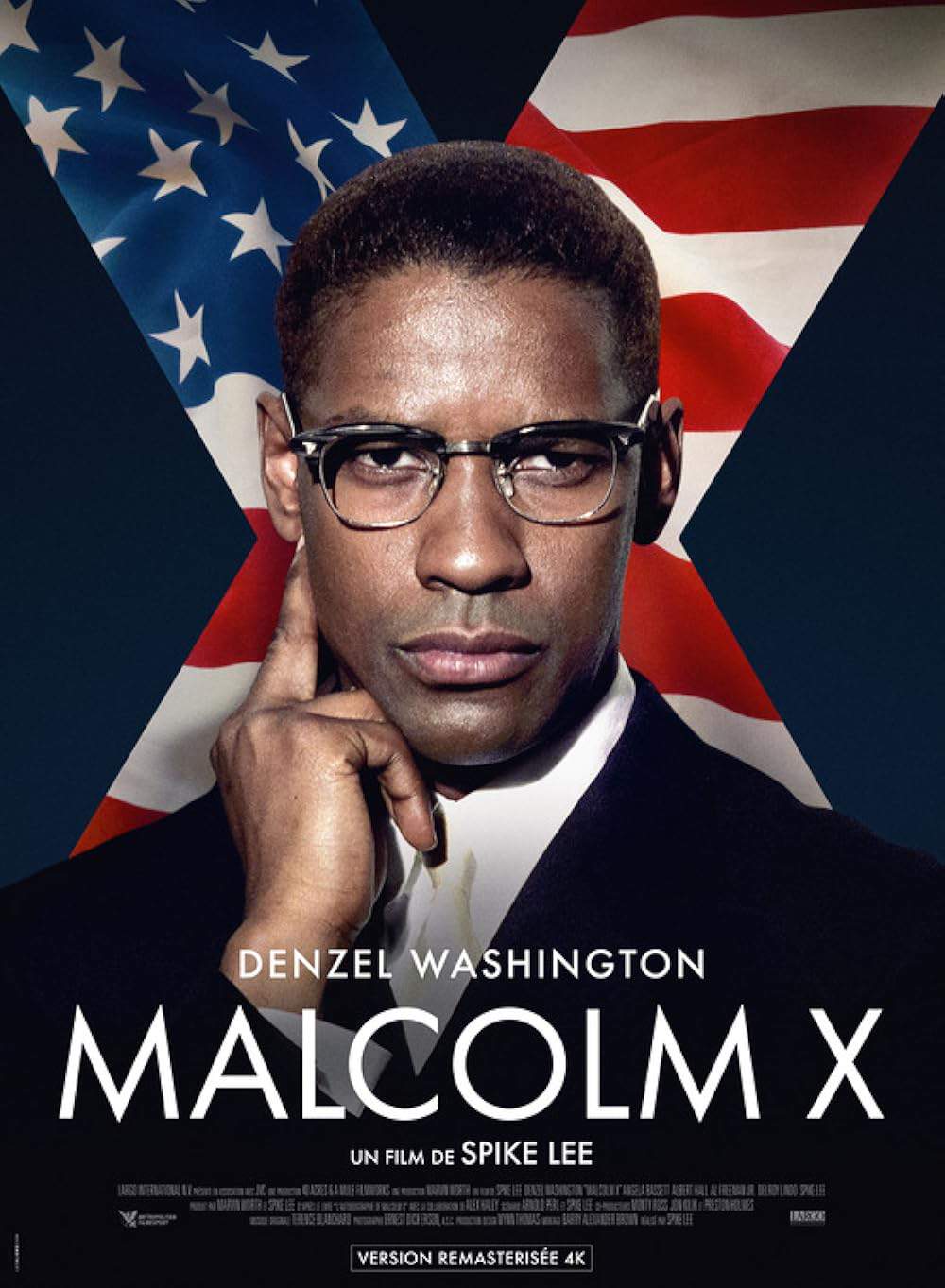
This powerful biography explores the life of Malcolm X, a pivotal figure in the Civil Rights Movement. Directed by Spike Lee and featuring a commanding performance by Denzel Washington, the film examines his controversial journey from a young hustler to a passionate advocate for Black empowerment. It delves into his evolving beliefs, his impact on a nation grappling with racial inequality, and the complexities of his legacy.

Where to Watch Malcolm X?

Find where to stream, rent, or buy Malcolm X (1992) in the US with current JustWatch availability, up-to-date pricing, and platform listings for subscription, rental, and digital purchase options.

Warning: spoilers below!

Haven’t seen Malcolm X yet? This summary contains major spoilers. Bookmark the page, watch the movie, and come back for the full breakdown. If you're ready, scroll on and relive the story!

Timeline – Malcolm X (1992)

Trace every key event in Malcolm X (1992) with our detailed, chronological timeline. Perfect for unpacking nonlinear stories, spotting hidden connections, and understanding how each scene builds toward the film’s climax. Whether you're revisiting or decoding for the first time, this timeline gives you the full picture.

1

Malcolm's Speech

The film opens with Malcolm X's powerful rhetoric, addressing the oppression of the Black community. His speech is forceful, calling out the acts of violence and systemic racism inflicted by whites, and is poignantly accompanied by disturbing footage of Rodney King's beating.

2

Childhood in Roxbury

Transitioning to the early 1940s, young Malcolm Little is introduced in Roxbury, Boston. Here, he seeks to conform to white standards by straightening his hair, reflecting his struggles with identity amid the backdrop of World War II.

1940s Roxbury, Boston
3

KKK Attack

In a haunting flashback, Malcolm recalls his traumatic upbringing in Nebraska, including the brutal attack on his family home by the Ku Klux Klan. His father's murder, which the authorities dismissed as a suicide, profoundly shapes the family dynamics and Malcolm's future.

Nebraska
4

Dreams of a Lawyer

Despite his aspirations to become a lawyer, Malcolm faces systemic racism when a teacher belittles his dreams as impractical. This interaction highlights the harsh reality for Black youth with ambitions in a prejudiced society.

5

Encounter at the Jitterbug Club

In 1944, Malcolm and Shorty enjoy a night out at a jitterbug club where Malcolm meets Sophia, a white woman. This encounter serves as a turning point, showcasing Malcolm's internal conflicts regarding race and attraction while he is still with his girlfriend Laura.

1944 Jitterbug Club
6

Introduction to Organized Crime

Malcolm finds work with a railroad and soon becomes entangled with West Indian Archie, leading him deeper into organized crime. This journey into illegal activities marks the beginning of a dangerous new chapter in Malcolm's life.

Harlem, New York
7

Life of Crime and Imprisonment

Malcolm and Shorty’s crime spree ultimately leads to their arrest. Facing unequal sentencing, they are imprisoned for several years, offering Malcolm a stark confrontation with the justice system and its biases.

8

Influence of Baines

During his time in prison, Malcolm meets Baines, a member of the Nation of Islam, who influences his transformation. Through Baines' teachings, Malcolm begins to challenge his perceptions of race and identity, starting his path towards self-discovery.

Prison
9

Embracing Islam

By discarding his surname 'Little', Malcolm adopts 'X', symbolizing his rejection of his lost heritage. This decision marks a pivotal moment in his life, as he fully commits to the principles of Islam and his belief in racial empowerment.

1952
10

Rise within the Nation of Islam

After his release in 1952, Malcolm rises rapidly in the ranks of the Nation of Islam, gaining a larger audience and influence. His marriage to Betty Sanders further enriches his commitment to the movement, but it also invites jealousy and conflict from others in the organization.

11

Controversy Following JFK's Assassination

The assassination of President John F. Kennedy sparks further controversy for Malcolm, who reflects on its ties to America's systemic violence against Black individuals. This incident escalates scrutiny and opposition against him from various sides.

12

Formation of OAAU

In response to growing tensions, Malcolm forms the Organization for African-American Unity (OAAU). This initiative symbolizes his evolved perspective on race and unity, especially following his transformative pilgrimage to Mecca.

13

Trip to Mecca

Malcolm embarks on a life-changing trip to Mecca, where he experiences a universal Islam that transcends racial divides. This journey profoundly reshapes his views on race relations and the potential for unity among peoples.

Mecca
14

The Audubon Ballroom Speech

On February 21, 1965, Malcolm prepares for a speaking engagement at the Audubon Ballroom, despite warnings about potential threats. His commitment to addressing the community leads to a fateful encounter that ends in his assassination.

February 21, 1965 Audubon Ballroom
15

Legacy of Malcolm X

The film concludes by reflecting on Malcolm X's enduring impact on the struggle for equality. His powerful voice and motto 'By any means necessary' continue to resonate within the ongoing fight against racial injustice.

Last updated: November 03, 2024 at 22:36

Was this helpful?

Malcolm X (1992) Timeline Questions Answered – Chronology FAQ

Find frequently asked questions about the Malcolm X (1992) timeline, including chronological order, nonlinear jumps, cause-and-effect links, and scene sequence clarifications. This timeline FAQ helps explain when key events happen, how moments connect, and why the story unfolds in that specific order.

Q1

Why did Malcolm change his last name to X?

A.

Malcolm discarded his surname 'Little' and adopted 'X' while in prison, symbolizing his rejection of the slave name imposed on his ancestors. The 'X' represented his lost ancestral African name, which he could never know due to the historical erasure of enslaved people's identities. This change marked his formal embrace of the Nation of Islam and his commitment to racial empowerment.

Earlier in the film, Malcolm reflects on his family's traumatic history, including the KKK attack that killed his father and the systemic oppression that stripped Black families of their heritage.

malcolm x nameslave namex surnamenation of islamidentity
Q2

Why did Malcolm join the Nation of Islam while in prison?

A.

During his imprisonment, Malcolm met Baines, a member of the Nation of Islam, who challenged his perceptions about race, language, and systemic oppression. Initially resistant, Malcolm gradually embraced Baines' teachings about the history of Black Americans and the structures of white supremacy. This intellectual transformation provided Malcolm with a framework for understanding his own identity and purpose, leading him to convert to Islam.

The flashback to Malcolm's childhood shows the KKK murdering his father and the authorities covering it up as suicide, planting the seeds of his later radicalization.

nation of islamprison conversionbainesislam teachingsracial identity
Q3

Why did Malcolm's views on race change after his trip to Mecca?

A.

Malcolm's pilgrimage to Mecca in 1964 exposed him to a universal form of Islam that transcended racial divisions. He witnessed Muslims of all colors worshipping together as equals, which profoundly challenged the Nation of Islam's beliefs about white people being inherently evil. This experience led Malcolm to conclude that racial separation was not the only path to Black empowerment, and he began advocating for unity across racial lines.

Earlier scenes show Malcolm's rigid beliefs within the Nation of Islam, making his later transformation more significant.

mecca pilgrimageracial unityislamrace relationstransformation
Q4

Why was Malcolm X assassinated?

A.

Malcolm was assassinated on February 21, 1965, at the Audubon Ballroom because his changing views on race and his public criticism of the Nation of Islam made him a target. After his trip to Mecca, Malcolm declared he no longer believed in racial separation, which directly contradicted Elijah Muhammad's teachings. This betrayal, combined with his growing influence and public speaking against both white racism and the Nation of Islam's leadership, placed him in mortal danger from multiple factions, including Nation of Islam members.

The film shows Malcolm receiving death threats and warnings from allies not to attend the Audubon Ballroom event, building toward the tragic outcome.

assassinationaudubon ballroomdeath threatsnation of islamelijah muhammad
Q5

Why did Malcolm become enemies with the Nation of Islam?

A.

Malcolm's relationship with the Nation of Islam deteriorated after he publicly questioned Elijah Muhammad's moral authority following revelations about Muhammad's extramarital affairs. Additionally, Malcolm's growing prominence and independent views on race relations created jealousy and conflict within the organization. When Malcolm suggested that President Kennedy's assassination was a consequence of America's history of racial violence, the Nation silenced him, leading to his eventual departure and the formation of his own organization.

The film shows Malcolm's rising influence within the Nation and his increasing discomfort with its teachings, particularly regarding his trip to Mecca.

elijah muhammadnation of ismal splitbetrayalorganization conflict
Q6

Why did Malcolm turn to a life of crime in Harlem?

A.

After moving to Harlem to work for the railroad, Malcolm met West Indian Archie, a dangerous figure involved in illegal activities. Archie trapped Malcolm in a perilous bet, marking his introduction to organized crime. Faced with limited economic opportunities due to racism and needing to support himself, Malcolm graduallyembarked on a path of theft and gambling with Shorty. This descent into crime ultimately led to his arrest and imprisonment, setting the stage for his spiritual transformation.

Earlier scenes show Malcolm's aspirations to become a lawyer being crushed by a teacher's racist dismissal, establishing the limited options he perceived available.

harlemwest indian archiecrimeimprisonmentshorty
Q7

Why did Malcolm's reaction to JFK's assassination cause controversy?

A.

When President Kennedy was assassinated in 1963, Malcolm X famously stated that it was a case of 'chickens coming home to roost,' implying that America's history of violence against Black people had finally struck at the highest level of government. This comment, made at a time of national mourning, drew intense backlash from both white America and the Nation of Islam, who believed he was celebrating the president's death. The incident intensified the scrutiny and opposition Malcolm faced from multiple directions.

Earlier scenes establish Malcolm's consistent criticism of systemic racial violence and his willingness to speak uncomfortable truths.

jfk assassinationchickens coming home to roostcontroversyracial violence
Q8

What is the significance of the opening scene with the Rodney King beating?

A.

The film opens with Malcolm X delivering a powerful speech about white supremacy while footage of the 1991 Rodney King beating plays and an American flag burns into an X. This stylistic choice by Spike Lee deliberately connects the historical Malcolm X to contemporary racial violence, suggesting that the systemic issues Malcolm fought against persisted decades after his death. It frames the film as not just historical biography but a commentary on ongoing racial injustice.

The opening establishes the film's theme that racial oppression continues through generations, making Malcolm's story eternally relevant.

rodney kingopening scenespike leeracial injusticecontemporary context
Q9

Why did Malcolm form the Organization for African-American Unity?

A.

After leaving the Nation of Islam, Malcolm formed the Organization for African-American Unity (OAAU) in 1964 as a new vehicle for his evolving message. The OAAU represented Malcolm's shift away from racial separation toward broader concepts of unity and human rights. This organization was designed to advocate for Black Americans using whatever means necessary while seeking alliances across racial lines, reflecting his transformative experiences in Mecca.

The formation follows directly from his Mecca pilgrimage and his declaration that he no longer advocated for racial separation.

oaauorganization for african american unitymalcolm x movementunitymecca aftermath
Q10

Why did Malcolm have conflicted feelings about his attraction to Sophia?

A.

At the jitterbug club in 1944, Malcolm encounters Sophia, a white woman, and is drawn to her despite having a Black girlfriend named Laura. This encounter reveals Malcolm's internal conflict regarding race and attraction. Though he would later become a fierce advocate for Black empowerment, his interest in Sophia reflects the internalized racial prejudices of the era, where proximity to whiteness was sometimes seen as desirable. This moment humanizes Malcolm by showing his own complicated relationship with racial identity before his transformation.

This scene occurs before Malcolm's ideological awakening, showing the evolution of his beliefs over time.

sophiajitterbug clubracial conflictlaurainternal struggle
Q11

Why was Malcolm's father killed by the KKK?

A.

Malcolm's father, Earl Little, was a devoted minister and activist who was targeted by the Ku Klux Klan in Nebraska. The KKK attacked the family's home seeking Earl's life because of his activism and outspokenness. Earl was murdered, but authorities ruled it a suicide, a common tactic to cover up racially motivated violence against Black families. This traumatic event profoundly shaped Malcolm's childhood and planted the seeds of his later radical activism against white supremacy.

The opening scene's powerful speech about white oppression directly connects to this childhood trauma.

father deathkkk attackearl littlenebraskasuicide cover up
Q12

Why did Malcolm's teacher tell him being a lawyer was impractical?

A.

As a bright young student, Malcolm aspired to become a lawyer. However, when he shared this ambition with a teacher, the teacher dismissed it as impractical, a direct result of the systemic racism that limited what society considered achievable for Black students. This crushing realization of how racism could shut doors despite one's talent and ambition stayed with Malcolm and contributed to his later rejection of mainstream American values.

This early disappointment illustrates the limited opportunities available to Black youth, setting the stage for his later embrace of more radical paths.

lawyer dreamracism in educationteacherchildhood aspirationssystemic barriers
Mobile App Preview

Coming soon on iOS and Android

The Plot Explained Mobile App

From blockbusters to hidden gems - dive into movie stories anytime, anywhere. Save your favorites, discover plots faster, and never miss a twist again.

Sign up to be the first to know when we launch. Your email stays private, always.

Explore Movie Threads

Discover curated groups of movies connected by mood, themes, and story style. Browse collections built around emotion, atmosphere, and narrative focus to easily find films that match what you feel like watching right now.

Intense political biographies like Malcolm X

Intense films about controversial figures who undergo profound personal and political change.If you were moved by the powerful historical drama of Malcolm X, explore other movies like it. This section features similar true stories of controversial figures grappling with systemic injustice, undergoing radical transformations, and leaving a complex legacy.

urgenttroublinginspiringsomberdefiantcontemplativegrim

Narrative Summary

The narrative follows a chronological arc, tracing a figure's journey from a formative past through a period of intense ideological awakening and activism, culminating in a legacy shaped by both their impact and the tragedy they often face. The focus is on the personal evolution within a high-stakes political context.

Why These Movies?

Movies in this thread share a high-intensity, emotionally heavy tone, a steady pacing that builds toward an inevitable climax, and a deep focus on the intersection of personal identity and transformative political action. They are united by their serious approach to complex historical figures.

Movies about faith and disillusionment like Malcolm X

Character-driven dramas about profound faith, disillusionment, and the search for truth.For viewers who appreciated the deep exploration of belief and identity in Malcolm X, this list gathers similar movies about ideological crisis. Discover other powerful stories of characters grappling with faith, dogma, and profound personal transformation.

contemplativetroublingurgentsomberdefiantpsychologicalgrim

Narrative Summary

The central narrative pattern is an internal struggle made external. A character finds structure and purpose in a powerful ideology or institution, only to discover its flaws or contradictions. This leads to a tense period of questioning, conflict with former allies, and a risky journey toward a new, often more nuanced, understanding.

Why These Movies?

These movies are grouped by their intense focus on a character's internal ideological battle and its external consequences. They share a contemplative yet tense mood, a steady pacing that allows for deep character study, and a theme of searching for truth beyond dogma.

Unlock the Full Story of Malcolm X

Don't stop at just watching - explore Malcolm X in full detail. From the complete plot summary and scene-by-scene timeline to character breakdowns, thematic analysis, and a deep dive into the ending - every page helps you truly understand what Malcolm X is all about. Plus, discover what's next after the movie.

Malcolm X Summary

Read a complete plot summary of Malcolm X, including all key story points, character arcs, and turning points. This in-depth recap is ideal for understanding the narrative structure or reviewing what happened in the movie.

Malcolm X Summary

Characters, Settings & Themes in Malcolm X

Discover the characters, locations, and core themes that shape Malcolm X. Get insights into symbolic elements, setting significance, and deeper narrative meaning - ideal for thematic analysis and movie breakdowns.

Characters, Settings & Themes in Malcolm X

Malcolm X Spoiler-Free Summary

Get a quick, spoiler-free overview of Malcolm X that covers the main plot points and key details without revealing any major twists or spoilers. Perfect for those who want to know what to expect before diving in.

Malcolm X Spoiler-Free Summary

More About Malcolm X

Visit What's After the Movie to explore more about Malcolm X: box office results, cast and crew info, production details, post-credit scenes, and external links - all in one place for movie fans and researchers.

More About Malcolm X