Plot Explained Spoilers guaranteed!
Plot Explained

Browse by genre

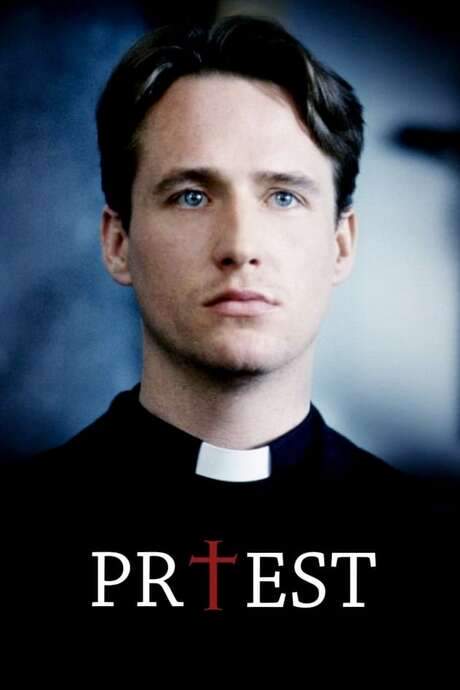
Priest (1994) movie poster

Plot Summary

Priest (1994) Plot Summary Explained

Release, runtime and language
1994 · 99 mins · English
JustWatch #16,796 15
Directed by
Antonia Bird
Starring
Tom Wilkinson, Robert Carlyle, Lesley Sharp, Robert Pugh, Linus Roache, John Bennett

Amid a community bound by strict rituals and hidden secrets, a young priest’s steadfast faith is tested when astonishing events unfold within his own congregation. He must decide whether to preserve the doctrines he cherishes or reveal an unsettling truth that could shatter everything.

On this page (6)
  1. 1 Where to watch
  2. 2 What happens: full plot
  3. 3 Plot questions answered
  4. 4 Movie threads
  5. 5 Movies like Priest
  6. 6 Every angle

Where to watch

Where to Watch Priest (1994)

Where can you watch Priest? Stream, rent or buy it in the US, including on Amazon Prime Video, Amazon MX Player and Amazon Prime Video Free: current JustWatch availability with up-to-date prices.

Streaming availability powered by JustWatch

Full plot summary · contains spoilers

What Happens in Priest: Full Plot Summary

The whole story of Priest (1994) explained, from the opening scene to the final frame: every key event, every twist and what it all adds up to. Read it as a quick recap before the sequel, to check a scene you missed, or to finally understand what really happened.

Father Greg Pilkington, Linus Roache, is newly assigned to St Mary’s parish in inner-city Liverpool when he is startled to discover that Father Matthew Thomas, Tom Wilkinson, is engaged in a sexual relationship with the rectory housekeeper Maria Kerrigan, Cathy Tyson. Thomas is a left-wing radical and outspoken proponent of Liberation Theology, which sets him at odds with the church hierarchy and leads to frequent clashes with the Bishop, Rio Fanning, even as the Bishop acknowledges his gifts and potential.

As the young priest’s personal conservatism and strict religious beliefs collide with Thomas’s brazen disregard for his vow of celibacy, Greg finds himself wrestling with his own deep-seated desires after meeting a man named Graham, Robert Carlyle at a local gay hangout, and the two embark on a physical relationship that complicates his vocation and sense of duty.

Meanwhile, Lisa Unsworth, Christine Tremarco, confides that she is being sexually abused by her father. He confirms her story and shows no remorse or intent to stop, and both Lisa and her secret have been confessed in the Sacrament of Penance, leaving Father Greg bound not to reveal what he has heard. He tries to warn Lisa’s mother, Mrs. Unsworth, Lesley Sharp, but she remains naïve about the danger, believing her daughter is safe while in her husband’s care.

When Mrs. Unsworth discovers her husband molesting Lisa and realizes the priest knew what was happening, she lashes out in anger and pain, increasing the pressure on everyone involved. Greg’s troubles intensify when he is arrested for having sex with Graham in a parked car, a sensational development given his status as a Catholic priest. He pleads guilty, and the scandal rocks the local community, making headlines and forcing a broader reckoning within the parish and the wider church.

Unable to shoulder the heat of public scrutiny, Father Greg relocates to a remote rural parish led by a disapproving and unforgiving priest. Father Matthew eventually persuades him to return to St Mary’s, where the two preside over a Mass that is met with loud protests from those opposed to Father Greg’s return. As the service unfolds, the congregation’s attention shifts: the crowd largely ignores Greg and lines up to receive communion from Father Matthew, highlighting a division within the parish over forgiveness, authority, and the nature of faith.

In the quiet after the disruption, Lisa walks toward the altar, seeking solace in the younger priest, and the two embrace in a tearful moment that underscores the fragile, human dimensions at the heart of a community trying to reconcile faith, duty, and personal truth.
Last updated: October 09, 2025 at 12:35

Was this helpful?

Plot questions answered

Priest Plot Explained: Your Questions Answered

The questions people ask most about Priest (1994): what happens in the confusing scenes, why the characters do what they do, the twists, hidden details and what the ending means. Each answer contains spoilers.

Q1

Why can't Father Greg reveal Lisa's abuse to her mother?

Greg cannot disclose Lisa's abuse because it was confessed to him within the Sacrament of Penance. The seal of confession is absolute in Catholic doctrine, ANY sin confessed to a priest in this context is strictly confidential, regardless of the circumstances. Breaking this seal would not only be a grave sin for the priest but would also destroy the confessional system's integrity, which relies on absolute confidentiality to encourage repentance.

Foreshadowing: Lisa's confession early in the film establishes the central moral dilemma that will haunt Greg throughout the story.

  • seal of confession
  • catholic confession
  • priest confidentiality
  • abuse disclosure
Q2

Why is Father Matthew allowed to remain at St Mary's despite his relationship with Maria?

Father Matthew Thomas remains at St Mary's because the Bishop values his abilities and considers him talented, despite his open defiance of clerical celibacy. The Bishop struggles to balance disciplinary authority with recognition of Thomas's gifts. Additionally, Matthew advocates Liberation Theology, a radical left-wing theology that puts him at odds with church hierarchy but also makes him a significant figure within certain circles of the church.

Foreshadowing: The film establishes early on that the church hierarchy tolerates Matthew's transgressions because of his exceptional talents, creating a double standard that Greg witnesses firsthand.

  • liberation theology
  • father matthew
  • celibacy
  • church hierarchy
  • double standard
Q3

Why does Mrs. Unsworth become angry at Greg for knowing about the abuse?

Mrs. Unsworth lashes out at Greg because she realizes he knew about her husband sexually abusing Lisa but did not explicitly tell her. When she discovers her husband molesting Lisa and understands that Greg possessed this knowledge, she redirects her rage toward the priest, partly because she feels betrayed that he did not act more directly, and partly because confronting her own husband's betrayal is more painful than blaming an outsider.

Foreshadowing: Greg's attempt to warn Mrs. Unsworth indirectly rather than directly reveals his fear of breaking the confessional seal, which creates the very conflict that fuels her anger later.

  • mrs unsworth
  • lisa abuse
  • confessional
  • anger
  • family secrets
Q4

What does the divided communion mean at the end of the film?

When Greg returns to St Mary's, most parishioners line up to receive communion from Father Matthew rather than Greg. This division represents the parish's split over questions of forgiveness, authority, and moral judgment. Some view Greg as unfit to lead after his scandal, while others perhaps see Matthew's hidden sins as equally disqualifying, yet Matthew's charisma and openness have earned him greater acceptance despite his transgressions.

Foreshadowing: The earlier scenes establish that while Greg is internally conflicted and conservative, Matthew is bold and charismatic, traits that help him maintain the congregation's loyalty even when his own secrets are known.

  • communion
  • parish division
  • forgiveness
  • congregation
  • matthew greg
Q5

Why does Greg begin a relationship with Graham?

Greg's relationship with Graham develops from his internal struggle with his homosexuality. As a conservative, traditional priest, Greg has repressed his same-sex desires throughout his vocation. Meeting Graham at a local gay hangout creates an opportunity for him to act on these feelings, leading to a physical relationship that contradicts his vows but fulfills a deep emotional and sexual need he has long denied.

Foreshadowing: The film hints at Greg's internal conflict from the beginning, his conservative beliefs colliding with his suppressed desires create the psychological tension that ultimately leads to his downfall.

  • greg homosexuality
  • graham
  • priest gay relationship
  • celibacy
  • sexual identity
Q6

What happens after Greg is arrested for his relationship with Graham?

After Greg is arrested for having sex with Graham in a parked car, he pleads guilty to the charge. The arrest becomes front-page news, a sensational story about a Catholic priest engaging in homosexuality. Unable to withstand the public scrutiny and shame, Greg relocates to a remote rural parish overseen by a disapproving priest who does not forgive his transgression.

Foreshadowing: The arrest represents the climax of Greg's internal conflict, his secret desires are exposed, leading to the public scandal that forces him to leave his parish.

  • greg arrest
  • graham
  • scandal
  • public shame
  • priest scandal
Q7

Why does Father Matthew convince Greg to return to St Mary's?

Father Matthew Thomas persuades Greg to return because he recognizes that Greg belongs at St Mary's and that their contrasting approaches to priesthood can coexist. Despite their ideological differences, Greg's conservatism versus Matthew's radicalism, Matthew shows compassion for his fellow priest and believes Greg's return could help heal the rift in the parish. His persuasion suggests Matthew values unity over judgment.

Foreshadowing: Earlier scenes show tension between the two priests, but Matthew's willingness to defend Greg against the Bishop and his eventual support reveal a deeper understanding of shared human frailty.

  • matthew greg return
  • forgiveness
  • reconciliation
  • parish healing
Q8

What does Lisa approaching Greg at the end of the film represent?

In the final scene, Lisa walks toward the altar and embraces Greg in a tearful reunion. This moment represents the possibility of human connection and healing amid the church's division and institutional failures. Lisa, who suffered abuse and was failed by the systems meant to protect her, seeks solace from the one person who showed her genuine concern, demonstrating that personal compassion can coexist with institutional brokenness.

Foreshadowing: Lisa's confession early in the film created Greg's central moral burden. Her final embrace represents a resolution to that burden, offering Greg a moment of grace despite the church's rejection of him.

  • lisa unsworth
  • greg
  • abuse victim
  • healing
  • solace
Q9

What is Liberation Theology and why does it cause conflict with the Bishop?

Liberation Theology is a radical left-wing theology that emphasizes the Catholic Church's responsibility to address social injustice, poverty, and political oppression. Father Matthew Thomas openly advocates this theology, which puts him at constant odds with church hierarchy, including the Bishop. The conflict represents the broader tension between progressive religious activism and the institutional Church's traditional authority and conservative doctrine.

Foreshadowing: The Bishop's acknowledgment of Matthew's gifts despite his clashes shows the church's complicated relationship with radical theology, valued for its impact but threatening to institutional control.

  • liberation theology
  • father matthew
  • bishop conflict
  • radical theology
  • church politics
Q10

What happens to Greg after he leaves St Mary's?

After his scandal becomes public, Greg relocates to a remote rural parish to escape the scrutiny. He is placed under the supervision of a disapproving and unforgiving priest who does not offer him support or absolution. This isolation represents Greg's exile, stripped of his position in the community he served and forced to live with the consequences of his actions in a hostile environment.

Foreshadowing: The rural parish represents the opposite of Greg's original inner-city ministry, a place of hiding and penance rather than active service.

  • greg relocation
  • scandal
  • remote parish
  • exile
  • penance

Movie threads

More Movies Like Priest, by Mood & Story

Curated lists built around what makes Priest tick: the same mood, the same kind of story or the same emotional payoff. Each list explains why these movies belong together.

Movies about moral claustrophobia like Priest

Characters trapped by secrets, facing moral dilemmas that threaten their entire world. Explore movies like Priest where characters face intense moral dilemmas within restrictive systems. If you liked the tense, claustrophobic feel of a priest wrestling with institutional secrets, you'll appreciate these similarly heavy dramas about conscience and consequence.

  • claustrophobic
  • tense
  • unsettling
  • conflicted
  • somber
  • anxious
  • Tone: tense, unsettling, conflicted
  • Pacing: steady, building pressure
Why these movies?

The story pattern: Narratives in this thread typically center on a protagonist who uncovers a dangerous truth or harbors a forbidden secret within a tightly-knit, rule-bound environment. The plot revolves around the growing pressure to either expose the truth, causing catastrophic fallout, or continue the deception, leading to personal ruin. The journey is one of escalating psychological strain.

Why they belong together: These films are grouped together because they share a specific, intense mood of entrapment and high-stakes ethical questioning. They feature a steady, methodical pacing that builds dread, a consistently tense tone, and a focus on the heavy emotional weight of moral compromise.

Movies about institutional reckoning like Priest

Stories where flawed systems are challenged, leaving painful but necessary change. Find similar movies to Priest that explore the bittersweet fallout of challenging a powerful institution. If you were drawn to the story of a system's façade cracking under the weight of its secrets, these dramas about painful truth and ambiguous justice will resonate.

  • somber
  • melancholic
  • introspective
  • unsettling
  • heavy
  • thought-provoking
  • Tone: somber, melancholic, bittersweet
  • Pacing: steady, methodical
Why these movies?

The story pattern: The narrative pattern involves a central character, often an insider, discovering a profound flaw within a trusted institution (religious, corporate, governmental). Their journey to expose or address this flaw forces a public reckoning, but the resolution is complex. Victory is pyrrhic; the institution is scarred, lives are broken, and the ending carries a heavy mix of sorrow for the loss and solace for the truth being told.

Why they belong together: Movies in this thread share a thematic focus on systemic failure and the high personal cost of truth-telling. They are united by a bittersweet ending feel, a heavy emotional weight stemming from serious themes, and a moderate complexity in weaving personal drama with larger institutional critique.

If you liked this

Movies Like Priest

Similar movies to Priest: the same genre, themes or kind of story. Each one comes with its own plot summary, timeline and ending explained.

Browse all movie summaries

Every angle

Priest (1994) Explained: Plot, Timeline & Characters

Everything about Priest in one place: what happens in the plot summary, the timeline in chronological order, the characters and meaning and a spoiler-free summary. What's After the Movie adds the cast, box office and post-credit scenes.

Coming soon on iOS and Android

The Plot Explained Movie Summary App

Plot summaries, endings explained and timelines on your phone. Catch up on any movie in minutes, save your favorites and never miss a twist again.

Be the first to know when we launch. Your email stays private, always.

Learn more about the app