Plot Explained Spoilers guaranteed!
Plot Explained

Browse by genre

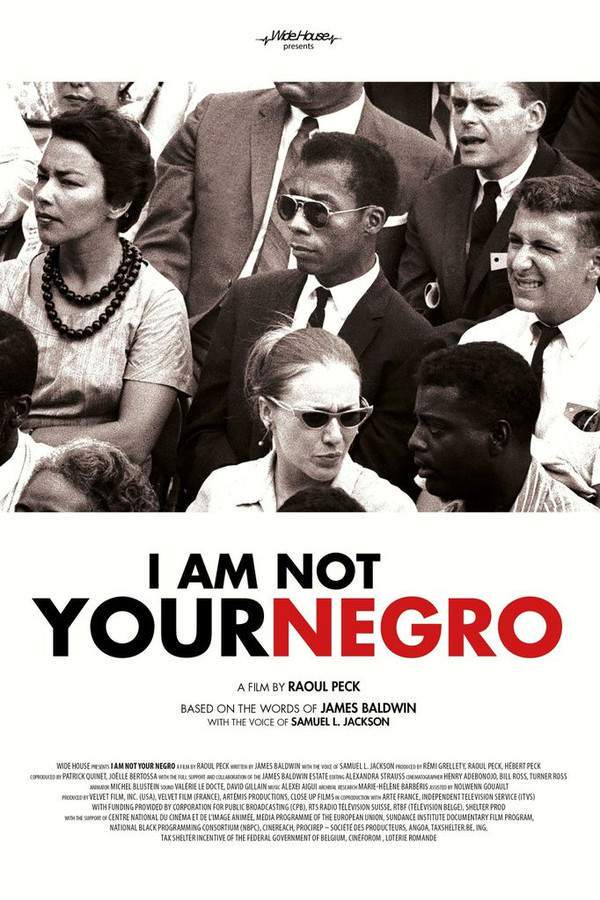
I Am Not Your Negro (2016) movie poster

Plot Summary

I Am Not Your Negro (2016) Plot Summary Explained

Release, runtime and language
2016 · 93 min · English
Loading streaming availability…
Directed by
Raoul Peck

This powerful documentary brings James Baldwin's unfinished manuscript to life, exploring his reflections on race in America. Director Raoul Peck combines Baldwin's words with archival footage and insightful interviews, focusing on the lives and legacies of civil rights icons Medgar Evers, Malcolm X, and Martin Luther King Jr. The film offers a searing and timely examination of racial injustice and the ongoing fight for equality.

On this page (6)
  1. 1 Where to watch
  2. 2 What happens: full plot
  3. 3 Plot questions answered
  4. 4 Movie threads
  5. 5 Movies like I Am Not Your Negro
  6. 6 Every angle
Loading streaming availability…

Full plot summary · contains spoilers

What Happens in I Am Not Your Negro: Full Plot Summary

The whole story of I Am Not Your Negro (2016) explained, from the opening scene to the final frame: every key event, every twist and what it all adds up to. Read it as a quick recap before the sequel, to check a scene you missed, or to finally understand what really happened.

The film begins with a poignant 1968 interview on The Dick Cavett Show, where James Baldwin challenges the notion that the situation for Black Americans was simply improving. He asserts that the fate of the United States is inextricably tied to how it addresses the plight of its Black citizens, arguing that the struggle for racial justice is not merely a "Negro problem" but a fundamental American crisis.

The documentary is structured into five distinct chapters:

* Paying My Dues: This section examines the era of school integration and the violent resistance of white supremacists. It contrasts the struggle of students like Dorothy Counts with the reflections of Baldwin, who describes his return to America as a longing for the unique style and connections of the life that nourished him.

Heroes: This chapter analyzes the romanticization of white violence* in cinema and the debasing portrayals of Black actors such as Stepin Fetchit, Mantan Moreland, and Willie Best. It also explores a tense meeting between Baldwin, Robert F. Kennedy, and Lorraine Hansberry, where they demanded a moral commitment to end racial brutality.

Purity: This segment discusses the limitations placed on Black stars. Baldwin notes that even icons like Harry Belafonte and Sidney Poitier were stripped of their sexual autonomy to appeal to white audiences. The film uses The Defiant Ones*, starring Sidney Poitier and Tony Curtis, to illustrate how Black and white audiences interpreted the same act of sacrifice in vastly different ways.

* Selling the Negro: Here, the film explores the economic foundations of forced labor and the modern prison system, arguing that the American economy was built on cheap, exploited labor.

* I Am Not A Nigger: The conclusion focuses on whiteness as a metaphor for power. Baldwin delivers a powerful ultimatum regarding the necessity of the "nigger" archetype in the white psyche:

> "I can't be a pessimist because I'm alive, so I'm forced to be an optimist. But the future of the Negro in this country is precisely as bright or as dark as the future of the country."

Ultimately, the film presents a haunting reflection on identity, power, and the urgent need for a national reckoning to ensure the survival of the American experiment.

Last updated: October 26, 2026 at 13:31

Was this helpful?

Plot questions answered

I Am Not Your Negro Plot Explained: Your Questions Answered

The questions people ask most about I Am Not Your Negro (2016): what happens in the confusing scenes, why the characters do what they do, the twists, hidden details and what the ending means. Each answer contains spoilers.

Q1

Why isn't Baldwin optimistic even though Black Americans are making progress?

Baldwin is not optimistic because he sees visible gains as conditional concessions inside a system that still enforces segregation, racial violence, and economic exploitation. In I Am Not Your Negro, he distinguishes access to offices, sports, entertainment, and television from the deeper absence of justice and equal power.

Foreshadowing: Baldwin's 1968 Cavett answer about the country's dependence on racial justice anticipates the film's closing argument.

  • james baldwin
  • racial progress
  • dick cavett show
  • black americans
  • institutional injustice
Q2

What does Baldwin mean by "I am not a nigger, I am a man"?

Baldwin's closing declaration rejects the slur as a legitimate identity and insists on his full humanity. The "nigger" in the title and final chapter functions as the label white society imposes on Black people, so his answer is to define himself as a man while forcing white Americans to examine why they needed that category. It also makes Black self-determination inseparable from the nation's larger reckoning with power.

Foreshadowing: The opening Cavett interview prepares this demand by framing Black survival as a test of the United States.

  • i am not a nigger
  • i am a man
  • james baldwin
  • racial identity
  • white power
  • human dignity
Q3

Why is the future of Black America tied to the future of the United States?

Baldwin treats racial justice as a measure of the country itself, arguing that the United States cannot remain hopeful or morally coherent while a large part of its population is denied basic equality. Black people are not a separate problem to be managed, but the clearest test of whether American ideals can survive their own hypocrisy.

Foreshadowing: The closing line that Black America's future is as bright or dark as the country's makes the opening argument literal.

  • future of black america
  • future of the united states
  • racial justice
  • national responsibility
  • baldwin argument
Q4

What does Baldwin mean by the line between a witness and an actor?

After the assassinations of Medgar Evers, Malcolm X, and Martin Luther King Jr., Baldwin felt the distance between observing injustice and intervening in it was very small but unmistakable. A witness records and interprets events; an actor accepts responsibility for changing them. The loss of these leaders therefore marks Baldwin's movement from commentator toward participant in the struggle.

Foreshadowing: The earlier emphasis on heroic action prepares the contrast Baldwin draws between remaining a witness and becoming an actor.

  • medgar evers
  • malcolm x
  • martin luther king jr
  • witness and actor
  • baldwin
  • civil rights movement
Q5

Why did Black and white audiences react differently to the train jump in The Defiant Ones?

White liberal audiences were relieved that Noah Cullen jumped from the escaping train with John "Joker" Jackson, while many Black viewers shouted for Cullen to get back on it. Baldwin reads the Black reaction as recognition that Cullen had surrendered his freedom largely to reassure white viewers that they were not hated. The split exposes how differently each audience interpreted the same act of sacrifice.

Foreshadowing: Baldwin's earlier point about Black men being made to accommodate white expectations anticipates the divided reaction to the scene.

  • the defiant ones
  • sidney Poitier
  • tony curtis
  • train jump
  • black audience
  • white audience
Q6

How does "Selling the Negro" connect forced labor to modern incarceration?

The chapter argues that American wealth in the South and ports grew through generations of cheap, coerced Black labor, making racial exploitation part of the nation's economic foundation. It then links that history to the modern prison system, presenting incarceration as a contemporary continuation of the same economy of dispossession and cheap labor. The point is structural: inequality persists because the system still profits from Black people's forced labor.

Foreshadowing: The chapter's emphasis on cheap Black labor as the foundation of national wealth foreshadows the modern prison-system comparison.

  • forced labor
  • modern prison system
  • mass incarceration
  • american economy
  • cheap black labor
  • racial exploitation
Q7

What did Baldwin mean by telling America to forget "The Negro Problem"?

Baldwin uses "The Negro Problem" to name the country's preferred way of framing racism: as a problem located in Black people rather than in white institutions and behavior. By telling America to forget the phrase, he insists that white America acknowledge the discrimination it created, own the responsibility, and change the conditions producing it.

Foreshadowing: The Birmingham image invoked at the Kennedy meeting anticipates Baldwin's insistence that white America owns the problem.

  • negro problem
  • racial inequality
  • white america
  • national responsibility
  • baldwin
Q8

Why doesn't Baldwin consider Uncle Tom a hero?

Baldwin sees Hollywood's Black heroes as a trap: white characters who use violence or rape to protect their interests are romanticized, while Black characters are commonly cast as criminal, deviant, and justly punished. Uncle Tom does not fit Baldwin's idea of heroism because he refuses to take vengeance into his own hands, which Hollywood treats as nobility but Baldwin sees as constrained passivity. He argues that these depictions lied about the world Black people knew and stripped them of agency.

Foreshadowing: The chapter's opening contrast between romantic white protagonists and punished Black characters sets up Baldwin's rejection of Uncle Tom as a hero.

  • uncle tom
  • black heroes
  • hollywood stereotypes
  • white violence
  • stepin fetchit
  • mantan moreland
  • willie best
Q9

Why did Baldwin and Lorraine Hansberry confront Robert F. Kennedy in 1963?

Baldwin and Hansbury wanted Robert F. Kennedy to make a moral commitment to confronting racial brutality after scenes such as Birmingham police violence against a Black woman. The meeting did not end amicably, and the film says it may have helped awaken Kennedy to the urgency of racial issues. Their appeal was moral and immediate, whereas the administration still approached the problem cautiously and incrementally.

Foreshadowing: The 1963 meeting prefigures Baldwin's 1965 criticism of Kennedy's gradualism at Cambridge.

  • robert f kennedy
  • lorraine hansberry
  • birmingham
  • moral commitment
  • baldwin meeting
  • racial violence
Q10

Why were Harry Belafonte and Sidney Poitier denied sexual autonomy?

Even when marketed as sex symbols, Harry Belafonte and Sidney Poitier were constrained in how they could express sexuality so that their public identities remained acceptable to white audiences. Baldwin argues that Black male stars were denied the same sexual autonomy and agency granted to white performers. The chapter's idea of "purity" is therefore about social control over Black masculinity, not merely a concern about public image.

Foreshadowing: The chapter's constrained public image of Black masculinity precedes the Defiant Ones example, where it shapes reactions to Poitier's sacrifice.

  • harry belafonte
  • sidney Poitier
  • sexual autonomy
  • black masculinity
  • racial purity
  • white audience
Q11

Why was Baldwin angry about Robert F. Kennedy's "Negro president in 40 years" remark?

At the 1965 Cambridge debate, Baldwin treated Robert F. Kennedy's suggestion that a Black president might arrive in 40 years as absurdly patient and conditional. His retort was that Black Americans had already lived in America for 400 years; the phrase "if you're good" made full citizenship sound like a reward white leaders might eventually grant. Baldwin's anger was aimed at turning justice into a test of Blackworthiness and asking Black people to wait.

Foreshadowing: The phrase recalls Baldwin's 1963 meeting with Kennedy, where he pressed for moral commitment rather than gradual promises.

  • robert f kennedy
  • negro president
  • 40 years
  • cambridge debate
  • william f buckley
  • baldwin
Q12

Why did Baldwin return to America during the civil rights movement?

Baldwin had been living across the Atlantic while many civil rights figures were fighting inside the United States. His writings explain that he missed the music, singular cultural style, and connections that had nourished him, describing the life that had also paid for him. His return was therefore a pull toward a country he loved and a reckoning with its contradictions, not a belief that racial progress had already solved the problem.

Foreshadowing: The opening integration footage frames his return as a reckoning with a country that had both nourished him and resisted Black equality.

  • baldwin return
  • paying my dues
  • civil rights movement
  • american exile
  • black identity
Q13

What does Baldwin mean when he describes whiteness as a metaphor for power?

In Baldwin's argument, whiteness symbolizes the power and autonomy that lets white society define other people as inferior. The derogatory "nigger" archetype exposes what the white psyche needs from racial difference rather than offering a truthful description of Black identity. By forcing white Americans to ask why that archetype was necessary, Baldwin shifts attention from Black conformity to the structures of white power.

Foreshadowing: The film's repeated images of Black identity framed by white institutions prepare the final focus on white power and autonomy.

  • whiteness
  • power
  • autonomy
  • racial hierarchy
  • james baldwin
  • white psyche
Q14

What did Dorothy Counts's experience show about school integration?

At 15, Dorothy Counts entered a formerly white North Carolina school and faced hostility designed to preserve segregation. Her experience, placed beside segregationist Leander Perez's defense of the old order, shows that integration was a direct challenge to white supremacy and triggered organized resistance. The sequence makes clear that Black students seeking ordinary rights were made to bear the violence required to preserve white privilege.

  • dorothy counts
  • school integration
  • north carolina
  • leander perez
  • desegregation
  • white supremacy
Q15

Why does the film combine Baldwin's unfinished manuscript with archival footage and interviews?

I Am Not Your Negro combines Baldwin's unfinished manuscript with archival footage and interviews so his central argument is supported by visible historical evidence. The writing supplies the analysis, while images of integration, assassination, representation, and imprisonment make the consequences concrete. The form also prevents the past from feeling sealed off, showing how the racial dynamics Baldwin criticized continue into later history.

  • unfinished manuscript
  • archival footage
  • documentary form
  • james baldwin
  • historical memory
  • racial justice

Movie threads

More Movies Like I Am Not Your Negro, by Mood & Story

Curated lists built around what makes I Am Not Your Negro tick: the same mood, the same kind of story or the same emotional payoff. Each list explains why these movies belong together.

Archival documentary storytelling like I Am Not Your Negro

Unfinished voices and archival fragments turn history into an urgent moral reckoning. Explore movies like I Am Not Your Negro that blend archival footage, interviews, and literary fragments into nonlinear arguments about history. These demanding, high-intensity stories appeal to viewers who value essays, cultural memory, and unresolved questions over conventional plotting and predictable character arcs.

  • archival
  • essayistic
  • historically urgent
  • reflective
  • fierce
  • unresolved
  • Tone: dark, sober, intellectually urgent
  • Pacing: variable, reflective, montage driven
Why these movies?

The story pattern: Rather than following a conventional plot, these works assemble voices, images, and historical fragments around a central moral question. Measured commentary alternates with dense montages that reveal broader systems of power. The narrative ultimately arrives at no easy solution, leaving an urgent demand for reflection, responsibility, and possible action.

Why they belong together: These films share an essayistic structure, archival texture, and nonlinear way of examining history. Their measured reflections are repeatedly interrupted by emotionally forceful montages, while their incomplete arguments preserve complexity instead of delivering a conventional conclusion.
Movies about racial injustice like I Am Not Your Negro

Stories confront entrenched violence while preserving a fierce, cautious belief in change. Find movies like I Am Not Your Negro that expose racial violence, institutional power, and the human cost of systemic oppression. These dark, heavy works pair moral urgency with resistance and cautious optimism, ideal for viewers seeking serious stories about equality, identity, and national accountability.

  • fierce
  • sobering
  • oppressive
  • defiant
  • haunting
  • cautiously hopeful
  • Tone: dark, fierce, cautiously hopeful
  • Pacing: variable, reflective, escalating
Why these movies?

The story pattern: The emotional journey in these stories moves from exposure and moral confrontation toward collective resistance. Individual lives and historical evidence reveal the reach of oppressive systems, while resistance figures provide force and direction. The future remains conditional, balancing grief and anger with a cautious belief that meaningful change is still possible.

Why they belong together: These films are united by their unflinching treatment of racial and institutional oppression, high emotional weight, and defiant tone. Even when their endings leave the future unresolved, they sustain a tension between harm already inflicted and the persistent possibility of resistance.

If you liked this

Movies Like I Am Not Your Negro

Similar movies to I Am Not Your Negro: the same genre, themes or kind of story. Each one comes with its own plot summary, timeline and ending explained.

Browse all movie summaries

Every angle

I Am Not Your Negro (2016) Explained: Plot, Timeline & Characters

Everything about I Am Not Your Negro in one place: what happens in the plot summary, the timeline in chronological order, the characters and meaning and a spoiler-free summary. What's After the Movie adds the cast, box office and post-credit scenes.

Coming soon on iOS and Android

The Plot Explained Movie Summary App

Plot summaries, endings explained and timelines on your phone. Catch up on any movie in minutes, save your favorites and never miss a twist again.

Be the first to know when we launch. Your email stays private, always.

Learn more about the app