Plot Explained Spoilers guaranteed!
Plot Explained

Browse by genre

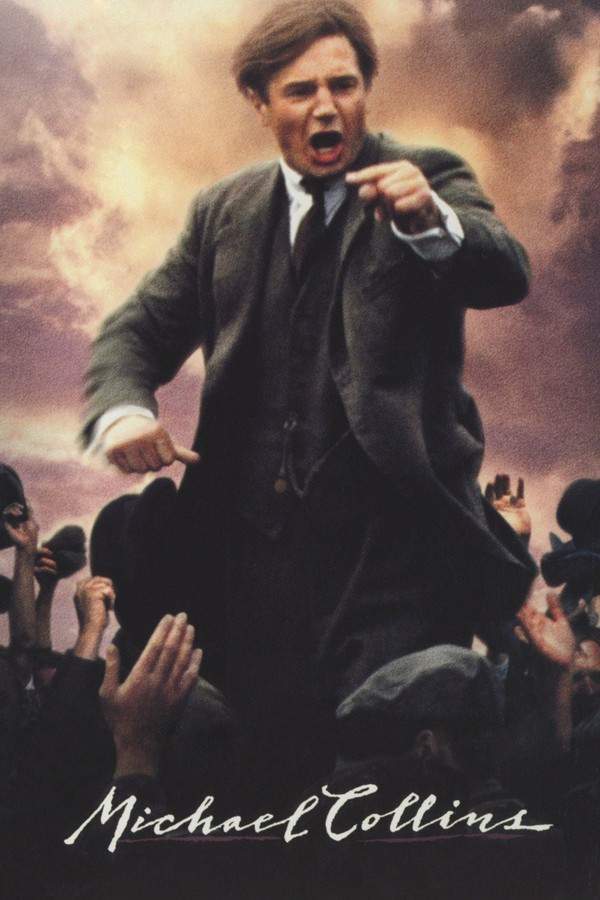
Michael Collins (1996) movie poster

Plot Summary

Michael Collins (1996) Plot Summary Explained

Release, runtime and language
1996 · 133 min · English
Directed by
Neil Jordan
Starring
Julia Roberts, Liam Neeson, Aidan Quinn
Budget
$25M

During the Irish War of Independence, Michael Collins rises to prominence as a key figure in the fight for Irish freedom from British rule. Driven by a fierce patriotism, he becomes a brilliant strategist and negotiator, playing a crucial role in the fight for independence. However, the path to freedom is fraught with political division and violence, leading to a tragic end for the celebrated leader and forever shaping the course of Irish history.

On this page (6)
  1. 1 Where to watch
  2. 2 What happens: full plot
  3. 3 Plot questions answered
  4. 4 Movie threads
  5. 5 Movies like Michael Collins
  6. 6 Every angle

Where to watch

Where to Watch Michael Collins (1996)

Where can you watch Michael Collins? Stream, rent or buy it in the US, including on Plex, Tubi TV and Amazon Video: current JustWatch availability with up-to-date prices.

Streaming availability powered by JustWatch

Full plot summary · contains spoilers

What Happens in Michael Collins: Full Plot Summary

The whole story of Michael Collins (1996) explained, from the opening scene to the final frame: every key event, every twist and what it all adds up to. Read it as a quick recap before the sequel, to check a scene you missed, or to finally understand what really happened.

In 1922, Joe O'Reilly (Ian Hart) seeks to comfort Kitty Kiernan (Julia Roberts), who is overwhelmed with grief following the death of Michael Collins (Liam Neeson). The narrative then shifts back to the tumultuous finale of the Easter Rising in 1916, where Collins, alongside Harry Boland (Aidan Quinn), Éamon De Valera (portrayed by Alan Rickman), and other patriots surrender to British forces. Determined not to follow the oppressors' lead again, Collins tells Boland, >“We won’t play by their rules, Harry. We’ll invent our own,” foreshadowing the battles yet to come.

As the Dublin Metropolitan Police intensively search for revolutionary leaders, the tragic fate of Collins’ companions unfolds, leading to all but De Valera, an American citizen, facing execution by firing squad. Following his confinement, Collins finds himself in Frongoch internment camp with Boland and others, where they begin plotting their next moves. Upon his release, Collins runs for election in the First Dáil but faces fierce violence from the Royal Irish Constabulary during a rally, where Boland comes to his rescue.

While recuperating at a friend's farm, Boland and Collins encounter Kitty, which sparks a romantic involvement between Kitty and Boland. Meanwhile, Collins learns from Detective Ned Broy (Rea) about the impending arrest of De Valera and his cabinet, but the latter insists on staying public, believing it’ll force their release. Only Collins and Boland escape the dragnet, and as a result, no outcry arises.

Collins and Boland ultimately embark on a mission to England, successfully freeing De Valera from Lincoln prison. However, tensions rise as De Valera, feeling overshadowed by Collins, plans a trip to the United States to seek support from Woodrow Wilson, bringing Boland along for the journey. Left to command the operations in their absence, Collins directs the IRA to intensify attacks on police barracks to seize weapons and issues a stern warning of death to those who collaborate with the British.

On Bloody Sunday, a tragic turn occurs as Collins' squad assassinates fourteen individuals from MI5's Cairo Gang, provoking retaliation from the Black and Tans, who indiscriminately fire on a crowd attending a Gaelic football match at Croke Park. In the aftermath, Broy meets a grim fate for destroying documents.

When De Valera orders an attack on The Custom House, Collins raises concerns that a conventional conflict would disadvantage them, but the Irish Cabinet stands by De Valera's directive, leading to disastrous consequences: six men are killed, and seventy apprehended. Feeling the pressure, Collins privately confides to Boland that their position is dire, yet the unexpected occurs as the British soon initiate a cease-fire.

In London, Collins reluctantly engages in negotiations despite his reservations about being a diplomat. The signing of the Anglo-Irish Treaty sparks controversy when De Valera reacts vehemently to the disclosure of terms without his input. Collins argues passionately that the Treaty represents a stepping stone to their republic.

As political tensions escalate, both Collins and De Valera campaign for support among the Irish populace. Collins narrowly escapes an assassination attempt but proposes to Kitty, who joyfully accepts his proposal. However, when a vote favors the Treaty, De Valera's refusal to concede leads to volatile clashes, with the IRA taking control of the Four Courts in Dublin.

Appalled by the prospect of engaging former comrades in battle, Collins, along with the Cabinet, realizes that failure to act will invite British intervention. The Battle of Dublin ensues, resulting in the IRA’s retreat from the city. In a heartbreaking twist, Boland is fatally shot while attempting to evade capture.

Crushed by Boland’s fate, Collins makes a heartfelt plea for peace through intermediaries, unwittingly setting a meeting with De Valera at Béal Na Bláth. Tragically, a surprise ambush occurs as government troops are attacked en route, and Collins is mortally wounded in the chaos. His life slips away in Joe O'Reilly’s arms, and as Kitty prepares for their future together, she receives the devastating news of his death just moments after trying on her wedding dress. In a bid to console her, O'Reilly reflects on Collins’ wishes, urging Kitty to move forward from her grief.

Last updated: October 27, 2024 at 22:33

Was this helpful?

Plot questions answered

Michael Collins Plot Explained: Your Questions Answered

The questions people ask most about Michael Collins (1996): what happens in the confusing scenes, why the characters do what they do, the twists, hidden details and what the ending means. Each answer contains spoilers.

Q1

Why did Michael Collins support the Anglo-Irish Treaty?

Collins believed the Treaty was a stepping stone to a full republic, despite its flaws. Though he had reservations about being a diplomat, he argued passionately that accepting the treaty would allow Ireland to gain independence incrementally rather than continue fighting a war they could not win. He saw it as a pragmatic compromise that would eventually lead to full sovereignty.

  • anglo-irish treaty
  • collins
  • negotiation
  • british rule
  • independence
Q2

What happened on Bloody Sunday in the movie?

Bloody Sunday occurred when Collins' IRA squad assassinated fourteen members of MI5's Cairo Gang in Dublin. The operation was a strategic success but provoked brutal retaliation. The Black and Tans responded by indiscriminately firing on a crowd attending a Gaelic football match at Croke Park, killing civilians including children.

Foreshadowing: Earlier, Collins had warned that escalating attacks would provoke harsh British responses.

  • bloody sunday
  • cairo gang
  • black and tans
  • croke park
  • assassination
Q3

Why did Michael Collins and Harry Boland become enemies during the Civil War?

Boland sided with De Valera's anti-Treaty faction, which opposed the Anglo-Irish Treaty. When the IRA took control of the Four Courts in Dublin, both former friends found themselves on opposite sides. Collins was appalled at the prospect of fighting former comrades, but felt compelled to act when the British threatened to intervene if the Irish didn't police themselves.

Foreshadowing: Earlier tensions between Collins and De Valera foreshadowed the political division that would split the movement.

  • harry boland
  • civil war
  • ira
  • four courts
  • divided nation
Q4

How did Michael Collins die?

Collins was killed in an ambush at Béal Na Bláth while attempting to broker peace between opposing factions after the Battle of Dublin. Government troops were attacked en route, and Collins was mortally wounded in the chaos. He died in Joe O'Reilly's arms, just as Kitty was preparing for their wedding.

  • béal na bláth
  • ambush
  • death
  • kitty kiernan
  • civil war
Q5

Why was the Custom House attack a disaster?

De Valera ordered the attack on the Custom House despite Collins' warnings that a conventional assault would disadvantage them against British forces. The Irish Cabinet supported De Valera's directive, and the mission resulted in six men killed and seventy apprehended. The attack was strategically misguided and achieved nothing except losing valuable fighters.

Foreshadowing: Collins had warned repeatedly that conventional warfare would not work against the British.

  • custom house
  • de valera
  • failure
  • ira
  • casualties
Q6

What was the conflict between Michael Collins and Éamon de Valera?

The conflict stemmed from De Valera feeling overshadowed by Collins' growing leadership and popularity. When De Valera traveled to the United States to seek support from Woodrow Wilson, he brought Boland along, leaving Collins to command operations at home. Later, De Valera reacted violently to theTreaty's terms being disclosed without his input, and he refused to accept the treaty vote result, leading to the Civil War.

Foreshadowing: After the Easter Rising surrender, Collins told Boland they would 'invent their own' rules, suggesting he would operate independently of established leaders.

  • de valera
  • political rivalry
  • leadership
  • treaty
  • civil war
Q7

Why did Kitty Kiernan end up with Harry Boland instead of Michael Collins?

While recuperating at a friend's farm, Collins and Boland both met Kitty. Although Collins had feelings for her, it was Boland who sparked a romantic involvement with Kitty. She later became engaged to Boland, not Collins. Collins eventually proposed to her and she accepted, but their wedding never happened due to his death.

  • kitty kiernan
  • harry boland
  • romance
  • relationship
  • wedding
Q8

Why was Michael Collins not executed after the Easter Rising?

After the Easter Rising, most of Collins' fellow patriots faced execution by firing squad. However, Éamon de Valera, who had American citizenship, was the only leader not executed. Collins was imprisoned at Frongoch internment camp in Wales rather than being executed, which allowed him to survive and later become the dominant revolutionary leader.

  • easter rising
  • execution
  • frongoch
  • prison
  • de valera
Q9

Why did the British agree to a ceasefire?

The British initiated a ceasefire after suffering from Collins' intensified IRA guerrilla campaign, which had successfully targeted police barracks and seized weapons. The sustained pressure and casualties made continuing the conflict increasingly costly, prompting London to seek negotiation rather than continue fighting.

Foreshadowing: Collins had warned that the Irish position was dire, but also directed the IRA to escalate attacks to force British concessions.

  • ceasefire
  • british
  • ira
  • negotiation
  • warfare
Q10

What happened to Detective Ned Broy?

Detective Ned Broy helped Collins by warning him about the impending arrest of De Valera and his cabinet. However, after Bloody Sunday, Broy was killed by the Black and Tans for destroying documents that would have exposed revolutionary informants. His death highlighted the brutal retaliation faced by those who aided the IRA.

  • ned broy
  • black and tans
  • death
  • informant
  • documents

Movie threads

More Movies Like Michael Collins, by Mood & Story

Curated lists built around what makes Michael Collins tick: the same mood, the same kind of story or the same emotional payoff. Each list explains why these movies belong together.

Revolutionary Rise and Tragic Fall stories like Michael Collins

Intense chronicles of charismatic leaders whose fight for freedom ends in personal tragedy. If you were captivated by the intense, fast-paced story of Michael Collins, explore more movies like it. This section features similar historical dramas and political thrillers about revolutionary leaders whose passionate fight for a cause leads to a tragic personal end, blending heavy emotional weight with urgent, tense narratives.

  • revolutionary
  • tragic
  • tense
  • gripping
  • somber
  • urgent
  • Tone: tense, tragic, somber
  • Pacing: fast, driven by major events
Why these movies?

The story pattern: These narratives typically follow a linear, event-driven structure charting a leader's journey from obscurity to power. The central conflict arises from external enemies and internal ideological fractures, often culminating in betrayal and assassination. The emotional arc is one of fervent hope transforming into somber tragedy.

Why they belong together: Movies in this thread share a core narrative pattern of a meteoric rise followed by a devastating fall, set against a backdrop of national upheaval. They are united by a tense, urgent tone, high emotional intensity, and a focus on the heavy personal cost of political change.

Tense Political Thrillers with ideological conflict like Michael Collins

Fast-paced stories where political ideals fracture alliances and lead to violent conflict. For viewers who liked the gripping political tension and ideological battles in Michael Collins, this section collects similar movies. Discover other fast-paced, high-intensity thrillers and dramas where deep political conflicts, strategic warfare, and the heartbreaking breakdown of alliances drive the narrative forward.

  • tense
  • gripping
  • urgent
  • oppressive
  • political
  • ideological
  • Tone: tense, gripping, oppressive
  • Pacing: fast, urgent
Why these movies?

The story pattern: The plot is propelled by a series of escalating political crises and strategic confrontations. Character arcs are defined by their shifting loyalties and the moral compromises made for their beliefs. The structure often leads to a fracturing point, such as a civil war or schism, highlighting the destructive power of ideological purity.

Why they belong together: These films are grouped by their shared high-tension atmosphere, fast pacing driven by political events, and exploration of how ideological debates descend into violence. They deliver a gripping, oppressive mood centered on conflict, betrayal, and grief.
If you liked this

Movies Like Michael Collins

Similar movies to Michael Collins: the same genre, themes or kind of story. Each one comes with its own plot summary, timeline and ending explained.

Browse all movie summaries

Every angle

Michael Collins (1996) Explained: Plot, Timeline & Characters

Everything about Michael Collins in one place: what happens in the plot summary, the timeline in chronological order, the characters and meaning and a spoiler-free summary. What's After the Movie adds the cast, box office and post-credit scenes.

Coming soon on iOS and Android

The Plot Explained Movie Summary App

Plot summaries, endings explained and timelines on your phone. Catch up on any movie in minutes, save your favorites and never miss a twist again.

Be the first to know when we launch. Your email stays private, always.

Learn more about the app