Year: 1971
Runtime: 60 mins
Language: German
Director: Werner Schroeter
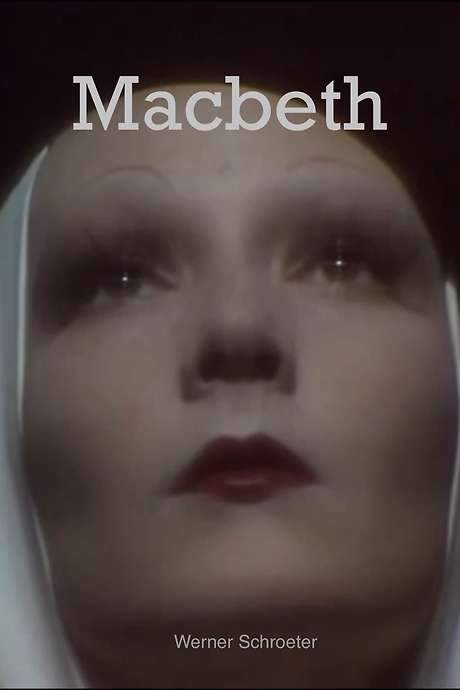
Schroeter’s ‘Macbeth’ merges Shakespeare’s tragedy with Verdi’s opera in a studio‑bound TV experiment shot with electronic cameras. He re‑scored Verdi for violin, accordion, piano and oboe, with Argentinian tango, bolero rhythms. The cast sings in harsh, shrill tones while vivid colours accentuate the performance. Audiences found presentation unsettling.
Warning: spoilers below!
Haven’t seen Macbeth yet? This summary contains major spoilers. Bookmark the page, watch the movie, and come back for the full breakdown. If you're ready, scroll on and relive the story!
Read the complete plot breakdown of Macbeth (1971), including all key story events, major twists, and the ending explained in detail. Discover what really happened—and what it all means.
In the Middle Ages, Scotland finds itself the stage for a grim power drama: a combined Norwegian and Irish invasion is brought to heel with the aid of two Scottish nobles, Macbeth and Banquo, while the traitorous Thane of Cawdor falters under treachery. The weight of the moment shifts when Cawdor is condemned to death by Duncan, who then awards Macbeth the rightful title as reward for loyalty and victory. The news lands with a mix of awe and fear in Macbeth’s camp, for the prophecy sparks a dangerous curiosity about what might come next.
Across their ranks, the nobles whisper about fate and ambition, and soon Macbeth and Banquo learn of the Three Witches who greet them with prophecies that seem to bend the future: Macbeth is hailed as the Thane of Cawdor and, beyond that, a future king; Banquo, while not destined to rule, will sire a line of kings though he will never sit upon the throne himself. The moment seems to open a door that neither man can simply close. After this encounter, Macbeth sits to write to his wife, and the letter that arrives triggers a reaction as sharp as a blade.
At home, the machinations deepen. The king names his eldest son Malcolm as Prince of Cumberland, the clear heir, which instantly irks Macbeth and stirs Donalbain to keep vigil over their own anxieties. The royal party travels to Macbeth’s own castle, where Lady Macbeth extends a surface of courtesy and hospitality to Duncan and his retinue, all the while hiding a steely resolve beneath her gracious smile. The scene is intimate, yet razor-edged with double meanings as the host’s warmth masks a deadly plan.
When the moment comes, Macbeth moves with a chilling resolve after his wife’s urging, slipping into Duncan’s chamber once the guards have been drugged. Duncan awakens briefly and utters Macbeth’s name, sealing the tragedy with a single, decisive act: he is murdered. Macbeth frames the guards for the crime and, once their deceit is uncovered, makes sure they cannot expose the truth. The murder sets off a rapid chain of consequences: Malcolm and Donalbain flee in fear, and the court circles tighter around Macbeth as rumors of conspiracy swirl through the castle and beyond.
As Macbeth consolidates power, the dangers multiply. Banquo becomes a target, and Macbeth, fearful of a rival lineage, dispatches two murderers to kill Banquo and his son Fleance; the plan succeeds in one sense—Banquo dies—but Fleance escapes into the night, leaving Macbeth with a gnawing sense that the prophecy may still unfold in unforeseen ways. Macbeth eliminates the two hired assassins, ensuring there will be no loose ends that could threaten his crown. The tension sharpens when Banquo’s ghost appears at a banquet, unsettling the assembled nobles and driving Macbeth toward a frenzied search for reassurance from the source of the prophecy—the witches.
Desperate for guidance, Macbeth seeks out the witches again, and they perform their occult rites as they conjure visions and speak in ambiguities that suggest invincibility. They plant ideas that mislead him into believing he cannot be harmed by anyone born of a woman and that no forest will advance to threaten him until some impossible condition is met. The line between certainty and paranoia becomes blurred as Macbeth clings to the sense of security these prophecies offer, even as his realm grows more divided and unstable.
Across Scotland, fear spreads as Ross takes charge of more brutal tasks: he moves to Fife to oversee the slaughter of Macduff’s family, while Macduff himself travels to England to join Malcolm in seeking assistance from a foreign throne. An alliance forms, led by the English king with Siward at the helm, and the united forces prepare to move against Macbeth. The conspirators know they face a treacherous foe who has already murdered to secure his throne, and they steel themselves for a long and brutal struggle.
In the climactic march on Dunsinane, the invaders hide their numbers by bearing branches from Birnam Wood, a stratagem that lends the countryside a deceptive air of forest magic. The battle roars to life as the two sides clash inside Macbeth’s stronghold, until the head-to-head duel with Macduff ends the tyrant’s rule. Macduff reveals a cruel twist of fate: he was delivered by Caesarean section, making him eligible to avenge the king’s death. In a final, triumphal moment, Macduff beheads Macbeth, and the crown returns to Malcolm, now recognized as the rightful king of Scotland. As the dust settles, Donalbain wanders with the witches once more, leaving the audience with the sense that fate, once set in motion, may never truly be laid to rest.
Last Updated: October 09, 2025 at 11:01
Discover curated groups of movies connected by mood, themes, and story style. Browse collections built around emotion, atmosphere, and narrative focus to easily find films that match what you feel like watching right now.
Stories where ambition's violent ascent is scored with psychological and musical intensity.Find movies like Macbeth that merge intense psychological drama with a bold, almost operatic style. These films explore themes of fatal ambition and moral collapse, often using striking soundscapes and visual design to create a powerful, unsettling viewing experience for fans of heavy, dramatic tragedies.
Narratives in this thread typically follow a protagonist's ruthless climb to power, driven by a fatal flaw like ambition or paranoia. This ascent is paralleled by a steep psychological and moral decline, often spurred by supernatural influences or overwhelming guilt, leading inexorably to a catastrophic and bloody downfall.
Movies are grouped here based on their shared high-intensity, dark tone, and heavy emotional weight. They unite through a focus on the operatic scale of personal tragedy, the use of sound and music as a key emotional driver, and a relentless pacing that builds towards a devastating conclusion.
Films that trap you inside a mind fracturing under the pressure of its own actions.If you liked the paranoid descent in Macbeth, explore more movies about psychological collapse. These films trap you with a character's unraveling sanity, often in confined spaces or oppressive atmospheres, delivering a steady-paced, heavy experience focused on guilt, betrayal, and the horror of a mind turning against itself.
The narrative pattern involves a character committing a transgression that severs their peace of mind. The story then follows their internal prison, as paranoia tightens its grip, reality becomes distorted, and they spiral into isolation and madness, with the external world often reflecting their inner turmoil.
These movies share a core focus on the psychological state of a protagonist. They are grouped by their oppressive, claustrophobic mood, steady pacing that builds dread, high intensity derived from internal conflict, and a dark tone that culminates in a tragic or bleak resolution.
Don't stop at just watching — explore Macbeth in full detail. From the complete plot summary and scene-by-scene timeline to character breakdowns, thematic analysis, and a deep dive into the ending — every page helps you truly understand what Macbeth is all about. Plus, discover what's next after the movie.
Track the full timeline of Macbeth with every major event arranged chronologically. Perfect for decoding non-linear storytelling, flashbacks, or parallel narratives with a clear scene-by-scene breakdown.
Discover the characters, locations, and core themes that shape Macbeth. Get insights into symbolic elements, setting significance, and deeper narrative meaning — ideal for thematic analysis and movie breakdowns.
Get a quick, spoiler-free overview of Macbeth that covers the main plot points and key details without revealing any major twists or spoilers. Perfect for those who want to know what to expect before diving in.
Visit What's After the Movie to explore more about Macbeth: box office results, cast and crew info, production details, post-credit scenes, and external links — all in one place for movie fans and researchers.
Discover movies like Macbeth that share similar genres, themes, and storytelling elements. Whether you’re drawn to the atmosphere, character arcs, or plot structure, these curated recommendations will help you explore more films you’ll love.
Macbeth (1971) Scene-by-Scene Movie Timeline
Macbeth (1971) Movie Characters, Themes & Settings
Macbeth (1971) Spoiler-Free Summary & Key Flow
Movies Like Macbeth – Similar Titles You’ll Enjoy
The Tragedy of Macbeth (2021) Film Overview & Timeline
Macbeth (2015) Film Overview & Timeline
Stratford Festival: Macbeth (2017) Full Movie Breakdown
National Theatre Live: Macbeth (2018) Movie Recap & Themes
Macbeth (1982) Story Summary & Characters
Macbeth (1981) Full Movie Breakdown
Macbeth (1987) Film Overview & Timeline
Macbeth (1983) Full Movie Breakdown
Master (1966) Story Summary & Characters
Macbeth (1979) Movie Recap & Themes
Macbeth (1948) Film Overview & Timeline
Macbeth on the Estate (1997) Story Summary & Characters
Macbeth (1971) Ending Explained & Film Insights
Macbeth (1998) Film Overview & Timeline
Macbeth (1997) Detailed Story Recap