Plot Explained Spoilers guaranteed!
Plot Explained

Browse by genre

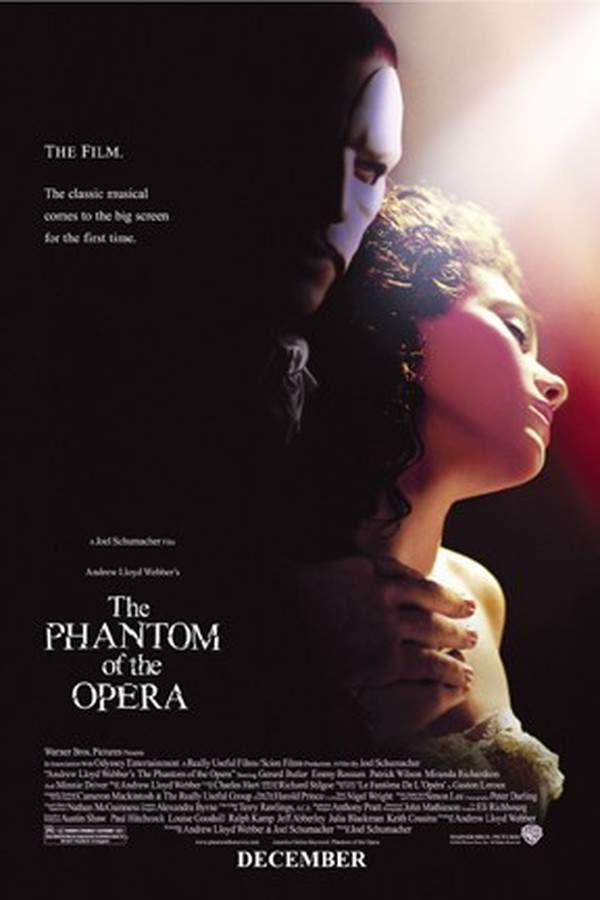
The Phantom of the Opera (2004) movie poster

Plot Summary

The Phantom of the Opera (2004) Plot Summary Explained

Release, runtime and language
2004 · 143 min · English
JustWatch #364 86
Directed by
Joel Schumacher
Starring
Gerard Butler, Patrick Wilson, Emmy Rossum
Budget
$70M

Beneath the grandeur of the Paris Opera House, a masked figure known as the Phantom orchestrates a series of events to claim a talented young soprano, Christine Daae, as his own. Hidden from view and possessing a disfigured appearance, he uses his musical genius to manipulate the opera’s management and propel Christine to stardom. However, her affections turn towards the charming and noble patron, Raoul. As the Phantom’s obsession intensifies, Raoul must find a way to protect Christine and thwart the Phantom’s increasingly dangerous plan.

On this page (7)
  1. 1 Where to watch
  2. 2 What happens: full plot
  3. 3 Plot questions answered
  4. 4 The book behind the movie
  5. 5 Movie threads
  6. 6 Movies like The Phantom of the Opera
  7. 7 Every angle

Where to watch

Where to Watch The Phantom of the Opera (2004)

Where can you watch The Phantom of the Opera? Stream, rent or buy it in the US, including on Pluto TV, YouTube Free and Amazon Video: current JustWatch availability with up-to-date prices.

Streaming availability powered by JustWatch

Full plot summary · contains spoilers

What Happens in The Phantom of the Opera: Full Plot Summary

The whole story of The Phantom of the Opera (2004) explained, from the opening scene to the final frame: every key event, every twist and what it all adds up to. Read it as a quick recap before the sequel, to check a scene you missed, or to finally understand what really happened.

As the auctioneer's gavel brings the event to a close, the dusty vaults of Paris' magnificent opera house are unearthed, unveiling a treasure chest of buried secrets and forgotten tales. Among the flurry of bidders, the esteemed Viscount Raoul de Chagny (Patrick Wilson) engages in a fierce competition with Madame Giry, the enigmatic ballet instructor, over a peculiar music box that features a whimsical monkey playing cymbals. The auction's crown jewel, however, is yet to come: an opulent chandelier linked to the shadowy saga of "the strange affair of the Phantom of the Opera." As it takes its rightful place in the auditorium, the narrative transports us back to 1870, a time when the opera house basked in its full glory.

The theatre buzzes with excitement as Carlotta, the leading soprano, prepares to grace the stage for the grand opera Hannibal. Manager Monsieur Lefèvre announces his retirement, passing the reins to Richard Firmin and Gilles André, who introduce Raoul as their esteemed patron. Caught amidst the chaos, one of the ballerinas, Christine Daaé, a gifted orphan with a voice as sweet as honey, locks eyes with Raoul—her childhood sweetheart—only for him to walk away without acknowledging her presence.

As tensions heighten, Carlotta descends into madness, plagued by the Opera Ghost's ceaseless torment. With the performance hanging by a thread, Madame Giry proposes that Christine step in for the absent diva. On opening night, Christine astounds the audience with her voice, leaving them in rapturous applause.

After the curtain falls, Christine confides in her dear friend Meg, Madame Giry’s daughter, about her extraordinary tutor—the ethereal "Angel of Music" sent by her deceased father to uplift her spirits. Unbeknownst to her, this elusive mentor is none other than the Opera Ghost, who has been watching over her from the shadows. That fateful evening, Christine reconnects with Raoul, sharing her fantastical experiences with the Angel of Music, but he dismisses her tales as mere fantasy.

In a haunting twist, the Phantom of the Opera reveals himself from the mirror of the dressing room, inviting Christine into his subterranean lair. Amid the dimly lit passageways, he lays bare his consuming love for her. However, when Christine stumbles upon a chilling mannequin donned in her wedding dress, she faints, succumbing to the Phantom's mesmerizing charm. As night falls, she awakens in his sanctuary, which ignites a wave of panic among the opera house staff over her sudden disappearance.

With dawn's arrival, Christine succumbs to curiosity and lifts the veil from the Phantom's masked face, triggering a frantic response from him as he shields his visage, tormented by the exposure. Their fleeting moment of understanding quickly dissipates when Christine hastily returns the mask. The Phantom, displaying a momentary kindness, guides her safely back to the opera house, but his goodwill comes at a cost: she must play the lead in the upcoming production of Il Muto. However, the managers ultimately choose to give the role back to Carlotta. Enraged by Christine's substitution during the performance, the Phantom sabotages Carlotta’s throat spray, leading to a disastrous performance that horrifies the audience. The Phantom's wrath soon extends to Joseph Buquet, the chief stagehand, as he meets a grim fate, hanging lifelessly from above the stage, further plunging the production into chaos. Amidst the turmoil, Christine and Raoul manage to escape to the roof, where they passionately declare their love for one another, leaving the Phantom in solitude, nursing a broken heart and vowing revenge.

As months roll by with no sign of the Phantom, Christine and Raoul proclaim their engagement at a masquerade ball thrown in the opera house, completely unaware that the Phantom lurks in the shadows, masked and seething with rage. His eyes, glowing with an otherworldly embers, pierce through the celebration as he crashes the festivities, demanding that his own opera, Don Juan Triumphant, be performed. Upon noticing Christine’s engagement ring, the Phantom’s grip tightens around it, allowing him to vanish into the night, pursued by Raoul. Just then, Madame Giry appears, revealing the dark secrets of the Phantom's past—once a deformed boy in a freak show, he suffered unimaginable abuse before executing his revenge on his captor. Giry had helped him escape, and ever since, he has hidden within the opera's winding corridors.

The following day, Christine visits her father's grave, only to encounter the Phantom masquerading as his spirit in a bid to reclaim her. Raoul intervenes yet again, shattering the illusion and setting the stage for a clash that could crumble the opera house's very foundation.

As Don Juan Triumphant begins, Raoul and the opera managers devise a clever ruse to capture the elusive Phantom, knowing his presence is intricately tied to Christine's lead role. Under the guise of artistic expression, the Phantom takes control of the performance, usurping the tenor's role with his hauntingly enchanting voice as he duets with Christine. Seizing the moment amid their musical harmony, Christine boldly unmasks the Phantom, exposing the grotesque visage that has haunted her psyche. The audience gasps in horror as the Phantom retaliates, abducting Christine and orchestrating a catastrophic chandelier crash that engulfs the opera house in flames, his motives clear: to guard his identity from judgmental eyes. As chaos erupts, a frenzied mob, fueled by the authorities and Giry's guidance, races to find the Phantom.

In his lair, the Phantom proposes marriage to Christine, who is dressed in her wedding gown. She attempts to reason with him, focusing not on his appearance but rather on the malevolence that has defined his actions. Upon Raoul's abrupt arrival, the Phantom delivers a chilling ultimatum: if Christine does not accept his proposal, Raoul will lose his life. Moved by Christine's sympathy, the Phantom softens briefly, granting the entranced lovers an escape, but not before offering his cherished music box. As Christine tenderly returns Raoul’s engagement ring as a keepsake, the Phantom makes his quiet exit, leaving only his discarded mask for Meg to discover.

Fast forward to the present day, Raoul stands by Christine's grave, placing the Phantom’s haunting music box as a tribute. As he prepares to leave, a fresh rose adorned with a black silk ribbon catches his eye—a sure sign of the Phantom's undying presence—and alongside it, Christine's engagement ring serves as a poignant reminder that the Phantom's love for her endures, steadfast and eternal.
Last updated: November 21, 2024 at 11:04

Was this helpful?

Plot questions answered

The Phantom of the Opera Plot Explained: Your Questions Answered

The questions people ask most about The Phantom of the Opera (2004): what happens in the confusing scenes, why the characters do what they do, the twists, hidden details and what the ending means. Each answer contains spoilers.

Q1

Why is the Phantom so obsessed with Christine?

The Phantom becomes obsessed with Christine because he sees her as his perfect creation, the Angel of Music he has nurtured and shaped through years of secret coaching. Having lived in isolation and hidden from society due to his disfigurement, he views Christine as the one person who truly heard his music and responded to it. His obsession combines romantic love with a sense of ownership, as he believes he made her into the star she became.

Foreshadowing: Earlier, Christine confides to Meg about her tutor, the Angel of Music, not realizing this phantom has been secretly training her voice for years.

  • phantom obsession
  • christine daae
  • angel of music
  • opera ghost love
Q2

What is the Phantom's tragic backstory?

Madame Giry reveals that the Phantom was once a deformed boy in a freak show who suffered unimaginable abuse at the hands of his captor. He later executed revenge on his tormentor, killing him, and Giry helped him escape. Since then, he has hidden within the winding corridors of the Paris Opera House, using his musical genius to manipulate events from the shadows while yearning for acceptance and love.

  • phantom backstory
  • freak show
  • deformed
  • madame giry secret
Q3

Why does Christine choose Raoul over the Phantom?

Christine chooses Raoul because she sees the Phantom's true nature as fundamentally malicious. While she sympathizes with his loneliness and deformity, she cannot ignore the murder, sabotage, and manipulation he has committed. Her final choice represents her rejection of darkness and violence, even after the Phantom shows a moment of mercy by letting them escape.

Foreshadowing: On the rooftop, Christine and Raoul declare their love for each other, establishing her emotional connection to Raoul long before the final confrontation.

  • christine chooses raoul
  • love triangle
  • christine Raoul engagement
Q4

What happens to the Phantom after the lair confrontation?

After Christine rejects his marriage proposal but shows him compassion, the Phantom allows Christine and Raoul to escape. He disappears into the opera house's depths, leaving only his discarded mask behind. Years later, Raoul discovers a fresh rose with a black ribbon at Christine's grave, confirming the Phantom survived and still honors his undying love for her from the shadows.

  • phantom fate
  • phantom escapes
  • end of phantom
  • christine grave rose
Q5

Why does the Phantom sabotage Carlotta's performance?

The Phantom sabotages Carlotta because the managers reinstated her as the lead for "Il Muto" despite his previous warning that Christine must play the role. His sabotage of her throat spray causes her voice to fail during the performance, resulting in a disastrous show. This act of vengeance also leads to the death of Joseph Buquet, the chief stagehand who had been threatening to expose the Phantom's identity.

  • carlotta sabotage
  • phantom revenge
  • il muto performance
Q6

What is the significance of the music box?

The music box features a monkey playing cymbals and becomes a symbol of the Phantom's only vulnerability, the part of him that still yearns for human connection. He gives it to Christine as a parting gift when he allows her and Raoul to escape. The box resurfaces at the end when Raoul places it on Christine's grave as a tribute, representing the Phantom's enduring love that persists even after her death.

Foreshadowing: At the auction, Raoul and Madame Giry bid against each other for the music box, hinting at its importance to both characters.

  • music box
  • monkey cymbals
  • phantom gift
  • christine inheritance
Q7

Why does Christine unmask the Phantom during the performance?

Christine unmasks the Phantom during "Don Juan Triumphant" to expose him to the audience and end his control over the opera house. This act of courage is also motivated by her need to see the truth behind the man who has been manipulating her. The unmasking horrifies the audience and triggers the Phantom's violent retaliation, including the catastrophic chandelier crash.

  • unmask phantom
  • don juan triumphant
  • chandelier crash
Q8

Why does the Phantom demand "Don Juan Triumphant" be performed?

The Phantom demands his own opera "Don Juan Triumphant" be performed because he seeks legitimate recognition and validation as an artist. After being denied credit for Christine's success and humiliated by the management, he forces them to stage his masterpiece. The performance becomes his ultimate platform to reveal himself and claim Christine publicly as his creation and beloved.

  • don juan triumphant
  • phantom opera
  • ego artistic recognition
Q9

Why does the Phantom let Christine and Raoul escape?

The Phantom lets Christine and Raoul escape because Christine shows him genuine compassion rather than fear or disgust. When she tells him she pities him, not for his appearance but for the evil he has done, he experiences a moment of moral awakening. This human connection touches the loneliness that has defined his existence, allowing him to choose love over possession.

Foreshadowing: The Phantom's lair contains a mannequin wearing Christine's wedding dress, showing he has been fantasizing about domestic life with her.

  • phantom mercy
  • christine pity
  • phantom emotional breakdown
Q10

How does Joseph Buquet die?

Joseph Buquet, the chief stagehand, meets his death when the Phantom hangs him from the flies above the stage. Buquet had been threatening to reveal the Phantom's identity after seeing him in the opera house corridors. His murder serves as a warning to anyone else who might try to expose the Phantom, and it plunges the production into further chaos during the already tumultuous events surrounding Carlotta's sabotage.

  • joseph buquet death
  • stagehand murder
  • phantom kills
Q11

Why does the Phantom terrorize the Paris Opera House?

The Phantom terrorizes the Paris Opera House because it represents the only world that has accepted him, albeit anonymously through his music. He demands respect, recognition, and control over its productions. When the new managers ignore his demands and threaten his secret existence, he uses fear, sabotage, and murder to maintain power and protect his identity while pursuing his obsessive goal of claiming Christine as his own.

  • phantom terrorizes opera
  • phantom manipulation
  • opera ghost control
Q12

How did Raoul and Christine know each other before the opera house?

Raoul and Christine were childhood sweethearts before they reunite at the opera house. They first locked eyes when Christine was a young ballerina, but Raoul walks away without acknowledging her during the initial chaos of the new management, possibly to avoid drawing attention to their connection. Their childhood bond is rekindled when Christine shares her story about the Angel of Music, and they eventually fall in love again and become engaged.

  • raoul christine childhood
  • childhood sweetheart
  • viscount raoul de chagny

Movie threads

More Movies Like The Phantom of the Opera, by Mood & Story

Curated lists built around what makes The Phantom of the Opera tick: the same mood, the same kind of story or the same emotional payoff. Each list explains why these movies belong together.

Gothic Melodramas with a Tragic Villain like The Phantom of the Opera

Romantic stories where a tortured, obsessive antagonist drives the dark, emotional plot. If you were captivated by the Phantom's tragic nature in The Phantom of the Opera, explore more movies like it. These films feature similarly complex antagonists in gothic settings, blending dark romance, high emotional stakes, and a bittersweet sense of tragedy.

  • gothic
  • tragic
  • melodramatic
  • romantic
  • haunting
  • obsessive
  • Tone: dark, romantic, tragic
  • Pacing: variable, with atmospheric builds
Why these movies?

The story pattern: Stories in this thread often revolve around a central, morally gray antagonist whose genius is overshadowed by their physical or psychological torment. Their fixation on an object of desire—often a person—propels the plot through manipulation, grand gestures, and escalating danger, leading to a climax that reveals their humanity amid their monstrous actions.

Why they belong together: Movies are grouped here for their shared mood of gothic romanticism, the central archetype of the tragic villain, and a tone that balances dark themes with melodramatic intensity. They deliver a heavy emotional experience centered on obsession and the price of alienation.

Atmospheric Thrillers of Obsessive Love like The Phantom of the Opera

Suspenseful tales where romantic fixation turns dangerous in a richly detailed world. For viewers who enjoyed the suspenseful romantic triangle and the Phantom's dangerous obsession in The Phantom of the Opera. Discover similar thrillers and drama movies where love becomes a threatening force, set against immersive and atmospheric backdrops.

  • obsessive
  • suspenseful
  • psychological
  • romantic
  • tragic
  • dangerous
  • Tone: dark, suspenseful, tragic
  • Pacing: variable, suspenseful
Why these movies?

The story pattern: The narrative pattern follows a triangle or pursuit dynamic, where a character becomes the target of an unstable individual's intense fixation. The story builds suspense through psychological manipulation, stalking, and acts of sabotage, creating a constant threat that challenges a healthier relationship. The journey is emotionally heavy, exploring the dark side of devotion.

Why they belong together: These films share a core theme of love warped into obsession, resulting in a high-intensity, suspenseful experience. They are united by a dark tone, a variable pacing that alternates between slow-burn tension and thrilling sequences, and a focus on the psychological dynamics of control and desire.

If you liked this

Movies Like The Phantom of the Opera

Similar movies to The Phantom of the Opera: the same genre, themes or kind of story. Each one comes with its own plot summary, timeline and ending explained.

Browse all movie summaries

Every angle

The Phantom of the Opera (2004) Explained: Plot, Timeline & Characters

Everything about The Phantom of the Opera in one place: what happens in the plot summary, the timeline in chronological order, the characters and meaning and a spoiler-free summary. What's After the Movie adds the cast, box office and post-credit scenes.

Coming soon on iOS and Android

The Plot Explained Movie Summary App

Plot summaries, endings explained and timelines on your phone. Catch up on any movie in minutes, save your favorites and never miss a twist again.

Be the first to know when we launch. Your email stays private, always.

Learn more about the app