Plot Explained Spoilers guaranteed!
Plot Explained

Browse by genre

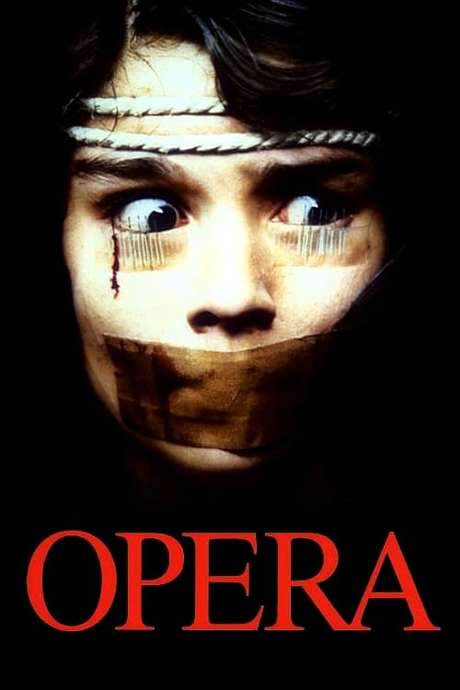
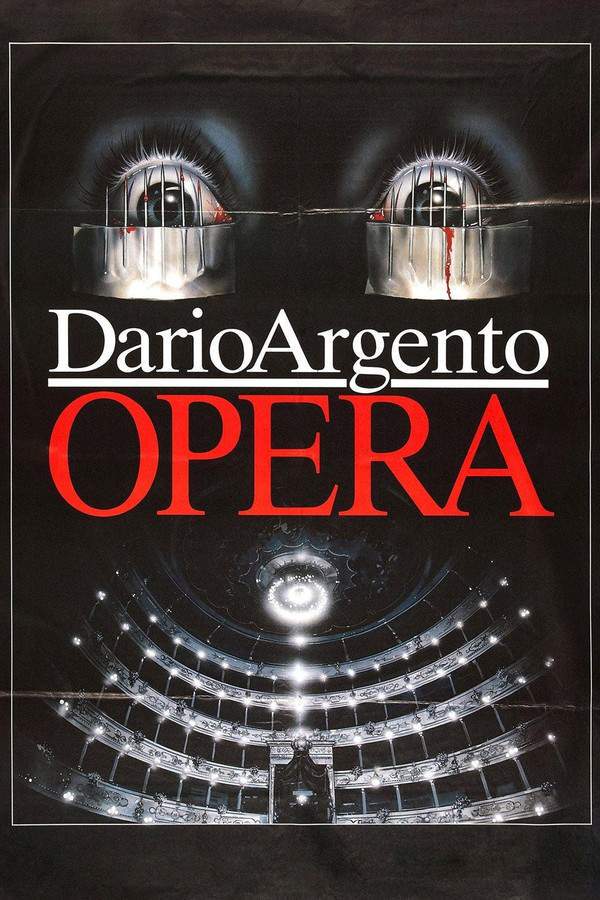
Opera (1990) movie poster

Plot Summary

Opera (1990) Plot Summary Explained

Release, runtime and language
1990 · 107 min · Italian
JustWatch #8,994 15
Directed by
Dario Argento
Starring
Daria Nicolodi, Carola Stagnaro, Ian Charleson, Antonella Vitale, Antonino Iuorio, Barbara Cupisti

A rising opera star finds themselves caught in a terrifying ordeal when a mysterious killer begins targeting the performers. Each murder is a gruesome recreation of scenes from Verdi's "Macbeth," creating a chilling and deadly performance. As the body count rises, the remaining cast and crew must uncover the killer's identity and motives before they become the next victims in this macabre symphony.

On this page (6)
  1. 1 Where to watch
  2. 2 What happens: full plot
  3. 3 Plot questions answered
  4. 4 Movie threads
  5. 5 Movies like Opera
  6. 6 Every angle

Where to watch

Where to Watch Opera (1990)

Where can you watch Opera? Stream, rent or buy it in the US, including on ARROW, Cineverse and Eternal Family: current JustWatch availability with up-to-date prices.

Streaming availability powered by JustWatch

Full plot summary · contains spoilers

What Happens in Opera: Full Plot Summary

The whole story of Opera (1990) explained, from the opening scene to the final frame: every key event, every twist and what it all adds up to. Read it as a quick recap before the sequel, to check a scene you missed, or to finally understand what really happened.

When Mara Cecova, the haughty and irritable lead of an avant-garde production of Verdi's Macbeth, is struck by a car outside the theater after a heated argument with the director and crew, her young understudy Betty steps into the spotlight. Given the prestigious role of Lady Macbeth, Betty initially feels a sense of dread but quickly becomes a sensation on stage.

On the highly anticipated opening night, an enigmatic opera fanatic watches Betty's performance from an empty box. When a meddling stagehand orders him to leave, the fanatic retaliates violently, murdering the stagehand by impaling him. Later, in her dressing room, Betty is celebrating with her boyfriend, Stefan, when the unseen assailant breaks into their apartment. After tying Betty to a pillar, he forces her to witness Stefan's brutal murder before escaping, leaving her traumatized.

Haunted by a horrific childhood memory of her own mother's murder at the hands of a similar hooded figure, Betty decides against going to the authorities. Instead, she confides in Marco, the director of Macbeth, fearing the killer might know her. The following day, Inspector Alan Santini arrives at the opera house to investigate Stefan's murder, while Betty avoids him, seeking counsel from her nurturing agent, Mira.

As rehearsals progress, a wardrobe seamstress named Giulia discovers that Betty's costume has been slashed. While trying to fix it, Giulia finds a mysterious gold bracelet sewn within the dress. The situation escalates when the killer appears once more, tying Betty up and attacking Giulia to seize the bracelet. In a struggle, Giulia is fatally wounded after uncovering the killer's identity. With Giulia barely alive, the killer brutally retrieves the bracelet, once again leaving Betty in a state of shock.

Seeking refuge back at her apartment, Betty encounters Inspector Santini and informs him about the incessant threat against her life. A detective is promised for her protection, but tensions rise when a man claiming to be Inspector Soavie shows up, leading to confusion over who can be trusted. As the situation unravels, Mira is tragically shot by the true killer as they attempt to force entry into Betty's apartment.

In an intense cat-and-mouse game, Betty narrowly escapes after finding the real Inspector Soavie fatally wounded. She hides in a ventilation shaft, fleeing to safety thanks to a brave local girl. Returning to the opera house, she learns from Marco about a plan to catch the killer and begins to confront her past.

As the next performance of Macbeth begins, chaos erupts when Marco unleashes a horde of aggressive ravens into the audience, attacking the murderer, who is revealed to be none other than Inspector Santini. A confrontation ensues, exposing Santini's dark past with Betty's mother and unveiling his twisted motive to replicate past horrors.

Blindfolded and tied up, Betty manages to escape Santini's fire trap and, along with Marco, escapes to the Swiss Alps to recover. However, when news breaks that Santini is still alive, a harrowing chase ensues through the wilderness. Marco sacrifices himself in a clash with Santini, allowing Betty to fight back using her wits. After a fatal confrontation, Santini is apprehended, and Betty finally finds solace in nature, symbolically freeing an ugly lizard as a mark of her liberation from the darkness that once consumed her.
Last updated: November 04, 2024 at 00:49

Was this helpful?

Plot questions answered

Opera Plot Explained: Your Questions Answered

The questions people ask most about Opera (1990): what happens in the confusing scenes, why the characters do what they do, the twists, hidden details and what the ending means. Each answer contains spoilers.

Q1

Why is Inspector Santini targeting Betty?

Inspector Santini is the killer because he was the hooded murderer who killed Betty's mother years earlier. When Betty became the understudy and started gaining recognition, Santini recognized her and resumed his killing spree, using the Macbeth opera productions to recreate the traumatic event from his past. His obsession with Betty stems from unresolved psychopathology related to that original crime.

Foreshadowing: Betty is haunted by a childhood memory of her mother's murder at the hands of a similar hooded figure, which she reveals when choosing not to go to the authorities.

  • santini
  • betty
  • serial killer
  • motivation
  • macbeth murders
Q2

Why doesn't Betty go to the police after Stefan's murder?

Betty refuses to report the murders to the police because she is paralyzed by childhood trauma. She witnessed her own mother's murder by a hooded killer as a child, and the violent encounter with the killer in her apartment triggers those same traumatic memories. Rather than relive the experience through a police investigation, she confides in Marco instead, hoping to handle the situation privately.

Foreshadowing: The timeline reveals that Betty is haunted by childhood memories of her mother's murder.

  • betty
  • police
  • trauma
  • childhood
  • stefan murder
Q3

What is the gold bracelet that Giulia finds?

The gold bracelet sewn into Betty's costume is the crucial piece of evidence connecting Inspector Santini to the original murder of Betty's mother. When Giulia discovers it and tries to investigate, the killer (Santini) attacks her to retrieve it, fatally wounding her. The bracelet serves as proof of Santini's identity as the original murderer and explains why he is targeting Betty.

Foreshadowing: The bracelet is discovered during rehearsals when seamstress Giulia finds it while fixing Betty's slashed costume.

  • gold bracelet
  • giulia
  • evidence
  • santini
  • clothes
Q4

Why does Marco release ravens during the performance?

Marco unleashes aggressive ravens into the audience as part of a trap to expose the killer. Knowing that Santini is attending the performance, Marco uses the birds to create chaos and force the killer into the open. The plan works when the ravens attack Santini, revealing his identity to everyone present and ending his ability to operate in disguise.

Foreshadowing: Betty returns to the opera house and learns from Marco about a plan to catch the killer during the performance.

  • marco
  • ravens
  • trap
  • performance
  • macbeth
Q5

Why are the murders connected to Verdi's Macbeth?

The killer recreates each murder as a scene from Verdi's Macbeth, specifically targeting performers in ways that mimic key moments from the opera. This pattern serves the killer's psychological obsession with replicating the original murder of Betty's mother, who was killed in a manner similar to Lady Macbeth's violent moments. The opera becomes both the setting and the thematic framework for the killings.

Foreshadowing: The description notes that each murder is a gruesome recreation of scenes from Verdi's Macbeth.

  • macbeth
  • opera
  • murders
  • scenes
  • verdi
Q6

How does Santini avoid detection as the killer?

Santini avoids detection by using his position as a police inspector to conduct the investigation into his own crimes. He arrives at the opera house to investigate Stefan's murder while simultaneously committing the murders, giving him access to evidence and the investigation's progress. His official role allows him to approach Betty under the guise of offering protection, and he eliminates other officers like the real Inspector Soavie to maintain his cover.

Foreshadowing: Inspector Santini arrives at the opera house to investigate while the murders continue.

  • santini
  • police
  • investigation
  • disguise
  • inspector
Q7

Why is Mira killed?

Mira is shot by the true killer while attempting to force entry into Betty's apartment. The killer targets Mira because she is Betty's protective agent and stands between him and Betty. This murder occurs when the killer breaks into the apartment seeking Betty, and Mira dies trying to defend her client, further demonstrating the killer's determination to reach Betty.

Foreshadowing: Mira is established as Betty's supportive agent who tries to protect her from the unfolding chaos.

  • mira
  • killed
  • betty
  • apartment
  • protection
Q8

What does the lizard at the end represent?

The ugly lizard that Betty releases in the Swiss Alps symbolizes her liberation from the psychological trauma that has haunted her since childhood. Just as she frees the lizard from confinement, she frees herself from the darkness and fear that consumed her after witnessing her mother's murder and enduring Santini's attacks. The act represents her triumph over the trauma and her reclaiming of agency over her life.

Foreshadowing: The narrative emphasizes Betty's journey from traumatized victim to survivor throughout the film.

  • lizard
  • freedom
  • trauma
  • liberation
  • symbolism
Q9

Why does the killer focus on Betty specifically?

The killer targets Betty because she is the daughter of his original victim, the woman he murdered years before the film begins. When Betty becomes the understudy for Lady Macbeth and gains public attention, Santini recognizes her and becomes obsessed with completing his twisted pattern. He wants to recreate the original crime with Betty as the final victim, making her the primary target throughout the film.

Foreshadowing: Betty's childhood memory of her mother's murder at the hands of a hooded figure is central to her trauma.

  • betty
  • target
  • daughter
  • original murder
  • obsession
Q10

Why does a man claiming to be Inspector Soavie arrive at Betty's apartment?

The man claiming to be Inspector Soavie is actually the true killer, Santini, using deception to get closer to Betty. When Betty reports the threats against her life, she is promised police protection, but Santini exploits this by impersonating a fellow inspector. This creates confusion about who can be trusted and allows Santini to continue his pursuit of Betty under the guise of helping her.
Foreshadowing: The timeline notes that the arrival of a man claiming to be Inspector Soavie raises suspicion and confusion.

  • soavie
  • impersonation
  • deception
  • trust
  • protection

Movie threads

More Movies Like Opera, by Mood & Story

Curated lists built around what makes Opera tick: the same mood, the same kind of story or the same emotional payoff. Each list explains why these movies belong together.

Thrillers where art becomes a weapon, like Opera

Thrillers where high art becomes a stage for a killer's cruel performance. For viewers who liked the artistic terror of Opera, this section features movies where killers use creative motifs—from opera and ballet to painting and theater—to stage their crimes. These stories blend high culture with high tension, creating a uniquely sadistic and suspenseful experience.

  • sadistic
  • suspenseful
  • melodramatic
  • theatrical
  • cruel
  • voyeuristic
  • Tone: dark, suspenseful, cruel
  • Pacing: fast, relentless
Why these movies?

The story pattern: These narratives often follow a cat-and-mouse game where the killer's actions are thematic and performative. The protagonist, often connected to the art form, is targeted and must survive while unraveling the killer's obsession, leading to a climactic confrontation that mirrors the art itself.

Why they belong together: These films are grouped by their shared core premise: a sadistic killer using a specific artistic framework for their crimes. This creates a cohesive experience defined by aestheticized violence, intellectual cruelty, and a constant, suspenseful dread that is both psychological and visceral.

Movies about reliving past trauma, similar to Opera

Stories where past psychological wounds resurface as a present-day deadly threat. If you liked how Opera forces its heroine to relive a childhood trauma, this section collects thrillers and horrors where the central mystery is tied to a protagonist's repressed past. These movies are heavy, psychologically intense, and focus on survival through confronting personal history.

  • traumatic
  • claustrophobic
  • anxious
  • oppressive
  • psychological
  • suspenseful
  • Tone: dark, traumatic, oppressive
  • Pacing: fast, driving
Why these movies?

The story pattern: The story structure is often linear but psychologically complex, with flashbacks or clues revealing the nature of the original trauma. The protagonist is forced to actively remember and process the past in order to survive the immediate threat, leading to a cathartic but costly resolution.

Why they belong together: This thread unites films with a shared focus on trauma as the engine of the plot. The similarity comes from the heavy emotional weight, the blend of psychological and physical peril, and the specific narrative pattern of a past horror dictating the terms of a present-day crisis.

If you liked this

Movies Like Opera

Similar movies to Opera: the same genre, themes or kind of story. Each one comes with its own plot summary, timeline and ending explained.

Browse all movie summaries

Every angle

Opera (1990) Explained: Plot, Timeline & Characters

Everything about Opera in one place: what happens in the plot summary, the timeline in chronological order, the characters and meaning and a spoiler-free summary. What's After the Movie adds the cast, box office and post-credit scenes.

Coming soon on iOS and Android

The Plot Explained Movie Summary App

Plot summaries, endings explained and timelines on your phone. Catch up on any movie in minutes, save your favorites and never miss a twist again.

Be the first to know when we launch. Your email stays private, always.

Learn more about the app