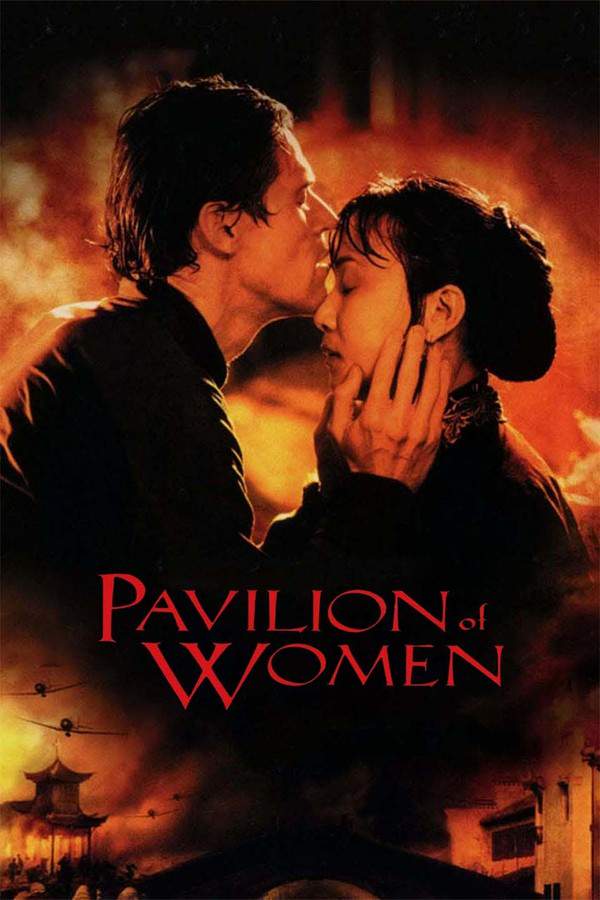
In the waning days of the Tang dynasty, a sprawling dynasty teeters on the edge of collapse as power struggles weave through the imperial court. Crown Prince Wu Luan, Daniel Wu, harbors a consuming love for the noblewoman Little Wan, but the Emperor intends to bind her to the throne in a political move that shatters Wu Luan’s heart and drives him to seek refuge in a distant theater, where he pours his pain into music and dance. Back at the center of power, the realm reels when the Emperor is murdered by his own brother Li, who seizes the throne and sows further chaos by dispatching riders to hunt Wu Luan and end his line.
Wu Luan’s return to the court is both triumphant and fragile. He finds Empress Wan, now officially the Emperor’s consort, and Qing Nu, her loyal companion, who remains publicly engaged to him even as the court wheels grind on. The chamber and corridors buzz with danger, where a seemingly flawless world can crumble in an instant. A palace official, blind to the shifting loyalties around him, greets Empress Wan as “Empress Dowager,” and upon recognizing this faux status, a family is marked for a violent end. With the death of the official, Minister Yin Taichang loses his grip on power, and his son, General Yin Sun, is sent away to rule a distant province, weakening Yin Taichang’s hold over the court.
Meanwhile, Wu Luan is summoned to perform a ceremonial swordplay in preparation for the Empress’s upcoming coronation. The moment he steps into the glare of the audience, a cruel plot unfurls. The Imperial Guard reveal deadly blades and attempt to murder him, feigning an accident, but the Empress intervenes and halts the attempt. A mysterious scroll arrives in Wu Luan’s chambers, showing a vision of his father’s murder at the hands of his uncle, a revelation that poisons his resolve with bitterness and resolve.
In a tense apothecary visit, Wu Luan learns that the poison used to destroy his father is a lethal mix of arsenic trioxide and black scorpions, a combination metaphorically as deadly as “the human heart.” Nothing in their world appears innocent, and the allegiances in the palace bend and snap under the pressure of fear and ambition.
As the Empress plans a grand coronation, Wu Luan—an accomplished singer and dancer in an entirely different guise—stages a masked mime performance that brutally exposes his uncle as the true murderer of his father. The Emperor, shaken yet calculating, hatches a plan to curb Wu Luan by offering him as a captive to a neighboring Khitan prince, a ruse that aims to remove him without destabilizing the Empress’s hold on the throne. Yet a staged border ambush turns into a turning point when Yin Sun, following the Empress’s orders, saves Wu Luan and keeps him alive, a move that throws Yin Taichang into further peril.
Believing Wu Luan to be dead and seeing his own grip tighten, the Emperor arranges a lavish banquet to celebrate a supposed security that never truly exists. The Empress notes the superstition of celebrating their association on their hundredth day of acquaintance, but the Emperor dismisses such fears. In a dramatic twist, she seizes a poisoned cup and intends to finish the plan she started. Yet the night’s drama takes another turn when Qing Nu appears on stage in a tribute to her beloved fiancé, wearing her theatre mask. The poison fails to land as the cup she’s offered becomes the one she is finally given by the Emperor out of respect and pity, and during her performance, Qing Nu collapses, dying in Wu Luan’s arms, a moment that freezes time in the palace.
Grief and horror flood the court as the Emperor realizes Empress Wan’s plot has backfired in the most brutal way. Overcome with fury, he turns the weapon on himself and drinks the rest of the poisoned wine, choosing suicide rather than a fall from grace. With the Emperor gone, Empress Wan is declared the ruler, but the power she has claimed is precarious and contested. Yin Sun, incensed by his sister’s death, moves to strike at the Empress to avenge her, only to be restrained by Wu Luan’s own blade. The blade that would end Yin Sun’s life is poisoned, and Empress Wan murders him with ruthless precision, while Wu Luan lies dying nearby. The Lord Chamberlain then proclaims the Empress Regnant, sealing her triumph in blood.
As the flames of desire that drive her ascent burn bright, Empress Wan speaks of the satisfaction she has found in seizing the throne. A final, brutal note arrives as a flying blade pierces her, and she turns toward her assailant with a look of confusion that quickly twists into horror. The attacker remains unseen, and the audience is left to wonder who delivered the final, deadly strike.
Throughout the tragedy, the palace is populated by a host of performers and guards who move like phantoms through the snow and shadow: the various Dancers—[Zhao Liang], [Cui Kai], [Fei Bo], [Du Jingyi], [Ou Siwei], [Toyomi Yusuke], [Takita Atsushi]—and the Red-faced [Wang Yubo], the White-Faced [Wei Jianhai], as well as a cadre of Imperial Guards led by the watchful eyes of the Empress. Ling, a trusted confidant, [Xu Xiyan], weaves in and out of the intrigue, while the seasoned figures of Minister Yin Taichang, General Yin Sun, and the Emperor Li each play their own parts in this deadly drama. The court’s inner circle includes the steadfast Ma Jingwu as Minister Yin Taichang, the cunning Ge You as Emperor Li, and the formidable Zhang Ziyi as Empress Wan, whose ascent is as dramatic as the blows that mark her fall. The film closes with a room filled with unanswered questions, leaving the true identity of the final killer a mystery, and the fate of the empire hanging in balance, as the curtain falls on a story where love, power, and treachery collide in a world where trust is the rarest and most dangerous treasure.