Chapter 27

Chapter 27

JustWatch#19,3168

Year: 2008

Runtime: 84 min

Language: english

Director: J.P. Schaefer

DramaCrime

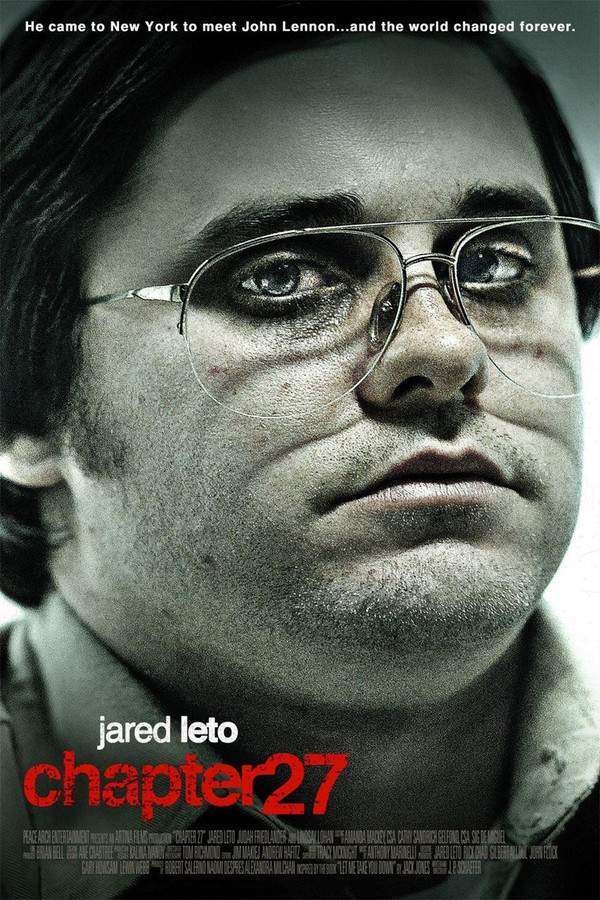
Driven by a disturbing obsession with J.D. Salinger's The Catcher in the Rye, Mark David Chapman's fragile mental state led him to commit a shocking crime on December 8, 1980. The film explores the events leading up to the assassination of John Lennon, delving into Chapman's isolation and the warped perspective that drove him to such an act. It's a chilling examination of a disturbed mind and its devastating consequences, forever changing the course of music history.

Where to Watch Chapter 27?

Find where to stream, rent, or buy Chapter 27 (2008) in the US with current JustWatch availability, up-to-date pricing, and platform listings for subscription, rental, and digital purchase options.

Warning: spoilers below!

Haven’t seen Chapter 27 yet? This summary contains major spoilers. Bookmark the page, watch the movie, and come back for the full breakdown. If you're ready, scroll on and relive the story!

Chapter 27 (2008) – Full Plot Summary & Ending Explained

Read the complete plot breakdown of Chapter 27 (2008), including all key story events, major twists, and the ending explained in detail. Discover what really happened, and what it all means.

On that fateful day of December 8, 1980, the tragic unraveling of Mark David Chapman culminated in an act of senseless violence: the murder of John Lennon, the storied musician and former member of The Beatles, outside the renowned Dakota apartment building. Driven by an unhealthy fixation on J.D. Salinger's quintessential character, Holden Caulfield, from The Catcher in the Rye, Chapman's obsession morphed into a distorted belief that he shared a profound connection with Lennon. This 25-year-old fan's turbulent journey fluctuated between reverence and a chilling urge for nihilism, transforming him into an anonymous harbinger of chaos and altering the landscape of music history forever.

The psychological upheaval festering within Chapman is strikingly illustrated by his revealing remarks, such as > "I'm too vulnerable for a world full of pain and lies" and > "Everyone is cracked and broken. You have to find something to fix you. To give you what you need. To make you whole again." These deeply affecting statements not only unveil the intensity of his inner struggle but also act as harbingers of the impending disaster.

As Chapman's grip on reality began to fray, he engaged in unsettling behaviors that underscored his mental instability. He misled unsuspecting taxi drivers by claiming to be the Beatles' sound engineer and exhibited socially unacceptable conduct towards a young admirer, Jude, who encountered him outside The Dakota. His tense confrontations with Paul, a paparazzi photographer, only served to intensify the volatile atmosphere that ultimately ignited his tragic and misguided wrath. The layers of his psyche reveal a complex individual spiraling deeper into a realm of confusion and darkness, beckoning the viewers to reflect on the fragility of mental health and the impact of obsession.

Last updated: November 19, 2024 at 20:55

Was this helpful?

Chapter 27 (2008) Plot Questions Answered – Summary FAQ

Explore frequently asked questions about Chapter 27 (2008) with spoiler-rich answers covering the full plot summary, major story beats, character motivations, hidden details, and ending meaning. This movie summary FAQ helps explain confusing scenes, plot twists, and narrative decisions in clear, searchable detail.

Q1

Why did Mark David Chapman kill John Lennon?

A.

Chapman believed he shared a profound connection with John Lennon through his obsession with J.D. Salinger's Holden Caulfield. He convinced himself that by killing Lennon, someone he saw as a 'phony' who had betrayed the meaning of Caulfield's message, he would become famous and transform himself into a heroic figure similar to the novel's protagonist. His fixation twisted from reverence into a chilling desire for nihilism, believing the murder would give his own meaningless life purpose.

Earlier in the film, Chapman makes disturbing statements about vulnerability and needing something to 'fix' him, revealing his fragile mental state.

mark david chapmanjohn lennonmotivationholden caulfieldcatcher in the rye obsession
Q2

Why was Mark David Chapman obsessed with Holden Caulfield?

A.

Holden Caulfield represents teenage alienation and a rejection of adult hypocrisy in 'The Catcher in the Rye.' Chapman identified deeply with this character because he felt alienated from society and viewed the world as filled with 'phonies.' He believed that by adopting Caulfield's perspective, he could preserve his own sense of purity and meaning, ultimately distorting the novel's themes into a justification for violence.

Chapman's quotes like 'Everyone is cracked and broken' reveal his desperate search for meaning, which he tried to fill with his Holden Caulfield fixation.

holden caulfieldcatcher in the ryeobsessionidentityalienation
Q3

Why did Chapman specifically target John Lennon?

A.

Chapman chose Lennon because he saw the musician as a 'phony' who had betrayed the counterculture ideals he once represented. After Lennon achieved fame and commercial success, Chapman viewed him as having sold out and corrupted the authentic message Chapman believed Holden Caulfield embodied. This perceived betrayal fueled Chapman's belief that Lennon deserved to die.

The film shows Chapman's obsession fluctuating between reverence and rage, setting the stage for his decision to target Lennon.

john lennontargetcelebritybetrayalfame
Q4

What happened at The Dakota on December 8, 1980?

A.

On the evening of December 8, 1980, Mark David Chapman waited outside The Dakota apartment building in New York City for John Lennon to return home. When Lennon arrived, Chapman approached him and fired five shots, killing the iconic musician outside his residence. The murder shocked the world and ended the life of one of music's most influential figures.

The timeline reveals Chapman lingered around The Dakota the night before, planning and contemplating his act while wrestling with conflicting emotions.

dakotanew yorkdecember 8 1980murder locationshooting
Q5

Why did Mark David Chapman lie to taxi drivers about being a Beatles sound engineer?

A.

Chapman's deception demonstrated his increasing detachment from reality. By posing as the Beatles' sound engineer, he was attempting to insert himself into the world he was obsessed with, blurring the lines between his fantasies and actual identity. This behavior highlighted his unstable mental state and growing eccentricity as he prepared for his plan to unfold.

This incident occurs earlier in the timeline, demonstrating his progressive mental deterioration before the murder.

taxideceptionsound engineerbeatlesdelusion
Q6

What was the confrontation between Chapman and the paparazzi photographer Paul about?

A.

Chapman had tense confrontations with Paul, a paparazzi photographer stationed outside The Dakota. These encounters exemplified Chapman's deteriorating mental state and heightened agitation. The pressure from media presence combined with his obsession created a volatile atmosphere that intensified his resolve to commit the act.

The confrontations occur on the same day as the murder, showing how his agitation peaked as the moment approached.

paparazzipaulconfrontationtensionmedia
Q7

What did Mark David Chapman's quotes about vulnerability and pain reveal about his mindset?

A.

Chapman's statements like 'I'm too vulnerable for a world full of pain and lies' and 'Everyone is cracked and broken' revealed his fragile psychological state. These quotes expose his desperate search for meaning and wholeness, demonstrating how his obsession with Holden Caulfield became a coping mechanism to deal with his perceived brokenness. This inner turmoil ultimately manifested as a distorted belief that violence would fix him.

These remarks function as harbingers of the impending disaster, showing his pre-murder mental collapse.

quotesvulnerabilitymental healthbreakdowninner turmoil
Q8

Why did Mark David Chapman stay around The Dakota the night before the murder?

A.

On the night before December 8, 1980, Chapman lingered outside The Dakota while planning and contemplating his act. He struggled with conflicting emotions of adoration and rage, trapped in a mental spiral that built toward the violent outburst. This period of hesitation and internal conflict demonstrates the psychological struggle preceding his final decision.

This night of contemplation directly preceded the murder the following evening, showing his building resolve.

night beforeplanninghesitationcontemplationdakota
Q9

What happened after Mark David Chapman murdered John Lennon?

A.

After the shooting, panic erupted at The Dakota as people fled the scene. Lennon was critically injured and rushed to the hospital, where he was pronounced dead. Chapman remained at the scene, calmly waiting for police and was arrested without resistance. The news spread globally, sending shockwaves through the music community and prompting nationwide mourning and vigils.

arrestaftermathpolicehospitalpanic
Q10

How did Chapman's mental illness connect to his obsession with the book?

A.

Chapman's fixation on 'The Catcher in the Rye' became a lens through which his mental illness expressed itself. His fragile mental state twisted the novel's themes of adolescent alienation into a distorted worldview where he saw himself as Holden Caulfield's protector, destined to rid the world of 'phonies' like Lennon. This connection between his psychological vulnerability and his obsession created the warped perspective that drove him to violence.

mental illnessobsessioncatcher in the ryepsychosispsychology
Mobile App Preview

Coming soon on iOS and Android

The Plot Explained Mobile App

From blockbusters to hidden gems - dive into movie stories anytime, anywhere. Save your favorites, discover plots faster, and never miss a twist again.

Sign up to be the first to know when we launch. Your email stays private, always.

Explore Movie Threads

Discover curated groups of movies connected by mood, themes, and story style. Browse collections built around emotion, atmosphere, and narrative focus to easily find films that match what you feel like watching right now.

Psychological Obsession Dramas like Chapter 27

Chilling character studies of minds unraveling under the weight of a dangerous fixation.Explore movies like Chapter 27 that delve into the dark psychology of obsession. If you were captivated by the portrayal of a disturbed mind's fixation, you'll find similar stories exploring the terrifying logic of characters consumed by their singular, destructive goals.

obsessiveunsettlingpsychologicaltragicdarkanxiouschillingdownward spiral

Narrative Summary

The narrative pattern follows a character's increasing isolation and warped perspective as they become consumed by an idea, person, or goal. The story steadily builds tension by showing the protagonist's rationalizations and the growing chasm between their internal logic and external reality, culminating in a devastating act.

Why These Movies?

Movies in this thread are grouped by their intense focus on a singular, destructive obsession as the primary driver of the plot. They share a dark, psychological tone, a steady pacing that amplifies dread, and a heavy emotional weight stemming from the tragic consequences of a fractured mind.
True Crime Character Studies similar to Chapter 27

Intimate portraits exploring the minds behind infamous real-life crimes.Find movies similar to Chapter 27 that offer a deep dive into the psychology of real-life criminals. These films share a steady, character-driven pace and a heavy emotional weight, exploring the human stories behind shocking headlines rather than the procedural details.

true crimepsychologicaltragicbased on true storyunsettlingdarkoppressivebiographical

Narrative Summary

These narratives typically avoid sensationalism, opting for a grounded, often bleak examination of a real person's life and mental state. The plot reconstructs the period leading up to a famous crime, emphasizing character depth and psychological complexity over action or mystery.

Why These Movies?

These films are connected by their approach to true crime: a sober, character-focused exploration of the perpetrator's psyche. They share a dark tone, steady pacing, and a commitment to understanding the human tragedy behind the sensational event, resulting in a deeply unsettling and thought-provoking experience.

Unlock the Full Story of Chapter 27

Don't stop at just watching - explore Chapter 27 in full detail. From the complete plot summary and scene-by-scene timeline to character breakdowns, thematic analysis, and a deep dive into the ending - every page helps you truly understand what Chapter 27 is all about. Plus, discover what's next after the movie.

Chapter 27 Timeline

Track the full timeline of Chapter 27 with every major event arranged chronologically. Perfect for decoding non-linear storytelling, flashbacks, or parallel narratives with a clear scene-by-scene breakdown.

Chapter 27 Timeline

Characters, Settings & Themes in Chapter 27

Discover the characters, locations, and core themes that shape Chapter 27. Get insights into symbolic elements, setting significance, and deeper narrative meaning - ideal for thematic analysis and movie breakdowns.

Characters, Settings & Themes in Chapter 27

Chapter 27 Spoiler-Free Summary

Get a quick, spoiler-free overview of Chapter 27 that covers the main plot points and key details without revealing any major twists or spoilers. Perfect for those who want to know what to expect before diving in.

Chapter 27 Spoiler-Free Summary

More About Chapter 27

Visit What's After the Movie to explore more about Chapter 27: box office results, cast and crew info, production details, post-credit scenes, and external links - all in one place for movie fans and researchers.

More About Chapter 27