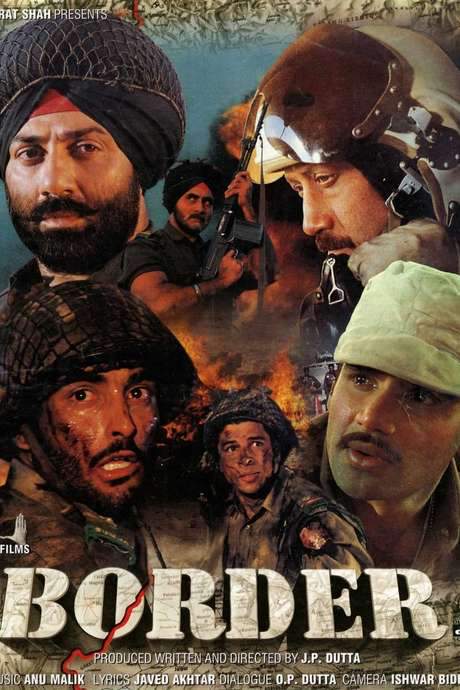
An Indian military officer, Major Pratap Singh, Sunny Deol, takes on a dangerous mission to foil a terrorist infiltration from across the border, relying on a handful of local civilians who share his resolve. The operation unfolds in the rugged border region of Zhonabad, a high-altitude landscape carved by treacherous mountain ravines where winter grips the land and compels inhabitants to move to safer ground. In this austere terrain, a web of clandestine activity begins to emerge, centering on a man named Lala, Tinnu Verma, a once-respected landlord whose influence masks a deeper allegiance: he is a Pakistani agent who guides infiltrators and shipments of arms through passes that he and his men alone know.
Lala’s power rests on the shoulders of his chief henchman, Albaksh, Arbaaz Khan, an illiterate but fiercely loyal worker who remains largely unaware of the full scope of Lala’s anti-national machinations. The danger intensifies when Captain Sonia, Tabu, a sharp military intelligence officer, uncovers the illicit network and brings the troubling information to the attention of the armed forces. Acting on her warning, the hierarchy issues a directive: Major Pratap must travel to Zhonabad and keep a close watch on Lala and Albaksh, hoping to disrupt the network before more harm can be done.
As the investigation deepens, Albaksh discovers the alarming breadth of Lala’s operation. He opposes Lala’s methods, but his reluctance earns him Lala’s wrath. In a calculated move to protect himself, Lala frames Albaksh as a traitor and terrorist in the eyes of the law, triggering a police arrest that pulls Albaksh out of circulation just as Pratap begins to unravel the conspiracy. The arrest rope tightens the noose around Albaksh, yet it also sets the stage for a crucial turning point: Pratap, meeting Albaksh in a cautious exchange, learns the extent of Lala’s plans and the scope of the infiltration. Albaksh confesses enough to reveal how the infiltrators intend to slip into India through the passes of Zhonabad, and his information becomes the spark that drives Pratap to act decisively.
With time running short, Major Pratap resolves to take matters into his own hands, choosing to fight the looming danger alongside Albaksh and the local residents who share his sense of duty. The climactic confrontation erupts as Pratap—equipped with a disciplined arsenal and unwavering determination—leads a brutal assault against the combined force of Gul Mastan and Lala. The battle is fierce and arduous, but the odds begin to tilt in favor of the Indian side thanks to the courage and coordination of Pratap, Albaksh, and the committed locals who stand with them, fighting shoulder to shoulder with a small contingent of Indian soldiers. The onslaught reaches its peak as Albaksh delivers the knife strike that ends Lala’s threat, piercing through the web of treachery that had long controlled the region, while Pratap himself delivers a critical blow that incapacitates Gul Mastan.
The endgame is costly. Major Pratap Singh sustains mortal injuries during the clash, yet his resilience, bolstered by the prayers and solidarity of the Indian army—comprising soldiers from diverse faiths and backgrounds—ensures that he survives. In the aftermath, the region breathes a cautious relief as the infiltrators’ network is dismantled and the attempt to destabilize the border is decisively halted. The story closes with a quiet testament to courage, sacrifice, and the sense of duty that binds the Indian forces to the people they protect.