Plot Explained Spoilers guaranteed!
Plot Explained

Browse by genre

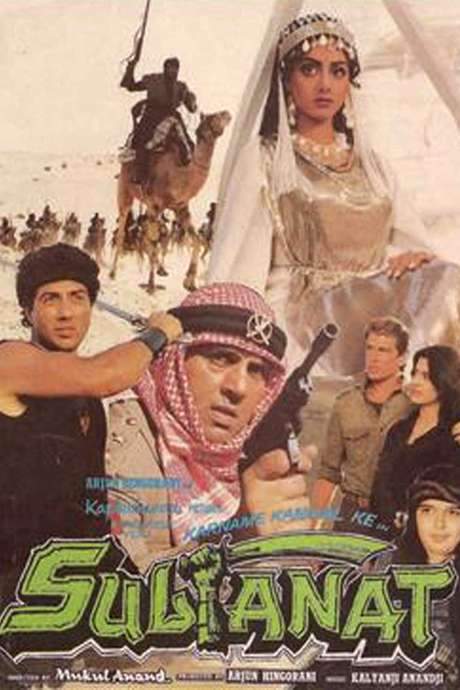
Sultanat (1986) movie poster

Plot Summary

Sultanat (1986) Plot Summary Explained

Release, runtime and language
1986 · 153 mins · Hindi
Directed by
John Philip Dayton, Mukul Anand
Starring
Dalip Tahil, Jugal Hansraj, Kevin Bernhardt, Sunny Deol, Dharmendra, Shakti Kapoor

When his wife perishes in childbirth during a botched coup led by bandit Razoulli (Amrish Puri), General Khalid (Dharmendra) swears revenge. Years later he targets Razoulli’s son (Sunny Deol), unaware that a hidden family secret binds the two men. The film also features performances by Sridevi, Karan Kapoor and Juhi Chawla, weaving intrigue and drama throughout.

On this page (5)
  1. 1 What happens: full plot
  2. 2 Plot questions answered
  3. 3 Movie threads
  4. 4 Movies like Sultanat
  5. 5 Every angle

Full plot summary · contains spoilers

What Happens in Sultanat: Full Plot Summary

The whole story of Sultanat (1986) explained, from the opening scene to the final frame: every key event, every twist and what it all adds up to. Read it as a quick recap before the sequel, to check a scene you missed, or to finally understand what really happened.

Shah is the ruler of a Sultanate in Middle-Eastern Asia. When a brutal bandit warlord, Razoulli Al-Jabber Al-Nasser, leads a raid on the realm, the sultanate’s army, commanded by Khalid, fights back and defeats the invaders. Razoulli escapes, but he abducts Khalid’s pregnant wife, Ayesha. Ayesha dies in childbirth, and a midwife proclaims that the newborn boy is blessed and destined to one day wear the crown. Razoulli, hungry for a male heir, tells Khalid that both his wife and child perished, and raises the boy as his own, teaching him the arts of warfare and leadership from a young age.

Meanwhile, Khalid remarries an American journalist, Jane, and they welcome another son, Samir, who is sent abroad for safety and education. Khalid grows into a seasoned General with a burning vow to bring Razoulli to justice, even as Razoulli consolidates power by portraying himself as the rightful guardian of the boy who would be king. The boy—now grown into a formidable fighter and decisive leader—becomes the Sultan in all but name, forged by hard training and the shadow of a distant father he does not yet know.

The tale folds in a daring encounter with Princess Yasmeen, Yasmeen, the beautiful daughter of Shah. During a cavalcade, the young Sultan dares to meet her gaze; when she commands him to bow, he refuses and instead truly engages her with a kiss. Enraged, Yasmeen captures him, subjects him to torture, and forces him into a perilous death race staged by her cousin and Shah’s nephew, Shakkir. The Sultan survives, escapes, and, in a bold turn, abducts Yasmeen. What follows is a tempestuous, passionate clash that blossoms into a powerful love—defying palace protocol and testing loyalties.

Back at court, Razoulli is slain by Khalid, and Razoulli’s wife sinks into madness at the loss. Sultan, unaware of his true lineage, vows to avenge the death of the man he believes to be his father and begins to suspect that Khalid was behind the tragedy that shaped his fate. Simultaneously, the royal marriage alliance unfolds in a dangerous political dance: Shah plans to marry Yasmeen to Khalid’s son, a move that could cement Khalid’s loyalty or sever it, depending on who truly rules the realm. Shakkir, ever the schemer, secretly plots to position himself as the future king by winning Yasmeen’s hand.

When news arrives that Khalid’s son, Samir, and his fiancée, Zarina, are coming to the capital, Sultan contemplates abducting them to safeguard his own grip on power. Khalid learns of this plot and resolves to end the threat once and for all. The arrival of Samir and Zarina becomes a flashpoint: Sultan overpowers Samir with the intent to kill, yet the perilous rescue arrives in the form of Khalid, who saves the intended target and is captured by Sultan’s loyalists in the ensuing chaos.

What follows is a stark, high-stakes duel between two fathers and sons, each convinced of his own right and burdened by a painful past. The combat culminates in a climactic moment of truth: Khalid is not merely a rival, but the man who once abandoned a child to fate and love. The clash resolves only when one of them falls, leaving the other to confront a destiny that binds blood, power, and legacy in an intricate, unresolved heartache.

In the palace, in the dust of battle, and in the quiet counsel of those who survive, the story lingers on whether vengeance, love, or duty will ultimately define a kingdom that has been tested by war, deceit, and the fragile ties that bind a family.
Last updated: October 09, 2025 at 14:40

Was this helpful?

Plot questions answered

Sultanat Plot Explained: Your Questions Answered

The questions people ask most about Sultanat (1986): what happens in the confusing scenes, why the characters do what they do, the twists, hidden details and what the ending means. Each answer contains spoilers.

Q1

Why did Razoulli keep the baby instead of killing it?

Razoulli needed a male heir to legitimize his claim to the Sultanate. When Ayesha gave birth during her captivity, the midwife proclaimed the child blessed and destined to wear the crown, a prophecy that made the boy infinitely valuable to Razoulli. By keeping the child and telling Khalid that both mother and infant died, Razoulli secured both an heir and a powerful political tool.

Foreshadowing: The midwife's proclamation during the birth establishes the baby's symbolic importance from the very beginning.

  • razoulli
  • ayesh
  • heir
  • baby
  • newborn
  • sultanate
Q2

Why does Khalid want to kill Razoulli?

Khalid witnessed Razoulli abduct his pregnant wife Ayesha during the raid. Years later, Razoulli told him that both Ayesha and their child died in childbirth. Believing his entire family dead at Razoulli's hands, Khalid dedicated his life to hunting down the man who destroyed everything he loved, eventually rising to General so he could command the resources to achieve his revenge.

Foreshadowing: The raid and abduction set Khalid on his path of vengeance from the very beginning.

  • khalid
  • razoulli
  • revenge
  • vengance
  • abduction
  • death
Q3

Why does Sultan vow to avenge Razoulli?

Sultan grew up believing Razoulli was his father. When Razoulli is killed by Khalid, Sultan witnesses the murder and vows revenge against the man he holds responsible for his 'father's' death. He does not know that Khalid is actually his biological father, the truth Razoulli concealed from both of them.

Foreshadowing: Razoulli's death at Khalid's hands directly triggers Sultan's oath of vengeance.

  • sultan
  • razoulli
  • khalid
  • vengeance
  • father
  • death
Q4

How do Sultan and Yasmeen end up together after he tortures her?

Their relationship begins with hostility: Sultan refuses to bow to Yasmeen during a cavalcade, provoking her anger. She captures him, tortures him, and forces him into a death race. After Sultan escapes and abducts Yasmeen, the power dynamic shifts. Through repeated confrontations during his captivity and subsequent abduction, their animosity transforms into passionate love, defying the political enmity between their families.

Foreshadowing: Their initial confrontation establishes the volatile chemistry that will later become love.

  • sultan
  • yasmeen
  • love
  • abduction
  • torture
  • relationship
Q5

What is the hidden connection between Sultan and Khalid?

Sultan is actually Khalid's biological son, not Razoulli's. When Ayesha gave birth in captivity, Razoulli seized the boy and raised him as his own, concealing the truth from both Khalid and the child. This hidden parentage creates the central tragedy: father and son fight to the death unaware they are blood relations.

Foreshadowing: The midwife's claim that the baby was blessed and destined to wear the crown foreshadows his true royal heritage.

  • sultan
  • khalid
  • father
  • son
  • secret
  • lineage
  • blood
Q6

Why does Sultan want to abduct Samir and Zarina?

Sultan learns that Shah plans to marry Princess Yasmeen to Khalid's son Samir, a political alliance that would unite Khalid's power with the royal family and threaten Sultan's own claim to the throne. By abducting Samir and his fiancée Zarina, Sultan aims to prevent this marriage, eliminate Khalid's political advantage, and secure his own power.

Foreshadowing: Shah's announcement of the marriage alliance sets the political conflict in motion.

  • samir
  • zarina
  • sultan
  • abduction
  • marriage
  • alliance
  • politics
Q7

What leads to the final fight between Sultan and Khalid?

Sultan's attempt to abduct Samir and Zarina forces Khalid to intervene. In the rescue attempt, Khalid is captured by Sultan's soldiers. This triggers a direct confrontation between the two men, each believing the other responsible for their suffering, Khalid seeing Sultan as a threat to his family, and Sultan seeing Khalid as the murderer of his father.

Foreshadowing: The abduction attempt serves as the flashpoint that brings the two fathers into direct conflict.

  • sultan
  • khalid
  • duel
  • fight
  • capture
  • battle
  • confrontation
Q8

Why did Razoulli take Ayesha during the raid?

Razoulli abducted Ayesha primarily to use her as a bargaining chip and symbol of his victory over the Sultanate. Taking the General's pregnant wife served multiple purposes: it demonstrated his power over the defeated forces, provided potential leverage, and fulfilled his desire for a trophy that would solidify his status as the new ruler.

Foreshadowing: The abduction sets the entire chain of events in motion, including the birth of the heir.

  • razoulli
  • ayesha
  • abduction
  • raid
  • prisoner
  • capture
Q9

Why does Khalid remarry an American journalist?

After believing Ayesha and his newborn child dead, Khalid eventually remarries Jane, an American journalist. Their union produces a second son, Samir, whom Khalid sends abroad for safety and education. This marriage provides Khalid with a new family while also giving him connections that help his rise to power as General.

Foreshadowing: Jane's presence in Khalid's life creates the political dimension that later threatens Sultan's position.

  • khalid
  • jane
  • marriage
  • remarriage
  • american
  • journalist
  • samir
Q10

What is Shakkir's motive in the story?

Shakkir, Shah's nephew, secretly plots to become the future king. He resents Shah's plan to marry Yasmeen to Khalid's son Samir, as this alliance would cement a rival's power. Shakkir schemes to win Yasmeen's hand himself, believing that marrying the princess would give him the throne rather than allowing it to pass to an outside heir.

Foreshadowing: Shakkir's scheming creates additional political intrigue that complicates the main conflict.

  • shakkir
  • yasmeen
  • marriage
  • throne
  • scheme
  • nephew
  • usurp
Q11

What happens to Razoulli's wife after his death?

When Khalid kills Razoulli, his wife is left widowed and descends into madness due to the trauma of losing her husband. This tragic outcome adds to the film's emotional weight, showing how the cycle of violence affects even those peripheral to the main conflict.

Foreshadowing: Her madness hints at the psychological toll of living under Razoulli's violent rule.

  • razoulli
  • wife
  • madness
  • death
  • widow
  • trauma
Q12

How does Sultan survive the death race?

Sultan, raised from childhood by Razoulli as a warrior, possesses exceptional combat skills and strategic thinking. These abilities, honed through rigorous training, allow him to outperform the other competitors in the brutal death race staged by Shakkir. His survival demonstrates the very skills Razoulli spent years cultivating in him.

Foreshadowing: Razoulli's rigorous warrior training of Sultan from childhood directly enables his survival.

  • sultan
  • death race
  • survival
  • combat
  • training
  • shakkir
  • arena

Movie threads

More Movies Like Sultanat, by Mood & Story

Curated lists built around what makes Sultanat tick: the same mood, the same kind of story or the same emotional payoff. Each list explains why these movies belong together.

Revenge epics with family secrets like Sultanat

High-stakes dramas where vengeance collides with shocking revelations of identity. If you enjoyed the high-stakes drama of Sultanat, explore more movies like it featuring vengeful quests intertwined with shocking family secrets. This section gathers films where a thirst for revenge is complicated by hidden identities and tangled bloodlines, delivering intense, emotionally heavy stories.

  • vengeful
  • melancholic
  • high stakes
  • dramatic irony
  • operatic
  • tragic
  • Tone: tense, dramatic, tragic
  • Pacing: fast, propulsive
Why these movies?

The story pattern: These stories typically follow a protagonist on a path of vengeance, only to discover that their target is a long-lost relative, creating a crisis of identity and a conflict between duty and blood. The plot is often fast-paced and high-intensity, building towards a climactic, bittersweet resolution that acknowledges the tragedy of the situation.

Why they belong together: These movies are grouped together because they share a powerful narrative engine combining a revenge plot with a family secret. They create a specific type of dramatic tension, moral conflict, and emotional weight that resonates with viewers who enjoy operatic, high-stakes melodramas.

Stormy, high-intensity melodramas like Sultanat

Sweeping stories defined by powerful emotions, high stakes, and tragic destinies. For viewers who loved the passionate, high-drama feel of Sultanat, this section features similar movies with stormy emotions and high-stakes conflicts. Discover films characterized by intense romantic entanglements, powerful themes of legacy and revenge, and a consistently tense, dramatic tone.

  • stormy
  • passionate
  • operatic
  • high stakes
  • dramatic
  • vengeful
  • Tone: tense, passionate, melancholic
  • Pacing: fast, relentless
Why these movies?

The story pattern: Narratives in this thread are propelled by powerful, often destructive emotions like vengeance, forbidden love, and pride. Characters are frequently swept up in forces larger than themselves—family curses, political intrigue, or star-crossed destinies—leading to fast-paced plots with brutal confrontations and emotionally resonant, if not entirely happy, conclusions.

Why they belong together: These films are grouped by their shared visceral experience: a combination of high emotional intensity, fast pacing, and a tense, dramatic tone. They appeal to viewers seeking a cathartic, all-consuming cinematic experience centered on grand themes of love, loss, and legacy.

If you liked this

Movies Like Sultanat

Similar movies to Sultanat: the same genre, themes or kind of story. Each one comes with its own plot summary, timeline and ending explained.

Browse all movie summaries

Every angle

Sultanat (1986) Explained: Plot, Timeline & Characters

Everything about Sultanat in one place: what happens in the plot summary, the timeline in chronological order, the characters and meaning and a spoiler-free summary. What's After the Movie adds the cast, box office and post-credit scenes.

Coming soon on iOS and Android

The Plot Explained Movie Summary App

Plot summaries, endings explained and timelines on your phone. Catch up on any movie in minutes, save your favorites and never miss a twist again.

Be the first to know when we launch. Your email stays private, always.

Learn more about the app