Plot Explained Spoilers guaranteed!
Plot Explained

Browse by genre

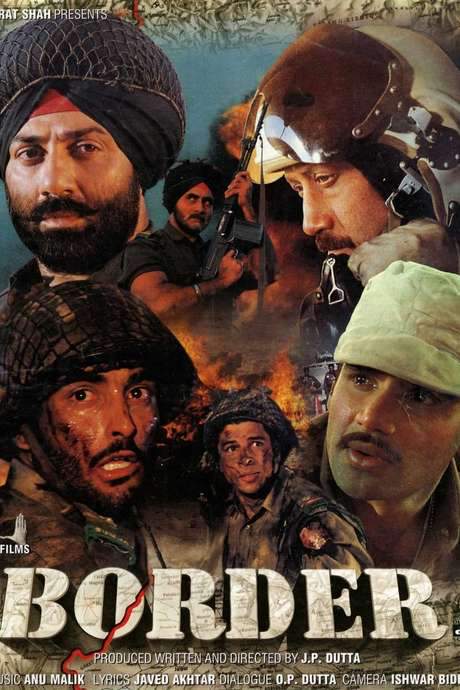
Border (1997) movie poster

Plot Summary

Border (1997) Plot Summary Explained

Release, runtime and language
1997 · 176 mins · Hindi
Directed by
J. P. Dutta
Starring
Tabu, Jackie Shroff, Sunny Deol, Akshaye Khanna, Kulbhushan Kharbanda, Suniel Shetty

In 1971, a Pakistani force of 2,000 troops equipped with tanks engages a lone Indian battalion of just 120 soldiers stationed in the desert outpost of Longewala, Rajasthan. The stark numerical and firepower disparity sets the stage for a dramatic and gritty confrontation between the two sides.

On this page (6)
  1. 1 Where to watch
  2. 2 What happens: full plot
  3. 3 Plot questions answered
  4. 4 Movie threads
  5. 5 Movies like Border
  6. 6 Every angle

Where to watch

Where to Watch Border (1997)

Where can you watch Border? Stream, rent or buy it in the US, including on Amazon Video: current JustWatch availability with up-to-date prices.

Streaming availability powered by JustWatch

Full plot summary · contains spoilers

What Happens in Border: Full Plot Summary

The whole story of Border (1997) explained, from the opening scene to the final frame: every key event, every twist and what it all adds up to. Read it as a quick recap before the sequel, to check a scene you missed, or to finally understand what really happened.

Set in the tense hours before the Indo-Pakistani War of 1971, a small Indian outpost sits on the edge of the Rajasthan desert, awaiting a clash that will redefine the frontier. At the forward operating airbase, Wing Commander Anand Bajwa is tasked with sending Hawker Hunter ground-attack planes to support the army in the Jaisalmer sector, a mission that requires patience and speed in equal measure. Jackie Shroff brings a calm, improvisational leadership to the role, offering quiet assurance even when the odds are steep.

Nearby, Major Kuldip Singh Chandpuri commands a company of the Punjab Regiment, a compact force of roughly 120 soldiers with a reputation for grit in the harsh desert. His path crosses with a capable young officer, Dharamvir Singh Bhan, a second lieutenant who carries the weight of his family legacy—his father, a veteran of a prior war, died in combat. Sunny Deol embodies the firm resolve and steady courage that define Kuldip’s leadership, while Akshaye Khanna portrays Dharamvir’s quiet bravery as he grows from a reluctant fighter into a frontline commander.

The border post is manned in concert with the Border Security Force, and the unit is quickly joined by the redoubtable Captain Bhairon Singh, a deeply patriotic carrier of the desert’s memory and lore. Suniel Shetty gives Bhairon a tangible warmth and loyalty that anchors the team through long, brutal hours. The unit’s defensive might is reinforced with two 105 mm Jonga-mounted guns provided by Subedar Ratan Singh, a practical, no-nonsense leader whose presence steadies the men under fire. Puneet Issar embodies that stoic reliability.

Life at Longewala is filled with routines, letters from home, and shared stories that bond the soldiers. Dharamvir reminisces about his fiancée, Kamla, a bright village girl who brought light into his days, while Bhairon recalls the intimate moment he shared with his bride, Phool Kanwar—a memory that gives him focus as danger closes in. Pooja Bhatt and Sharbani Mukherji give life to these tender threads that keep the men human even as they stand guard in the desert’s vast loneliness.

Tensions rise when a suspicious group of locals turns out to be insurgents, feeding information to the Pakistani forces. A firefight ensues, and Dharamvir takes a lethal risk to prove his resolve by confronting the intruders, a moment that forces him to confront his fear of killing and to seek reassurance from Bhairon after a horrifying firefight. The outpost’s morale tightens as the men await the larger conflict, while the radio crackles with updates about the broader war as it inches closer to their post.

The quiet is broken when the airstrike alarms fail to give them air support at night. Bajwa explains the grim reality: only daylight sorties can reverse the menace of a night assault. Kuldip, faced with an untenable choice, decides to stand his ground, trusting his men to weather the coming storm rather than abandon the post. The soldiers rally to the call, and that fateful decision becomes the crucible in which their devotion and discipline are tested.

As Pakistani forces—tanks and infantry led by the infamous commander Ghulam Dastagir—pour across the border, Longewala’s defenders improvise with mined perimeters, anti-tank weapons, and a stubborn refusal to yield. The enemy’s tanks, including Western-style armor, press forward in a desperate bid to overrun the position before dawn. The last-ditch counterattack is shaped by Kuldip’s insistence on bold action: the remaining few men, armed with rockets and grenades, launch a sweeping, dangerous assault to disrupt the invaders’ momentum. The outpost’s defenses bend, but they do not break.

The battle is brutal and costly. Das, a loyal anti-tank gunner who had earned Kuldip’s trust, is wounded saving Bhairon’s position and dies in the line of duty, a moment that darkens the post’s already heavy mood. Ratan Singh makes a final sacrifice to shield his comrades, a selfless act that cements the unit’s resolve. Bhairon himself sacrifices his own life to destroy a tank, a bold, almost mythic gesture that betrays the desert’s unflinching courage. Dharamvir, leading a valiant patrol to break through the encirclement, pays the ultimate price, his life ending amidst the smoke and sand.

With dawn breaking, the Indians hold the line long enough for Bajwa and his squadron to break through the desert’s stillness and retaliate from the skies. The airstrike destroys several more enemy tanks, turning the tide as Pakistani reinforcements falter and retreat across the border. The landmark victory at Longewala comes at a heavy price: the post’s defenders mourn their fallen and reflect on the cost of protecting their homeland, while the army prepares a broader counteroffensive that will echo across the region.

In the aftermath, the post looks toward a future carved from hard-won victory and the memories of those who gave their lives. The film closes on a solemn note of respect for sacrifice, and the enduring bond among those who stood together in one of India's most famous desert battles.

Last updated: October 09, 2025 at 09:29

Was this helpful?

Plot questions answered

Border Plot Explained: Your Questions Answered

The questions people ask most about Border (1997): what happens in the confusing scenes, why the characters do what they do, the twists, hidden details and what the ending means. Each answer contains spoilers.

Q1

Why was there no air support at night during the Battle of Longewala?

The Indian Air Force base lacked night-capable ground-attack aircraft. Wing Commander Bajwa explained to Major Kuldip that only daylight sorties could effectively counter the nighttime tank assault. The Hawker Hunters required daylight conditions to operate safely and accurately, forcing the defenders to hold the position alone until dawn.

Foreshadowing: Earlier in the film, Bajwa discusses the logistical challenges of operating from the forward airbase, hinting at the limitations that would later trap the soldiers in a nightlong siege.

  • air support
  • night attack
  • IAF
  • Hawker Hunter
  • Bajwa
  • logistics
  • 1971 war
Q2

Why did Major Kuldip Singh decide to hold the Longewala outpost instead of retreating?

Kuldip chose to hold the position because abandoning the outpost would have allowed Pakistani forces to advance unchecked into Indian territory. With air support unavailable until dawn, he trusted his 120 soldiers and their limited anti-tank weapons to weather the assault. His decision reflected the strategic importance of delaying the enemy advance until reinforcements and air support could arrive.

Foreshadowing: The earlier scene where Kuldip and Bajwa discuss the Western front reveals Kuldip's understanding of the larger war strategy.

  • Kuldip Singh
  • retreat
  • strategic decision
  • defense
  • outpost
  • tactical choice
Q3

What happened to Dharamvir Singh's patrol at Longewala?

Dharamvir led a patrol to track Pakistani tanks crossing the border. He was ordered to follow the tanks covertly rather than engage immediately. After fighting his way back through enemy lines to rejoin the post, he discovered his entire patrol had been wiped out during the night battle. He himself was killed while leading a subsequent patrol to break through the encirclement.

Foreshadowing: The earlier encounter with insurgents, where Dharamvir overcomes his fear of killing, sets up his eventual heroic death in battle.

  • Dharamvir Singh
  • patrol
  • killed
  • death
  • battle
  • Longewala
  • Indian soldiers
Q4

How did Indian soldiers at Longewala manage to stop Pakistani tanks with limited weapons?

The defenders used a combination of anti-tank mines, two 105mm Jonga-mounted RCL guns provided by Subedar Ratan Singh, and rocket launchers. They created mined perimeters around the outpost that destroyed or damaged several enemy tanks. When tanks broke through, soldiers launched desperate counterattacks with rockets and grenades, disrupting the invaders' momentum until the airstrike arrived at dawn.

Foreshadowing: The arrival of Subedar Ratan Singh with the anti-armor guns earlier establishes the defensive capability that proves crucial.

  • tanks
  • anti-tank mines
  • Jonga guns
  • Ratan Singh
  • weapons
  • defense
  • rocket launchers
Q5

Why did Captain Bhairon Singh sacrifice himself at Longewala?

Bhairon Singh sacrificed his life to destroy a Pakistani tank that was threatening the outpost's defenses. Mortally wounded during the fighting, he made the ultimate act of courage to halt the enemy armor advancing on his position, becoming one of the defining symbols of the battle's heroism.

Foreshadowing: Earlier scenes show Bhairon's deep patriotism and knowledge of the desert, establishing his personal connection to the land he defends.

  • Bhairon Singh
  • sacrifice
  • death
  • tank
  • heroism
  • Indian army
  • BSF
Q6

What was Dharamvir Singh's fear that he overcame during the battle?

Dharamvir feared killing another person. During a night patrol encounter with insurgents, he hesitated to shoot a surviving insurgent, revealing his moral struggle with taking a life. His commander Kuldip rebuked him, and Dharamvir overcame this fear by carrying out the action. This psychological arc culminates in his later heroism and ultimate sacrifice.

Foreshadowing: The confrontation with insurgents where Dharamvir hesitates explicitly sets up his character arc of overcoming fear.

  • Dharamvir
  • fear of killing
  • psychology
  • character development
  • insurgents
  • overcoming fear
Q7

How did the dawn airstrike turn the battle in India's favor at Longewala?

At dawn on December 5th, Wing Commander Bajwa finally launched his Hawker Hunter squadron against the Pakistani tanks. The airstrike destroyed several enemy vehicles, forcing the already-battered Pakistani forces to falter. With their momentum broken and facing the combined Indian ground defense and air assault, the Pakistanis retreated across the border, securing a hard-won Indian victory.

Foreshadowing: The previous night's radio conversation between Kuldip and Bajwa establishes that dawn air support was the key to survival.

  • dawn airstrike
  • Bajwa
  • Hawker Hunter
  • pakistani tanks
  • retreat
  • victory
  • tide of battle
Q8

Why did Subedar Ratan Singh sacrifice himself at Longewala?

Ratan Singh sacrificed himself by throwing away an exploding tank shell that threatened his fellow soldiers. He saved several men from a fatal blast by using his body to shield them from the explosion, a selfless act that galvanized the remaining troops to continue fighting despite their heavy losses.

Foreshadowing: Earlier scenes establish Ratan Singh as a practical, no-nonsense leader whose reliability steadies the men under fire.

  • Ratan Singh
  • sacrifice
  • death
  • tank shell
  • saved soldiers
  • heroism
  • Indian army
Q9

How many Pakistani tanks were destroyed at the Battle of Longewala?

Multiple Pakistani tanks were destroyed during the battle through a combination of anti-tank mines, Jonga-mounted guns, rockets, and the dawn airstrike. The exact number varies in historical accounts, with the film depicting significant tank losses that forced the Pakistani retreat.

Foreshadowing: The film shows several tank destructions throughout the night battle and climaxed with the airstrike.

  • pakistani tanks
  • destroyed
  • number
  • tank losses
  • air strike
  • mines
  • Jonga guns
Q10

Did India win the Battle of Longewala?

Yes, India won the Battle of Longewala. Despite being outnumbered roughly 17 to 1 and facing 2,000 Pakistani troops with tanks, the 120 Indian defenders held their position until dawn. The arrival of the Indian Air Force airstrike destroyed remaining Pakistani armor, forcing the enemy to retreat across the border. However, the victory came at a heavy cost with significant Indian casualties including Bhairon Singh, Ratan Singh, Das, and Dharamvir Singh.

Foreshadowing: The entire film builds toward this outcome, balancing the tension of the night siege with the eventual dawn arrival of air support.

  • victory
  • India
  • win
  • battle outcome
  • retreat
  • casualties
  • Longewala
  • 1971 war

Movie threads

More Movies Like Border, by Mood & Story

Curated lists built around what makes Border tick: the same mood, the same kind of story or the same emotional payoff. Each list explains why these movies belong together.

Heroic Last Stand Movies like Border

Stories of small groups facing impossible odds with immense courage and sacrifice. If you liked the tense defense against impossible odds in Border, explore more movies about heroic last stands. These films feature small groups facing overwhelming forces, blending intense battle sequences with themes of sacrifice, patriotism, and the heavy cost of courage in war and historical settings.

  • tense
  • gritty
  • patriotic
  • heroic
  • brutal
  • somber
  • Tone: tense, gritty, patriotic
  • Pacing: variable, building to fast-paced action
Why these movies?

The story pattern: Movies in this thread typically follow a linear path toward an inevitable, large-scale confrontation. The narrative builds tension through the stark disparity between the defenders and attackers, often taking time to develop characters before plunging them into a fast-paced, chaotic, and brutal battle where survival is uncertain and sacrifice is paramount.

Why they belong together: These films are grouped together for their shared focus on a specific type of military conflict narrative. They create a cohesive viewing experience through high-stakes tension, graphic war violence, a somber and patriotic mood, and a story structure that builds to a climactic, costly defense.

War Movies with Bittersweet Endings like Border

War stories where the win is achieved, but the human cost leaves a somber reflection. For viewers who appreciated the somber victory in Border, this list features similar war films with bittersweet endings. These movies depict successful military campaigns or battles where the triumph is deeply tempered by the loss of comrades, exploring themes of sacrifice, leadership, and the true cost of war.

  • somber
  • bittersweet
  • heroic
  • patriotic
  • loss and grief
  • sacrifice
  • Tone: somber, bittersweet, reflective
  • Pacing: variable, character-driven to action-packed
Why these movies?

The story pattern: The narrative pattern involves a clear objective or battle that is ultimately achieved, but the journey to that success results in major character deaths or profound trauma. The story doesn't shy away from the emotional aftermath, often ending on a note of solemn remembrance rather than pure celebration, emphasizing that some victories are Pyrrhic.

Why they belong together: These films share a specific emotional arc and conclusion. They are united by their ability to deliver a satisfying narrative resolution while simultaneously imparting a heavy sense of loss, creating a complex and memorable viewing experience that honors both achievement and sacrifice.

If you liked this

Movies Like Border

Similar movies to Border: the same genre, themes or kind of story. Each one comes with its own plot summary, timeline and ending explained.

Browse all movie summaries

Every angle

Border (1997) Explained: Plot, Timeline & Characters

Everything about Border in one place: what happens in the plot summary, the timeline in chronological order, the characters and meaning and a spoiler-free summary. What's After the Movie adds the cast, box office and post-credit scenes.

Coming soon on iOS and Android

The Plot Explained Movie Summary App

Plot summaries, endings explained and timelines on your phone. Catch up on any movie in minutes, save your favorites and never miss a twist again.

Be the first to know when we launch. Your email stays private, always.

Learn more about the app