Plot Explained Spoilers guaranteed!
Plot Explained

Browse by genre

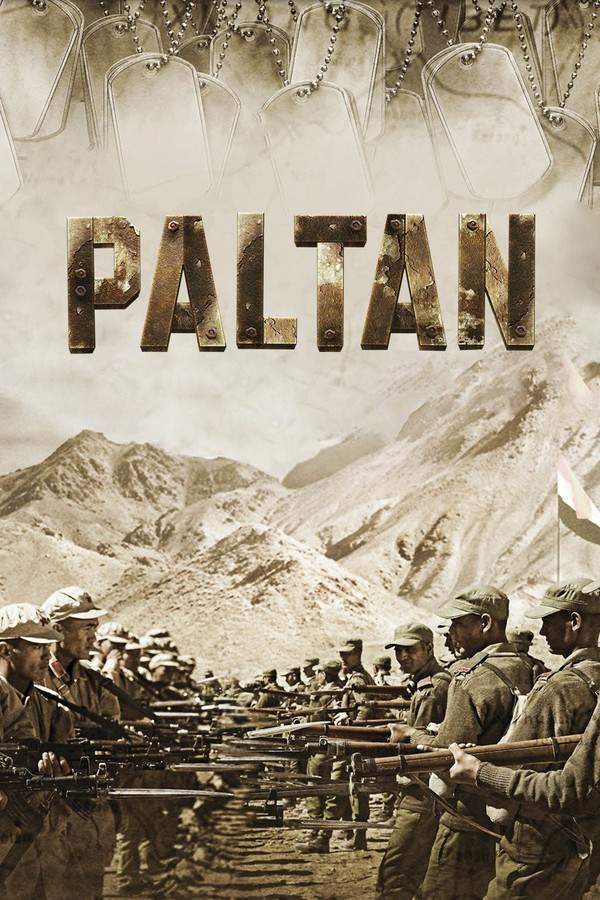
Paltan (2018) movie poster

Plot Summary

Paltan (2018) Plot Summary Explained

Release, runtime and language
2018 · 150 min · Hindi
Echo score 31
Directed by
J.P. Dutta
Starring
Abdul Quadir Amin, Arjun Rampal, Jackie Shroff, Esha Gupta, Abhilash Chaudhary, Bijou Thaangjam

During a period of heightened tensions, Indian soldiers confront a powerful Chinese force in this action-packed war drama. Paltan depicts the events of the 1967 Nathu La clashes, exploring the complexities of India-China relations and the importance of unwavering vigilance. The film portrays the bravery and sacrifices made by Indian troops amidst a dangerous military standoff.

On this page (6)
  1. 1 Where to watch
  2. 2 What happens: full plot
  3. 3 Plot questions answered
  4. 4 Movie threads
  5. 5 Movies like Paltan
  6. 6 Every angle

Where to watch

Where to Watch Paltan (2018)

Where can you watch Paltan? Stream, rent or buy it in the US, including on Amazon Video: current JustWatch availability with up-to-date prices.

Streaming availability powered by JustWatch

Full plot summary · contains spoilers

What Happens in Paltan: Full Plot Summary

The whole story of Paltan (2018) explained, from the opening scene to the final frame: every key event, every twist and what it all adds up to. Read it as a quick recap before the sequel, to check a scene you missed, or to finally understand what really happened.

In October 1962, a Rajput Battalion is stationed at India's border near the Namka Chu river in Arunachal Pradesh. This battalion suffers a devastating blow when an unexpected attack leads to their complete annihilation during the early morning hours.

Fast forward to 1966, where Maj. General Sagat Singh (Jackie Shroff), the General Officer Commanding of the Mountain Division, assigns Lt. Col. Rai Singh Yadav (Arjun Rampal), the commanding officer of the 2 Grenadiers, to secure the strategic Nathu La pass. Recognizing the pass's critical importance to Sikkim, Gen. Sagat impresses upon Rai the necessity of holding this position at all costs, leading to a tense standoff. We also meet Maj. Bishen Singh (Sonu Sood), Rai's second-in-command, and Capt. Prithvi Singh Dagar (Gurmeet Choudhary), who views Bishen as his role model.

Amidst plans for defense, Maj. Harbhajan Singh (Harshvardhan Rane) seeks vengeance for the brutal treatment of Rajput soldiers back in 1962 at the hands of the Chinese. The Chinese military exacerbates tensions by constructing new bunkers along the border, signaling preparations for potential conflict.

Back at home, the emotional strain of military life is felt as Harbhajan’s girlfriend, Harjyot Kaur (Monica Gill), finds herself frustrated with his unwillingness to reject marriage proposals from his family. Conversely, Prithvi's fiancé, living in a conservative village, struggles with expressing her affection for a man known for his flirtatious nature.

As tensions rise, the Chinese employ various provocative tactics against Rai's troops, consistent with the strategies outlined in Mao's Red Book on guerrilla warfare. Rai counters with psychological methods, leading to a series of aggressive exchanges, including the construction of Chinese defensive positions that infringe upon Indian territory.

To gather intelligence, Rai orders 2Lt. Attar Singh (Luv Sinha) to infiltrate Chinese territory. His findings indicate significant military mobilization aimed at taking control of Nathu La. In response to further incursions, Sagat mandates the establishment of a demarcated fencing along the border, which the Chinese immediately attempt to dismantle, fueling confrontations that escalate into full-blown skirmishes.

As anxieties mount, the Chinese provoke a direct confrontation by firing on Indian troops working on the fencing. The Indian army retaliates, resulting in notable casualties on both sides. Although Rai calls for artillery support, he is ordered to maintain his position, leading to an unforeseen invasion by the Chinese troops. Unbeknownst to them, the Chinese have secretly dug a tunnel facilitating troop movement close to the border.

In a desperate act of heroism, Dagar sacrifices himself to destroy the tunnel, disrupting Chinese reinforcements. Tragically, Harbhajan also falls in an attempt to fend off the final surge of enemy troops.

Eventually, artillery orders are sanctioned, allowing the Indian forces to eliminate remaining threats on the Chinese side. After a fierce three-day battle, the Chinese are compelled to surrender. They request the retrieval of their fallen soldiers, agreeing to return Indian bodies only under the condition that India acknowledges its territorial violation. The conflict leaves a lasting mark, as the fencing at Nathu La solidifies its status, cemented by the valiant efforts and sacrifices of those who defended it.

Last updated: October 25, 2024 at 09:43

Was this helpful?

Plot questions answered

Paltan Plot Explained: Your Questions Answered

The questions people ask most about Paltan (2018): what happens in the confusing scenes, why the characters do what they do, the twists, hidden details and what the ending means. Each answer contains spoilers.

Q1

Why was the Rajput Battalion destroyed in 1962?

The Rajput Battalion was stationed at the Namka Chu river in Arunachal Pradesh during October 1962. During an early morning attack, they suffered complete annihilation due to an unexpected Chinese assault. This devastating defeat highlighted India's vulnerability along the border and directly motivates characters like Harbhajan Singh who seek vengeance for the brutal treatment of their fellow soldiers.

Foreshadowing: The 1962 annihilation serves as the backstory that drives Harbhajan's quest for revenge throughout the film.

  • 1962 attack
  • namka chu river
  • rajput battalion
  • chinese attack
  • arunachal pradesh
Q2

Why was Lt. Col. Rai Singh assigned to Nathu La?

Maj. General Sagat Singh assigned Lt. Col. Rai Singh Yadav, commander of the 2 Grenadiers, to secure the strategic Nathu La pass in 1966. The pass held critical importance to Sikkim's security, and Sagat emphasized that holding this position was essential, making Rai the key officer in what would become a tense military standoff.

  • rai singh yadav
  • nathu la
  • sikkim
  • sagat singh
  • mountain division
Q3

What provocations did the Chinese use at Nathu La?

The Chinese employed multiple provocative tactics consistent with Mao's Red Book on guerrilla warfare. They constructed new bunkers along the border, built defensive positions that infringed on Indian territory, attempted to dismantle the border fencing established by Indian troops, and ultimately fired on Indian soldiers working on the fence. These escalations were designed to test and provoke Indian responses.

Foreshadowing: The bunkers constructed early in the conflict foreshadow the larger military buildup the Chinese were planning.

  • chinese provocations
  • bunkers
  • border fencing
  • mao red book
  • guerrilla warfare
Q4

Why did Major Harbhajan Singh want revenge?

Major Harbhajan Singh sought vengeance specifically for the brutal treatment and ultimate destruction of the Rajput Battalion in 1962. The memory of that devastating attack, where his fellow Indian soldiers were annihilated at the Namka Chu river, drove his desire to confront and defeat the Chinese forces at Nathu La.

  • harbhajan singh
  • revenge
  • 1962
  • rajput battalion
  • namka chu
Q5

How did the Chinese tunnel help their invasion?

The Chinese secretly dug a tunnel that allowed their troops to move close to the border without being detected. This tunnel enabled a surprise invasion during the standoff, allowing Chinese forces to bypass the visible border positions and infiltrate Indian territory unexpectedly, creating a critical tactical advantage that threatened the Indian defenders.

  • chinese tunnel
  • surprise invasion
  • troop movement
  • border infiltration
  • nathu la battle
Q6

Why did Captain Dagar sacrifice himself to destroy the tunnel?

Captain Prithvi Singh Dagar sacrificed himself to destroy the tunnel because it was allowing Chinese reinforcements to flow through and strengthen their attack on Indian positions. By blowing up the tunnel, Dagar cut off the critical supply line of fresh Chinese troops, significantly weakening the enemy assault despite the ultimate cost of his own life.

  • prithvi singh dagar
  • tunnel sacrifice
  • chinese reinforcements
  • hero
  • nathu la
Q7

Why was Major Harbhajan Singh killed at Nathu La?

Major Harbhajan Singh was killed during a final surge of Chinese troops as he attempted to defend against overwhelming odds. After the tunnel was destroyed and the battle reached its climax, Harbhajan fell while fighting off the last major enemy assault, sacrificing his life in the process.

  • harbhajan singh death
  • final battle
  • chinese surge
  • sacrifice
  • nathu la
Q8

Why did the Chinese surrender at Nathu La?

After a fierce three-day battle, the Chinese forces were compelled to surrender when India finally received authorization for artillery support. This allowed Indian forces to eliminate remaining threats on the Chinese side, breaking their offensive capability and forcing their surrender.

  • chinese surrender
  • three-day battle
  • artillery support
  • nathu la victory
  • india
Q9

What was the condition for returning soldiers' bodies?

After the Chinese surrender, they requested the retrieval of their fallen soldiers. However, they agreed to return Indian bodies only under the condition that India acknowledged its territorial violation. This bitter negotiation marked the tense conclusion to the conflict.

  • soldiers bodies
  • territorial violation
  • china
  • india
  • negotiation
Q10

Why did India maintain position instead of using artillery earlier?

When Rai called for artillery support during the Chinese invasion, he was ordered to maintain his position rather than use heavy artillery. This restriction forced the Indian troops to defend primarily with small arms and personal bravery until artillery orders were finally sanctioned later in the battle, allowing the decisive counterattack that led to Chinese surrender.

  • artillery support
  • maintain position
  • orders
  • ra i singh
  • military command

Movie threads

More Movies Like Paltan, by Mood & Story

Curated lists built around what makes Paltan tick: the same mood, the same kind of story or the same emotional payoff. Each list explains why these movies belong together.

Military Standoff Movies like Paltan

High-stakes dramas where opposing forces are locked in a tense stalemate. Discover more movies like Paltan that explore tense military standoffs and border disputes. These films capture the psychological pressure and strategic brinkmanship of historical conflicts, focusing on stories where the threat of war is as powerful as the battle itself.

  • tense
  • patriotic
  • strategic
  • anxious
  • confrontational
  • somber
  • Tone: tense, somber, confrontational
  • Pacing: steady, building pressure
Why these movies?

The story pattern: Stories in this thread typically follow a linear progression from initial friction to a high-tension stalemate, culminating in a climactic, often tragic, confrontation. The narrative focuses on command decisions, troop morale, and the psychological toll of waiting for the other side to make a move.

Why they belong together: These movies are grouped together because they share a core focus on the tension of a standoff. They create a specific, anxious mood built on strategic depth, national pride, and the immense pressure felt by soldiers and commanders facing a formidable opponent.

Bittersweet War Movies like Paltan

War stories where tactical success comes with profound personal loss. If you liked the ending of Paltan, explore other war movies with bittersweet victories. These similar films depict military success that is tempered by significant loss, exploring the complex emotions of winning a battle while mourning the fallen.

  • bittersweet
  • tragic
  • heroic
  • somber
  • sacrifice
  • emotional
  • Tone: bittersweet, tragic, heavy
  • Pacing: steady, character-driven
Why these movies?

The story pattern: The narrative arc follows characters through the brutality of war, building camaraderie and highlighting individual sacrifices. The climax achieves a military objective, but the resolution is dominated by mourning and reflection on the lives lost, leaving the audience with a mix of pride and sorrow.

Why they belong together: These films are united by their emotionally complex endings. They balance the glory of victory with the sobering reality of sacrifice, creating a powerful and resonant viewing experience that acknowledges the true cost of war.

If you liked this

Movies Like Paltan

Similar movies to Paltan: the same genre, themes or kind of story. Each one comes with its own plot summary, timeline and ending explained.

Browse all movie summaries

Every angle

Paltan (2018) Explained: Plot, Timeline & Characters

Everything about Paltan in one place: what happens in the plot summary, the timeline in chronological order, the characters and meaning and a spoiler-free summary. What's After the Movie adds the cast, box office and post-credit scenes.

Coming soon on iOS and Android

The Plot Explained Movie Summary App

Plot summaries, endings explained and timelines on your phone. Catch up on any movie in minutes, save your favorites and never miss a twist again.

Be the first to know when we launch. Your email stays private, always.

Learn more about the app