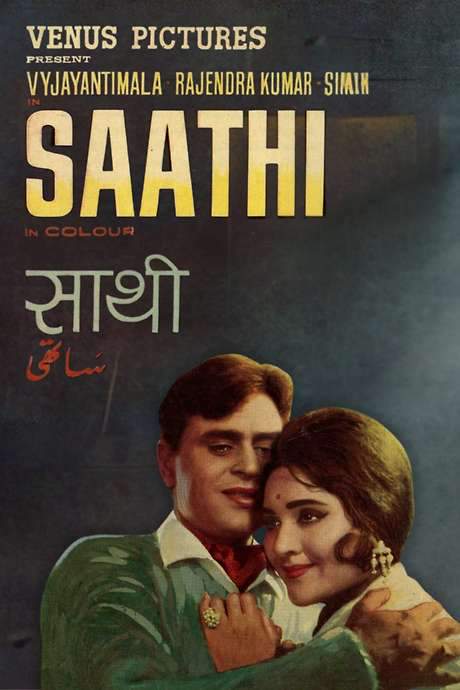
Dr. Colonel Saab Nazir Hussain is the head of the psychiatry ward in a hospital, a steady presence who has seen war-torn minds and fragile recoveries pressed into the same quiet hallways. In this ward, Nurse Radha Waheeda Rehman tends to her patients with meticulous care, yet her heart bears a wound that she cannot quite seal. She is still nursing the ache of a civilian patient, Dev Kumar Dharmendra (Patient #24) whom she helped heal, but who left the hospital, leaving behind an ache that colors every corner of the ward and every cautious interaction with new souls who arrive seeking calm.
Into this tense, delicate world arrives Arun Choudhury Rajesh Khanna, a writer and a poet who steps into the ward with a storm of acute mania. His distress follows a painful rejection from his lover, Sulekha Snehlata, a singer whose voice had once offered him solace but could not alter the course of his heartache. Initially, Radha is wary and refuses to take him in, trying to hold professional boundaries firm and clear. Yet, the pull of compassion, the calling to tend a mind in turmoil, eventually moves her to relent and offer Arun a chance at care.
As Radha attends to Arun, the nurse’s professional calm becomes a mirror for her own tangled feelings. In the quiet between treatments and conversations, she revisits her memories and shares a story from her own past: how she cared for injured brave army soldiers when she was posted in Ladakh during the Sino-Indian war of 1962. The recollection is vivid, a reminder of duty under fire and the humanity that persists even in the hardest times. This memory is not just a backdrop; it drapes itself over every moment she spends with Arun, coloring her tenderness with a longing that worries even her, a worry that she might be repeating a familiar, dangerous pattern.
Over time Arun responds to treatment and Slowly, the mania eases; he seems to be moving toward recovery. Yet Radha’s connection to him deepens in ways that feel more than professional. The line between caregiver and patient begins to blur, and Radha’s emotions grow more complicated—so much so that the protection she once maintained around her own heart begins to falter. The strain of this dual role begins to weigh on her mind and she slips into a state of emotional strain herself.
Irony arrives with a quiet, almost cruel twist: Radha ends up being admitted to the same ward, to the same room, as she watches the labels and doors that once defined boundaries close in on her. Colonel Sahab observes the change with a heavy resignation, realizing that he had always seen a devoted nurse in her, and that the woman inside the nurse—tender, fallible, and human—had been hidden behind a disciplined exterior for too long. The transformation is complete enough to feel like a fracture, yet the work of healing still has miles to go.
Amid the professional and personal tremors, Arun makes a hopeful promise: he will wait for her recovery, staying by her side in the quiet vigil that the ward affords. The narrative thus threads a delicate balance between care and longing, duty and desire, and the enduring question of whether healing can truly happen when the healer’s own heart is laid bare. The story holds a mirror to the enduring impulse to care for others even as the care we offer is, at times, the care we most need ourselves.