Plot Explained Spoilers guaranteed!
Plot Explained

Browse by genre

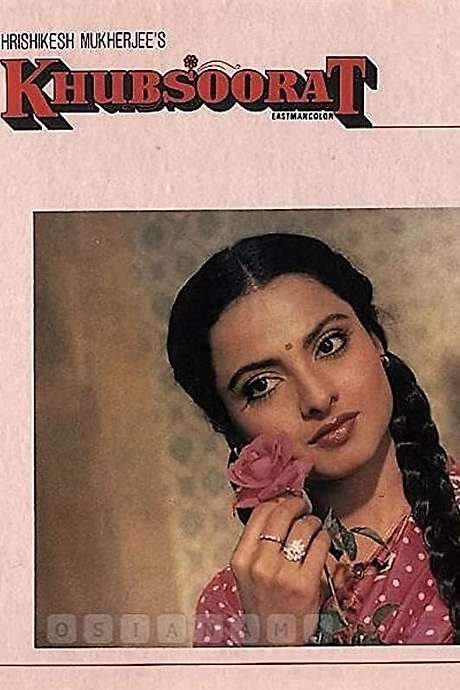
Khubsoorat (1980) movie poster

Plot Summary

Khubsoorat (1980) Plot Summary Explained

Release, runtime and language
1980 · 126 mins · Hindi
Directed by
Hrishikesh Mukherjee
Starring
Ranjit Chowdhry, Dina Pathak, Rakesh Roshan, Rekha, Anand, Ashok Kumar

Nirmala Gupta governs her household with an iron fist. Though most family members resent her authoritarian ways, they obey and strive to appease her. When the free‑spirited sister of her daughter‑in‑law stays for a few days, her lively presence unsettles the Gupta family and provokes Nirmala’s irritation.

On this page (5)
  1. 1 What happens: full plot
  2. 2 Plot questions answered
  3. 3 Movie threads
  4. 4 Movies like Khubsoorat
  5. 5 Every angle

Full plot summary · contains spoilers

What Happens in Khubsoorat: Full Plot Summary

The whole story of Khubsoorat (1980) explained, from the opening scene to the final frame: every key event, every twist and what it all adds up to. Read it as a quick recap before the sequel, to check a scene you missed, or to finally understand what really happened.

In Pune, middle-aged Nirmala Gupta [Dina Pathak] is a strict disciplinarian who runs her household by a rigid code of rules. She believes a orderly, rule-bound life is the key to keeping the family together, and she enforces these expectations on everyone living under her roof. Even though her husband Dwarka Prasad Gupta [Ashok Kumar] and her son Inder Gupta [Rakesh Roshan] may privately chafe at the rigidity, they all go along, hoping harmony will prevail.

Nirmala arranges a marriage between her second son Chander Gupta and Anju Dayal [Aradhana]. Anju, who hails from Mumbai, is the daughter of the affluent widower Ram Dayal [David Abraham Cheulkar] and the elder sister of Manju Dayal [Rekha]. The setup seems conventional at first, but it sets in motion a delicate balance of power, affection, and hidden grievances that will test the family’s bonds.

After the wedding, Manju comes to live with Anju for several months. She is playful, open, and unfazed by the stern rules that govern the Gupta household, qualities that instantly create a rift with Nirmala. Inder Gupta, meanwhile, finds himself drawn to Manju, and their growing affection complicates the already tense atmosphere at home. Manju’s warmth and ease with people win the trust of most family members, including Dwarka Prasad, who appreciates her ability to bring lightness into the household. Yet Nirmala remains wary and increasingly isolated, viewing Manju as a threat to the order she has built around the family.

The situation comes to a head when Manju, with the support of Inder and the others, stage a small play that openly casts Nirmala’s tyranny in a light that many in the family have long felt but few dared to acknowledge. The performance takes place while Nirmala is away from the house, and when she discovers it, she is deeply hurt. She feels betrayed not just by Manju’s audacity but by the implication that her authority isn’t absolute. The audience for the play, who once admired her discipline, now see her through a critical lens, and the realization stings more because many in the family—those outside the inner circle—seem more comfortable with Manju, the outsider, than with Nirmala herself.

The next days are uneasy. For a wedding, Inder and the rest of the family depart, leaving Manju and Nirmala with Dwarka Prasad and a few others. When Manju apologizes to Nirmala, the matriarch’s response is harsh: she banishes Manju from the house. Dwarka Prasad, angered by the punishment, confronts Nirmala and suffers a serious heart attack as a result. The crisis jolts the household, and Manju acts quickly to save Dwarka Prasad, stepping in at a moment of great danger to ensure his life is spared.

In the aftermath, Nirmala begins to understand the real character behind Manju’s outward charm. The tension eases, though the family remains divided by the day’s events. When Inder and the others eventually return home, Manju chooses to leave, though Inder follows her to the railway station in a bid to reconcile, with Nirmala insisting on a difficult, emotional boundary between tradition and affection. In the end, however, the bond between Inder Gupta and Manju Dayal endures and culminates in their marriage, signaling a new harmony that acknowledges both duty and desire within the family.

The story unfolds with a quiet, observational tone that emphasizes family dynamics, generational expectations, and the ways love can challenge the strict uses of power within a household. Through the arc of Nirmala, Inder, Anju, and Manju, it explores how mercy, understanding, and trust can emerge even after deepest conflict, reshaping relationships and redefining what it means to be a family.
Last updated: October 09, 2025 at 15:00

Was this helpful?

Plot questions answered

Khubsoorat Plot Explained: Your Questions Answered

The questions people ask most about Khubsoorat (1980): what happens in the confusing scenes, why the characters do what they do, the twists, hidden details and what the ending means. Each answer contains spoilers.

Q1

Why does Nirmala banish Manju from the house?

Nirmala banishes Manju after she apologizes for staging the play that portrayed Nirmala as a tyrant. The play, which was performed while Nirmala was away, directly challenged her authority and depicted her as a dictator who suppresses freedom in the household. Manju's apology does not soften Nirmala; instead, she sees the apology as insufficient and the act as a betrayal of her hospitality. The banishment represents Nirmala's final stand against what she perceives as a threat to her established order.

Foreshadowing: Earlier, Manju had been openly breaking household rules and winning the affection of other family members, which already signaled growing tension.

  • nirmala
  • manju
  • banishment
  • household rules
  • tyranny
Q2

What causes Dwarka Prasad's heart attack?

Dwarka Prasad suffers a heart attack after he confronts Nirmala about her decision to banish Manju. When Manju is expelled from the house, Dwarka Prasad, who had grown fond of Manju's warmth and liveliness, confronts Nirmala in anger. The heated argument escalates quickly, and the stress of the confrontation triggers his heart attack. This crisis occurs immediately after the banishment and shocks both Nirmala and Manju.

Foreshadowing: Dwarka Prasad had previously expressed his appreciation for Manju's presence, showing his preference for her over Nirmala's strict ways.

  • dwarka prasad
  • heart attack
  • nirmala
  • confrontation
  • manju
Q3

How does Manju save Dwarka Prasad after his heart attack?

Manju acts quickly when Dwarka Prasad collapses from the heart attack, using immediate medical intervention to stabilize him. She summons help without delay and ensures he receives proper medical attention. Her quick thinking during the crisis contrasts sharply with Nirmala's paralysis at the moment. This act of compassion and competence shifts the family's perception of Manju, demonstrating her genuine care for family members despite the recent conflict.

  • manju
  • dwarka prasad
  • save
  • heart attack
  • medical intervention
Q4

Why does Nirmala change her attitude toward Manju?

Nirmala's attitude shifts after she witnesses Manju's selfless act of saving Dwarka Prasad from his heart attack. When the crisis hits, Manju immediately takes charge and ensures Dwarka Prasad gets the help he needs, showing genuine compassion and capability. Seeing Manju's true character, her warmth, loyalty, and ability to act under pressure, makes Nirmala realize she misjudged her. The life-threatening situation forces Nirmala to recognize that Manju genuinely cares for the family, not just for causing disruption.

Foreshadowing: Dwarka Prasad had earlier praised Manju, hinting at qualities Nirmala overlooked.

  • nirmala
  • manju
  • character transformation
  • understanding
  • compassion
Q5

Why does Inder follow Manju to the railway station?

Inder follows Manju to the railway station because he loves her and wants to prevent her from leaving permanently. After the family returns from the wedding and Manju decides to leave the Gupta house, Inder pursues her, hoping to reconcile and convince her to stay. His pursuit represents his commitment to their relationship and his refusal to let her go without a fight. Nirmala accompanies them to the station, wrestling with her own feelings about the situation.

  • inder
  • manju
  • railway station
  • love
  • pursuit
Q6

What was the play Manju staged about?

The play that Manju staged was a dramatization of Nirmala's tyranny and the household's potential under more lenient governance. With support from Inder and other relatives, Manju performed a small play that openly depicted Nirmala as a strict ruler who suppresses freedom within the home. The performance took place on a day when Nirmala was believed to be away, but she accidentally discovers the production. The play represented the unspoken grievances that other family members had long held but never expressed directly.

  • manju
  • play
  • performance
  • nirmala
  • tyranny
  • criticism
Q7

Why does Inder fall in love with Manju?

Inder falls in love with Manju because of her vivacious personality, warmth, and ability to bring lightness into the otherwise rigid household. During her months-long stay, Manju's playful and unfazed nature contrasts sharply with Nirmala's strict discipline, making Manju immediately appealing. Her charm wins over most family members, including Dwarka Prasad, and Inder is particularly drawn to her liveliness. Manju's kindness and authenticity create a connection that deepens into romantic affection.

  • inder
  • manju
  • love
  • attraction
  • charm
  • vivacious
Q8

Why is Nirmala so strict with her family?

Nirmala maintains strict discipline because she believes that orderly, rule-bound living is essential for keeping the family together. She governs her household with rigid laws and expects everyone to follow them without question. Though family members may privately resent her control, Nirmala sees her approach as necessary for maintaining harmony and family unity. Her authoritarian style stems from a genuine, if misguided, belief that strictness protects the family structure.

  • nirmala
  • discipline
  • strictness
  • family rules
  • control
Q9

How do Inder and Manju end up getting married?

Inder and Manju marry at the film's end, uniting their families after the conflicts have been resolved. After Inder pursues Manju to the railway station and Nirmala stops Manju from leaving, the path toward reconciliation opens. Nirmala's boundary between tradition and affection proves difficult, but ultimately the bond between Inder and Manju endures. The marriage represents a new harmony that balances duty and desire, with the family accepting their union as a resolution to the story's central conflict.

  • inder
  • manju
  • marriage
  • wedding
  • union
  • resolution
Q10

Why does Manju stage the play despite knowing the risks?

Manju stages the play to give voice to the unspoken frustrations that other family members feel toward Nirmala's authoritarian rule. With support from Inder and some relatives, she uses the private gathering as an opportunity to dramatize how the household could prosper with more freedom. Manju likely believes the play will remain hidden from Nirmala, misjudging the situation. Her action, though risky, stems from a desire to challenge the oppressive atmosphere she has witnessed during her stay.

  • manju
  • play
  • rebellion
  • family tensions
  • criticism

Movie threads

More Movies Like Khubsoorat, by Mood & Story

Curated lists built around what makes Khubsoorat tick: the same mood, the same kind of story or the same emotional payoff. Each list explains why these movies belong together.

Movies about free spirits shaking up a family like Khubsoorat

An outsider's lively presence disrupts a rigid family, bringing joyful chaos and healing. If you enjoyed the dynamic of a free-spirited character bringing life to a rigid household in Khubsoorat, you'll love these movies. This thread gathers heartwarming stories where an outsider's arrival challenges family traditions, creating uplifting conflict and ultimately leading to harmony and love.

  • heartwarming
  • challenging
  • domestic
  • family warmth
  • uplifting
  • gentle conflict
  • Tone: hopeful, heartwarming
  • Pacing: steady, character-driven
Why these movies?

The story pattern: The narrative follows a predictable but satisfying arc: introduction of the disruptor, initial friction and rebellion, a climactic event that forces reevaluation, and a final resolution where the family structure is revitalized rather than broken. The journey is from strict control to compassionate integration.

Why they belong together: These films are grouped by their shared focus on domestic renewal through an external catalyst. They balance gentle conflict with a hopeful, heartwarming tone, creating an uplifting experience centered on the transformative power of individuality within a family unit.

Heartwarming family dramas with gentle conflict like Khubsoorat

Stories where domestic disagreements lead to deeper understanding and stronger bonds. Looking for more movies like Khubsoorat? This collection features uplifting family stories where interpersonal tensions and generational clashes are resolved in a hopeful, satisfying way. These dramas offer a medium level of emotional weight but are ultimately comforting and positive.

  • uplifting
  • heartwarming
  • family dynamics
  • observational
  • gentle conflict
  • hopeful
  • Tone: hopeful, uplifting
  • Pacing: steady, linear
Why these movies?

The story pattern: Narratives in this thread are straightforward, focusing on a central domestic conflict that is resolved through communication and empathy. The stakes are personal and emotional, often involving themes of control, tradition, and acceptance, culminating in a happy or bittersweet ending that affirms family unity.

Why they belong together: They share a specific emotional mix: a medium intensity of interpersonal drama balanced by a consistently hopeful tone and a steady pacing. The experience is observational and uplifting, leaving the viewer with a sense of warmth and resolution.

If you liked this

Movies Like Khubsoorat

Similar movies to Khubsoorat: the same genre, themes or kind of story. Each one comes with its own plot summary, timeline and ending explained.

Browse all movie summaries

Every angle

Khubsoorat (1980) Explained: Plot, Timeline & Characters

Everything about Khubsoorat in one place: what happens in the plot summary, the timeline in chronological order, the characters and meaning and a spoiler-free summary. What's After the Movie adds the cast, box office and post-credit scenes.

Coming soon on iOS and Android

The Plot Explained Movie Summary App

Plot summaries, endings explained and timelines on your phone. Catch up on any movie in minutes, save your favorites and never miss a twist again.

Be the first to know when we launch. Your email stays private, always.

Learn more about the app