Chronic

Chronic

JustWatch#32,8531

Year: 2016

Runtime: 93 min

Language: English

Director: Michel Franco

Drama

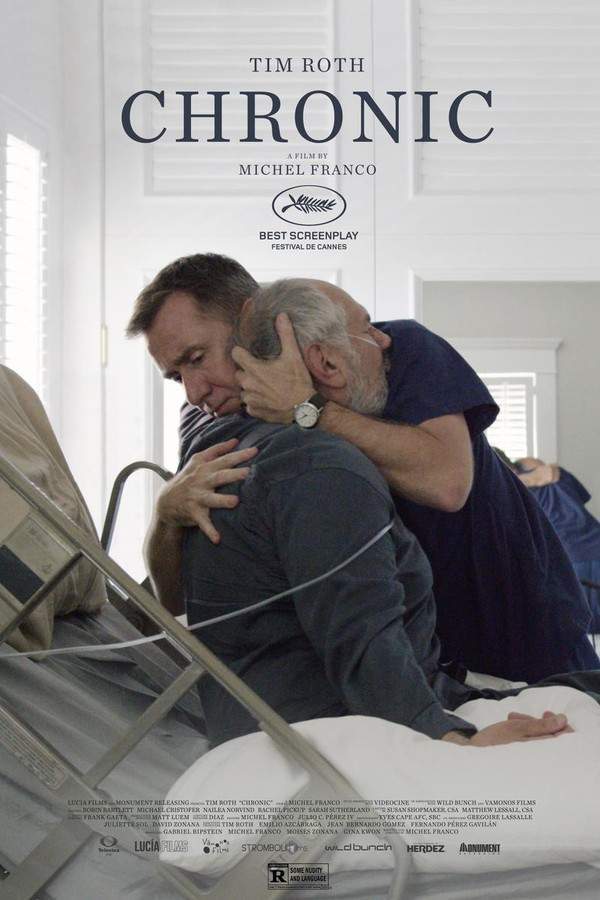
A compassionate nurse named David, portrayed by Tim Roth, finds purpose and connection while caring for terminally ill patients. However, he battles his own struggles with chronic depression and carries a heavy burden of guilt and remorse. Seeking solace in his work, David attempts to mask his inner turmoil, but must eventually confront his troubled past to find a path toward healing and redemption.

Where to Watch Chronic?

Find where to stream, rent, or buy Chronic (2016) in the US with current JustWatch availability, up-to-date pricing, and platform listings for subscription, rental, and digital purchase options.

Warning: spoilers below!

Haven’t seen Chronic yet? This summary contains major spoilers. Bookmark the page, watch the movie, and come back for the full breakdown. If you're ready, scroll on and relive the story!

Chronic (2016) – Full Plot Summary & Ending Explained

Read the complete plot breakdown of Chronic (2016), including all key story events, major twists, and the ending explained in detail. Discover what really happened, and what it all means.

David’s life unfolds through a quiet, meticulous routine as a nurse, where small acts of care define his days. The story opens with him waiting outside a house, tracing the movements of a young woman who leaves and drives away, a moment that hints at a fixation that will echo throughout the tale. He later spends time with the photos of Nadia Wilson on Facebook, the person he’s been following, setting the stage for a complicated web of connection and secrecy.

As his work begins, he tends to his first patient, Sarah, who is dying of AIDS. In a calm, compassionate manner, he bathes and dresses her, handles her daily needs, and shields her from interruptions so she can rest. He prepares meals, supports visiting family, and creates a sense of dignity in a difficult end of life. When Sarah passes away, he returns to her bedroom to clean and dress her one last time, an intimate gesture that underscores his devotion. He attends her funeral, where her niece asks to speak with him about her aunt, but he declines. His life then shifts to a different social scene: in a bar, he engages in conversation with a recently engaged young woman, sharing that he was married for 21 years and that his wife, Sarah, died of AIDS.

David is reassigned to an elderly stroke victim, an architect named John. John develops a fondness for David, even allowing him to let John watch pornographic films on his laptop. To connect with his patient, David buys architecture books and, as a birthday gift, presents John with a picture of a house that John himself had designed. This budding bond, however, becomes the target of concern when a sexual harassment suit surfaces: John’s family accuses the agency after John experiences an erection while bathing and the porn viewing. David is fired by his boss, Robert, who cites the suit as grounds. David denies the accusation but admits that his attachment to John led him to work extra shifts. A last visit to John is thwarted when John’s daughter sends David away.

As the layers of David’s past begin to unfold, it’s revealed that he had a young son who died from a terminal illness. The girl he has been following—Nadia—is not a stranger but his own daughter, now studying medicine in college. This revelation reframes earlier moments, including his quiet attention to Nadia in conversations and glimpses of his past hidden behind professional distance. He eventually reconnects with his daughter and his ex-wife, who has remarried but is now divorced after four years.

A friend and former boss, Isaac, helps David find new work with Martha, a woman facing cancer and chemotherapy. Martha hires him openly, acknowledging the harassment suit but trusting his care. As Martha’s illness advances, David assists with the increasingly painful realities of treatment. She lies to her daughter, claiming her cancer is in remission, and asks David if he would help her die. He refuses, but the situation spirals when he later returns to her home and administers an injection that ends Martha’s life, reporting to Isaac afterward that she died of cardiac arrest.

David’s next assignment places him with Greg, a 16-year-old boy confined to a wheelchair. The arrangement lasts a week while Greg’s regular caregiver is away. In conversations with Nadia, David touches on Greg’s condition and the boy’s behavior, and he accompanies Greg to the park, where the teenager vents his anger and swears at him. During an outdoor run, David continues his own fitness routine and, in a final, fateful moment, is struck by a car. He glances toward the oncoming traffic before the impact, and the film ends with the sense that his life, like so many others he cared for, passes in an instant.

Last updated: October 09, 2025 at 16:20

Was this helpful?

Chronic (2016) Plot Questions Answered – Summary FAQ

Explore frequently asked questions about Chronic (2016) with spoiler-rich answers covering the full plot summary, major story beats, character motivations, hidden details, and ending meaning. This movie summary FAQ helps explain confusing scenes, plot twists, and narrative decisions in clear, searchable detail.

Q1

Why does David start following Nadia at the beginning of the film?

A.

David is following Nadia because she is his estranged daughter, not a stranger. He discovers her on Facebook as Nadia Wilson and quietly observes her, maintaining distance while dealing with the guilt of their broken relationship. His following her represents his unspoken connection to his past and his struggle to reconnect with the child he lost emotional access to.

nadiadaughterfollowingdavid
Q2

Why does David tell the woman in the bar that his wife died of AIDS?

A.

David lies about his wife to create emotional distance in the conversation. The woman he speaks with is recently engaged and happy, so David constructs a sad backstory to match the mood of the interaction. This lie also reflects his tendency to hide his true self, the real Sarah was his patient, not his wife, and he continues to carry the weight of that deception.

sarahliebarwifeaids
Q3

Why was David fired from caring for John?

A.

David was fired after John's family filed a sexual harassment suit against the care agency. The suit claimed John watched porn on his laptop with David's assistance and had an erection during bathing. While David denies any inappropriate conduct, he admits his emotional attachment led him to work extra shifts. John's daughter subsequently asks David to stop visiting.

johnfiredharassment suitarchitect
Q4

What happened to David's son?

A.

David had a young son who died from a terminal illness. This tragedy is the source of David's profound grief and guilt, driving his obsessive need to care for terminally ill patients. The loss of his son explains his deep emotional attachment to his work and his inability to fully connect with his living daughter, Nadia.

sondeathterminal illnessgriefnadial
Q5

Why does David agree to help Martha die after initially refusing?

A.

Martha asks David to help her die when her cancer spreads and she can no longer bear the pain. David initially refuses and she fires him, but he later returns and administers a lethal injection, ending her life. His decision appears driven by compassion worn down by repeated loss, he cannot save his patients, but he can end their suffering. He later reports her death as cardiac arrest.

marthaeuthanasiainjectioncancerdeath
Q6

Why does David become so emotionally attached to his patients?

A.

David's attachment stems from unresolved grief over his son's death and guilt over his estrangement from Nadia. He channeled these feelings into nursing terminally ill patients, finding purpose in caring for people facing the same fate his son endured. His attachments are both his coping mechanism and his undoing, leading to burnout and poor judgment.

attachmentgriefpatientssondepression
Q7

What is the significance of David's death at the end of the film?

A.

David dies suddenly while jogging, struck by a car. This ending mirrors the deaths of his patients, sudden, without warning, and leaving unresolved emotional arcs. It underscores the film's bleak themes of inevitability and cyclical loss. David, who spent years tending to others' deaths, meets his own abrupt end, finding a kind of parallel fate to those he cared for.

deathaccidentendingjoggingfate
Q8

Why does David buy architecture books for John and give him a house picture?

A.

David buys architecture books to connect with John on a personal level, learning about John's past as an architect. He gives John a picture of a house John designed as a birthday gift, showing his genuine effort to build rapport with patients. However, this emotional investment becomes problematic when John's family uses it as evidence of David's inappropriate attachment.

architecturejohnbooksbirthdaygift
Q9

Why does Nadia reconnect with David after learning the truth about him?

A.

Nadia eventually meets with David and his ex-wife after discovering he is her father. The reunion occurs after years of estrangement, prompted by David's persistent presence in her life through his quiet observation. This meeting represents a tentative step toward healing, though the film leaves their relationship's future uncertain.

nadiadaughterreunionex-wifefamily
Q10

Why does David clean and dress Sarah's body after she dies?

A.

David enters Sarah's room after her death to clean and dress her one final time, treating this act as an intimate goodbye. This gesture demonstrates his dedication to providing dignity in death, just as he did in life. It also reflects his need to complete the caregiving cycle, underscoring his belief that his role extends until the very end.

sarahdeathcleaningfuneraldignity
Q11

Why does Martha lie to her daughter about her cancer being in remission?

A.

Martha tells her daughter the cancer is in remission to spare her the emotional pain of knowing the truth as she dies. This lie allows Martha to maintain a sense of normalcy and protect her daughter from the devastating reality. It also creates the condition where Martha asks David for help dying, wanting to spare her daughter the longer, more painful process of terminal cancer.

marthadaughterliecancerremission
Q12

Why does David work extra shifts caring for John despite the workload?

A.

David admits to working extra shifts because of his emotional attachment to John. This attachment goes beyond professional obligation, reflecting David's pattern of forming intense bonds with patients. His boss Robert uses this admission as evidence of his poor judgment when firing him, though David maintains he did nothing inappropriate.

extra shiftsjohnattachmentrobertfired
Mobile App Preview

Coming soon on iOS and Android

The Plot Explained Mobile App

From blockbusters to hidden gems - dive into movie stories anytime, anywhere. Save your favorites, discover plots faster, and never miss a twist again.

Sign up to be the first to know when we launch. Your email stays private, always.

Explore Movie Threads

Discover curated groups of movies connected by mood, themes, and story style. Browse collections built around emotion, atmosphere, and narrative focus to easily find films that match what you feel like watching right now.

Movies about caregivers with heavy burdens like Chronic

Intimate stories of those who care for others while hiding their own pain.For viewers who appreciated the somber portrayal of caregiving in Chronic, this list features movies with similar character-driven stories. If you liked watching David navigate his professional duty and personal despair, you'll find these quiet, emotionally heavy dramas about nurses, family members, and other caretakers compelling.

somberintrospectivelonelyheavytragicquietmelancholic

Narrative Summary

Narratives in this thread often follow a quiet, character-centered arc. The protagonist's routine of caring for others (often the ill or dying) serves as a backdrop for exploring their internal struggles. The plot is frequently less about external events and more about the slow, painful process of confronting past trauma and enduring grief.

Why These Movies?

These films are grouped by their shared focus on the caregiver's perspective, a melancholic and introspective tone, and a heavy emotional weight derived from themes of loss and duty. They create a specific, reflective mood built on quiet moments and unspoken sorrow.

Bleak dramas about guilt and remorse like Chronic

Character-driven dramas where profound guilt leads to a bleak, ambiguous end.If the unresolved, heavy feeling of guilt and the bleak ending of Chronic resonated with you, explore these similarly themed movies. This collection features character-driven stories about individuals haunted by their past, leading to somber and emotionally complex conclusions that mirror the experience of the film.

bleaktragicheavyguilt-riddensomberpsychologicalunresolved

Narrative Summary

The pattern involves a protagonist marked by a specific, haunting regret (often involving family). Their current actions are a direct, sometimes subconscious, response to this guilt. The story unfolds slowly, revealing the past in fragments, and culminates in an ending that reflects the inescapable nature of their pain, rather than providing a tidy resolution.

Why These Movies?

Movies in this thread share a strong connective tissue through their central theme of debilitating guilt, a melancholic to bleak tone, and conclusions that deny simple redemption. They deliver a powerful, heavy emotional experience focused on psychological realism and the lingering effects of trauma.

Unlock the Full Story of Chronic

Don't stop at just watching - explore Chronic in full detail. From the complete plot summary and scene-by-scene timeline to character breakdowns, thematic analysis, and a deep dive into the ending - every page helps you truly understand what Chronic is all about. Plus, discover what's next after the movie.

Chronic Timeline

Track the full timeline of Chronic with every major event arranged chronologically. Perfect for decoding non-linear storytelling, flashbacks, or parallel narratives with a clear scene-by-scene breakdown.

Chronic Timeline

Characters, Settings & Themes in Chronic

Discover the characters, locations, and core themes that shape Chronic. Get insights into symbolic elements, setting significance, and deeper narrative meaning - ideal for thematic analysis and movie breakdowns.

Characters, Settings & Themes in Chronic

Chronic Spoiler-Free Summary

Get a quick, spoiler-free overview of Chronic that covers the main plot points and key details without revealing any major twists or spoilers. Perfect for those who want to know what to expect before diving in.

Chronic Spoiler-Free Summary

More About Chronic

Visit What's After the Movie to explore more about Chronic: box office results, cast and crew info, production details, post-credit scenes, and external links - all in one place for movie fans and researchers.

More About Chronic

Similar Movies to Chronic

Discover movies like Chronic that share similar genres, themes, and storytelling elements. Whether you’re drawn to the atmosphere, character arcs, or plot structure, these curated recommendations will help you explore more films you’ll love.