

Plot Explained Spoilers guaranteed!
Plot Explained

Browse by genre

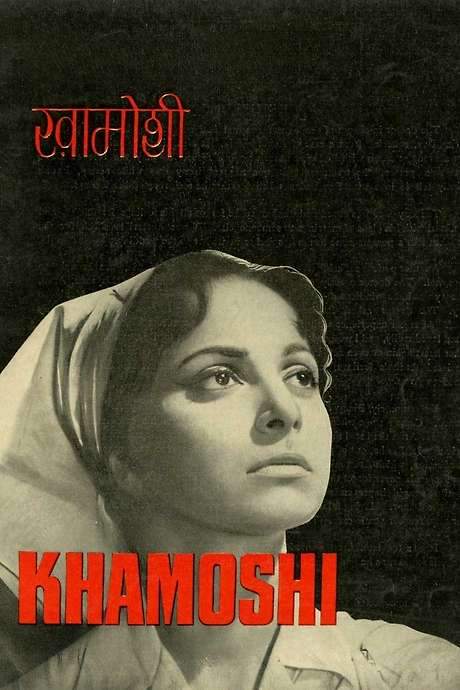
Khamoshi (1969) movie poster

Timeline

Khamoshi (1969) Timeline Explained – Every Event in Order

Release, runtime and language
1969 · 127 mins · Hindi
Directed by
Asit Sen
Starring
Waheeda Rehman, Dharmendra, Rajesh Khanna, Nazir Hussain, Snehlata

In a psychiatric ward, Colonel Sahab is the attending doctor and Nurse Radha (Waheeda Rahman) is heart‑broken after civilian patient Dev Kumar (Dharmendra) leaves, having fallen in love with him. When poet‑writer Arun Choudhury (Rajesh Khanna) is admitted with acute mania after a romantic rejection, Radha reluctantly nurses him. She reflects on her earlier duty caring for wounded soldiers in Ladakh during the 1962 Sino‑Indian war.

On this page (6)
  1. 1 Where to watch
  2. 2 Events in order (12)
  3. 3 Timeline questions answered
  4. 4 Movie threads
  5. 5 Movies like Khamoshi
  6. 6 Every angle

Where to watch

Where to Watch Khamoshi (1969)

Where can you watch Khamoshi? Stream, rent or buy it in the US: current JustWatch availability with up-to-date prices.

Streaming availability powered by JustWatch

12 events in order · contains spoilers

Khamoshi Timeline: Events in Chronological Order

Every key event of Khamoshi (1969) in order, scene by scene, with when and where it takes place. Use it to untangle flashbacks, time jumps and parallel storylines, to refresh your memory before the sequel or to find the exact scene you are thinking of.

  1. Dev Kumar leaves, Radha's heartbreak begins

    Nurse Radha, who has fallen in love with Dev Kumar, is heart-broken when the civilian patient is cured and leaves the hospital. Her inability to keep her heart separate from her professional duties foreshadows the emotional storms to come. Colonel Sahab, head of the psychiatry ward, notes the tension already bubbling in the ward.

    Where
    Hospital ward
  2. Arun Choudhary arrives as a patient

    Arun Choudhary, a writer and poet, is admitted with acute mania after being rejected by his lover Sulekha. Initially, Radha refuses to take care of him, but she eventually relents and agrees to supervise his care. The arrival of a volatile new patient shifts the ward dynamics.

    Where
    Hospital ward
  3. Radha begins caring for Arun

    Radha starts caring for Arun, setting aside her earlier reluctance. As she tends him, she starts to reminisce about her own past and moments that shaped her. The care scene deepens the emotional tension between her professional duties and personal feelings.

    Where
    Hospital ward
  4. Flashback to Ladakh and 1962

    During her care, Radha recounts her postings in Ladakh during the Sino-Indian War of 1962, where she tended injured army soldiers. The memory reveals the source of her compassion and the bravery she associates with care. The flashback adds a weighty backdrop to her present vulnerability.

    When
    1962
    Where
    Ladakh
  5. Arun gradually cures, Radha remains involved

    Arun gradually recovers from his manic episode, responding to Radha's treatment. Yet Radha's emotional involvement with him remains intense and unresolved. The improvement in Arun's condition contrasts with Radha's creeping emotional instability.

    Where
    Hospital ward
  6. Radha's emotional derangement surfaces

    Radha's emotions spiral into derangement, blurring the boundary between caregiver and lover. She struggles to maintain professional distance as her feelings for Arun deepen. The situation destabilizes the ward and foreshadows an imminent personal crisis.

    Where
    Hospital ward
  7. Radha is admitted to the same ward room

    Ironically, Radha is admitted to the same room of the ward that she once cared for Arun in. The role reversal forces her to confront her own vulnerabilities from a patient’s perspective. The change heightens the tension between her duties and desires.

    Where
    Hospital ward
  8. Colonel Sahab's realization

    Colonel Sahab expresses regret that he always saw a devoted nurse in Radha and failed to see the woman inside her. He begins to understand the depth of her struggle and the complexity of her emotions. The realization marks a turning point in how the staff perceives her.

    Where
    Hospital ward
  9. Arun vows to wait for Radha's recovery

    Arun promises to wait for Radha's recovery, showing loyalty and understanding despite the chaotic turn of events. He offers patience and supportive words as he remains under care. The pledge becomes a fragile anchor amid emotional turmoil.

    Where
    Hospital ward
  10. Boundary tensions rise in the ward

    The ward's atmosphere grows tense as personal longing interferes with clinical routine. Colleagues monitor Radha's condition and debate the boundaries between care and affection. The narrative tightens around the question of who should be cared for and how.

    Where
    Hospital ward
  11. Radha's ongoing crisis and staff reflection

    Radha's inner crisis deepens, prompting quiet conversations among the staff about duty, desire, and control. The line between professional responsibility and personal vulnerability becomes increasingly blurred. The hospital environment reflects and amplifies her turmoil.

    Where
    Hospital ward
  12. A suspended future

    Arun's pledge to wait for Radha's recovery lingers as the last note of the story, leaving their relationship suspended in the balance. The audience is left with a sense of cautious hope amid emotional turmoil and unresolved questions. The ending emphasizes the fragile boundary between care and affection.

    Where
    Hospital ward

Last updated: February 03, 2026 at 07:41

Was this helpful?

Timeline questions answered

Khamoshi Timeline Explained: Your Questions Answered

When does it happen, and why in that order? The questions people ask about the chronology of Khamoshi (1969): time jumps, flashbacks, cause and effect between scenes and the correct order of events, each answered with spoilers.

Q1

Why does Radha agree to take care of Arun after initially refusing?

Radha initially refuses Arun because she is still emotionally wounded from Dev Kumar leaving. However, her compassion as a nurse eventually overcomes her professional reservations. The story shows that her caring nature is deeply rooted, she previously served in Ladakh during the 1962 Sino-Indian war tending to wounded soldiers. This compassion becomes her weakness, as she cannot turn away someone in need even when it risks her own emotional stability.

Foreshadowing: The summary notes that her inability to keep her heart separate from her professional duties foreshadows the emotional storms to come.

  • Radha
  • Arun
  • care
  • compassion
  • professional boundaries
Q2

Why does Radha end up becoming a patient in the same ward?

Radha breaks down because she crosses the professional boundary between caregiver and patient. As she treats Arun, her emotional involvement deepens beyond what is professionally appropriate. She had never fully healed from her heartbreak over Dev Kumar, and caring for Arun reawakens those feelings. The strain of simultaneously being Arun's nurse while developing romantic feelings for him causes her own mental state to deteriorate, eventually requiring her own hospitalization.

Foreshadowing: Colonel Sahab had noted the tension in the ward early on, and the timeline explicitly foreshadows emotional storms stemming from her inability to maintain distance.

  • Radha
  • breakdown
  • emotional collapse
  • professional boundary
Q3

What causes Arun's acute mania that leads to hospitalization?

Arun is admitted to the psychiatric ward because he suffers acute mania following a romantic rejection. His lover Sulekha, a singer, rejects him despite having once offered him solace through her voice. This rejection triggers a severe emotional and psychological breakdown, leading to his hospitalization in the psychiatric ward.

  • Arun
  • mania
  • rejection
  • Sulekha
  • emotional breakdown
Q4

What is the significance of Radha's Ladakh flashback?

The Ladakh flashback reveals Radha's deep-rooted capacity for compassion and her history of caring for others under extreme circumstances. During the 1962 Sino-Indian war, she tended wounded army soldiers in Ladakh. This background explains her intense dedication to nursing and suggests that her pattern of loving her patients stems from her wartime experiences. The memory adds emotional weight and explains why she cannot easily separate professional care from personal affection.

Foreshadowing: The flashback establishes that Radha has always been someone who gives too much of herself emotionally.

  • Ladakh
  • 1962 war
  • flashback
  • army soldiers
  • compassion
Q5

Why does Colonel Sahab regret not seeing Radha as a woman?

Colonel Sahab regrets that he only saw Radha as a devoted nurse and failed to recognize the woman inside her with her own emotional needs and vulnerabilities. When Radha herself becomes a patient, he realizes that her disciplined professional exterior had hidden her tender, fallible human side. This realization marks a turning point in how he perceives her struggle and the complexity of her emotions.

  • Colonel Sahab
  • Radha
  • realization
  • regret
  • nurse
Q6

What happens to Arun after Radha is admitted to the ward?

After Radha is admitted to the ward, Arun makes a hopeful promise to wait for her recovery. Despite the chaotic turn of events, he remains loyal and offers patience and supportive words. His pledge becomes a fragile anchor amid the emotional turmoil, leaving their relationship suspended in a delicate balance of hope and uncertainty.

  • Arun
  • promise
  • wait
  • recovery
  • relationship
Q7

Why does Radha fall in love with another patient after Dev Kumar?

Radha falls into a cyclical pattern of emotional attachment to patients. Her heartbreak over Dev Kumar had never been resolved, healing was incomplete because she never processed her feelings professionally. When Arun arrives, the combination of his vulnerability, his poetic nature, and her role as his caregiver triggers the same emotional response. The story portrays this as a dangerous pattern where her compassion, her greatest strength, becomes her vulnerability.

Foreshadowing: The timeline explicitly notes that her inability to keep her heart separate from professional duties foreshadows emotional storms.

  • Radha
  • pattern
  • emotional attachment
  • patients
  • cycle
Q8

What happens when professional boundaries blur in the psychiatric ward?

When professional boundaries blur between Radha and Arun, the ward's atmosphere grows tense. Colleagues must monitor Radha's condition and grapple with the question of where care ends and affection begins. The situation destabilizes the entire ward because the traditional healer-patient dynamic is disrupted. Radha's dual role as caregiver and emotional participant becomes unsustainable, ultimately leading to her breakdown.

  • boundaries
  • ward
  • professional
  • care
  • emotional involvement
Q9

Is there hope for Radha and Arun's relationship at the end?

The ending remains ambiguous. While Arun promises to wait for Radha's recovery, the fact that Radha is now a patient in the same ward she once managed creates uncertainty. The narrative leaves their relationship suspended in balance, a cautious hope amid emotional turmoil. The story does not confirm whether recovery is possible for either of them, maintaining the film's melancholic tone.

  • ending
  • ambiguous
  • recovery
  • relationship
  • future

Movie threads

More Movies Like Khamoshi, by Mood & Story

Curated lists built around what makes Khamoshi tick: the same mood, the same kind of story or the same emotional payoff. Each list explains why these movies belong together.

Movies about soulful caregiver bonds like Khamoshi

Stories about caregivers forming profound, complicated connections with those they look after. If you were moved by the tender yet tragic relationship in Khamoshi, explore more movies about deep connections between caregivers and patients. These films share a focus on emotional devotion, blurred professional lines, and the heavy cost of compassion in settings like hospitals and care homes.

  • heartbreaking
  • emotional
  • introspective
  • soulful
  • devoted
  • tragic
  • Tone: melancholic, heartfelt
  • Pacing: slow, contemplative
Why these movies?

The story pattern: The narrative typically follows a dedicated caregiver—a nurse, a nanny, a guardian—whose life becomes intertwined with a vulnerable individual. The story arc explores the growth of a deep, often unconventional bond that challenges the caregiver's neutrality, leading to personal sacrifice, emotional turmoil, and a poignant exploration of love and duty.

Why they belong together: These films are grouped together because they share a core focus on the emotional intensity and complex dynamics of a caregiver-patient relationship. They consistently evoke a melancholic, reflective mood through slow pacing and heavy emotional weight, focusing on internal conflict rather than external action.

Quiet psychiatric hospital dramas like Khamoshi

Quiet, character-driven stories set within the reflective walls of psychiatric care. Fans of the reflective, somber atmosphere of Khamoshi will find similar moods in these psychiatric hospital dramas. These films prioritize emotional depth over plot, exploring mental illness, healing, and the poignant relationships that form in clinical settings with a slow, melancholic pace.

  • somber
  • reflective
  • psychological
  • clinical
  • introspective
  • quiet
  • Tone: somber, introspective
  • Pacing: slow, deliberate
Why these movies?

The story pattern: The narrative unfolds primarily within a psychiatric institution, where patients and staff navigate the delicate process of healing. The plot is often driven by dialogue and emotional revelation rather than external events, focusing on themes of trauma, memory, and the thin line between sanity and breakdown, culminating in endings that are thoughtful rather than neatly resolved.

Why they belong together: These movies are connected by their specific, somber setting and the introspective mood it creates. They share a slow, deliberate pace, a medium intensity focused on psychological depth, and a tone that is consistently melancholic and reflective, making the setting itself a central character in the story.

If you liked this

Movies Like Khamoshi

Similar movies to Khamoshi: the same genre, themes or kind of story. Each one comes with its own plot summary, timeline and ending explained.

Browse all movie summaries

Every angle

Khamoshi (1969) Explained: Plot, Timeline & Characters

Everything about Khamoshi in one place: what happens in the plot summary, the timeline in chronological order, the characters and meaning and a spoiler-free summary. What's After the Movie adds the cast, box office and post-credit scenes.

Coming soon on iOS and Android

The Plot Explained Movie Summary App

Plot summaries, endings explained and timelines on your phone. Catch up on any movie in minutes, save your favorites and never miss a twist again.

Be the first to know when we launch. Your email stays private, always.

Learn more about the app