

Plot Explained Spoilers guaranteed!
Plot Explained

Browse by genre

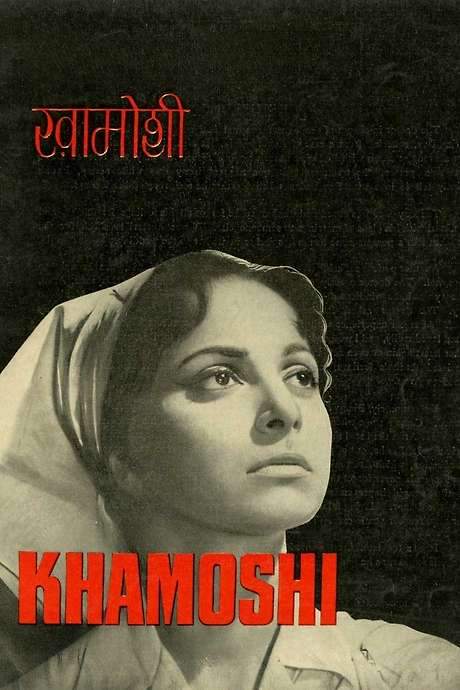
Khamoshi (1969) movie poster

Characters & Themes

Khamoshi (1969) Characters, Setting & Themes Explained

Release, runtime and language
1969 · 127 mins · Hindi
Directed by
Asit Sen
Starring
Waheeda Rehman, Dharmendra, Rajesh Khanna, Nazir Hussain, Snehlata

In a psychiatric ward, Colonel Sahab is the attending doctor and Nurse Radha (Waheeda Rahman) is heart‑broken after civilian patient Dev Kumar (Dharmendra) leaves, having fallen in love with him. When poet‑writer Arun Choudhury (Rajesh Khanna) is admitted with acute mania after a romantic rejection, Radha reluctantly nurses him. She reflects on her earlier duty caring for wounded soldiers in Ladakh during the 1962 Sino‑Indian war.

On this page (8)
  1. 1 Where to watch
  2. 2 Characters explained (5)
  3. 3 Where & when it takes place
  4. 4 Themes & meaning (3)
  5. 5 Character & meaning questions
  6. 6 Movie threads
  7. 7 Movies like Khamoshi
  8. 8 Every angle

Where to watch

Where to Watch Khamoshi (1969)

Where can you watch Khamoshi? Stream, rent or buy it in the US: current JustWatch availability with up-to-date prices.

Streaming availability powered by JustWatch

5 main characters · contains spoilers

Khamoshi Characters Explained: Who Is Who

The main characters of Khamoshi (1969), heroes and villains: what drives them, how they change over the course of the story and what each of them reveals about the film's bigger ideas.

  • Nurse Radha

    played by Waheeda Rehman

    A compassionate nurse whose heartbreak over Dev's departure pushes her toward blurred professional boundaries. Her romantic involvement with patients drives the central emotional conflict, and she is haunted by memories of her wartime service in Ladakh. As the story unfolds, her feelings destabilize her, culminating in a personal crisis within the ward.

    • 💖 Compassionate
    • 💔 Troubled
    • 👩‍⚕️ Nurse
  • Dev Kumar (Mr. Dev)

    played by Dharmendra

    A civilian patient whose recovery initially anchors Radha's hope and affection. His leaving the hospital triggers Radha's emotional turmoil and underscores the fragility of boundaries between caregiver and patient.

    • 💗 Patient
    • 🧠 Calm
    • 🧬 Recovery
  • Arun Choudhury

    played by Rajesh Khanna

    A writer and poet suffering from acute mania after being rejected by his lover. His creative vulnerability and emotional intensity create tension with Radha, while his eventual cure allows a brief moment of hope for their mutual longing.

    • 🎭 Creative
    • 💡 Sensitive
    • 🧠 Maniacal
  • Dr. Colonel Saab

    played by Nazir Hussain

    A World War II veteran physician who heads the psychiatry ward. He serves as a paternal figure for the ward and regrets not recognizing the woman behind the nurse's devotion, as he observes Radha's turmoil from a professional distance.

    • 🧭 Veteran
    • 🏥 Authority
    • 👨‍⚕️ Mentor
  • Sulekha

    played by Snehlata

    A singer and Arun's former lover whose rejection drives his mania. Her presence represents the romantic rival and the emotional stakes in Arun's arc.

    • 🎶 Artist
    • 💔 Rejection
    • 🧭 Influence

Last updated: February 03, 2026 at 07:29

Was this helpful?

Setting

Where and When Does Khamoshi Take Place?

The setting of Khamoshi (1969): the year and time period, the places and locations, and how they shape the characters, the mood and the tension of the story.

Time period

1960s

The story unfolds mainly in the 1960s within the hospital ward. It interweaves memories of the Sino-Indian War in 1962 and glimpses of World War II through Colonel Sahab's past, suggesting a layered timeline of memory and healing that informs present events.

Location

Hospital Psychiatry Ward, Ladakh

The primary setting is a hospital's psychiatry ward where patients with mental health issues are cared for. The ward operates as a clinical space focused on assessment and treatment, often dealing with emotional crises. Radha's memories of serving injured soldiers in Ladakh during the 1962 Sino-Indian War anchor the space in a broader history of conflict and healing.

  • 🏥 Hospital
  • 🗺️ Ladakh

Last updated: February 03, 2026 at 07:29

Was this helpful?

3 major themes

Khamoshi Meaning: Themes & Message Explained

What is Khamoshi (1969) really about? The emotional, social and philosophical themes the film keeps returning to, its symbolism and the message beneath the surface.

  • Love vs Duty

    Radha's heart-driven emotions collide with her professional responsibilities as a nurse. Her attraction to Dev and later Arun disrupts clinical boundaries and tests her ability to care impartially. The narrative uses romance within a care setting to explore how personal longing complicates healing.

  • Mental Health

    Arun suffers from acute mania triggered by romantic rejection, while Radha's emotional derangement exposes the fragility of the caregiver's own mental state. The hospital environment frames treatment, restraint, and empathy as central to both patient and caretaker journeys. The film probes how memory and psyche influence behavior.

  • War Memory

    The story ties personal trauma to historical conflict, with Colonel Sahab's WWII service and Radha's Ladakh memories from the 1962 war. These memories shape characters' identities and inform their capacity for compassion and trauma processing. The hospital serves as a hinge between individual healing and collective history.

Last updated: February 03, 2026 at 07:29

Was this helpful?

Character & theme questions

Khamoshi Characters & Meaning: Your Questions Answered

The questions people ask about Khamoshi (1969): who the characters really are, their relationships, what the symbols mean, where it takes place and what the movie is really about. Each answer contains spoilers.

Q1

Where is the story of Khamoshi set?

The primary setting is a hospital psychiatric ward where patients with mental health issues are treated. The ward functions as a clinical space focused on assessment and care. Radha's memories also take viewers to Ladakh, where she previously served injured soldiers during the 1962 Sino-Indian War, connecting the hospital to a broader history of conflict and healing.

  • psychiatric ward
  • hospital
  • Ladakh
  • setting
  • 1962 war
Q2

When does Khamoshi take place?

The story unfolds mainly in the 1960s within the hospital ward. It interweaves memories of the Sino-Indian War in 1962 and glimpses of World War II through Colonel Sahab's past, creating a layered timeline where past conflicts inform present-day healing and emotional struggles.

  • 1960s
  • 1962
  • time period
  • Sino-Indian war
  • historical context
Q3

What is the Love vs Duty theme in Khamoshi about?

Radha's heart-driven emotions collide with her professional responsibilities as a nurse. Her romantic attraction to patients like Dev and later Arun disrupts clinical boundaries and tests her ability to care impartially. The film explores how personal longing complicates healing, both for her patients and ultimately for herself.

  • love
  • duty
  • nurse
  • professional boundaries
  • romance
  • caregiver
Q4

How does Khamoshi portray mental health?

Arun suffers from acute mania triggered by romantic rejection, while Radha's emotional breakdown exposes the fragility of a caregiver's own mental state. The hospital environment frames treatment, restraint, and empathy as central to both patient and caretaker journeys, showing how memory and psyche influence behavior.

  • mental health
  • mania
  • psychological
  • psychiatric
  • care
  • treatment
Q5

What role does war memory play in Khamoshi?

The story connects personal trauma to historical conflict through Colonel Sahab's WWII service and Radha's Ladakh memories from the 1962 Sino-Indian war. These wartime experiences shape characters' identities and inform their capacity for compassion and trauma processing. The hospital serves as a hinge between individual healing and collective history.

  • war
  • memory
  • trauma
  • Ladakh
  • Sino-Indian war
  • healing
  • soldiers
Q6

Who is Nurse Radha in Khamoshi?

Nurse Radha is the compassionate protagonist working in the psychiatric ward. She becomes emotionally involved with patients, particularly Dev Kumar, and later Arun Choudhury. Haunted by memories of serving wounded soldiers in Ladakh during the 1962 war, her professional boundaries blur as her personal feelings destabilize her own mental state.

  • Radha
  • nurse
  • protagonist
  • Waheeda Rehman
  • caregiver
Q7

Who is Arun Choudhury in Khamoshi?

Arun Choudhury is a poet and writer admitted to the psychiatric ward with acute mania after being rejected by his lover Sulekha. His creative vulnerability and emotional intensity create romantic tension with Nurse Radha. His eventual cure offers a brief moment of hope, though the ending remains ambiguous about whether true healing is possible.

  • Arun Choudhury
  • poet
  • writer
  • mania
  • Rajesh Khanna
  • romantic rejection
Q8

Who is Dr. Colonel Saab in Khamoshi?

Dr. Colonel Saab is a World War II veteran physician who heads the psychiatric ward. He serves as a paternal figure within the hospital, observing Radha's emotional turmoil from a professional distance. He regrets not recognizing the depth of the nurse's devotion and personal struggles, representing the weight of experience and the limits of clinical observation.

  • Colonel Saab
  • doctor
  • psychiatrist
  • WWII veteran
  • authority figure
Q9

What is the significance of Ladakh in Khamoshi?

Ladakh represents Radha's past as a nurse during the 1962 Sino-Indian War, where she cared for wounded soldiers. These memories contrast sharply with her present-day emotional struggles in the hospital. The Ladakh flashbacks connect her personal trauma of heartbreak to the broader trauma of war, adding historical depth to her character arc.

  • Ladakh
  • war
  • soldiers
  • 1962
  • Sino-Indian war
  • flashback
  • memories
Q10

What is the emotional tone of Khamoshi?

Khamoshi has a predominantly melancholic tone, with deep emotional distress woven throughout. The pacing is slow and reflective, emphasizing reminiscence and internal struggle. The film deals with heartbreak, mental breakdown, and psychological care, creating a somber atmosphere where the cyclical tragedy of the nurse's emotional attachments drives the narrative.

  • melancholy
  • sadness
  • emotional tone
  • psychological
  • heartbreak
  • slow pacing
Q11

Is the ending of Khamoshi optimistic or pessimistic?

The ending is deliberately ambiguous. While there is a promise of recovery and hope when Arun is cured, the fact that Nurse Radha has now become a patient in the same hospital leaves the actual outcome uncertain. This uncertainty contributes to the film's somber feel, suggesting that healing may be temporary or incomplete.

  • ending
  • ambiguity
  • recovery
  • hope
  • resolution
  • uncertain outcome

Movie threads

More Movies Like Khamoshi, by Mood & Story

Curated lists built around what makes Khamoshi tick: the same mood, the same kind of story or the same emotional payoff. Each list explains why these movies belong together.

Movies about soulful caregiver bonds like Khamoshi

Stories about caregivers forming profound, complicated connections with those they look after. If you were moved by the tender yet tragic relationship in Khamoshi, explore more movies about deep connections between caregivers and patients. These films share a focus on emotional devotion, blurred professional lines, and the heavy cost of compassion in settings like hospitals and care homes.

  • heartbreaking
  • emotional
  • introspective
  • soulful
  • devoted
  • tragic
  • Tone: melancholic, heartfelt
  • Pacing: slow, contemplative
Why these movies?

The story pattern: The narrative typically follows a dedicated caregiver—a nurse, a nanny, a guardian—whose life becomes intertwined with a vulnerable individual. The story arc explores the growth of a deep, often unconventional bond that challenges the caregiver's neutrality, leading to personal sacrifice, emotional turmoil, and a poignant exploration of love and duty.

Why they belong together: These films are grouped together because they share a core focus on the emotional intensity and complex dynamics of a caregiver-patient relationship. They consistently evoke a melancholic, reflective mood through slow pacing and heavy emotional weight, focusing on internal conflict rather than external action.

Quiet psychiatric hospital dramas like Khamoshi

Quiet, character-driven stories set within the reflective walls of psychiatric care. Fans of the reflective, somber atmosphere of Khamoshi will find similar moods in these psychiatric hospital dramas. These films prioritize emotional depth over plot, exploring mental illness, healing, and the poignant relationships that form in clinical settings with a slow, melancholic pace.

  • somber
  • reflective
  • psychological
  • clinical
  • introspective
  • quiet
  • Tone: somber, introspective
  • Pacing: slow, deliberate
Why these movies?

The story pattern: The narrative unfolds primarily within a psychiatric institution, where patients and staff navigate the delicate process of healing. The plot is often driven by dialogue and emotional revelation rather than external events, focusing on themes of trauma, memory, and the thin line between sanity and breakdown, culminating in endings that are thoughtful rather than neatly resolved.

Why they belong together: These movies are connected by their specific, somber setting and the introspective mood it creates. They share a slow, deliberate pace, a medium intensity focused on psychological depth, and a tone that is consistently melancholic and reflective, making the setting itself a central character in the story.

If you liked this

Movies Like Khamoshi

Similar movies to Khamoshi: the same genre, themes or kind of story. Each one comes with its own plot summary, timeline and ending explained.

Browse all movie summaries

Every angle

Khamoshi (1969) Explained: Plot, Timeline & Characters

Everything about Khamoshi in one place: what happens in the plot summary, the timeline in chronological order, the characters and meaning and a spoiler-free summary. What's After the Movie adds the cast, box office and post-credit scenes.

Coming soon on iOS and Android

The Plot Explained Movie Summary App

Plot summaries, endings explained and timelines on your phone. Catch up on any movie in minutes, save your favorites and never miss a twist again.

Be the first to know when we launch. Your email stays private, always.

Learn more about the app