Plot Explained Spoilers guaranteed!
Plot Explained

Browse by genre

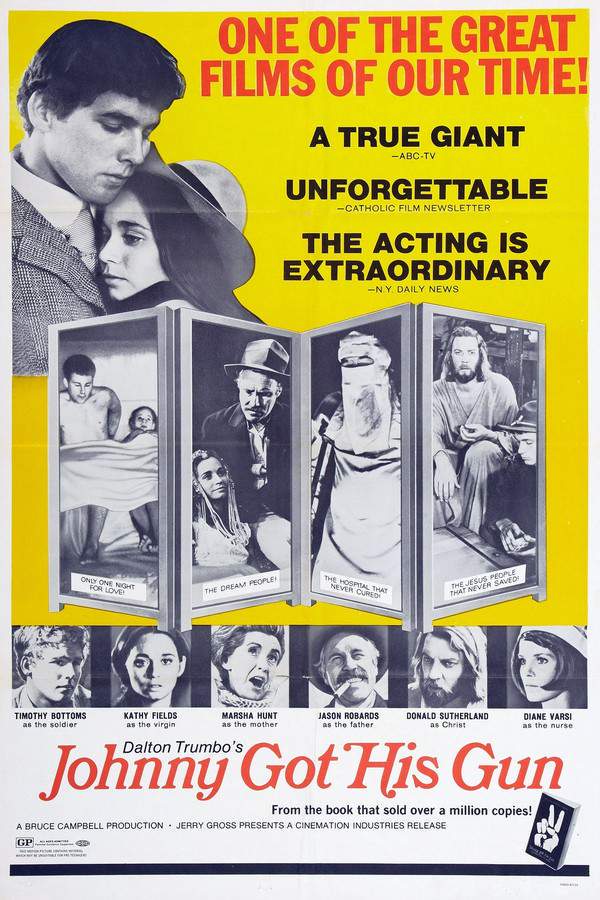
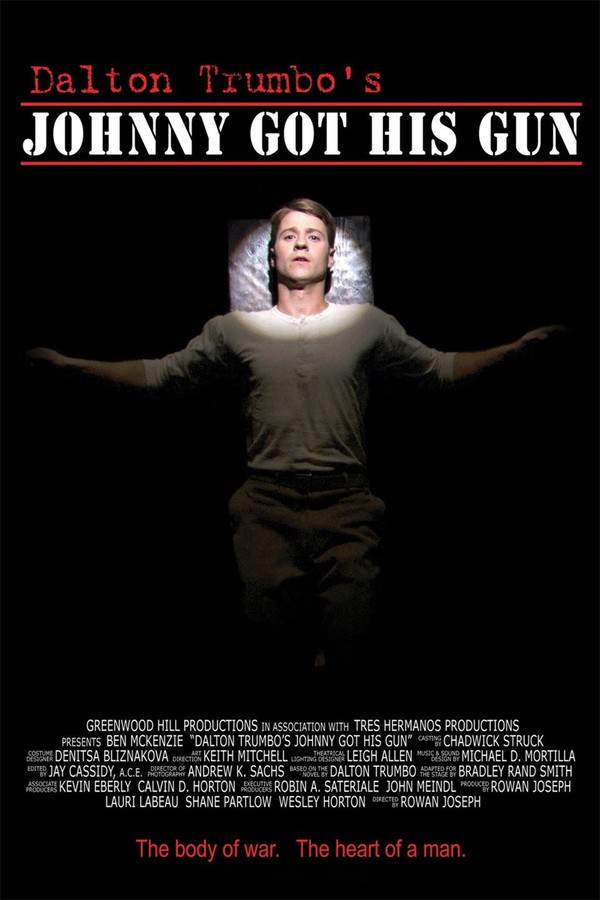
Johnny Got His Gun (1971) movie poster

Plot Summary

Johnny Got His Gun (1971) Plot Summary Explained

Release, runtime and language
1971 · 111 min · English
Loading streaming availability…
Directed by
Dalton Trumbo
Starring
Charles McGraw, Timothy Bottoms, Donald Sutherland, Jason Robards, Don 'Red' Barry, Kathy Fields

Following a devastating war, a young American soldier suffers horrific injuries, leaving him completely paralyzed and unable to communicate. Though his body is trapped, his mind remains alert and filled with a desperate longing for connection. He struggles to find a way to convey his thoughts and feelings to the outside world and to reclaim a sense of self after such profound loss, grappling with the physical and emotional trauma of his situation.

On this page (7)
  1. 1 Where to watch
  2. 2 What happens: full plot
  3. 3 Plot questions answered
  4. 4 The book behind the movie
  5. 5 Movie threads
  6. 6 Movies like Johnny Got His Gun
  7. 7 Every angle
Loading streaming availability…

Full plot summary · contains spoilers

What Happens in Johnny Got His Gun: Full Plot Summary

The whole story of Johnny Got His Gun (1971) explained, from the opening scene to the final frame: every key event, every twist and what it all adds up to. Read it as a quick recap before the sequel, to check a scene you missed, or to finally understand what really happened.

Joe Bonham, a young American soldier caught in the turmoil of World War I, wakes up in a hospital bed after a devastating artillery strike. Although he survives, he is left blind, deaf, mute, and without limbs, turning him into a captive within his own body. As his mind oscillates between stark reality and vivid memories, he recalls his life before the war — moments spent with his Christian Science family and his beloved Kareen.

In a troubling twist, Joe uncovers a connection with a compassionate young nurse who intuitively understands his suffering, even while the medical staff around him misinterpret his condition as a vegetative state. His determination to communicate grows, and he begins to tap his head against the pillow, utilizing Morse code to spell out his desperate cry for help.

When prompted about his wishes, Joe expresses a formidable desire: to be displayed in a glass coffin as a stark reminder of the horrors of war. However, when he learns that such an action violates army regulations, he pleads for an end to his suffering, yearning for euthanasia.

As reality dawns on him, Joe comes to grips with the Army's unyielding stance — they are unlikely to fulfill either of his heart-wrenching requests, instead consigning him to an existence that feels more like living death. His empathy-driven nurse makes a heartfelt attempt to end his suffering by restricting his breathing tube, but her supervisor intervenes, preventing Joe from finding peace.

Ultimately, Joe's fate remains tragically unchanged; he is left isolated in his hospital bed, a mere shadow of his former self, softly murmuring, > "S.O.S. Help me." The stark contrast between his vibrant past and his grim present serves as a haunting testament to the devastating impact of war on the human spirit.

Last updated: November 09, 2024 at 11:33

Was this helpful?

Plot questions answered

Johnny Got His Gun Plot Explained: Your Questions Answered

The questions people ask most about Johnny Got His Gun (1971): what happens in the confusing scenes, why the characters do what they do, the twists, hidden details and what the ending means. Each answer contains spoilers.

Q1

How does Joe Bonham communicate in the movie?

Joe communicates by tapping his head against his pillow in Morse code. Though he is blind, deaf, mute, and paralyzed, his mind remains fully alert. He uses this method to spell out desperate messages, including his cry for help, demonstrating his fierce determination to reach the outside world despite his devastating condition.

  • morse code
  • communication
  • hospital
  • paralysis
  • tapping
Q2

Why does Joe want to be displayed in a glass coffin?

Joe wishes to be displayed in a glass coffin as a living war memorial, wanting his ruined body to serve as a stark visual reminder of the horrors of war. He believes his fate could powerfully illustrate the true cost of conflict to the public. However, army regulations forbid this, leaving his wish unfulfilled.

  • glass coffin
  • war memorial
  • protest
  • army regulations
  • sacrifice
Q3

What happened to Joe Bonham in World War I?

Joe was caught in a devastating artillery strike during World War I. The blast left him with catastrophic injuries, he lost his eyes, ears, voice, and all four limbs. He survived but awoke in a hospital bed completely paralyzed, trapped in a body he could no longer control while his mind remained completely aware.

Foreshadowing: The opening scene establishes the artillery strike that transforms Joe's life.

  • artillery
  • injuries
  • paralysis
  • world war 1
  • battlefield
Q4

Why does Joe Bonham ask for euthanasia?

After learning that his glass coffin wish cannot be granted due to army regulations, Joe begs for euthanasia instead. Unable to move, see, hear, or speak, he faces a lifetime of complete isolation and suffering with no hope of recovery. He views death as the only merciful escape from his unbearable existence as a living corpse.

  • euthanasia
  • death
  • suffering
  • mercy
  • release
Q5

Why does the nurse understand Joe when no one else does?

A compassionate young nurse at the hospital develops an intuitive connection with Joe, sensing that he is fully conscious despite appearing vegetative. While the medical staff misinterprets his condition, she recognizes the terror in his eyes and genuinely attempts to understand his suffering, making her the only person who acknowledges his tragic awareness.

  • nurse
  • compassion
  • understanding
  • consciousness
  • medical staff
Q6

Why does the nurse try to stop Joe's breathing?

Moved by Joe's unbearable suffering and his desperate pleas for death, the nurse attempts to help him by restricting his breathing tube. This is her attempt to grant him the peaceful death he craves. However, her supervisor discovers and stops her, forcing Joe to continue enduring his grim existence.

  • breathing tube
  • mercy killing
  • supervisor
  • institutional rules
  • compassion
Q7

What is Joe Bonham's religious background?

Joe comes from a Christian Science family, which is revealed through his vivid memories of his past life. His upbringing emphasized prayer and spiritual healing rather than conventional medicine. This background adds emotional depth to his story, as his current state represents the ultimate contradiction to those beliefs, no prayer can restore his destroyed body.

  • christian science
  • family
  • religion
  • memories
  • upbringing
Q8

What does the ending mean when Joe murmurs S.O.S. Help me?

In the final moments, Joe softly murmurs "S.O.S. Help me", an underwater distress signal adapted to his desperate cry for salvation. This haunting plea encapsulates his complete isolation and the inhumanity of his situation. Unlike a traditional rescue, there is no salvation coming, making the phrase a tragic acknowledgment that no one will save him from his living death.

  • sos
  • ending
  • plea
  • salvation
  • isolation
Q9

Who is Kareen in Joe's memories?

Kareen is Joe's beloved from his life before the war. She represents everything Joe has lost, love, companionship, physical connection, and a future. Throughout the film, Joe's memories of Kareen contrast painfully with his current isolated existence, emphasizing the devastating personal toll of war beyond just physical injuries.

  • kareen
  • love
  • memories
  • lost future
  • romance
Q10

What does living death mean in the context of the film?

The phrase "living death" refers to Joe's horrifying existence, fully conscious but completely trapped in a non-functional body. He is neither alive in any meaningful way nor dead. This concept is central to the film's anti-war message, showing that war can reduce a human being to a state worse than death while leaving the mind untouched.

  • living death
  • consciousness
  • entrapment
  • existence
  • existential horror

Movie threads

More Movies Like Johnny Got His Gun, by Mood & Story

Curated lists built around what makes Johnny Got His Gun tick: the same mood, the same kind of story or the same emotional payoff. Each list explains why these movies belong together.

Movies about Trapped Consciousness like Johnny Got His Gun

Stories about characters whose minds are alert but bodies are imprisoned. If you were captivated by the claustrophobic psychological horror of Johnny Got His Gun, explore more movies like it. These films feature characters whose minds are awake but bodies are imprisoned, creating intense, introspective journeys into memory, trauma, and the struggle for communication.

  • claustrophobic
  • psychological
  • desperate
  • nightmarish
  • isolating
  • reflective
  • Tone: bleak, desperate, nightmarish
  • Pacing: slow, meditative, internal
Why these movies?

The story pattern: Stories in this thread are defined by an internal, psychological conflict. The plot is often driven by a character's desperate attempts to communicate or make sense of their reality from a state of extreme physical limitation, using flashbacks and hallucinations to contrast their past freedom with their present confinement.

Why they belong together: Movies are grouped here based on their shared exploration of the mind-body disconnect. They create a uniquely claustrophobic and introspective viewing experience, focusing on psychological survival, existential dread, and the haunting power of memory in the face of physical helplessness.
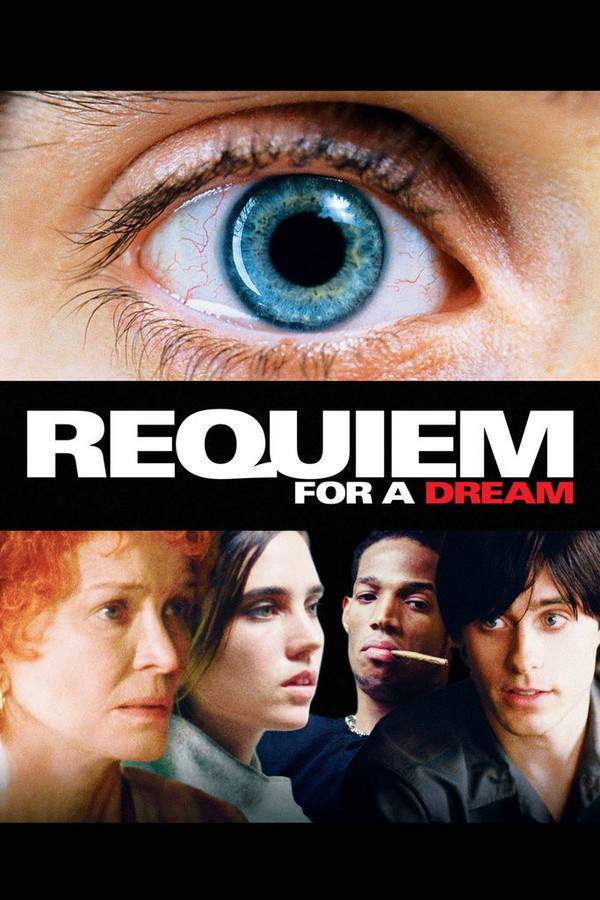
Bleak Anti-War movies like Johnny Got His Gun

Bleak films that expose the dehumanizing and traumatic reality of warfare. For viewers seeking more powerful anti-war stories similar to Johnny Got His Gun. These movies depict the grim reality and profound trauma of combat, focusing on the dehumanizing effects and heavy emotional cost of war rather than glorified action.

  • somber
  • melancholic
  • devastating
  • brutal
  • reflective
  • grim
  • Tone: bleak, somber, melancholic
  • Pacing: slow, deliberate
Why these movies?

The story pattern: The narrative pattern in this thread often follows a character's descent into the existential horror of war, showcasing the destruction of their former self. The conflict is internal as much as external, dealing with the struggle to retain humanity in the face of unimaginable violence and loss.

Why they belong together: These films are united by their bleak perspective on war, prioritizing emotional truth and traumatic consequence over spectacle. They share a heavy, somber mood and aim to leave the viewer with a profound sense of the inhumanity and pointless destruction of armed conflict.

If you liked this

Movies Like Johnny Got His Gun

Similar movies to Johnny Got His Gun: the same genre, themes or kind of story. Each one comes with its own plot summary, timeline and ending explained.

Browse all movie summaries

Every angle

Johnny Got His Gun (1971) Explained: Plot, Timeline & Characters

Everything about Johnny Got His Gun in one place: what happens in the plot summary, the timeline in chronological order, the characters and meaning and a spoiler-free summary. What's After the Movie adds the cast, box office and post-credit scenes.

Coming soon on iOS and Android

The Plot Explained Movie Summary App

Plot summaries, endings explained and timelines on your phone. Catch up on any movie in minutes, save your favorites and never miss a twist again.

Be the first to know when we launch. Your email stays private, always.

Learn more about the app