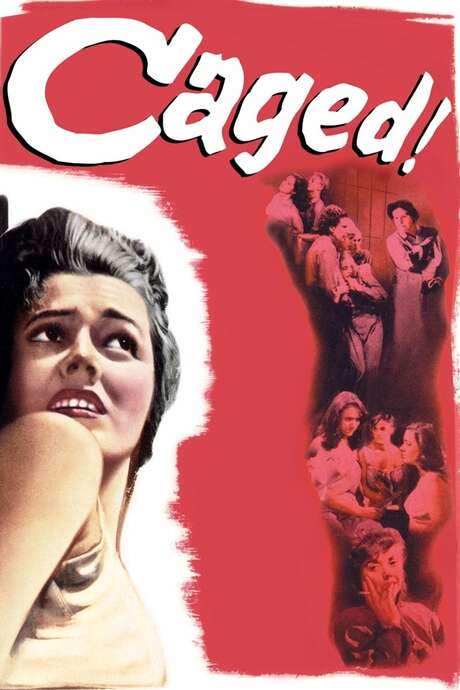
Marie Allen is a 19-year-old newlywed who ends up in prison after a failed armed robbery with her husband Tom, who is killed. During her first prison physical examination, she discovers she is two months pregnant. The story unfolds under the tight, harsh control of the Isolation Matron, a stern figure whose authority casts a shadow over everything that happens behind the walls of the women’s ward. Marie’s arrival drops her into a world defined by routine cruelty, clipped smiles, and unspoken rules that demand obedience and resilience in equal measure.
Inside the facility, Marie struggles to adapt to the monotony and the cutthroat atmosphere. She encounters Kitty Stark, a calculating shoplifter with a dangerous edge, who lectures Marie on toughness and survival and even hints at teaching her to steal once she’s released. Kitty’s hard-edged worldview is a stark, unsettling lesson in how quickly power shifts in the prison social structure, and it foreshadows the volatile dynamics that will pull Marie deeper into a network of crime and fear.
As months pass, the possibility of parole becomes a distant beacon. Marie watches others receive parole only to remain jailed because they cannot secure work for themselves—parole officers fail to deliver on the promises of freedom, and one hopeless prisoner even takes her own life. The system that promises liberation instead tightens its grip, slowly eroding Marie’s fragile hope for an easy exit. The birth of Marie’s child marks a bright, fragile moment in the midst of despair: a healthy but premature baby arrives, and Marie plans to place temporary custody with her mother so she can reclaim the child after release. Yet her stepfather refuses to allow the baby into his home, and when parole is denied, Marie’s attempt at a half-hearted escape is not met with punishment so much as a heavy-handed reminder of the state’s power. Ultimately, she must surrender her newborn to adoption, a crushing concession in a system that treats motherhood as a slippery liability.
The arrival of the infamous Elvira Powell intensifies the prison’s power struggle. Elvira’s presence triggers a fierce rivalry with Kitty, and she manipulates the situation by bribing the matron to place Kitty in solitary confinement, where she is beaten. A seemingly small catalyst—the discovery of a kitten in the prison yard—spirals into a riot when Marie tries to claim the kitten as a pet, and Harper moves to take it away. The chaos ends with the kitten’s accidental death and Marie being punished for resisting the matron’s authority. The incident exemplifies how everyday objects, like a tiny animal, can ignite a larger front in a prison economy built on fear, leverage, and punitive control.
Before leading Marie to solitary confinement, Harper shaves her head, a stark, symbolic stripping of innocence that intensifies the clash with Ruth Benton, the reform-minded superintendent who seeks a more humane approach. The political tension surrounding Harper—who is a political appointee—puts Benton in a difficult position. When Benton threatens a public hearing over the latest abuses, the authorities defuse the crisis by dropping the resignation demand, and the power balance within the prison remains unsettled but intact for the moment.
Kitty eventually returns from solitary after a month, visibly shaken and mentally fragile. Harper’s continued harassment in the cafeteria pushes Kitty over the edge, and she fatally stabs Harper while the inmates look on, doing nothing to intervene. The brutal act crystallizes the grim reality of the prison’s social order and further cements Marie’s hardened views, as she quietly helps to shape the outcomes around her in a world where loyalties are fluid and survival often overrides mercy.
With parole again within reach, Marie claims to have secured a job on the outside, but the supposed employment is merely a ruse designed to win her release so she can join Elvira’s shoplifting gang. The film closes on a bleak note as Marie steps out of the institution a cynical, unscrupulous woman, leaving the door open for a life already written by the people she has encountered inside. A final, understated exchange leaves Ruth Benton reflecting on Marie’s file, a stark reminder that in this system, some destinies never truly end—they simply stay active, waiting for a return:
> Keep it active. She'll be back.