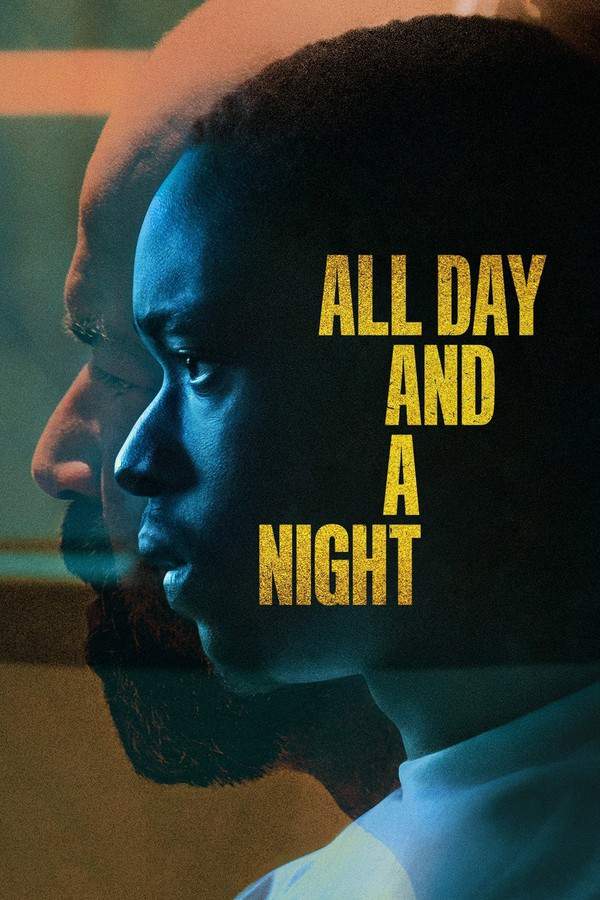
Elijah Butler is a bright, inquisitive 10-year-old growing up in New York, where everyday life blends with the challenges of a tough urban neighborhood. He lives with his mother, a tireless, aspiring professional who hopes to climb into a legal career, and her fiancé, a photographer who stands as the family’s steady presence. The mother, played by Mary J. Blige, works hard and attends night school while juggling the demands of a low-income world that makes steady employment hard to secure. Her partner, Cee, shares a genuine bond with Elijah and supports them in every way he can, even as life takes unexpected turns.
The family’s fragile balance is shattered when Cee is incarcerated after an incident on the street where he’s targeted while photographing passing pedestrians. He receives a lengthy sentence, a consequence of multiple charges, and the house that once felt alive grows quieter and more uncertain. In a parallel twist of fate, Elijah’s childhood innocence is interrupted when he and his best friend, Thomas Wilson, stumble into trouble of their own. A prank on a police officer involving a laser pointer lands them in a juvenile correctional facility, and Elijah’s mother learns just how fragile their world has become. When she attempts to reclaim her son, she ends up in a mental institution after a confrontation with an overbearing officer. The film follows their intertwined fates as Elijah is separated from his mother and placed in foster care, a separation that leaves emotional scars even as daily life resumes.
Years pass, and the story moves forward with Elijah now an adult and still guided by a remarkable artistic sensibility. He pursues art with a seriousness that earns him a scholarship offer to a prestigious arts school, but financial realities force him to confront a harsh truth: he cannot afford the tuition. His relationship with Jolie, played by Denee Rivera, remains a source of light as he wrestles with the possibility of a different life. He continues to visit Cee through prison channels, clinging to the memory of the father figure who believed in him even from a distance. Elijah’s inner world expands as he imagines a future shaped by his creative voice, though the practical obstacles he faces loom large.
The period of his life takes a sharp turn when an impulsive moment leads to tragedy: Elijah accidentally kills one of his foster brothers, Big Pete. The incident occurs during a confrontation that spills onto the subway tracks, and the consequences are devastating. Elijah is found guilty of second-degree murder and given a draconian sentence of fifteen years to life. The weight of the verdict transforms the course of his life, shoving him into a system designed to test the spirit as much as the body.
Inside the prison, Elijah’s artistic talent becomes a beacon of possibility. He reconnects with a fellow inmate he knew from earlier times, Thomas Wilson, and discovers a surprising sense of purpose in an art class that offers a rare moment of beauty and self-expression within the bleak surroundings. As the class is abruptly shut down for lack of funds, the prisoners endure harsher routines—back-breaking labor, the removal of amenities, and a growing sense of desperation. Elijah channels this frustration into bold, ambitious work, painting pieces that surprise and move his fellow inmates.
Driven by a growing sense of injustice, Elijah stages an uprising within the abandoned structure where the inmates work. The act of defiance leads to severe consequences, landing him in solitary confinement as the authorities crack down on dissent. The situation worsens when basic necessities—water, gym time, and educational opportunities—are withdrawn, pushing Elijah to a breaking point. He decides to mount a bold breakout, partnering with a small group of allies who share his hunger for freedom and a belief in the power of collective action.
The escape plan unfolds with the help of allies inside the jail: KT, Brown, and Jay, a prison electrician whose technical know-how becomes essential. As the plan advances, tension and betrayal creep in: one member, Harris, decides to bail at a critical moment, altering the dynamics of the group. The escape sequence culminates in a tense chase as the prisoners approach a police vehicle, but violence erupts when Jay stabs Thomas in the back with a screwdriver—an act rooted in a prior feud that had already left its mark on their fragile camaraderie.
Amid the chaos of the breakout, Elijah makes a last-ditch attempt to rescue Thomas, who dies in his arms. The escape does not go as planned, and Elijah finds himself trapped against a barrier while holding an officer hostage. A shotgun blast ends his life just as the escape seems within reach, a brutal finale that underscores the film’s unflinching look at the price of rebellion within a system built to keep people caged.
In the aftermath, Elijah’s artistic legacy takes on a life of its own. Some time later, his drawings—born from the time he spent behind bars—find their way into an art gallery, inviting viewers to glimpse the humanity that endured within hardship. The closing image focuses on a painting that depicts Elijah and Thomas as children, a poignant reminder of the friendship that shaped their paths and the enduring power of art to capture memory, resilience, and loss.
Throughout the film, the lives of Elijah and those around him illuminate a web of resilience, ambition, and the enduring pull of family ties. The story strides through moments of tenderness and brutality with a steady, restrained cadence, inviting viewers to reflect on the consequences of choices made under pressure and the ways in which art can offer a form of escape, expression, and, at times, absolution. The final frame lingers on the gallery painting, letting the audience consider how a single life, and the art it leaves behind, can echo across years and touch future generations.