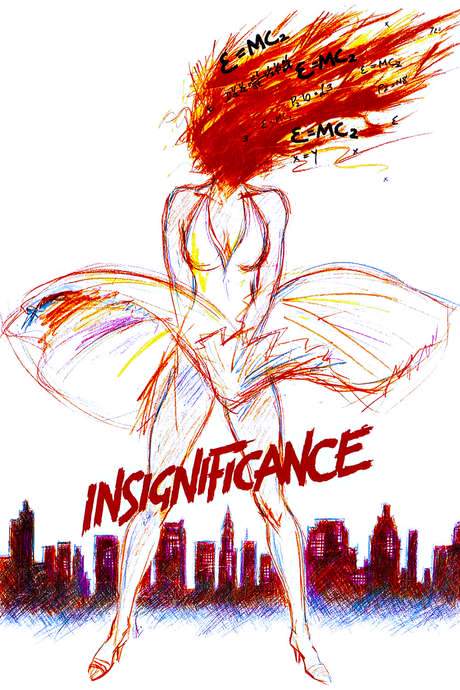
In a restless, post‑World War II New York that feels both familiar and slightly surreal, a single night becomes a prism through which the film explores the biggest questions of existence—life, death, desire and the very structure of the universe. An off‑beat comedy‑drama, the story is built around a fanciful encounter of four cultural icons from the 1950s who, in reality, never shared a table. Their imagined meeting is framed by fleeting flashes of memory and speculative glimpses of the future, giving the narrative a dreamy, modern‑fable quality that constantly blurs the line between the ordinary and the extraordinary.
The Actress arrives with a magnetic blend of glamour and curiosity, wielding the optics of performance to probe deeper truths about fame and imagination. The Ballplayer, a symbol of mid‑century celebrity, carries the weight of personal expectation and the echo of a public life lived under constant scrutiny. The Professor is an introspective scientist whose abstract calculations hint at a broader cosmic order, yet he is also tethered to the anxieties of an era that demands loyalty and conformity. The Senator embodies the political pressures of the time, pressing the intellectual mind with questions of identity and duty that reverberate far beyond a single courtroom.
When these disparate personalities converge in a cramped hotel suite, their conversations become a lively dance of wit, flirtation, and uneasy alliances. The film’s tone shifts effortlessly from sly humor to contemplative reverie, using the characters’ quirks and the layered setting to ask how much of ourselves is shaped by the gaze of others and how much remains untouchable. The interplay of bright props—a fan, balloons, flashlights—serves as visual metaphors for the invisible forces that bind and repel them.
Through sharp dialogue and a visual style that feels both vintage and avant‑garde, the story invites viewers to contemplate the paradoxes of progress and intimacy. The night’s lingering questions about power, love, and the unseen currents of history linger long after the lights dim, promising a rich, thought‑provoking experience without revealing the outcomes that lie ahead.