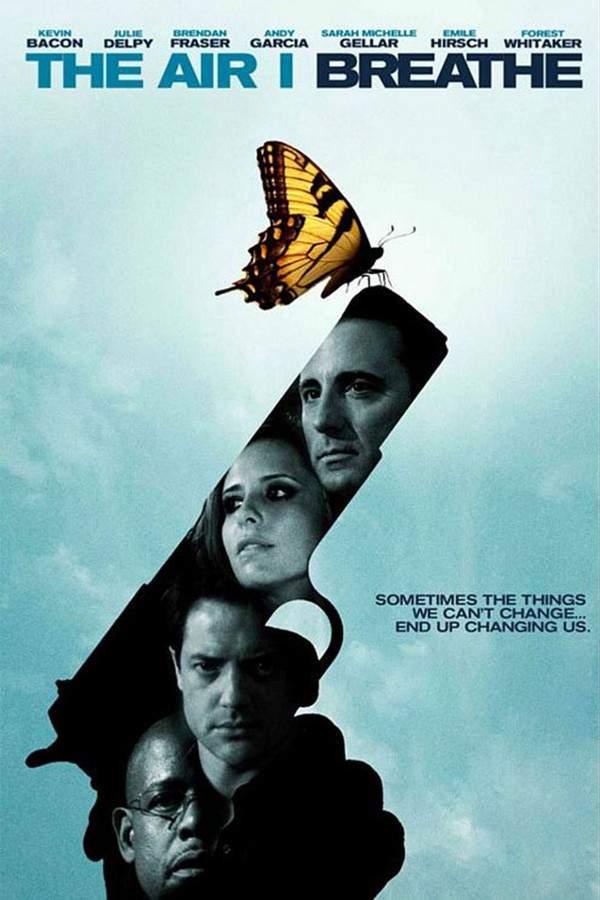
Detective Hollis Lucetti receives startling news from a doctor: he has been sterile his entire life. This revelation triggers a painful, curiosity-fueled moment at home as he confronts his wife, pressing for the truth about who could be the father of their children. The film wastes no time moving from personal doubt to a life-and-death crisis, threading a thread of secrecy through a seemingly ordinary domestic moment and setting the stage for a larger, more metaphysical struggle.
The scene then shifts to Gavin Nichols, an atheist, who stands on the edge of a tall building as if to jump. A small crowd gathers below, and Hollis, now on the scene as part of the emergency response, becomes the contact between two radically different worlds: the practical, medical, and procedural reality of crisis intervention and the high-stakes moral drama unfolding on the ledge. Gavin’s insistence that he has no other option—because otherwise someone else will die—frames the story as a test of conscience and resolve, not merely a stunt for suspense.
As the tension builds, the narrative leaps back to reveal a complex love triangle involving Gavin, Shana, and Joe. Shana is the new woman at the hotel where Gavin works, and she shares an apartment nearby with Joe, her husband. Joe is a fundamentalist Christian who treats Shana with a controlling softness that borders on patronizing. A heated religious debate between Gavin and Joe unfolds during a visit to the couple’s space; Gavin methodically dismantles Joe’s born-again certainty, arguing that the scope of humanity’s fate would cast many faithful and nonbelievers alike into peril if Joe’s view were universal. He asks a provocative hypothetical about a Chinese child who dies in an accident and never hears about Jesus, challenging the premise of knowledge and salvation. Joe answers that such examples don’t prove God’s unfairness; they are a reason to evangelize, not despair. This debate sets the intellectual tone for what follows: belief versus doubt, certainty versus compassion, and the ways people rationalize love and fear.
Meanwhile, Shana reveals a painful past to Gavin: she once struggled with addiction and prostitution and was rescued by Joe after a brutal episode in a church sanctuary. She explains that Joe wants them to relocate to Uganda to spread their faith, a move she sees as both noble and burdensome. Gavin and Shana grow closer, and their mutual attraction deepens into an affair, a development that intensifies Joe’s sense of threatened control and moral crisis.
Joe quickly suspects the affair and confronts Gavin. In a tense apartment scene, he recounts his own fall from grace—how he once wandered from his family to chase drugs and vice, only to be “born again” and convinced that God gave him Shana to care for. He quotes Psalm 23 and asserts divine ownership over his life and his household, insisting that Gavin must face a reckoning. He forces Gavin to confront Leviticus 20:10, the verse that condemns adultery with another man’s wife, forcing him at gunpoint to read the harsh command aloud:
> If a man commits adultery with another man’s wife—with the wife of his neighbor—both the adulterer and the adulteress are to be put to death.
Gavin counters by invoking mercy and a more nuanced sense of sin, including the mercy shown to the adulteress in the Gospel of John, which invites reflection on guilt, forgiveness, and the possibility of redemption. The dialogue becomes a crucible for their beliefs, and the narrative presses forward on Gavin’s insistence that true conviction can withstand the pressure of life-or-death choices.
The crisis crescendos as Lucetti, the detective, grows more desperate to prevent bloodshed. He shares a fragment of his own story—the way his wife betrayed him out of love and fear, choosing to sleep with his younger brother to ensure their children would resemble him. Gavin listens, but he refuses to let pain drown out love. He remains focused on Shana, urging Lucetti to tell her he loves her before the fall, a moment that crystallizes the emotional stakes of the entire ordeal.
From a distance, the police monitor the room where Joe and Shana lie with a direct view of Gavin’s suicide. The scene culminates in Joe’s arrest, a consequence that seems to close one dangerous loop while leaving others unresolved. With the crisis resolved in one sense, Hollis returns home to his wife and children, appearing ready, at least for now, to pursue reconciliation and the quiet, uncertain life that remains.
Throughout, the narrative threads philosophical inquiry with intimate drama, exploring how faith, doubt, love, and fear shape decisions when every option carries a price. The film leaves viewers with a meditation on the limits of certainty, the power of forgiveness, and the stubborn resilience of hope in the face of moral complexity.