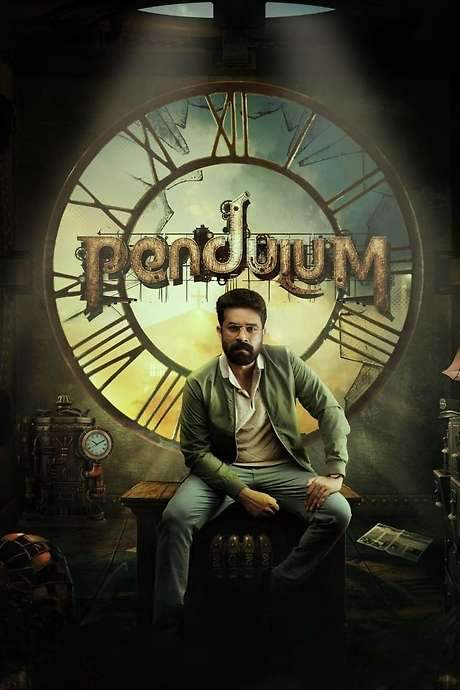
Two children, Amir and Angel, share a dream that feels more vivid than any memory. In the dream, a mysterious figure calls out to Angel, and just as the moment sharpens, the vision ends abruptly. The unsettling impression of that encounter lingers as the story shifts forward in time, hinting at threads that will braid together fate, memory, and the thin line between waking life and dream space. The figure behind the interruption remains unnamed, but the moment is charged with a sense that something beyond ordinary reality is trying to surface. The voice of that figure is carried in the film by Pedro Valle, whose subtle presence underscores the dream’s eerie pull.
Years later, Antony discovers Amir in the trunk of a truck inside a warehouse, where the owner, Alex Ichayan, promises to get rid of Amir. The next day, Amir refuses to exit the vehicle, and Alex urges Antony to drop him off at his destination. Amir claims to have lost his memory during a class taught by Kochu Thressia and ominously predicts that the truck will hit someone along the way. The situation feels like a trap of memory and prophecy, as if Amir’s words are straws thrown across two timelines that might collide at any moment. A quiet sense of danger lingers as to what memory and prediction truly mean in this strange encounter.
In the present, Dr. Mahesh Narayan, his wife Shwetha, and their daughter Thanmayi relocate from Melbourne to Kerala. An old man visits Mahesh in the hospital, asking him to locate his missing son. Mahesh initially suspects mental strain and directs the man toward a psychiatrist, but the encounter plants a seed of curiosity that will pull him deeper into a labyrinth of dreams and memories. On a one-day family trip to Marayur, Mahesh stops the car near a tea shop and explains to Shwetha that he feels déjà vu, as if a place has pressed its memory into him before. Thanmayi accidentally slips the car key into the trunk, the trunk becomes center-locked, and the tea shop owner offers hospitality for the night. That evening, Mahesh glimpses the older visitor from the hospital and suddenly finds himself drawn into Amir and Angel’s dream, only to be struck by a truck. The next morning, Shwetha and the tea shop owner discover Mahesh unconscious outside.
Shwetha grows concerned that Mahesh has suffered a panic attack, and she shares her worries with Dr. Shabnam. Mahesh’s searches lead him to Dr. Jain Joseph, who reveals that the truck involved in the accident was scrapped fifteen years earlier. Following Jain’s advice, Mahesh seeks out Antony, who recounts Amir’s predictive visions and explains that he and his helper, Babu, cannot locate the person who was hit. Jain then directs Mahesh to meet John Master, a figure who can offer a clearer explanation of these bizarre experiences.
John Master explains lucid dreaming and clarifies that Mahesh reached out as an uninvited guest into a shared dream space that connects two people. Mahesh recounts his experiences of the two children in his dream, and John Master urges him to search for them in reality. Through the collaboration of Kochu Thressia, Mahesh learns more about Amir and Angel. Angel, now a librarian, becomes a key link in the mystery, and Mahesh asserts that he is a participant in Angel and Amir’s dream, a claim that Angel initially dismisses as fanciful.
John Master grows convinced that something significant happened between the two dream periods. He urges Mahesh to meet Angel again and ask about any dream signs Amir may have mentioned. When Mahesh asks Angel to recall those signs, she is transported to a remote location within a dream space, where Mahesh underscores that she is dreaming. Angel remembers the moment when Amir spoke of the dream signs and sees Mahesh there, which deepens a sense that the dream world is entangled with real events. Amir’s father reveals that someone was with Angel, and then both Angel and Mahesh awaken. The next day, Mahesh repeats Amir’s exact words to Angel, deepening the sense that the dream has a stubborn, revealing logic that might be hidden from ordinary perception. John Master suspects that Angel is withholding information.
As the investigation unfolds, Mahesh meets Benny, who once worked with Angel’s father, Joseph. Benny sends an old photograph of Angel from her childhood, a clue that strains the boundary between memory and reality. Mahesh ventures into a dream to coax Angel into reconstructing memories of a long-vanished bungalow. In the recreated space, he discovers young Angel unconscious and a painting of himself, a personal symbol that ties him to Amir’s early words. He also re-encounters the first dream in which Amir spoke to Angel, and he reveals to John Master how his actions may have provoked Angel to harm Amir. The revelation takes a startling turn when Mahesh begins to sense that John Master may be someone else entirely—perhaps Amir in disguise—who warns that the dream will soon collapse and that their paths will meet again.
A tense awakening brings Mahesh back to the tea shop, where he experiences a time-loop that seems to erase the boundaries between dream and waking life. He reconnects with Angel, only to learn that she played a role in injuring Amir, compelled by forces that someone else orchestrated. In the film’s climactic movement, Mahesh reaches the place foretold by Amir and witnesses the sight of Amir’s dead body being carried away, a stark culmination of memory, predestination, and the fragile permeability between dream and reality.
Throughout, the film weaves together memory, prophecy, and lucid dreaming to explore how two children’ lives ripple through the present, forcing the adults around them to confront what they remember, what they fear, and what they might otherwise forget. The narrative's circular structure— dreams feeding reality, and reality refashioning dreams—keeps the viewer attentive, inviting reflection on how time can loop and how the mind might navigate the spaces between truth and interpretation. The result is a deeply atmospheric, thought-provoking meditation on memory’s power and the mystery of dreams that feel almost real.