Year: 1985
Runtime: 110 mins
Language: English
Director: Nicolas Roeg
An off‑beat comedy that examines life, death, sex and the cosmos through a meeting of four 1950s icons who never actually crossed paths. Set in post‑World War II America, the film weaves flashbacks and flash‑forwards around a fictional Einstein’s reflections, childhood memories and anxieties about the future, creating a striking modern fable.
Warning: spoilers below!
Haven’t seen Insignificance yet? This summary contains major spoilers. Bookmark the page, watch the movie, and come back for the full breakdown. If you're ready, scroll on and relive the story!
Read the complete plot breakdown of Insignificance (1985), including all key story events, major twists, and the ending explained in detail. Discover what really happened—and what it all means.
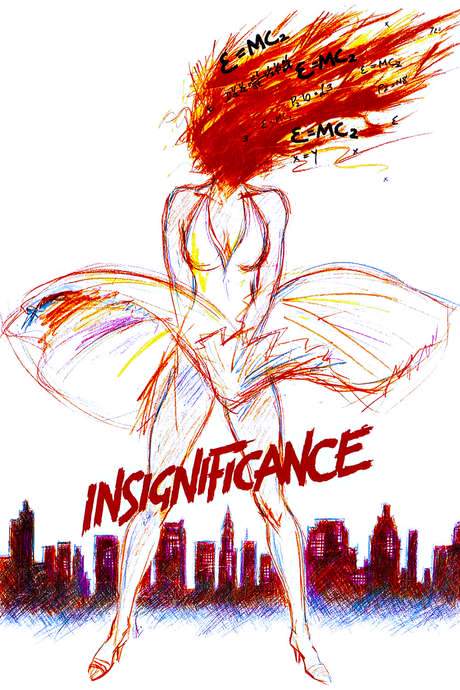
On a crowded New York City street, a film crew stages a provocative sequence: The Actress, Theresa Russell in a white dress stands on a grate while a towering fan imitates subway gusts, blowing her skirt up around her waist. The Ballplayer, Gary Busey, watches with obvious discomfort as onlookers ogle her from every angle. Instead of joining him after the shot, she slips into a taxi and disappears. She then stops at a shop to gather a curious assortment—toys, flashlights, balloons—tiny symbols of spectacle and desire that will echo through the night’s events.
Meanwhile, The Professor, Michael Emil, is alone in a hotel room, absorbed in pages of complex calculations. The Senator, Tony Curtis, arrives with a mix of coaxing and intimidation, insisting that the Professor appear before a committee to answer the old, haunting question about identity and loyalty. The confrontation grows tense, and the Senator lays out his demand with a clockwork certainty of the era. To underscore the pressure, he presses on with the infamous prompt, and the air thickens with unspoken history:
Are you now or have you ever been…?
The Professor refuses to appear, a choice that seals his distance from the world outside his window. The Senator leaves, vowing to return at eight the next morning, a threat and a reminder of power that travels through walls and rooms alike.
That night, The Actress arrives at the Professor’s door, and a conversation about fame, pursuit, and the pull of the stars unfolds. The two discuss how being watched changes you, how imagination can become a cage, and how fear can drive human connections. The Professor seems drawn to the possibility of a different life, while The Actress demonstrates a playful scientific wonder, using the toys, lights, and balloons to illustrate ideas of relativity in a practical, almost childlike way. As their camaraderie deepens, she flirts with him, admitting she’d like to sleep with him, and they decide to retreat to bed. Their moment is interrupted when The Ballplayer, having tracked his wife to the hotel, arrives, forcing The Professor to slip away and seek another room. On the hotel stairs, he pauses to speak with a Cherokee elevator man, a brief human connection with Will Sampson, a quiet counterpoint to the night’s spectacle.
In the morning, The Senator returns to the Professor’s room to find him gone, but The Actress lies naked and alone in theProfessor’s bed. The Senator mistakes her for a call girl and threatens to expose the Professor to ruin him, then delivers a harsh blow to her abdomen. The Professor bursts in as the Senator gathers his papers, attempting to take away the hundred pages of work that hold years of thought. In a sudden fit of protest, the Professor grabs the papers and throws them from the windows, while The Actress writhes in pain on the bed. The Senator leaves defeated, and The Ballplayer returns to share stories of his fame and the strains cracking their marriage. The Actress, now in the bathroom, reveals she may be miscarrying; she ultimately declares that the marriage is over, and he leaves with a quiet, desolate weariness.
As the room wrestles with the tension between scrutiny and secrecy, The Professor sits on the bed with a stopped watch in one hand and the alarm clock in the other, waiting for the moment at 8:15. The time—symbolic and ominous—marks the hour when the world’s horrors were once unleashed. The Professor acknowledges a deep guilt about the events that intersect science, power, and human frailty, while The Actress offers a quiet, steady reassurance. Then, at 8:15 a.m., a vision erupts: the room, Hiroshima, and the world catch fire in flames of destruction. The Actress’s skirt swirls as she appears to burn in the vision, a stark image of collapse and fear. Yet the vision abruptly reverses, and order is restored. The Actress smiles at The Professor, who replies with a hopeful, shared grin as she waves and leaves, leaving behind a sense that, even amid catastrophe, the human spirit can choose renewal.
Last Updated: October 09, 2025 at 14:46
Discover curated groups of movies connected by mood, themes, and story style. Browse collections built around emotion, atmosphere, and narrative focus to easily find films that match what you feel like watching right now.
Films that use a dreamlike lens to reinterpret famous figures and events.If you enjoyed the dreamlike reinterpretation of historical figures in Insignificance, explore these other movies. This selection features films that use surrealism and allegory to explore history, similar to the thought-provoking storytelling in Insignificance.
Narratives in this thread often feature non-linear structures, weaving together the lives of iconic characters in unexpected ways. They use historical settings not for accuracy, but as a canvas to explore deep philosophical and political themes through a postmodern, dreamlike filter.
Movies are grouped here for their shared approach to history as a malleable concept. They prioritize mood, metaphor, and intellectual exploration over factual storytelling, creating a distinct vibe of thoughtful, surreal revisionism.
Stories that grapple with profound guilt and hope after catastrophe.For viewers who appreciated the heavy emotional weight and bittersweet resolution of Insignificance, this list features similar films. Discover other movies like Insignificance that explore existential themes, guilt, and the possibility of hope after trauma.
These narratives follow characters burdened by responsibility or guilt, often tied to a pivotal, traumatic event. The central conflict is internal, a struggle with meaning and consequence, which unfolds through tense, reflective dialogue and culminates in an emotionally complex, bittersweet conclusion.
These films are united by their profound emotional weight and their focus on existential themes. They share a specific tonal balance of high tension and heavy reflection, leading to endings that are neither purely bleak nor fully hopeful.
Don't stop at just watching — explore Insignificance in full detail. From the complete plot summary and scene-by-scene timeline to character breakdowns, thematic analysis, and a deep dive into the ending — every page helps you truly understand what Insignificance is all about. Plus, discover what's next after the movie.
Track the full timeline of Insignificance with every major event arranged chronologically. Perfect for decoding non-linear storytelling, flashbacks, or parallel narratives with a clear scene-by-scene breakdown.
Discover the characters, locations, and core themes that shape Insignificance. Get insights into symbolic elements, setting significance, and deeper narrative meaning — ideal for thematic analysis and movie breakdowns.
Get a quick, spoiler-free overview of Insignificance that covers the main plot points and key details without revealing any major twists or spoilers. Perfect for those who want to know what to expect before diving in.
Visit What's After the Movie to explore more about Insignificance: box office results, cast and crew info, production details, post-credit scenes, and external links — all in one place for movie fans and researchers.
Discover movies like Insignificance that share similar genres, themes, and storytelling elements. Whether you’re drawn to the atmosphere, character arcs, or plot structure, these curated recommendations will help you explore more films you’ll love.
Insignificance (1985) Scene-by-Scene Movie Timeline
Insignificance (1985) Movie Characters, Themes & Settings
Insignificance (1985) Spoiler-Free Summary & Key Flow
Movies Like Insignificance – Similar Titles You’ll Enjoy
8½ (1963) Plot Summary & Ending Explained
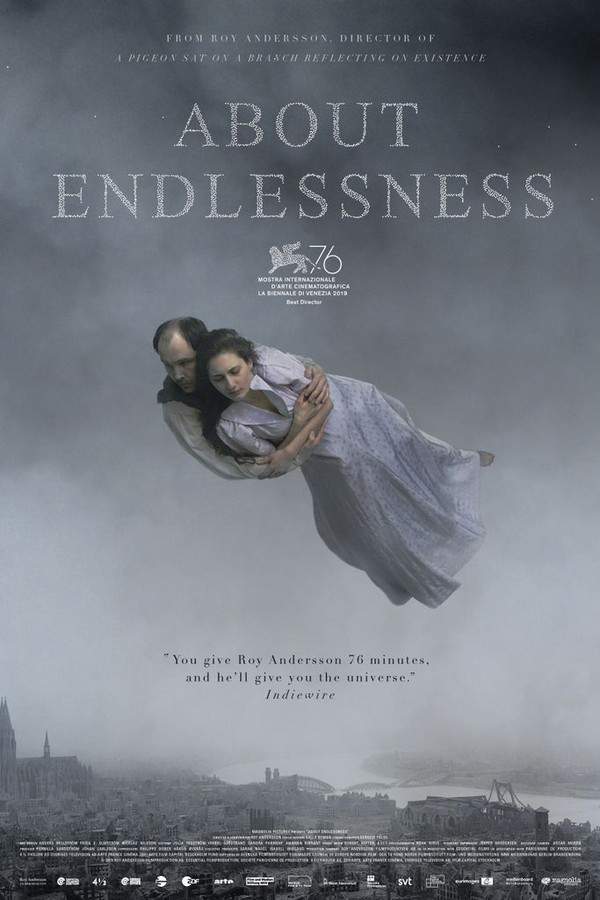
About Endlessness (2021) Film Overview & Timeline
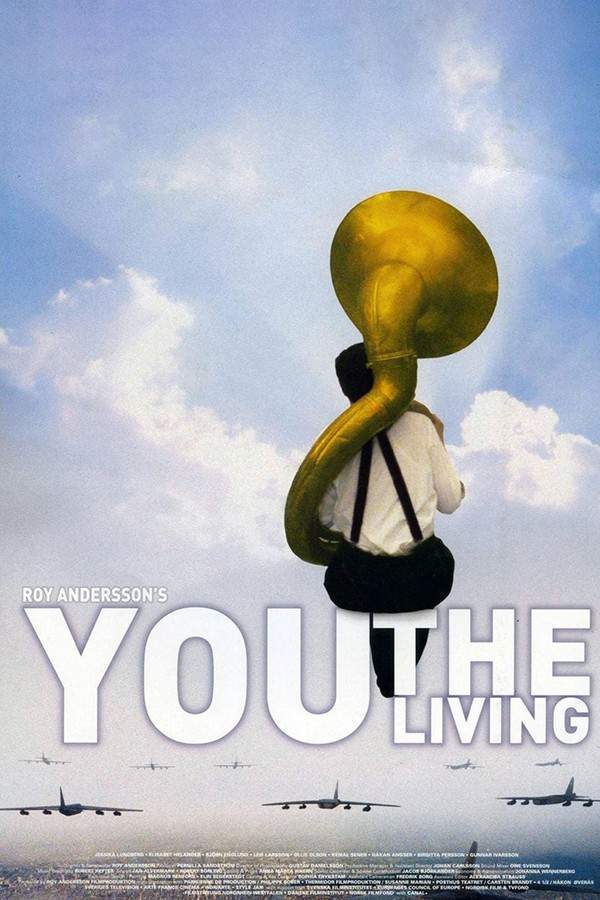
You, the Living (2009) Story Summary & Characters
Indignation (2016) Ending Explained & Film Insights
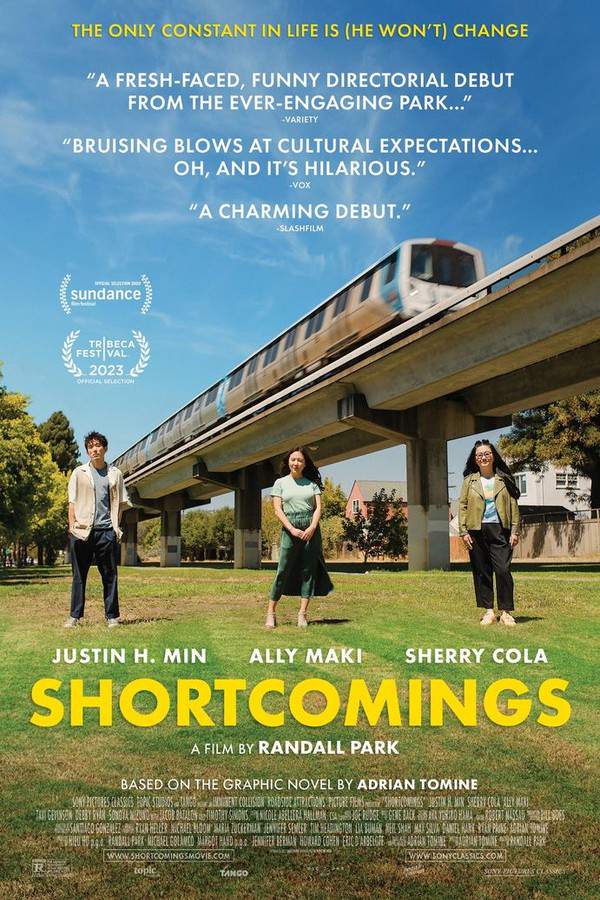
Shortcomings (2023) Full Movie Breakdown
Synecdoche, New York (2008) Full Movie Breakdown
Whatever Works (2009) Film Overview & Timeline
Crimes and Misdemeanors (1989) Detailed Story Recap
The Majestic (2001) Full Movie Breakdown
Relativity (2019) Story Summary & Characters
About Endlessness (2019) Complete Plot Breakdown
The Enormity of Life (2021) Spoiler-Packed Plot Recap
Stroszek (1977) Full Movie Breakdown
Stand-Ins (1997) Ending Explained & Film Insights
End of the Road (1970) Ending Explained & Film Insights