Plot Explained Spoilers guaranteed!
Plot Explained

Browse by genre

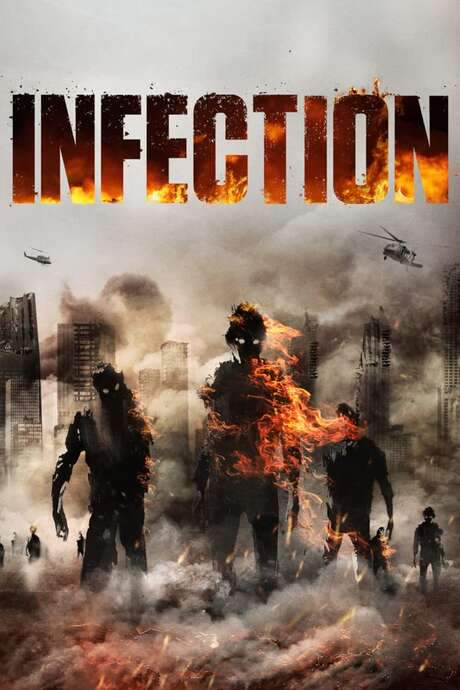
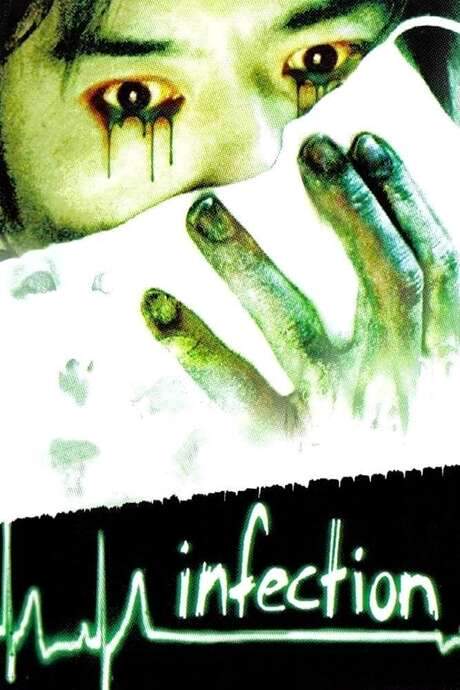
Infection (2004) movie poster

Plot Summary

Infection (2004) Plot Summary Explained

Release, runtime and language
2004 · 98 mins · Japanese
Directed by
Masayuki Ochiai
Starring
Yoko Maki, Masanobu Takashima, Mari Hoshino, Shirô Sano, Kaho Minami, Moro Morooka

Set in a bleak, isolated hospital, the film follows a single doctor’s error that spirals into a lethal crisis for a patient. As the infection spreads, the once‑sterile corridors become a tightening trap where death lurks around every breath, turning the facility into a nightmarish battlefield of fear and contagion.

On this page (6)
  1. 1 Where to watch
  2. 2 What happens: full plot
  3. 3 Plot questions answered
  4. 4 Movie threads
  5. 5 Movies like Infection
  6. 6 Every angle

Where to watch

Where to Watch Infection (2004)

Where can you watch Infection? Stream, rent or buy it in the US, including on Plex and Tubi TV: current JustWatch availability with up-to-date prices.

Streaming availability powered by JustWatch

Full plot summary · contains spoilers

What Happens in Infection: Full Plot Summary

The whole story of Infection (2004) explained, from the opening scene to the final frame: every key event, every twist and what it all adds up to. Read it as a quick recap before the sequel, to check a scene you missed, or to finally understand what really happened.

At a run-down, understaffed hospital, Dr. Akiba, Koichi Sato, refuses to admit a patient with a strange black rash, and he is soon pulled into a severe crisis in Room 3 when a burn victim dies after being given the wrong drug. In the aftermath, Akiba, Dr. Uozumi, and four nurses decide to cover up the circumstances of the death and move the body to an unused room, hoping to keep the incident quiet.

The situation takes a troubling turn when the head nurse, Kaho Minami, discovers that the patient Akiba refused to admit has been left in the hallway and informs him. Yet when Akiba investigates, he finds that Dr. Akai, Shirô Sano, has taken the patient and intends to study his symptoms. The patient, though still alive, shows a disturbing change: his body mass is liquefying into a creeping green goo. Uncertain how much Akai knows about Room 3, Akiba and the others reluctantly agree to help examine the patient.

Their efforts are interrupted when they return to the room to find the patient missing and the head nurse unconscious. When she comes to, she begins acting strangely while bleeding green goo from her ears and eyes, signaling a spreading infection that may be beyond their control. The staff scramble to contain the risk, placing the head nurse on a bed and wrapping her in plastic to try and limit the contamination.

The tension escalates as the mean nurse encounters the young nurse, who is drawing her own blood. The conversation spirals into chaos when the younger nurse lets out a maniacal laugh and drives two needles into her own body, spraying the other nurse with the same ominous green goo. The situation darkens further when Uozumi, while speaking to a patient he had killed earlier, is overwhelmed by guilt; Akiba arrives to find Uozumi alone, his eyes turning white and green goo seeping from him.

Aghast, Akiba points to the infected mean nurse—now also covered in green goo and hanging upside down from the ceiling—before fleeing the room. He later confronts Akai, accusing him of creating and spreading the virus. Akai denies responsibility and explains that the infection spreads on a mental level, infecting the subconscious of those affected. He urges Akiba to remember what happened in Room 3 earlier that night.

Dr. Nakazono, Michiko Hada, enters and finds Akiba talking to himself, forcing him to confront that he has been speaking with his own reflection. She discovers the corpses of the two nurses—dead, their bodies bloodied and devoid of the visible green goo—and realizes that the last few hours may have been a hallucination. She calls the police, while Akiba recalls the events in Room 3 and realizes that Akai was actually the burn patient all along.

The narrative loops again, revealing the same sequence with roles reversed: Akiba becomes the burn patient who ordered the wrong drug, and Akai is cast in the role of Akiba, setting off the massacre of the staff. The hospital is evacuated the next day, with Nakazono surviving as the police search for Akiba, who has vanished. As Nakazono leaves, the red lights around the building flip to green and back again, and she cuts her hand, blood turning to green. A lingering shot shifts to the room where the burn victim was kept: a locker hums, green goo spilling from the seams, and, inside, a hand—Akiba’s hand, slick with goo—reaches out before itfalls to the floor.

Last updated: October 09, 2025 at 15:09

Was this helpful?

Plot questions answered

Infection Plot Explained: Your Questions Answered

The questions people ask most about Infection (2004): what happens in the confusing scenes, why the characters do what they do, the twists, hidden details and what the ending means. Each answer contains spoilers.

Q1

Why did the hospital staff cover up the burn victim's death?

The staff decided to cover up the death because the burn victim died after receiving the wrong drug due to Dr. Akiba's error. Fearing professional consequences and potential criminal liability for negligence, Akiba along with Dr. Uozumi and four nurses moved the body to an unused room rather than report the incident. This decision sets off the chain of events as their guilt manifests through the spreading infection.

Foreshadowing: Earlier, Akiba's refusal to admit the patient with the black rash shows his pattern of prioritizing avoiding trouble over proper medical care.

  • cover-up
  • negligence
  • guilt
  • death
  • hospital staff
Q2

What is the green goo infection in the movie?

The green goo appears to be a supernatural infection that causes victims' bodies to liquefy while triggering violent madness. However, the film reveals that much of what appears as physical infection is actually a collective hallucination driven by the staff's guilt over their cover-up. The infection spreads mentally through the subconscious, making people see and experience things that aren't physically happening.

Foreshadowing: Akai explains that the infection spreads on a mental level, infecting the subconscious of those affected.

  • green goo
  • infection
  • hallucination
  • supernatural
Q3

Who was Akai really in the hospital?

Akai was actually the burn patient from Room 3 all along. The film reveals this through the narrative loop where roles are reversed, Akiba becomes the burn patient who ordered the wrong drug, while Akai takes on Akiba's original role. This means Akai wasn't another doctor studying the patient; he was the patient himself, appearing to Akiba in the guise of a colleague.

Foreshadowing: Akai urges Akiba multiple times to remember what happened in Room 3 earlier that night, hinting at his true identity.

  • Akai
  • burn patient
  • identity
  • twist
  • Room 3
Q4

Was the infection real or a hallucination?

The film presents a layered answer. The green goo manifestations, character transformations, and violent events that the staff experience are largely hallucinations born from their collective guilt over the cover-up. However, the final scenes suggest something physical may still be present, the green lights, Nakazono cutting her hand and bleeding green, and the locker scene all imply the infection has a real, lingering presence beyond the hallucination.

Foreshadowing: Dr. Nakazono finds the nurses' corpses bloodied but without green goo, revealing the earlier scenes were not physical reality.

  • hallucination
  • reality
  • guilt
  • psychological
Q5

Why do the characters transform and become violent?

The characters transform due to psychological infection rather than physical contagion. Akai explains that the infection spreads through the mind, targeting the subconscious. The staff's guilt over the cover-up manifests as visual and behavioral hallucinations, seeing green goo, experiencing body horror, and committing violent acts. Each character's transformation reflects their internal guilt: Uozumi is consumed by guilt over killing a patient, the young nurse laughs maniacally while stabbing herself.

Foreshadowing: Akai states the infection spreads on a mental level, infecting the subconscious of those affected.

  • transformation
  • guilt
  • violence
  • psychological infection
Q6

What does the ending locker scene mean?

The locker scene reveals Akiba's fate after the massacre. The locker in the room where the burn victim was kept opens to reveal someone inside covered in green goo, and Akiba's hand reaches out before falling back, the implication being that Akiba has become the next victim or is trapped in the cycle of infection. This suggests the horror continues and that Akiba has been absorbed into the same phenomenon that claimed the original burn patient.

Foreshadowing: The narrative loop shows Akiba taking the burn patient's place, hinting he will suffer the same fate.

  • locker
  • ending
  • Akiba
  • fate
  • cycle
Q7

What happened in Room 3 that started everything?

In Room 3, a burn victim died after being given the wrong drug, an error made by Dr. Akiba. Rather than report this medical mistake, Akiba and the staff decided to cover up the death and move the body. This act of negligence and subsequent cover-up is the psychological trigger for everything that follows, as the staff's collective guilt manifests as the spreading infection and hallucinations.

Foreshadowing: The film's opening shows Akiba refusing to admit the rash patient, establishing his pattern of avoiding responsibility.

  • Room 3
  • burn victim
  • wrong drug
  • cover-up
  • trigger
Q8

Why did Dr. Nakazono survive when everyone else died?

Nakazono survived because she was not complicit in the cover-up. She was not present during the initial decision to hide the burn victim's death and therefore did not share the same guilt that consumed the other staff members. Her relative innocence allowed her to perceive the hallucinations for what they were and eventually break from the collective delusion, leading her to call the police and ultimately become the sole survivor.

Foreshadowing: Nakazono enters the story later and is not involved in moving the body or keeping the secret.

  • Nakazono
  • survivor
  • guilt
  • innocence
Q9

What does the red lights changing to green mean at the end?

The red lights flipping to green symbolizes the infection's transition from the psychological hallucination to physical reality. The red lights represent the hospital's normal state and the code blue emergency, while green represents the infection and the supernatural. When Nakazono leaves and the lights change, followed by her cutting her hand and bleeding green, it signals that the infection has crossed from mental manifestation into the real world, and the horror is not over.

Foreshadowing: Earlier, green goo appeared throughout the hospital as the infection spread visually.

  • red lights
  • green lights
  • symbolism
  • infection
  • ending
Q10

Why did Akiba disappear after the massacre?

Akiba vanished because he became trapped in the cycle of the infection. The narrative reveals that Akiba and Akai switched roles, the burn patient was Akai all along, and Akiba took his place. After the staff massacre, Akiba either died in the chaos or was absorbed into the locker where the burn victim was kept. His disappearance reflects his transformation into the next victim, mirroring the original burn patient's fate.

Foreshadowing: The role reversal scene shows Akiba becoming the burn patient who ordered the wrong drug.

  • Akiba
  • disappearance
  • cycle
  • fate

Movie threads

More Movies Like Infection, by Mood & Story

Curated lists built around what makes Infection tick: the same mood, the same kind of story or the same emotional payoff. Each list explains why these movies belong together.

Claustrophobic institutional horror movies like Infection

A lethal threat unfolds within the oppressive walls of a failing institution. If you liked the feeling of being trapped in a deteriorating hospital in 'Infection', explore these movies that feature similar confined horror settings. These films use isolated locations like labs, ships, or asylums to create unbearable tension and amplify the sense of doom.

  • claustrophobic
  • paranoid
  • unsettling
  • oppressive
  • terrifying
  • isolated
  • Tone: dark, oppressive, paranoid
  • Pacing: steady, methodical dread
Why these movies?

The story pattern: Stories in this thread typically begin with a breach of safety within a controlled environment, leading to a rapid or methodical collapse of order. Characters are forced to confront a hidden threat while dealing with failing systems, professional guilt, and the breakdown of their colleagues, often culminating in a struggle for survival within a now-hostile space.

Why they belong together: These films are grouped because they share a core premise: a contained setting that turns into a labyrinthine death trap. They leverage feelings of confinement and professional failure to build high-tension, atmospheric horror where the environment is as much a threat as the monster or disease.

Psychological horror movies about guilt like Infection

A character's fatal mistake manifests as a terrifying, reality-bending punishment. For viewers who appreciated the psychological depth and guilt-driven narrative of 'Infection', this section highlights movies where the horror stems from a character's internal trauma. These stories explore how a single mistake can unravel sanity, blending reality with nightmarish visions.

  • guilt-ridden
  • unsettling
  • nightmarish
  • psychological
  • hallucinatory
  • mind-bending
  • Tone: dark, bleak, psychologically intense
  • Pacing: steady, psychological build
Why these movies?

The story pattern: The narrative follows a character haunted by a past transgression. Their psychological distress begins to physically manifest, often as a supernatural entity, a disease, or a series of horrific events that may or may not be real. The story becomes a distorted journey of confession and punishment, where the truth is revealed gradually, challenging the viewer's perception of events.

Why they belong together: These movies are linked by their focus on internal horror. They use psychological breakdowns, unreliable narrators, and surreal imagery to explore themes of responsibility, shame, and self-destruction. The terror is intellectual and emotional, rooted in character psychology rather than an external monster.

If you liked this

Movies Like Infection

Similar movies to Infection: the same genre, themes or kind of story. Each one comes with its own plot summary, timeline and ending explained.

Browse all movie summaries

Every angle

Infection (2004) Explained: Plot, Timeline & Characters

Everything about Infection in one place: what happens in the plot summary, the timeline in chronological order, the characters and meaning and a spoiler-free summary. What's After the Movie adds the cast, box office and post-credit scenes.

Coming soon on iOS and Android

The Plot Explained Movie Summary App

Plot summaries, endings explained and timelines on your phone. Catch up on any movie in minutes, save your favorites and never miss a twist again.

Be the first to know when we launch. Your email stays private, always.

Learn more about the app