Plot Explained Spoilers guaranteed!
Plot Explained

Browse by genre

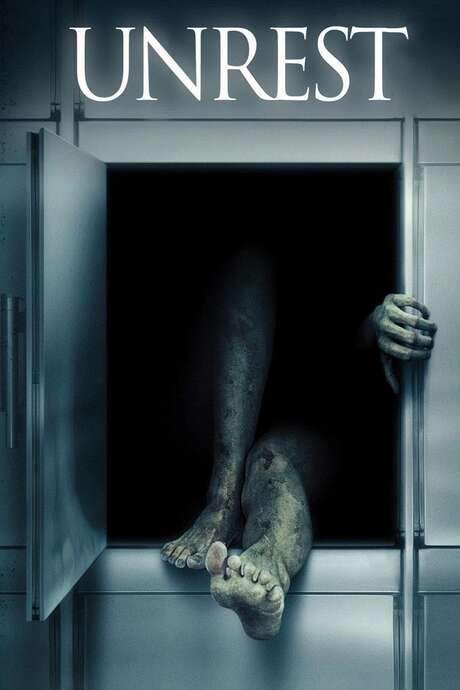
Unrest (2006) movie poster

Plot Summary

Unrest (2006) Plot Summary Explained

Release, runtime and language
2006 · 88 mins · English
Directed by
Jason Todd Ipson
Starring
Derrick O'Connor, Jay Jablonski, Ben Livingston, Rhett Willman, Joshua Alba, Marisa Petroro

Touted as the first horror film to feature actual human cadavers, it follows a young pathology medical student who becomes convinced that the restless spirit of a dead cadaver lodged in the hospital morgue is exacting revenge on anyone who touches or disrespects the body, leading to a series of mysterious deaths.

On this page (5)
  1. 1 What happens: full plot
  2. 2 Plot questions answered
  3. 3 Movie threads
  4. 4 Movies like Unrest
  5. 5 Every angle

Full plot summary · contains spoilers

What Happens in Unrest: Full Plot Summary

The whole story of Unrest (2006) explained, from the opening scene to the final frame: every key event, every twist and what it all adds up to. Read it as a quick recap before the sequel, to check a scene you missed, or to finally understand what really happened.

An eerie, hospital-bound tale centers on a cursed cadaver whose presence corrupts those who come into contact with it. The story unfolds largely within a tense hospital environment, where the ghosts are rarely visible in a traditional sense, yet the deaths pile up whenever the spirit tied to the body is provoked.

Alison Blanchard, Corri English, a young medical student, arrives at the hospital to study anatomy and begins to notice something terribly wrong with the cadaver she has been assigned. The corpse carries unsettling clues: self-inflicted wounds and even signs of having once contained a child. As she digs deeper, the aura around the body grows more malevolent, and a string of mysterious deaths starts to ripple through the unit. The atmosphere tightens as colleagues fall victim to accidents and foul play alike, particularly the fiancée of one of Alison’s team members, along with several hospital staff, all seemingly connected to the disturbed presence named by the crew as “Norma.”

The mystery deepens when Alison learns the truth behind Norma: the cadaver is really a person named Alita Covas, whose life intertwines with a brutal past. Alita once led an archaeological expedition to an Aztec sacrificial site and uncovered tens of thousands of bodies offered to Tlazōlteōtl, a powerful figure associated with sex, temptation, and purification. The revelations describe a fall from grace: Alita’s later years saw her become a prostitute, followed by years of mental instability, a spree of murders, and a final, solitary death in a mental asylum. The backstory casts a long shadow over the present horror, casting the cadaver not as a mere object but as a vessel carrying a violent history and an unsettled spirit.

Dr. Blackwell, Derrick O'Connor, presides over the dissection and the hospital’s grim routine, trying to keep the situation under control as the body’s curse begins to surface in increasingly dangerous and gruesome ways. The tension mounts as Alison pieces together the chain of events that ties the current fatalities to the deteriorating condition of the corpse. The more she uncovers, the more she realizes that the situation cannot be contained by standard medical means; the history embedded in the body demands a ritual response that bridges science and superstition.

Driven by a sense of responsibility and a growing bond with her classmate and love interest, Rick O'Connor, Jay Jablonski, Alison resolves that the only way to appease the vengeful spirit is to return Alita Covas to her homeland. The plan pivots on transporting the now dismembered remains back to Brazil, a move that reframes the hospital’s sterile walls as a place on the edge of a larger, ancient grievance. Along the way, the group faces a cascade of hazards, each more unsettling than the last, as the body's rage seems to flare whenever the living attempt to interfere with its rest.

In a dramatic sequence set within the hospital’s own corridors and treatment rooms, Alison and Rick confront the brutal truth of what they carry. The two students end up carrying out a controversial and grisly cremation of the body within the hospital itself, a desperate attempt to lay the spirit to rest. The act becomes a stark fusion of ritual and science, with the walls of the hospital bearing witness to a line that was never meant to be crossed—between life, death, and the unresolved mistakes of the past.

Ultimately, Alison travels to Brazil to scatter the ashes and to perform what she hopes will be a final absolution for Alita Covas. The closing moments carry a chilling ambiguity: even after the ceremony, the hospital’s air hints that the spirit may not be fully quelled. The film closes on a note that suggests the haunting persists in some form, a reminder that some wounds are not easily laid to rest and that place, history, and the dead can remain stubbornly tethered to the living.

Throughout the narrative, the hospital setting serves not just as a backdrop but as a character in its own right, where sterile rooms, quiet hallways, and the hum of medical equipment frame a story that blends medical inquiry with ancient vengeance. The tension is carried by dedicated performances, with Alison Blanchard's curiosity and courage driving the investigation forward, while the relationship with Rick O'Connor provides a human, emotionally resonant thread through the escalating peril. The arc of Alita Covas’s past—her expedition, the 50,000 offerings to Tlazōlteōtl, her descent into madness, and her eventual death—forms the core mythic engine of the film, giving the horror its motive and its tragic weight.

Key characters thread through the plot with a sense of inevitability: Dr. Blackwell acts as the science-facing anchor who confronts the mystery head-on; Alita Covas embodies the past that refuses to stay buried; Alison Blanchard represents the present’s attempt to understand and perhaps heal what history has opened. The hospital’s staff and environment intensify the suspense, turning each routine procedure into an opportunity for danger and discovery. The result is a paradoxical blend of clinical detail and mythic storytelling that keeps the tension tight while inviting viewers to consider the cost of ignoring a history that refuses to stay quiet.
Last updated: January 28, 2026 at 12:44

Was this helpful?

Plot questions answered

Unrest Plot Explained: Your Questions Answered

The questions people ask most about Unrest (2006): what happens in the confusing scenes, why the characters do what they do, the twists, hidden details and what the ending means. Each answer contains spoilers.

Q1

Why does the cadaver in Unrest kill people who touch it?

The cadaver known as Norma is possessed by the spirit of Alita Covas, who seeks revenge on anyone who disrespects or touches her remains. According to the film's mythology, Alita died with unresolved anger after her traumatic past, and her spirit becomes increasingly malevolent whenever the living interfere with her body. The deaths are not random, they target those who come into direct contact with the corpse or treat it without proper reverence.

Foreshadowing: Early in the film, Alison notices unsettling omens around the cadaver and unusual self-inflicted wounds, hinting that the body carries a violent, vengeful presence.

  • spirit
  • revenge
  • cadaver
  • curse
  • Norma
Q2

What is Alita Covas's backstory in Unrest?

Alita Covas was a archaeologist who led an expedition to an Aztec sacrificial site and discovered approximately 50,000 bodies offered to the Aztec god Tlazōlteōtl. After the expedition, she descended into prostitution, suffered mental instability, committed murders, and was eventually institutionalized in a mental asylum where she died, by her own hand, according to the backstory. Her violent death left her spirit tethered to her remains, which eventually ended up in the hospital morgue.

Foreshadowing: The revelation that Norma is actually Alita Covas shifts the mystery from mere superstition to a personal history of trauma and murder.

  • Alita Covas
  • archaeologist
  • Aztec
  • backstory
Q3

What is Tlazōlteōtl and why does it matter in the film?

Tlazōlteōtl is an Aztec deity associated with sex, temptation, purification, and wrath. The film presents the theory that Alita's exposure to the massive sacrificial site angered the god, and this divine fury was transmitted through her remains. The curse on the cadaver is framed as a manifestation of Tlazōlteōtl's power, a supernatural consequence of disturbing an ancient sacred place. Returning Alita's body to Brazil is meant to appease this god.

Foreshadowing: The discovery of 50,000 bodies at the Aztec site connects Alita's personal tragedy to a larger, ancient grievance.

  • Tlazōlteōtl
  • Aztec
  • god
  • curse
  • sacrificial
Q4

Why does Alison cremate the body inside the hospital?

After learning Alita's full history, Alison concludes that the spirit cannot be appeased through normal means. Desperate to stop the escalating deaths, she and Rick decide to perform an improvised cremation within the hospital itself, a fusion of scientific procedure and ritual. This extreme act is portrayed as the only way to disrupt the curse before the situation claims more lives, though it clearly crosses a moral and ethical line.

Foreshadowing: Earlier, Dr. Blackwell struggles to contain the situation through conventional medical protocols, setting up the need for a more drastic solution.

  • cremation
  • Alison
  • Rick
  • hospital
  • ritual
Q5

Does the spirit actually get appeased by the end of Unrest?

The ending is deliberately ambiguous. Alison travels to Brazil to scatter the ashes, hoping this final act will lay Alita's spirit to rest. However, the closing scene strongly suggests the spirit remains active within the hospital. The implication is that some curses cannot be fully appeased through ritual alone, Alita's anger and Tlazōlteōtl's influence persist beyond the protagonist's attempt at closure.

Foreshadowing: The film maintains tension throughout by showing that each attempt to contain the body only escalates the danger.

  • ending
  • spirit
  • haunting
  • ambiguous
Q6

Why does the fiancée of Alison's teammate die?

The fiancée becomes one of the first major victims of the curse, dying under inexplicable circumstances that are clearly linked to her contact with the cadaver or its immediate environment. Her death signals that the curse is escalating beyond random accidents and actively targeting people connected to those working with the body. This event propels Alison to investigate the cadaver's true identity.

Foreshadowing: The wave of deaths begins after Alison notices the unusual signs on the cadaver, including self-inflicted wounds.

  • fiancee
  • death
  • curse
  • escalation
Q7

What do the self-inflicted wounds on the cadaver signify?

The self-inflicted wounds are evidence that Alita Covas died by her own hand in the mental asylum. This detail is significant because suicide is often associated with unresolved anger and restless spirits in horror mythology. The wounds serve as both a character detail, showing Alita's tragic end, and a plot mechanism that explains why her spirit would be so vengeful and why disturbing her remains triggers such violent retribution.

Foreshadowing: Alison notices these wounds early in her examination, which contributes to her growing suspicion that something is wrong with the body.

  • self-inflicted
  • wounds
  • suicide
  • asylum
Q8

Why is the cadaver nicknamed Norma in Unrest?

The hospital staff gives the cadaver the nickname Norma, though the summary does not explain the specific origin of this name. It appears to be an informal designation used by the medical students and staff working in the anatomy lab. The name becomes a sort of code word for the mysterious, cursed body as the deaths begin to pile up.

Foreshadowing: The use of a nickname rather than the real name adds to the initial dismissiveness of the situation, which the film later critiques.

  • Norma
  • nickname
  • cadaver
  • hospital
Q9

Why does Alison decide to return Alita's body to Brazil?

After uncovering Alita's full history, Alison becomes convinced that the spirit is tied to Alita's homeland and the site where she discovered the Aztec sacrificial ground. She believes that returning the body to Brazil will appease the angry spirit and the deity Tlazōlteōtl. This decision reflects Alison's growing understanding that the situation cannot be resolved through medical or scientific means alone, it requires addressing the ancient grievance.

Foreshadowing: The revelation about Alita's expedition shifts the story from a contemporary hospital mystery to one involving ancient supernatural consequences.

  • Brazil
  • return
  • Alison
  • appease
  • spirit
Q10

Why do so many hospital staff members die in Unrest?

The deaths multiply because the curse activates whenever anyone touches or mistreats the cadaver. Each person who comes into contact with Norma, through dissection, transport, or even casual interaction, becomes a target for Alita's vengeful spirit. The hospital setting amplifies the body count because medical environments naturally involve frequent physical contact with the corpse, whether through examination, procedures, or disposal attempts.

Foreshadowing: The very first scene establishes that the cadaver seems to invite misfortune to anyone who interacts with it.

  • deaths
  • hospital
  • staff
  • curse
  • contact
Q11

What is the significance of the child signs detected in the cadaver?

During her examination, Alison detects signs that a child may have been present within the cadaver. This detail is somewhat ambiguous in the summary but likely connects to Alita's history of trauma or the supernatural corruption of her body. Some interpretations suggest this could hint at a pregnancy or perhaps a more mystical element suggesting the body absorbed or was contaminated by something innocent, adding to the horror of the desecration.

Foreshadowing: This unsettling detail is among the first clues that alerts Alison to the cadaver's abnormal nature.

  • child
  • signs
  • cadaver
  • anomaly

Movie threads

More Movies Like Unrest, by Mood & Story

Curated lists built around what makes Unrest tick: the same mood, the same kind of story or the same emotional payoff. Each list explains why these movies belong together.

Medical horror movies with supernatural retribution like Unrest

Where clinical settings become stages for ancient curses and spectral vengeance. If you liked the medical horror and ancient curse elements of Unrest, this list features similar movies where hospitals and clinical settings are haunted by vengeful supernatural forces. Discover more terrifying stories of medical procedural horror blended with mythic vengeance.

  • clinical
  • supernatural
  • vengeful
  • gruesome
  • medical
  • cursed
  • Tone: dark, grim, macabre
  • Pacing: steady, methodical
Why these movies?

The story pattern: These narratives often follow professionals – doctors, students, pathologists – whose rational worldview is shattered by an inexplicable supernatural threat rooted in a forgotten past. The plot involves uncovering a mystery, often related to a curse or a desecrated body, as the characters face a vengeful entity that uses the medical environment itself as a weapon.

Why they belong together: Movies are grouped here because they share a unique blend of a clinical, realistic setting with a supernatural threat. This creates a specific kind of dread, contrasting cold science with hot, primal fear, and often involves themes of disrespect for the dead and the consequences of playing god.

Movies about psychological descent and paranormal fear like Unrest

Protagonists who slowly unravel as they confront an ambiguous supernatural threat. Fans of Unrest's psychological torment and ambiguous supernatural threat will find more films here about characters questioning their sanity. Explore stories similar to Unrest where the horror comes from a slow, paranoid descent while facing a haunting presence.

  • paranoid
  • psychological
  • unsettling
  • descent
  • dread
  • anxious
  • Tone: unsettling, paranoid, dark
  • Pacing: steady, building dread
Why these movies?

The story pattern: The narrative follows a central character who is the primary witness to strange events. As the threat escalates, they become increasingly isolated and paranoid, unsure if they are being haunted or suffering a mental collapse. The story structure is a steady unraveling of both the mystery and the protagonist's grip on reality, leading to an often ambiguous conclusion.

Why they belong together: These films are grouped by their shared focus on a character's psychological journey from skepticism to terror-filled belief. The viewing experience is defined by a pervasive sense of unease and a gradual increase in tension, making the audience question what is real alongside the protagonist.

If you liked this

Movies Like Unrest

Similar movies to Unrest: the same genre, themes or kind of story. Each one comes with its own plot summary, timeline and ending explained.

Browse all movie summaries

Every angle

Unrest (2006) Explained: Plot, Timeline & Characters

Everything about Unrest in one place: what happens in the plot summary, the timeline in chronological order, the characters and meaning and a spoiler-free summary. What's After the Movie adds the cast, box office and post-credit scenes.

Coming soon on iOS and Android

The Plot Explained Movie Summary App

Plot summaries, endings explained and timelines on your phone. Catch up on any movie in minutes, save your favorites and never miss a twist again.

Be the first to know when we launch. Your email stays private, always.

Learn more about the app