Plot Explained Spoilers guaranteed!
Plot Explained

Browse by genre

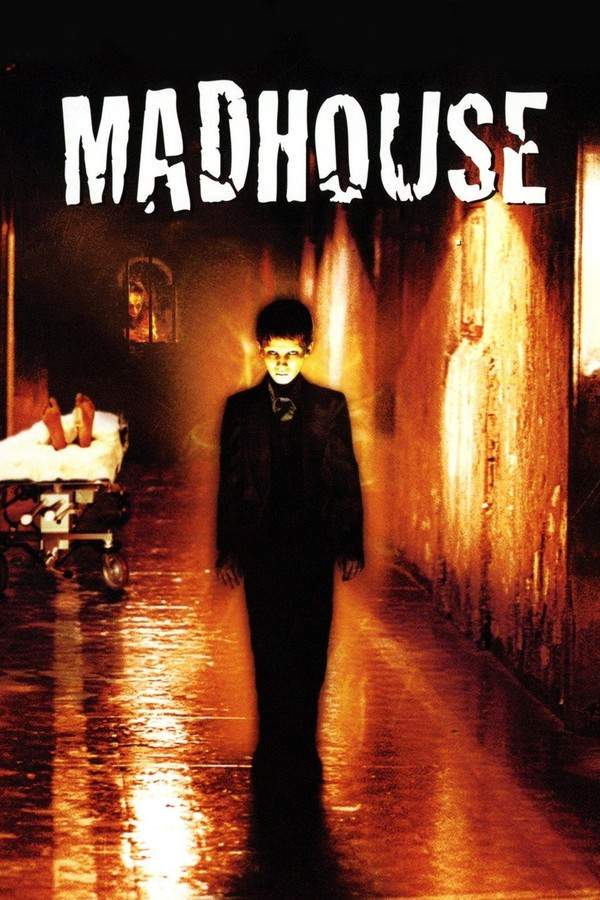
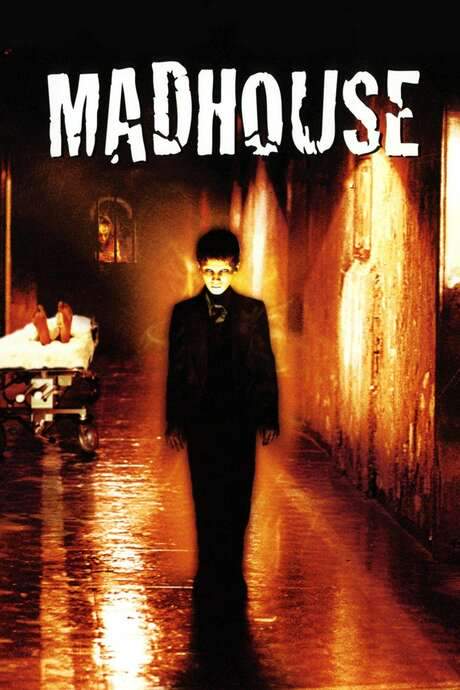
Madhouse (2004) movie poster

Plot Summary

Madhouse (2004) Plot Summary Explained

Release, runtime and language
2004 · 91 mins · English
Directed by
William Butler
Starring
Dendrie Taylor, Lance Henriksen, Natasha Lyonne, Joshua Leonard, Leslie Jordan, Jordan Ladd

Let the insanity begin. A young psychiatric intern unearths secrets about the mental health facility in which he works.

On this page (6)
  1. 1 Where to watch
  2. 2 What happens: full plot
  3. 3 Plot questions answered
  4. 4 Movie threads
  5. 5 Movies like Madhouse
  6. 6 Every angle

Where to watch

Where to Watch Madhouse (2004)

Where can you watch Madhouse? Stream, rent or buy it in the US, including on Tubi TV, Amazon Video and Apple TV Store: current JustWatch availability with up-to-date prices.

Streaming availability powered by JustWatch

Full plot summary · contains spoilers

What Happens in Madhouse: Full Plot Summary

The whole story of Madhouse (2004) explained, from the opening scene to the final frame: every key event, every twist and what it all adds up to. Read it as a quick recap before the sequel, to check a scene you missed, or to finally understand what really happened.

In 1989, a young boy attempts to escape Cunningham Hall Mental Facility, but his bid is cut short when he is struck by a car outside the gates. Fast forward several years, and psychiatric intern Clark Stevens arrives at Cunningham Hall to train before he can graduate to medical school. He is welcomed into the orbit of the staff and patients, starting with Nurse Betty, who hands him keys and a walkie‑talkie before escorting him to the facility’s director, Dr. Franks. The encounter is punctuated by a troubling interruption: a patient named Carl blurts out that he “shouldn’t be here” and insists that reform meant to be free ends up imprisoning people.

In the director’s office, Clark discovers a book titled Psychology and the Paranormal, a clue that suggests a link between mental stability and the supernatural. [Dr. Franks] introduces Clark to two other clinicians—Dr. Morton and Dr. Douglas—as the tour continues. A nurse named Sara guides Clark through the wards, and the pair pass by Alice, a patient who stares out a window and seems to glimpse something others cannot. Alice’s visions intensify as the tour moves toward the basement, the place where the most dangerous patients are kept, a zone the staff members nickname “Madhouse.” A sudden attack by a patient using a shard of glass is fended off by Drake, a security guard, and Clark’s curiosity about the mysterious Macabre underbelly grows. That night, Clark spots a young boy roaming the hospital grounds, a figure that haunts him again the following day as he witnesses Alice being physically abused by a staff member. He pursues the boy to Madhouse, only to confront Dr. Morton, who remembers a patient from Cell #44 who seemingly escaped and then died. The moment is interrupted when Hendricks returns with a task: clean up a mess in the rec room.

Sometime later, Clark recounts the Cell #44 tale to [Dr. Franks] and is brushed off. As he leaves, he overhears a tense exchange between [Dr. Franks] and [Nurse Hendricks] about something she alone seems to know. Night duty shifts bring Sara back to the nurses’ station, where she and Hendricks hear a chilling noise. Hendricks, armed with a stun gun, investigates, only to be slain by a cloaked figure who kills her with a defibrillator’s electric shock. The next day, Hendricks’s body is found, and Franks orders staff to interview the patients about the murder. Clark is sent down to Cell #44, where a patient identifies himself as Ben London and hints that the killer might be Franks.

Clark probes further, asking Grace—the nurse in charge of medicine—about Ben’s prescriptions, but the situation continues to spiral as Carl’s suicide earlier seals the sense that something deeply wrong is happening. In a group meeting led by Clark and Sara, Alice shares her visions of the boy and the strange forces at work. Clark then witnesses Drake engaging in sexual activity with a patient in an open room, which leads to a police arrest of Drake as the murderer. It is around this time that Clark uncovers a darker truth: Franks has been using placebos to manipulate patient outcomes and siphon hospital funds.

Meanwhile, a new wave of violence hits when the same figure who killed Hendricks murders Dr. Morton with an axe. The night grows thicker with revelations as Clark confronts Ben again, only to be drugged by Sara with coffee meant to sedate him. Through the fog of sleep, Clark hears Ben’s voice and sees the little boy again, until a startling realization dawns: Sara herself is the killer, and she has been manipulating events from behind the scenes. But the twist does not end there. When Clark awakens and returns to the Madhouse to seek Ben, he discovers that Ben is not a separate person at all—the boy and Ben London are manifestations of Clark himself. Clark, it turns out, is actually Ben London—once a patient in the hospital as a child—and he was presumed dead when [Dr. Franks] struck him with his car during an escape attempt. Ben London had impersonated Clark, a deceased medical student, to infiltrate the hospital.

Ben London then confronts [Dr. Franks] in his office, revealing his true identity as the one who has been orchestrating the scheme and destroying the records of embezzlement. The confrontation ends with Ben killing Franks by axe, and Sara—who had aided in keeping up the façade—witnesses the murder and pleads for mercy before Ben finally kills her as well. The film closes on a chilling note: Ben London, back in formal attire, walks into another unnamed psychiatric hospital, suggesting a cycle that will continue as he moves from one institution to the next.

Through its claustrophobic hallways and shifting sense of reality, the story blends medical procedure with a psychological thriller, inviting viewers to question what is real within the walls of Cunningham Hall and how deeply a patient’s past can bleed into the present.

Last updated: October 09, 2025 at 14:55

Was this helpful?

Plot questions answered

Madhouse Plot Explained: Your Questions Answered

The questions people ask most about Madhouse (2004): what happens in the confusing scenes, why the characters do what they do, the twists, hidden details and what the ending means. Each answer contains spoilers.

Q1

Who is the real killer in the movie?

The cloaked killer is Ben London, the psychiatric patient who has been impersonating Clark Stevens throughout the film. He kills Nurse Hendricks with a defibrillator, Dr. Morton with an axe, Dr. Franks with an axe, and finally Sara after she pleads for mercy. His motive is revenge against those who wronged him as a child patient.

Foreshadowing: Earlier scenes show Clark seeing a young boy on hospital grounds and hearing Ben's voice, hinting at their connection.

  • ben london
  • clark stevens killer
  • murderer
  • cloaked killer
  • revenge
Q2

Why does Ben London impersonate Clark Stevens?

Ben infiltrates Cunningham Hall by impersonating the deceased medical student Clark Stevens to investigate his traumatic past. As a child patient, he was nearly killed when Dr. Franks struck him with a car during an escape attempt. He returns to expose Franks' crimes and seek vengeance for what was done to him.

Foreshadowing: Dr. Morton mentions a patient from Cell #44 who escaped and died, and Ben London hints at his identity when Clark visits Cell #44.

  • ben london
  • clark stevens impersonation
  • identity
  • undercover
  • infiltration
Q3

Why was the boy hit by a car in 1989?

In 1989, young Ben London attempted to escape Cunningham Hall Mental Facility. Dr. Franks, the director, struck him with his car on the facility grounds to prevent his escape. Ben was presumed dead, but he survived and was later institutionalized elsewhere. This incident planted the seeds for Ben's decades-long plot of revenge.

Foreshadowing: The opening scene shows the boy's escape attempt being violently stopped, establishing Franks' willingness to commit murder to hide the facility's secrets.

  • 1989 escape
  • car accident
  • dr franks
  • child patient
  • escape attempt
Q4

Why does Sara help Ben London?

Sara is revealed to be Ben London's accomplice throughout the film. She helps maintain his cover by drugging Clark's coffee to keep him unconscious, misleading the investigation, and participating in the murders. Her exact motivation is unclear, but she appears loyal to Ben and may have her own grievances against the institution.

Foreshadowing: Sara guides Clark on the initial tour and is present during key moments, establishing her access and proximity to the investigation.

  • sara
  • ben london accomplice
  • manipulation
  • drugging
Q5

How does Dr. Franks die?

Ben London confronts Dr. Franks in his office after discovering him destroying evidence of his embezzlement scheme. Ben reveals his true identity as the boy from 1989 and kills Franks with an axe, exacting revenge for the car attack that nearly killed him and the decades of corruption he endured.

Foreshadowing: Earlier, Ben tells Clark that Franks could be the killer, and Franks is shown destroying financial records in his office.

  • dr franks death
  • axe murder
  • killed by ben london
  • confrontation
Q6

What is Dr. Franks embezzling from Cunningham Hall?

Dr. Franks has been using placebos instead of real medication on patients to manipulate their behavior while siphoning hospital funds for personal gain. This explains why patient treatments seem ineffective and why certain patients behave erratically. Clark discovers this scheme while investigating the facility's corruption.

Foreshadowing: Patient Ben London hints at something being wrong with the medication regime, and Alice's visions intensify despite her prescribed treatments.

  • embezzlement
  • placebos
  • medication fraud
  • corruption
  • patient manipulation
Q7

Is Clark Stevens a real person?

No. Clark Stevens is a deceased medical student whose identity Ben London assumed to infiltrate Cunningham Hall. After being institutionalized following the 1989 car accident, Ben spent years planning his return to the facility as an impostor to expose and destroy the people responsible for his suffering.

Foreshadowing: The mysterious boy appears throughout the film, and Ben's voice haunts Clark during his drugged sleep, suggesting a shared consciousness.

  • clark stevens impostor
  • identity reveal
  • ben london true identity
  • fake identity
Q8

Who kills Nurse Hendricks?

Sara kills Nurse Hendricks using a defibrillator's electric shock while posing as the cloaked figure. This occurs during a night shift when Hendricks investigates a noise at the nurses' station. Sara's involvement becomes clear later when she is revealed as Ben London's accomplice.

Foreshadowing: Hendricks is shown physically abusing patient Alice earlier, and she responds aggressively to patient disruptions.

  • nurse hendricks death
  • killed by sara
  • defibrillator murder
Q9

Who kills Dr. Morton?

Ben London kills Dr. Morton with an axe. Morton is murdered in his office, adding to the escalating violence at Cunningham Hall. This killing is part of Ben's broader campaign to eliminate staff members he holds responsible for the facility's abuse and corruption.

Foreshadowing: Dr. Morton recalls Cell #44's patient escaping and dying, showing he knows more about the facility's dark secrets.

  • dr morton death
  • axe murder
  • killed by ben london
Q10

Why does Alice see the young boy in her visions?

Alice, a patient with psychic visions, perceives the presence of young Ben London roaming the facility. Since Ben is actually the boy she sees, her supernatural abilities allow her to sense what others cannot, that something supernatural is happening within the institution's walls.

Foreshadowing: Alice stares out windows throughout the film, sensing things that staff and other patients miss.

  • alice visions
  • psychic abilities
  • young boy
  • supernatural perception
Q11

Why does patient Carl commit suicide?

Carl's suicide reflects the desperation of patients trapped in an abusive psychiatric system. He explicitly states that reform meant to free patients actually imprisons them further. His death underscores the film's themes of institutional corruption and the destructive toll of the facility on vulnerable patients.

Foreshadowing: Carl interrupts Clark's first day by shouting that he should not be there and that patients are kept as prisoners.

  • carl suicide
  • patient despair
  • institutional abuse
  • mental health facility
Q12

Why is Drake arrested for the murders?

Drake is falsely accused and arrested because Clark witnesses him engaging in sexual activity with a patient. This incident makes him the obvious suspect for the murders, allowing the real killer (Ben and Sara) to continue their plan unimpeded while police focus on the wrong person.

Foreshadowing: Clark observes Drake's inappropriate conduct with a patient in an open room, providing immediate circumstantial evidence.

  • drake arrest
  • false accusation
  • wrongful arrest
  • murder suspect
Q13

What happens at the end of the movie?

After murdering Dr. Franks and Sara, Ben London leaves Cunningham Hall and enters another unnamed psychiatric hospital. Still dressed formally, he walks the halls suggesting he will continue his pattern of infiltrating institutions to expose corruption and seek revenge, repeating the cycle.

Foreshadowing: The film opens with Ben escaping one facility and ends with him entering another, creating a cyclical structure.

  • ending
  • cycle of violence
  • another hospital
  • ben london continues
Q14

Why does Ben kill Sara at the end?

After Sara witnesses Ben murder Dr. Franks, she pleads for mercy but Ben corners and kills her anyway in the Madhouse basement. Despite their partnership, Ben eliminates her to prevent her from revealing his crimes or potentially cooperating with authorities.

Foreshadowing: Sara drugs Clark to keep him unconscious, showing she is deeply complicit in Ben's violent scheme.

  • sara death
  • killed by ben london
  • witness elimination

Movie threads

More Movies Like Madhouse, by Mood & Story

Curated lists built around what makes Madhouse tick: the same mood, the same kind of story or the same emotional payoff. Each list explains why these movies belong together.

Thrillers of institutional horror and unraveling sanity like Madhouse

Psychological thrillers set in oppressive institutions hiding dark secrets. If you liked the psychological dread and shocking twists of Madhouse, explore more movies like it. This thread features similar horror and thriller stories set within oppressive institutions, where dark secrets and identity crises create a gripping, grim experience for fans of the genre.

  • claustrophobic
  • paranoid
  • unsettling
  • atmospheric
  • grim
  • suspenseful
  • Tone: dark, paranoid, unsettling
  • Pacing: steady, methodical buildup
Why these movies?

The story pattern: The narrative typically follows an investigator or newcomer within a closed system (prison, hospital, school) who senses something is terribly wrong. Their inquiry challenges the institution's authority, leading them to uncover systemic abuse, corruption, or a supernatural presence, often culminating in a twist that redefines everything they thought they knew, including their own reality.

Why they belong together: Movies are grouped here for their shared setting of a claustrophobic institution, a central mystery that challenges perception, and a tone of psychological dread. They prioritize a slow-burn revelation of horrific truths, often leaving the audience with a bleak perspective on power and sanity.

Psychological thrillers with shocking identity twists like Madhouse

Thrillers where the protagonist's perception of reality is a lie. For viewers who enjoyed the jaw-dropping identity revelation in Madhouse, this thread collects similar movies with complex narratives and unreliable protagonists. Discover more thrillers and horror films where a character's search for truth leads to a devastating discovery about their own past and identity.

  • twisted
  • mind-bending
  • unsettling
  • suspenseful
  • grim
  • psychological
  • Tone: dark, twisted, bleak
  • Pacing: steady, complex
Why these movies?

The story pattern: These narratives are built on a foundation of deception, often from the protagonist's own mind. The story unfolds with hints of dissonance and fractured memories, guiding the audience to sympathize with the hero's quest. The climax delivers a paradigm-shifting reveal—such as the protagonist being the villain, an impostor, or a victim of severe trauma—that forces a reevaluation of every preceding scene.

Why they belong together: These films are connected by their core narrative mechanism: a twist that fundamentally alters the protagonist's identity. They share a complex structure, a dark tone, and a heavy emotional weight, creating a deeply unsettling experience centered on the fragility of the self.

If you liked this

Movies Like Madhouse

Similar movies to Madhouse: the same genre, themes or kind of story. Each one comes with its own plot summary, timeline and ending explained.

Browse all movie summaries

Every angle

Madhouse (2004) Explained: Plot, Timeline & Characters

Everything about Madhouse in one place: what happens in the plot summary, the timeline in chronological order, the characters and meaning and a spoiler-free summary. What's After the Movie adds the cast, box office and post-credit scenes.

Coming soon on iOS and Android

The Plot Explained Movie Summary App

Plot summaries, endings explained and timelines on your phone. Catch up on any movie in minutes, save your favorites and never miss a twist again.

Be the first to know when we launch. Your email stays private, always.

Learn more about the app