Plot Explained Spoilers guaranteed!
Plot Explained

Browse by genre

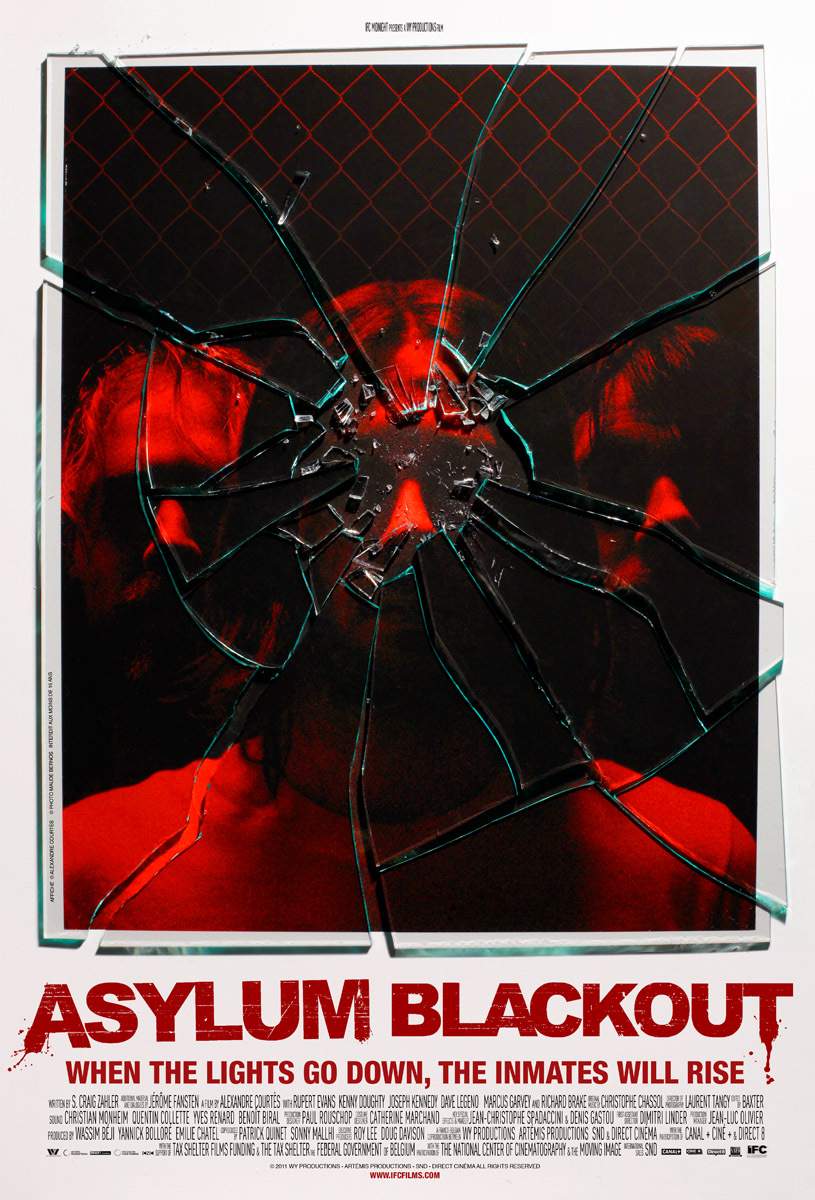
Asylum Blackout (2012) movie poster

Plot Summary

Asylum Blackout (2012) Plot Summary Explained

Release, runtime and language
2012 · 85 min
Loading streaming availability…
Directed by
Alexandre Courtès

A rock band leading double lives as orderlies at a high-security asylum finds their world turned upside down when a power outage throws the facility into chaos. As a storm intensifies, the inmates are unleashed, and the musicians must fight to survive the escalating panic and mayhem. Trapped within the asylum, they struggle to maintain order and protect themselves until help can arrive, facing a terrifying landscape of madness.

On this page (5)
  1. 1 Where to watch
  2. 2 What happens: full plot
  3. 3 Plot questions answered
  4. 4 Movie threads
  5. 5 Every angle
Loading streaming availability…

Full plot summary · contains spoilers

What Happens in Asylum Blackout: Full Plot Summary

The whole story of Asylum Blackout (2012) explained, from the opening scene to the final frame: every key event, every twist and what it all adds up to. Read it as a quick recap before the sequel, to check a scene you missed, or to finally understand what really happened.

As the rain-drenched streets of Washington DC in 1989 began to fade together, the once inseparable bond between George (Rupert Evans), Max (Kenny Doughty), and Ricky (Joseph Kennedy) started to unravel. The group's musical dreams were slowly suffocated by their personal dysfunction; Ricky's unreliability, Max's childish antics, and George's growing disconnection due to his newfound romance with Lynn (Anna Skellern). To make ends meet, they took on jobs in the cafeteria of a criminally insane asylum, working alongside William (Marcus Garvey) and the patients. George, who held the title of head chef, found pride in creating culinary masterpieces and extending kindness to the inmates, whose calm demeanor was primarily due to their medication. Notably, one inmate in particular, Harry Green (Richard Brake), sent chills down George's spine.

After an exhausting rock show, George stumbled into the kitchen at the end of the night, only to be met with a torrential downpour and a series of chilling omens: chicken heads, his own self-inflicted injury, and an explosive outburst directed at his bandmates and Harry, who seemed to scrutinize him with disturbing focus. His anxiety escalated when he witnessed Harry ostensibly persuading another patient to reject their medication.

Despite Max’s recommendation for George to take a quick nap while he prepared dinner, the chef’s rest barely lasted. Hours later, chaos shattered the calm—a loud explosion rocked the kitchen, followed by the grim announcement that the power had gone out and all exit doors were now locked. The gathered inmates turned restless in the dining room, monitored closely by the head guard, who enlisted George and William to escort them back to their cells.

Unbeknownst to the kitchen staff, a far darker scenario was unfolding within the asylum. While George and William successfully rounded up the inmates, they discovered that the locks on all doors had malfunctioned. Upon returning to the kitchen, they were met with an eerie stillness; the head guard was nowhere to be found, and Ricky and Max had barricaded themselves in the freezer.

A crucial moment arrived when a band of inmates broke through the kitchen doors, showering chaos on the once-tranquil dining area. In the ensuing turmoil, George, William, and Max managed to escape unnoticed amidst the chaos. However, Ricky, unwilling to abandon the freezer, left his friends to navigate the perilous circumstances alone. As the asylum descended into anarchy, George caught a glimpse of Harry, who seemed to relish the upheaval, his face twisted in a twisted grin as if he were orchestrating the pandemonium.

In a panic, George, Max, and William sought answers but stumbled upon the grotesque sight of the decapitated head guard. Their desperate aim to escape led them into the sanctuary of the head guard’s office, where they attempted and failed to reach authorities through a landline, only to be met with the grim reality that help wouldn’t arrive for at least an hour.

Meanwhile, Ricky met his gruesome fate at the hands of the inmates, impaled before George, Max, and William. Harry’s insidious urging incited the inmates to storm the head guard's office, sparking a brutal showdown that concluded with the cooks emerging victorious at a harrowing price: Max lost his nose in the violent scuffle.

In an act of sheer desperation, the trio sprinted to the kitchen, but George was knocked unconscious, and Max fell into captivity. Upon regaining consciousness, George found himself restrained and exposed on a table, forced to watch as the inmates reduced Max to ashes on the stove top. An additional inmate began to mutilate George, yet eventually relented at his desperate pleas.

As George's world spiraled into madness, Harry reemerged, bizarrely devouring his own fingers with a disturbingly gleeful expression, leaving George feeling utterly ineffectual. The long-awaited sound of police sirens pierced the chaos, and William led the authorities into the kitchen, just as Harry vanished without a trace.

In the aftermath, George was wheeled out of the asylum on a stretcher, fleetingly gazing at the corpse of Harry—his fingers intact—implying that George's chilling encounters with Harry might have been mere hallucinations throughout this harrowing ordeal. The narrative then jumps forward, revealing George in a hospital bed, with Lynn weeping by his side as he stares vacantly into space, seemingly ravaged by his traumatic experiences.

In a surreal final twist, the camera zooms into George's psyche, where he inexplicably finds himself back in the cafeteria, alongside his bandmates, with the inmates still roaming free, leaving questions lingering in the audience’s mind.
Last updated: November 17, 2024 at 22:36

Was this helpful?

Plot questions answered

Asylum Blackout Plot Explained: Your Questions Answered

The questions people ask most about Asylum Blackout (2012): what happens in the confusing scenes, why the characters do what they do, the twists, hidden details and what the ending means. Each answer contains spoilers.

Q1

What caused the power outage in the asylum?

The exact cause of the power outage is never explicitly explained in the film. It appears to occur during a severe storm, and the subsequent chaos suggests it may have been caused by the storm itself or a malfunction in the asylum's electrical systems. Regardless of the cause, the power failure locks all exit doors and triggers the breakdown of order, unleashing the inmates.

Foreshadowing: Earlier scenes show rain and ominous signs foreshadowing the coming disaster.

  • power outage
  • storm
  • asylum locks
  • chaos
Q2

Was Harry Green real or a hallucination?

The film strongly suggests Harry Green was a hallucination. At the end, George sees Harry's corpse with intact fingers, yet earlier Harry was shown eating his own fingers. Additionally, Harry vanishes completely when the police arrive, and the final scene implies George may have been a patient all along, creating ambiguity about which encounters were real.

Foreshadowing: Harry's unsettling behavior and his supposed influence over other patients may hint at his symbolic rather than literal presence.

  • Harry Green
  • hallucination
  • ending
  • twist
  • reality
Q3

Why did Ricky stay in the freezer instead of escaping?

Ricky chose to stay behind in the freezer, refusing to leave with George, Max, and William during the chaos. His decision appears to stem from panic and paralysis rather than any logical reason. This fatal hesitation leads to his brutal death at the hands of the inmates, who impale him while his friends escape.

Foreshadowing: Earlier tension between Ricky and the others, combined with his established unreliability, foreshadows his inability to act decisively.

  • Ricky
  • freezer
  • death
  • escape
Q4

What happened to Max in the asylum?

Max is captured by the inmates during the chaos. While George is knocked unconscious, Max is restrained and burned alive on the stove top by the inmates. George is forced to watch thishorrific death before being mutilated himself. Earlier, Max loses his nose during the showdown in the head guard's office.

Foreshadowing: Max's childish behavior and failure to take the situation seriously early on contrasts sharply with his brutal fate.

  • Max
  • death
  • burning
  • nose
  • captivity
Q5

Why did the inmates turn violent during the power outage?

The inmates become violent once the power fails and their medication schedule is disrupted. Throughout the film, their calm demeanor is attributed to their medication. When the power goes out, the medication distribution stops, and the patients descend into madness. Harry Green notably encourages this violence, seemingly enjoying the chaos.

Foreshadowing: George witnesses Harry persuading another patient to skip their medication, hinting at what happens when patients go without their drugs.

  • inmates
  • violence
  • medication
  • chaos
  • Harry Green
Q6

Was George actually a patient at the asylum?

The ending strongly implies George was a patient at the asylum all along, not an orderly. The final surreal scene shows George back in the cafeteria with the inmates still roaming free, and earlier details like Harry's corpse having intact fingers suggest George's experiences were hallucinations. His vacant stare in the hospital bed reinforces the idea that he never escaped the asylum psychologically.

Foreshadowing: Harry's seemingly supernatural presence and the ambiguous nature of many events hint at the psychological nature of the narrative.

  • George
  • patient
  • hallucination
  • ending
  • twist
  • reality
Q7

How did William survive the asylum chaos?

William survives by remaining with George and Max throughout the ordeal. He helps them navigate the asylum, barricade in the head guard's office, and ultimately leads the police to the kitchen when help arrives. Unlike the band members, William is shown as a competent, level-headed survivor who understands the asylum's layout and procedures.

Foreshadowing: William's experience as a longtime staff member provides him with practical knowledge that helps him navigate the crisis.

  • William
  • survival
  • police
  • rescue
Q8

What does the final scene of the movie mean?

The final scene shows George seemingly back in the asylum cafeteria with the inmates still roaming freely, suggesting the entire rescue may have been a hallucination or that George has permanently retreated into his mind due to trauma. This ambiguous ending implies his psychological break is complete, trapping him in a nightmare of his own making.

Foreshadowing: The earlier reveal that Harry's corpse has intact fingers and vanishes entirely during the rescue hints that much of what George experienced was not real.

  • ending
  • twist
  • hallucination
  • cafeteria
  • ambiguity
Q9

Why was George specifically targeted by Harry Green?

George appears to be Harry's primary focus throughout the film. Harry scrutinizes George with disturbing intensity and seems to be orchestrating the chaos specifically against him. However, given the revelation that Harry may have been a hallucination, this targeted behavior likely reflects George's own psychological projection, his fears and guilt manifesting as a threatening figure.

Foreshadowing: George's anxiety and unease around Harry precedes any clear hostile action, suggesting the tension originates from George's mind.

  • George
  • Harry Green
  • target
  • psychology
Q10

Why did it take so long for help to arrive?

When George and William attempt to call for help, they learn that authorities cannot arrive for at least an hour due to the storm and the asylum's remote location. This delay allows the violence to escalate unchecked and results in multiple deaths before police finally arrive.

Foreshadowing: The isolated location of the asylum and the severe storm are established early, creating the conditions for this delay.

  • police
  • help
  • delay
  • storm

Movie threads

More Movies Like Asylum Blackout, by Mood & Story

Curated lists built around what makes Asylum Blackout tick: the same mood, the same kind of story or the same emotional payoff. Each list explains why these movies belong together.

Claustrophobic survival horror movies like Asylum Blackout

Characters trapped in a confined location must survive a relentless, chaotic threat. If you liked the frantic, trapped feeling of Asylum Blackout, this thread gathers movies with similar claustrophobic survival horror. Find other stories where characters are confined and hunted, facing relentless chaos in isolated locations like bunkers, facilities, or remote outposts.

  • claustrophobic
  • anxious
  • chaotic
  • trapped
  • desperate
  • frantic
  • Tone: dark, tense, chaotic
  • Pacing: fast, relentless
Why these movies?

The story pattern: The narrative pattern involves a sudden breakdown of order in a confined space, forcing characters into immediate survival mode. The plot is a linear, escalating series of threats and narrow escapes, focusing on physical endurance and the psychological toll of being trapped with a deadly, often unseen or inexplicable, danger.

Why they belong together: These movies are grouped by their core premise of confinement and immediate physical threat. They share a high-intensity, fast-paced experience that generates anxiety and dread through spatial limitations and relentless action, creating a visceral, panic-driven viewing experience.

Movies about psychological madness like Asylum Blackout

Stories where the line between reality and hallucination blurs under extreme pressure. Fans of the psychological breakdown and ambiguous reality in Asylum Blackout will find similar movies here. This thread collects stories focused on characters descending into madness, dealing with hallucinations, paranoia, and a blurred line between real danger and mental collapse.

  • unsettling
  • paranoid
  • psychological
  • hallucinatory
  • grim
  • bleak
  • Tone: dark, unsettling, paranoid
  • Pacing: variable, building to intense peaks
Why these movies?

The story pattern: The narrative follows a protagonist experiencing a gradual or sudden psychological collapse. The story often introduces elements of uncertainty—are the threats real or imagined?—leading to an ending that may be bleak or ambiguous, leaving the character (and sometimes the viewer) permanently scarred and unsure of what truly happened.

Why they belong together: These films are united by their focus on the fragility of the human mind under duress. They share a heavy emotional weight, unsettling mood, and a thematic exploration of madness, perception, and trauma, often using narrative ambiguity to enhance the psychological dread.

Every angle

Asylum Blackout (2012) Explained: Plot, Timeline & Characters

Everything about Asylum Blackout in one place: what happens in the plot summary, the timeline in chronological order, the characters and meaning and a spoiler-free summary. What's After the Movie adds the cast, box office and post-credit scenes.

Coming soon on iOS and Android

The Plot Explained Movie Summary App

Plot summaries, endings explained and timelines on your phone. Catch up on any movie in minutes, save your favorites and never miss a twist again.

Be the first to know when we launch. Your email stays private, always.

Learn more about the app