Plot Explained Spoilers guaranteed!
Plot Explained

Browse by genre

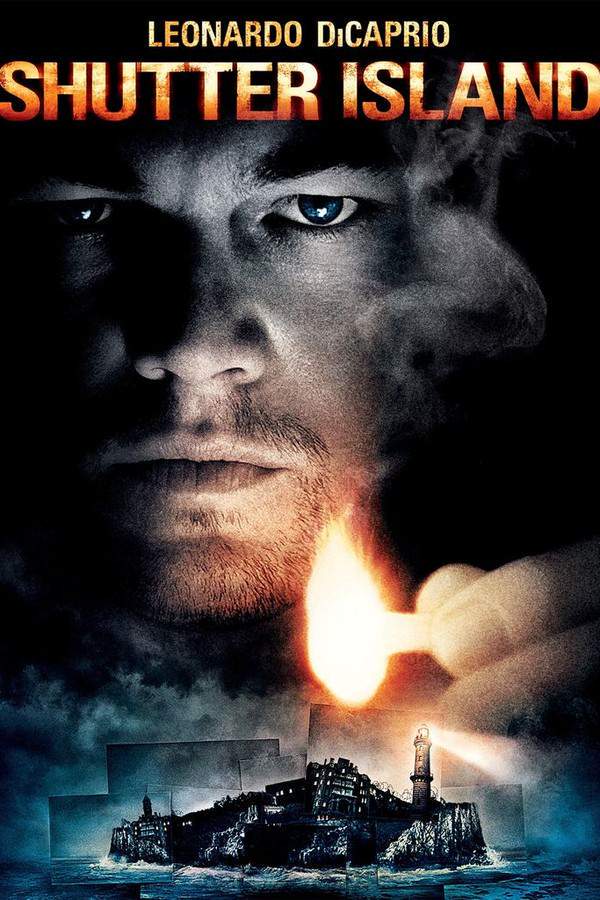
Shutter Island (2010) movie poster

Plot Summary

Shutter Island (2010) Plot Summary Explained

Release, runtime and language
2010 · 138 min · English
JustWatch #124 25
Directed by
Martin Scorsese
Starring
Mark Ruffalo, Leonardo DiCaprio, Emily Mortimer
Budget
$80M

In 1954, US Marshal Teddy Daniels and his partner travel to Ashecliffe Hospital, a psychiatric institution for the criminally insane, located on the isolated Shutter Island. They are tasked with investigating the disappearance of a patient, Rachel Solando, who vanished from her locked room. As Teddy delves into the investigation, he uncovers disturbing secrets about the hospital and its experimental procedures. He is haunted by troubling flashbacks and struggles to distinguish between reality and illusion, leading him to question his own sanity and the true nature of the case.

On this page (7)
  1. 1 Where to watch
  2. 2 What happens: full plot
  3. 3 Plot questions answered
  4. 4 The book behind the movie
  5. 5 Movie threads
  6. 6 Movies like Shutter Island
  7. 7 Every angle

Where to watch

Where to Watch Shutter Island (2010)

Where can you watch Shutter Island? Stream, rent or buy it in the US, including on fuboTV, Paramount Plus Essential and Paramount Plus Premium: current JustWatch availability with up-to-date prices.

Streaming availability powered by JustWatch

Full plot summary · contains spoilers

What Happens in Shutter Island: Full Plot Summary

The whole story of Shutter Island (2010) explained, from the opening scene to the final frame: every key event, every twist and what it all adds up to. Read it as a quick recap before the sequel, to check a scene you missed, or to finally understand what really happened.

U.S. Marshals Edward "Teddy" Daniels (Leonardo DiCaprio) and Chuck Aule (Mark Ruffalo) are summoned to Shutter Island, a high-security mental institution housing the criminally insane, after a patient named Rachel mysteriously disappears. Teddy carries the weight of a tragic past, having lost his family in a horrific apartment fire. They meet McPherson (Ted Levine), the deputy warden, who warns them that the facility is divided: dangerous male and female patients are held separately, with the most violent individuals confined in Building C. He instructs that they cannot enter without being accompanied by both him and Dr. Cawley (Ben Kingsley).

Upon meeting Dr. Cawley, he reveals the ongoing debate in mental health treatment; one faction favors surgical interventions like lobotomies, while others advocate for the use of new psychotropic medications. Dr. Cawley informs them of Rachel, who tragically murdered her three children and now believes they are alive, mistaking the hospital staff for her neighbors. As Teddy seeks answers, he grows frustrated when Cawley declines to share any personnel files. In Rachel's room, they discover a cryptic note reading, “Where is number 67?” This leads to further tension during a staff meeting, where it surfaces that Rachel's doctor has gone on vacation, infuriating Teddy.

Teddy is haunted by frequent flashbacks from his time as a soldier in WWII, reflecting his troubled psyche. In these vivid dreams, Dolores (Michelle Williams), his deceased wife, offers him unsolicited yet haunting advice. Teddy’s unit was among the first to liberate the dreadful Concentration Camp Dachau, an experience that left him with deep-seated trauma, compounded by a horrific encounter with a German Commander. He openly admits to shooting Nazi guards in cold blood—a manifestation of his inner turmoil.

As Dr. Naehring (Max Von Sydow), Dr. Cawley's German superior, becomes a persistent figure, Teddy feels increasingly uneasy about the secrets the asylum seems to harbor. During their investigations, they discover that some patients appear to be coached, with one scribing the word RUN in his notebook. As the investigation unfolds, Teddy confides in Chuck about the arsonist Laeddis, suspecting he might also be detained on the island. However, upon searching, he finds no records.

The situation escalates when McPherson insists they change into patient uniforms, further immersing them in the twisted environment of Shutter. Crawley later reveals that Rachel has been located, stirring Teddy's dreams where he sees Laeddis seated in Cawley's chair, scarred and sinister.

When a power failure opens all the patient doors, Teddy and Chuck venture into Building C. Here, Teddy encounters George Noyce, who warns him that the only way to rescue him is to forsake thoughts of his wife and Laeddis. He learns that Laeddis has been moved to the lighthouse for a lobotomy. Despite Chuck's cautions, Teddy is determined to reach the lighthouse, only to be deterred by the rising tide.

In a cave, Teddy meets a woman claiming to be Rachel, who alleges she is a doctor against the torturous lobotomies forced upon the patients. She warns Teddy against accepting the hospital's pills and cigarettes, as it could lead to his commitment as insane due to his probing questions.

When Chuck goes missing, Crawley claims he arrived alone, deepening Teddy's isolation. His wife again appears in visions, urging him not to approach the lighthouse. In a fit of rage, Teddy destroys Crawley's car and sneaks into the lighthouse, convinced of a conspiracy to enslave him.

Inside, he realizes Crawley holds the gun he had checked in and is met with a startling admission: Teddy is actually Andrew Laeddis, who has been a patient at Shutter for two years, entangled in a role-play orchestrated by the staff to confront his delusions. Crawley explains that Rachel Solando, along with Dolores Chanal, are constructs of his mind to escape the guilt he harbors over the loss of his family, which he cannot bear to confront.

As the truth unfurls, Crawley presses Teddy to acknowledge the painful reality that he neglected Dolores' mental health, leading to the tragedy of his children’s deaths. Stripped of his fantasies, Teddy is faced with the unbearable truth of his past.

The next morning, as they discuss escaping, Chuck implies that Teddy might be heading towards lobotomy. When Teddy mentions his intent to voluntarily give up his search for the truth, it becomes evident that he may have regressed back into his fabricated reality.
Last updated: November 08, 2024 at 02:51

Was this helpful?

Plot questions answered

Shutter Island Plot Explained: Your Questions Answered

The questions people ask most about Shutter Island (2010): what happens in the confusing scenes, why the characters do what they do, the twists, hidden details and what the ending means. Each answer contains spoilers.

Q1

Why is Teddy actually Andrew Laeddis in Shutter Island?

Teddy Daniels is a delusional identity created by Andrew Laeddis, a former patient at Shutter Island. The staff staged an elaborate role-play in which Laeddis believed himself to be a U.S. Marshal investigating the facility. This was a therapeutic technique to confront him with his own delusions. In reality, Laeddis is the man he has been searching for throughout the film, and he has been institutionalized on the island for two years.
Foreshadowing: Early in the film, Teddy cannot find any records of Laeddis existing in the hospital system, and the staff consistently deflect his questions about personnel files.

  • andrew laeddis
  • teddy daniels identity
  • twist
  • revelation
  • delusion
Q2

Why did Andrew Laeddis kill his wife and children?

Andrew Laeddis murdered his wife Dolores and their three children. Dr. Cawley explains that Laeddis neglected his wife's mental health, which deteriorated to the point where she drowned their children in the lake behind their house. Overwhelmed by grief and guilt, Laeddis then set fire to the apartment and shot his wife, unable to face the reality of what happened due to his untreated trauma and denial.

Foreshadowing: Teddy's flashbacks show a disturbed Dolores giving him haunting advice, reflecting his suppressed memory of her declining mental state.

  • dolores
  • children deaths
  • murder
  • guilt
  • family tragedy
Q3

What does the note 'Where is number 67?' mean?

The cryptic note 'Where is number 67?' was one of the elements planted by the staff as part of Laeddis's therapeutic role-play. It served to maintain the illusion of a real investigation and keep him engaged in the narrative they constructed. The specific meaning of '67' is not explicitly detailed in the film, but it functioned as another layer of the fabricated mystery designed to immerse Laeddis in his detective persona.

Foreshadowing: The note appears early in the investigation and leads to tension about a missing doctor, deepening Teddy's (Laeddis's) paranoia about a cover-up.

  • cryptic note
  • number 67
  • investigation
  • rachel solando
Q4

Who is Chuck really? Is he a real U.S. Marshal?

Chuck Aule is actually Dr. Chuck Aule, a psychiatrist at Shutter Island who was assigned to work with Laeddis as part of the role-playing therapy. He posed as a U.S. Marshal partner to participate in the elaborate simulation designed to help Laeddis confront his delusions. When Laeddis's delusions became too intense, the staff had to intervene, and Dr. Aule's true identity was revealed during the lighthouse confrontation.

Foreshadowing: Chuck consistently urges caution and tries to steer Teddy away from the lighthouse, and he is oddly compliant with the staff's demands throughout the investigation.

  • chuck aule
  • doctor
  • psychiatrist
  • role play
  • therapy
Q5

What happens at the lighthouse in Shutter Island?

At the lighthouse, Teddy confronts Dr. Cawley, who reveals the truth about his identity. Cawley holds the gun Teddy checked in at the beginning and explains that the entire investigation was staged, the lighthouse was prepared for this final confrontation. Here, Teddy learns he is Andrew Laeddis, that his wife Dolores and patient Rachel Solando are imaginary constructs, and that he has been a patient for two years attempting to escape his guilt over his family's deaths.
Foreshadowing: Teddy's wife repeatedly warns him not to approach the lighthouse, and George Noyce specifically tells him to forget about the lighthouse if he wants to escape.

  • lighthouse
  • final confrontation
  • truth revelation
  • dr cawley
Q6

Who is Rachel Solando and is she real?

Rachel Solando is a real patient at Shutter Island who murdered her three children and believes they are still alive, mistaking staff for her neighbors. However, the Rachel who appears in the cave and warns Teddy about the hospital's lobotomy procedures is a different matter, the actual Rachel was found early in the investigation. The Rachel encountered in the cave was a construct of Laeddis's mind, similar to his wife Dolores, created to help him process the guilt he feels about his own family tragedy.

Foreshadowing: Rachel's case mirrors Laeddis's own tragedy, both killed their children, suggesting Laeddis projects his guilt onto other patients.

  • rachel solando
  • patient
  • missing
  • murderer
  • children
Q7

What is Building C on Shutter Island?

Building C is the most secure ward at Shutter Island, housing the most violent and dangerous patients. Deputy Warden McPherson warns Teddy and Chuck that they cannot enter without being accompanied by both himself and Dr. Cawley. During the power outage, Teddy and Chuck venture into Building C where they encounter George Noyce, who delivers crucial warnings about Laeddis and the lighthouse.

Foreshadowing: The initial warning about Building C's restricted status primes the audience for the dangerous encounter that follows during the power failure.

  • building c
  • ward
  • violent patients
  • george noyce
  • restricted area
Q8

Why does Teddy have flashbacks of Dachau concentration camp?

Teddy's flashbacks to his time as a soldier liberating Dachau reflect Andrew Laeddis's actual WWII service. Laeddis was part of the unit that liberated Dachau, an experience that left him with severe trauma. He admits to shooting Nazi guards in cold blood, which contributed to his psychological deterioration. These flashbacks serve to establish Laeddis's history of trauma and provide the foundation for his unstable mental state.

Foreshadowing: The flashbacks establish Teddy's troubled psyche from the beginning, hinting that his perception of reality may be unreliable.

  • dachau
  • wwii
  • soldiers
  • trauma
  • flashbacks
  • concentration camp
Q9

What does George Noyce warn Teddy about?

In Building C, George Noyce tells Teddy that the only way to escape Shutter Island is to abandon thoughts of his wife and Laeddis. He reveals that Laeddis has been moved to the lighthouse for a lobotomy. This warning is designed to push Teddy further toward the lighthouse confrontation, serving the staff's therapeutic plan. Noyce appears to be a real patient, though his warnings are part of the orchestrated narrative.

Foreshadowing: Noyce's specific warning to forget about Laeddis and the lighthouse directly leads Teddy toward the film's climactic revelation.

  • george noyce
  • warning
  • laeddis
  • lighthouse
  • lobotomy
Q10

What happens at the end - does Teddy get a lobotomy?

At the end, after briefly accepting the painful truth about killing his wife and children, Teddy appears to regress into his delusion. When Chuck suggests they escape, Teddy says he may have to 'voluntarily' give up his search for the truth about the island. This implies he will choose to undergo the lobotomy procedure, which would erase his awareness of the truth and return him to his protective fantasy world, creating the film's bleak, circular ending.

Foreshadowing: The film opens with Teddy and Chuck arriving on the island, and the entire narrative is revealed to have been an attempt to avoid this fate.

  • lobotomy
  • ending
  • finale
  • regression
  • delusion
  • choice
Q11

Was there really a conspiracy at Shutter Island?

There was no actual conspiracy. The elaborate investigation, the missing patient Rachel, the cryptic notes, the power outages, and the apparent secrets were all staged components of a therapeutic role-play designed for Andrew Laeddis. The staff, including Dr. Cawley and Dr. Naehring, created this elaborate scenario to help Laeddis confront his delusions by placing him in the role of an investigator who ultimately discovers his own buried truth.

Foreshadowing: Teddy consistently encounters obstacles that seem designed to prevent him from reaching the truth, which makes sense in retrospect as part of the controlled narrative.

  • conspiracy
  • cover-up
  • role play
  • therapy
  • staff
  • plot
Q12

Why does Dr. Cawley refuse to share personnel files with Teddy?

Dr. Cawley refuses to share personnel files because doing so would expose the reality that Teddy (Andrew Laeddis) is a patient, not a U.S. Marshal. Maintaining the integrity of the role-play requires keeping Laeddis's true identity hidden. The staff's consistent deflection of Teddy's questions about records, missing doctors, and the identity of Laeddis was deliberate to sustain the therapeutic simulation.

Foreshadowing: Cawley's initial explanation about debates in mental health treatment (surgery vs. medication) hints at his investment in unconventional therapeutic approaches.

  • dr cawley
  • personnel files
  • secrets
  • denial
  • investigation
Q13

What is Dr. Naehring's role at Shutter Island?

Dr. Naehring is Dr. Cawley's German superior at Shutter Island, adding to the film's atmosphere of European psychological expertise. His presence becomes increasingly ominous to Teddy, who associates him with the traumatic German commander from his WWII flashbacks. In reality, Naehring is part of the therapeutic team orchestrating Laeddis's role-play. His Germanic background connects to Teddy's wartime trauma, making him an antagonist figure in Teddy's paranoid narrative.

Foreshadowing: Teddy's discomfort with Naehring stems from his unconscious connection to the German officers he encountered during the liberation of Dachau.

  • dr naehring
  • german
  • superior
  • cawley
  • psychiatrist
  • authority

Movie threads

More Movies Like Shutter Island, by Mood & Story

Curated lists built around what makes Shutter Island tick: the same mood, the same kind of story or the same emotional payoff. Each list explains why these movies belong together.

Movies with Unreliable Narrators like Shutter Island

Psychological journeys where perception is the ultimate mystery. If you enjoyed the disorienting mystery of Shutter Island, you'll appreciate these films that also feature unreliable narrators. These movies challenge you to separate truth from illusion, creating complex psychological thrillers and mind-bending dramas that keep you guessing until the final reveal.

  • mind-bending
  • disorienting
  • paranoid
  • psychological
  • unsettling
  • twist ending
  • Tone: dark, disorienting, paranoid
  • Pacing: variable, deliberate
Why these movies?

The story pattern: Stories in this thread are built around a central character whose perspective is compromised by trauma, mental illness, or deception. The plot unfolds as a puzzle, with clues and events that seem straightforward initially, but are completely re-contextualized by a final twist that reveals the truth about the protagonist's perception.

Why they belong together: Movies are grouped here because they share the core narrative device of an unreliable narrator. They create a similar viewing experience of active interpretation, paranoia, and a climax that forces a re-evaluation of everything that came before, focusing on the fragility of memory and identity.

Claustrophobic Thrillers in Sinister Institutions like Shutter Island

Isolated settings where the system itself is the monster. Fans of the oppressive atmosphere of Shutter Island will find similar dread in these movies set in isolated institutions. These stories use confined settings like asylums and prisons to create a palpable sense of claustrophobia, where the search for truth uncovers horrors baked into the system itself.

  • claustrophobic
  • oppressive
  • paranoid
  • institutional
  • conspiracy
  • unsettling
  • Tone: oppressive, dark, paranoid
  • Pacing: slow burn, variable
Why these movies?

The story pattern: The narrative pattern involves an outsider or investigator entering a seemingly inescapable institution to uncover a mystery. As they dig deeper, they find that the authority figures and the institution's purpose are deeply corrupt or sinister, turning the environment into a hostile maze where the protagonist's sanity and safety are at risk.


Why they belong together: These movies are grouped by their shared use of a confined, institutional setting as a primary source of horror and tension. They create a similar vibe of paranoia and oppression, where the walls feel like they are closing in and the true enemy is the pervasive, unfeeling system the characters are trapped within.

If you liked this

Movies Like Shutter Island

Similar movies to Shutter Island: the same genre, themes or kind of story. Each one comes with its own plot summary, timeline and ending explained.

Browse all movie summaries

Every angle

Shutter Island (2010) Explained: Plot, Timeline & Characters

Everything about Shutter Island in one place: what happens in the plot summary, the timeline in chronological order, the characters and meaning and a spoiler-free summary. What's After the Movie adds the cast, box office and post-credit scenes.

Coming soon on iOS and Android

The Plot Explained Movie Summary App

Plot summaries, endings explained and timelines on your phone. Catch up on any movie in minutes, save your favorites and never miss a twist again.

Be the first to know when we launch. Your email stays private, always.

Learn more about the app