Plot Explained Spoilers guaranteed!
Plot Explained

Browse by genre

Hospital of the Transfiguration (1979) movie poster

Timeline

Hospital of the Transfiguration (1979) Timeline Explained – Every Event in Order

Release, runtime and language
1979 · 90 mins · Polish
Directed by
Edward Żebrowski
Starring
Ewa Dałkowska, Władysław Kowalski, Wojciech Pszoniak, Adam Gessler, Ryszard Kotys, Elżbieta Karkoszka

Shortly after World II begins, a compassionate, idealistic young doctor takes a post at a psychiatric hospital. He quickly discovers that his humane ideas about treating patients clash with the entrenched staff attitudes and the harsh realities imposed by the German occupation, forcing him to confront profound moral and professional dilemmas.

On this page (5)
  1. 1 Events in order (14)
  2. 2 Timeline questions answered
  3. 3 Movie threads
  4. 4 Movies like Hospital of the Transfiguration
  5. 5 Every angle

14 events in order · contains spoilers

Hospital of the Transfiguration Timeline: Events in Chronological Order

Every key event of Hospital of the Transfiguration (1979) in order, scene by scene, with when and where it takes place. Use it to untangle flashbacks, time jumps and parallel storylines, to refresh your memory before the sequel or to find the exact scene you are thinking of.

  1. Stefan arrives at the closed psychiatric hospital

    In late 1939, Stefan joins the hospital as a young doctor, bringing humanitarian ideals to a place that is wary of outsiders. He is accepted by the director, Dr. Pajączkowski, and begins his work under the supervision of the cynical Dr. Rygier. The atmosphere is tense, with skepticism about new approaches to treatment already in the air.

    When
    late 1939
    Where
    Closed psychiatric hospital
  2. Rygier’s brutal methods come to light

    Rygier subjects patients to humiliating experimental treatments, including electroconvulsive therapy, which Stefan finds morally troubling. He witnesses a surgery on Andrzej, a brain cancer patient, that nearly destroys the patient’s mental faculties. Stefan’s disapproval of these methods deepens as the hospital’s bedside reality clashes with his ideals.

    When
    late 1939
    Where
    Operating theater / hospital wards
  3. Sekułowski arrives and confronts Stefan

    The drug-addicted writer Sekułowski seeks refuge in the hospital and quickly begins to provoke the young doctor with sharp criticism, accusing him of lacking life experience. This adds another layer of tension and cynicism inside the already fragile institution. Stefan is forced to navigate these provocative interactions while trying to help patients.

    When
    late 1939
    Where
    Hospital
  4. Kauters and Marglewski reveal their obsessions

    The hospital becomes a display of competing philosophies: Dr. Kauters favors only surgical methods, while Dr. Marglewski reduces mental illness to possession. Stefan notices these obsessions shaping decisions and care, emphasizing the rift between humane care and dogmatic approaches.

    When
    late 1939
    Where
    Hospital
  5. Thiesdorf arrives to liquidate the hospital

    An SS officer named Thiesdorf arrives, announcing the liquidation of the psychiatric hospital. His presence foreshadows the collapse of the staff’s fragile autonomy and signals a brutal new order. Reactions among the staff range from fear to strained resignation.

    When
    late 1939
    Where
    Hospital grounds
  6. Stefan’s rebellion grows, but Pajączkowski remains cautious

    Stefan becomes increasingly defiant toward Rygier’s methods, but he cannot count on strong support from director Pajączkowski. Rygier tries to label Stefan with a ‘Masonic’ scientific background to discredit him, intensifying the internal power struggle. The director’s caution leaves Stefan isolated in his moral stance.

    When
    late 1939
    Where
    Hospital
  7. Nosilewska confesses her past

    Dr. Nosilewska secretly confesses to Stefan that she fled from Austria after it was occupied. Her revelation adds a personal dimension to the unfolding horror and underscores how the occupation ties into the hospital’s doomed fate. Stefan’s sense of futility grows as the political reality intrudes on medicine.

    When
    late 1939
    Where
    Hospital
  8. Stefan faces the futility of idealism and witnesses malpractice

    Stefan begins to realize the futility of his idealism in the face of entrenched misconduct. He witnesses Kauters' failed surgery and Marglewski’s charlatanism, which erode any remaining trust in the hospital’s care. The cracks in the system become impossible to ignore as liquidation looms.

    When
    late 1939
    Where
    Hospital
  9. Liquidation day: Stefan aids, and cyanide is used

    On the day of liquidation, Pajączkowski cannot obtain consent from Rygier, Kauters, and Marglewski to act; Stefan chooses to support him, distributing the remaining medicines to patients. At Sekułowski’s request, he adds cyanide to the writer’s drink and burns the files, attempting to salvage some dignity amid chaos.

    When
    late 1939
    Where
    Hospital
  10. Arrests begin: Nosilewska and others taken

    As the Germans enter the grounds, part of the hospital staff is arrested. Nosilewska is taken away as a Jew, and Pajączkowski shares her fate. The wave of arrests marks a definitive end to any pretense of institutional protection for the patients.

    When
    late 1939
    Where
    Hospital grounds
  11. Sekułowski’s act of resistance

    Sekułowski, resisting arrest, takes cyanide and dies. His suicide becomes a grim symbol of the doomed resistance within the hospital’s walls. The event underscores the perilous choices faced by those trapped in this liquidation.

    When
    late 1939
    Where
    Hospital room
  12. Forced march to execution begins

    SS officers lead the remaining staff and patients out of the building toward execution. Stefan, hidden among the gowns, tries to rescue a young boy, but the boy dies in his arms, highlighting the human tragedy of the moment. The hospital’s interior violence spills into the open air.

    When
    late 1939
    Where
    Hospital grounds
  13. Stefan vanishes into the forest

    When an SS patrol is spotted in the forest, Stefan flees and disappears into the fog. His disappearance leaves the fate of those left behind even more uncertain as the search and violence continue beyond the hospital’s reach.

    When
    late 1939
    Where
    Forest near hospital
  14. The killings and burial after the escape

    The execution squad shoots the patients and remaining staff and then buries them in the forest. The hospital’s tragedy closes with burial and the chilling silence of the woods, marking the complete erasure of the hospital’s former world.

    When
    late 1939
    Where
    Forest / surrounding grounds

Last updated: October 09, 2025 at 12:38

Was this helpful?

Timeline questions answered

Hospital of the Transfiguration Timeline Explained: Your Questions Answered

When does it happen, and why in that order? The questions people ask about the chronology of Hospital of the Transfiguration (1979): time jumps, flashbacks, cause and effect between scenes and the correct order of events, each answered with spoilers.

Q1

Why did the Nazis liquidate the psychiatric hospital?

The Nazis systematically eliminated psychiatric hospitals and other institutions as part of their T-4 program, targeting people with mental illnesses or disabilities considered 'unworthy of life.' When SS officer Thiesdorf arrives at the hospital, he announces its liquidation because the regime viewed the patients as unproductive and a drain on resources. This policy reflected the Nazi ideology that sought to purge society of those deemed 'inferior.'

Foreshadowing: Earlier scenes establishing the hospital's fragile state under occupation hinted at its vulnerability to Nazi intervention.

  • liquidation
  • nazi
  • psychiatric hospital
  • execution
  • tt4 program
Q2

Why did Stefan give cyanide to Sekułowski?

Sekułowski, the drug-addicted writer who had taken refuge in the hospital, explicitly asked Stefan to help him avoid capture by the Nazis. Rather than let Sekułowski be arrested and likely tortured or killed, Stefan added cyanide to his drink at his request. This act was an act of mercy and resistance, allowing Sekułowski to die with dignity rather than face the brutality of Nazi imprisonment. Sekułowski's suicide was his final act of defiance against the occupiers.

Foreshadowing: Sekułowski had previously challenged Stefan's idealism and spoke about resistance, showing he preferred death over capture.

  • cyanide
  • sekulowski
  • suicide
  • mercy
  • resistance
Q3

What happened to the patients after the hospital liquidation?

The patients were led out of the hospital by SS officers along with the staff who remained. They were marched into the forest where the execution squad shot them and buried them in mass graves. The systematic murder of the patients represents the horror of Nazi policy toward the disabled and mentally ill, wiping out the entire hospital community.

Foreshadowing: Thiesdorf's arrival and announcement of liquidation foreshadowed the inevitable tragedy that would befall the patients.

  • patients
  • execution
  • forest
  • burial
  • mass grave
Q4

Why did Dr. Rygier cooperate with the Nazis?

Dr. Rygier was a pro-Nazi doctor who openly supported the occupation regime. He performed brutal experimental treatments on patients, including humiliating electroconvulsive therapy, and represented those who collaborated with Nazi authorities. His cooperation gave him power and protection within the hospital hierarchy, though his methods were ethically reprehensible. Rygier also tried to discredit Stefan by suggesting he had a 'Masonic' scientific background, using ideological accusations to maintain his authority.

Foreshadowing: Rygier's cruel methods were shown from Stefan's first days at the hospital, revealing his alignment with brutal authority.

  • rygier
  • nazi
  • collaboration
  • experiments
  • electroconvulsive therapy
Q5

What happened to Stefan at the end of the movie?

As the SS patrol moved through the forest, Stefan hid in the fog and attempted to rescue a young boy hidden beneath hospital gowns. The boy died in his arms, and when an SS patrol approached, Stefan fled into the fog and disappeared into the forest. His ultimate fate remains unknown, he simply vanishes into the mist, leaving the outcome uncertain. This ending emphasizes the randomness of survival and the failure of individual heroism against systematic brutality.

Foreshadowing: The film's mounting tension and Stefan's growing defiance foreshadowed his desperate final attempt at rescue.

  • stefan
  • forest
  • fog
  • escape
  • rescue boy
Q6

Why was Nosilewska arrested?

Dr. Nosilewska was arrested because she was Jewish. She had secretly confessed to Stefan that she had fled from Austria after it was occupied, revealing her desperate situation. When the Germans arrived to liquidate the hospital, she was identified as a Jew and taken away alongside director Pajączkowski. Her arrest and eventual fate represent the personal cost of the occupation beyond the hospital walls.

Foreshadowing: Her secret confession about fleeing Austria hinted at her vulnerable legal status under Nazi rule.

  • nosilewska
  • jewish
  • arrested
  • austria
  • occupation
Q7

Why wouldn't Dr. Kauters or Dr. Marglewski help save the patients?

When director Pajączkowski tried to obtain consent from Rygier, Kauters, and Marglewski to take spontaneous action to save patients during liquidation, all three refused. Each doctor was entrenched in their own obsessions: Kauters believed only in surgical remedies, while Marglewski treated mental illness as if it were mere possession. Their self-absorbed approaches reflected a failure of moral courage, leaving only Stefan to support the director's desperate plan to distribute medicines and aid those they could.

Foreshadowing: Earlier scenes showing Kauters' failed surgery and Marglewski's charlatanry revealed their detachment from ethical responsibility.

  • kauters
  • marglewski
  • refuse
  • patients
  • liquidation
Q8

What does the title 'Hospital of the Transfiguration' mean?

The title refers to a biblical concept of transformation, but in context, it represents the hospital's transformation from a place of treatment into a site of death and destruction. The transfiguration is ironic, the institution meant to heal becomes a graveyard. The film shows how the hospital, under Nazi occupation, undergoes a dark transformation where humanitarian ideals are crushed and the patients are ultimately murdered rather than cured.

Foreshadowing: The gradual shift from medical debates to Nazi liquidation suggests this transformation throughout the narrative.

  • title
  • transfiguration
  • biblical
  • irony
  • hospital
Q9

Why did the boy die in Stefan's arms?

Stefan concealed a young boy beneath hospital gowns during the forced march and tried to rescue him as they entered the forest. However, the boy died in Stefan's arms before he could escape with him. The child's death underscores the futility of Stefan's attempt to save anyone, the brutality of the situation was overwhelming, and even when given a chance to act, Stefan could not prevent tragedy. This moment highlights the film's bleak theme that individual heroism cannot overcome systematic murder.

Foreshadowing: Stefan's growing defiance and attempt to distribute medicines foreshadowed his desperate final rescue attempt.

  • boy
  • death
  • stefan
  • rescue
  • failure
Q10

What did Rygier mean by calling Stefan 'Masonic'?

Rygier attempted to discredit Stefan by implying he had a 'Masonic' scientific background, meaning he was associated with Freemasonry. This was a slur used by Nazis to attack intellectuals, scientists, or professionals who might oppose their ideology. By labeling Stefan with this accusation, Rygier sought to undermine Stefan's credibility and isolate him within the hospital staff, casting doubt on his motives and making it easier to suppress his humanitarian efforts.

Foreshadowing: Rygier's hostility toward Stefan was evident from the beginning, and this accusation was an escalation of his campaign.

  • masinic
  • accusation
  • rygier
  • freemasonry
  • credibility
Q11

Why did Stefan's idealistic approach fail at the hospital?

Stefan's humanitarian ideals clashed with the hospital's entrenched staff, the pro-Nazi atmosphere under occupation, and ultimately the Nazi liquidation itself. His disapproval of Rygier's brutal methods and his attempts to help patients put him at odds with the institutional power structure. When liquidation came, he lacked support from most colleagues, leaving only his individual actions, distributing medicine and aiding Sekułowski's suicide, as small acts of defiance against overwhelming evil. The film shows that idealistic individual morality cannot survive systematic brutality without collective action.

Foreshadowing: Stefan's early disagreements with Rygier and the director's caution foreshadowed his isolation.

  • stefan
  • idealism
  • failure
  • moral dilemma
  • occupation
Q12

What was Sekułowski's role in the hospital?

Sekułowski was a drug-addicted writer who sought refuge in the hospital, likely to avoid conscription or persecution. His sharp tongue and cynical outlook challenged Stefan's idealism, as he accused the young doctor of lacking real life experience. Despite his provocative behavior, Sekułowski demonstrated moral courage by choosing suicide over capture, asking Stefan for cyanide to avoid Nazi interrogation. His death became an act of resistance, adding a literary dimension to the hospital's doomed community.

Foreshadowing: His confrontations with Stefan established his philosophical challenge to naive idealism.

  • sekulowski
  • writer
  • drug addict
  • refuge
  • suicide

Movie threads

More Movies Like Hospital of the Transfiguration, by Mood & Story

Curated lists built around what makes Hospital of the Transfiguration tick: the same mood, the same kind of story or the same emotional payoff. Each list explains why these movies belong together.

Movies about moral collapse in oppressive institutions like Hospital of the Transfiguration

Stories where individuals fight decaying ethics within a closed, oppressive system. If you liked the ethical dilemmas and institutional pressure in Hospital of the Transfiguration, explore these movies. These stories feature characters grappling with profound moral choices within closed, authoritarian systems, often set against a backdrop of war or societal breakdown.

  • claustrophobic
  • oppressive
  • moral conflict
  • somber
  • desperate
  • grim
  • Tone: bleak, oppressive
  • Pacing: steady, methodical
Why these movies?

The story pattern: The narrative pattern follows an idealist entering a system they believe they can improve, only to discover its deeply entrenched corruption or indifference. As external pressures mount, the system's flaws are magnified, leading to a series of moral compromises and a final, often tragic, confrontation with its brutal reality.

Why they belong together: These films are grouped by their shared focus on the conflict between individual ethics and institutional failure. They create a claustrophobic, high-stakes atmosphere where the primary tension is moral and philosophical, set within a contained, oppressive world.

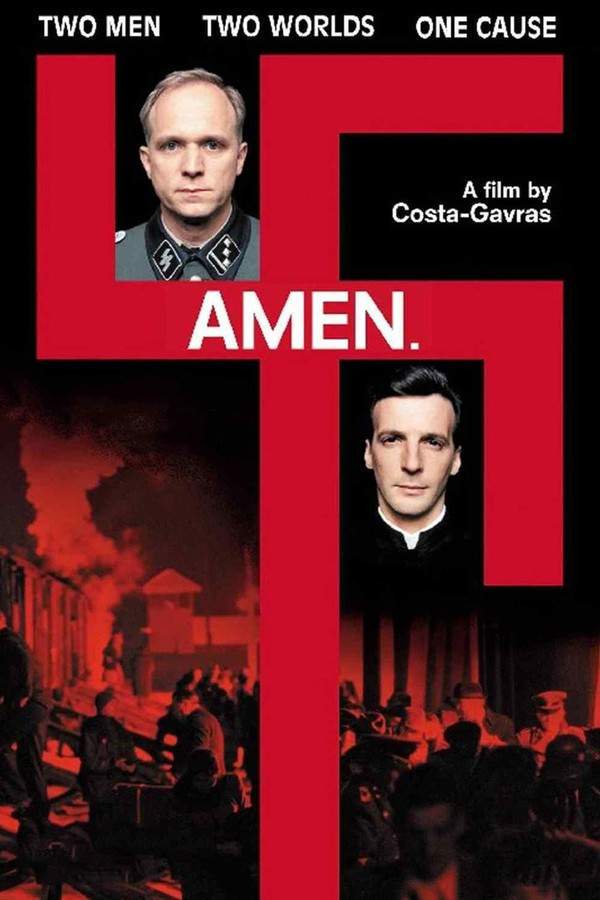
Bleak war dramas about futile resistance like Hospital of the Transfiguration

Stories of small acts of defiance that are ultimately crushed by overwhelming force. For viewers seeking movies similar to Hospital of the Transfiguration, this thread highlights bleak wartime stories centered on quiet defiance. These films explore the psychological toll of occupation and the tragic, often futile, nature of individual resistance against a brutal, overwhelming force.

  • somber
  • desperate
  • grim
  • tragic
  • war-torn
  • psychological
  • Tone: somber, tragic, grim
  • Pacing: steady, deliberate
Why these movies?

The story pattern: The narrative journey centers on a character's growing awareness of an inhuman system and their subsequent, often internal, resistance. Their efforts are portrayed as noble but ultimately insignificant against the machine-like efficiency of the oppressor, leading to a conclusion that emphasizes tragedy and the loss of innocence rather than victory.

Why they belong together: These movies share a specific, somber mood defined by the juxtaposition of personal courage with systemic, inevitable doom. The similarity lies in the emotional experience of witnessing principled stands lead to devastating, rather than triumphant, outcomes.

If you liked this

Movies Like Hospital of the Transfiguration

Similar movies to Hospital of the Transfiguration: the same genre, themes or kind of story. Each one comes with its own plot summary, timeline and ending explained.

Browse all movie summaries

Every angle

Hospital of the Transfiguration (1979) Explained: Plot, Timeline & Characters

Everything about Hospital of the Transfiguration in one place: what happens in the plot summary, the timeline in chronological order, the characters and meaning and a spoiler-free summary. What's After the Movie adds the cast, box office and post-credit scenes.

Coming soon on iOS and Android

The Plot Explained Movie Summary App

Plot summaries, endings explained and timelines on your phone. Catch up on any movie in minutes, save your favorites and never miss a twist again.

Be the first to know when we launch. Your email stays private, always.

Learn more about the app