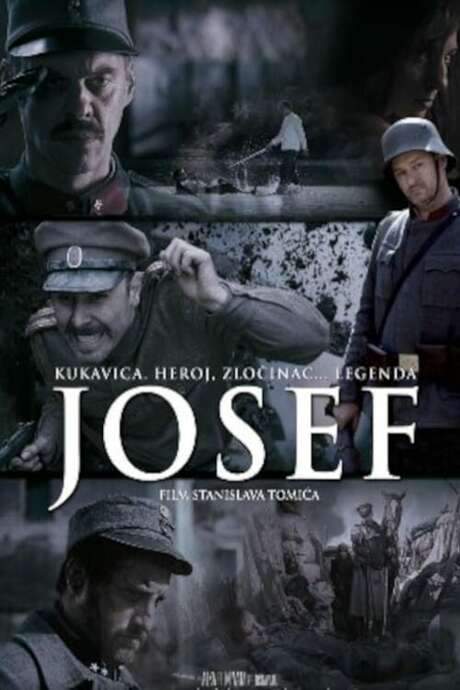
In 1915, amid the brutal cold and confusion on the Eastern Front in Galicia, Croatian soldiers in the Austro-Hungarian Army are sent to face the Russian Army and Circassian bandits. An unnamed Croat who survives a fierce battle slips into the uniform and identification tag of the dead NCO, Josef. Later, the Croat and a group of Croatian Home Guard and Hungarian Honvéd deserters are captured by a Gendarmerie unit led by Lieutenant Tiffenbach. Before the Croat can be executed, he is mistaken for Zugsführer Josef, the dead NCO whose tag he’s carrying, which leads to a tense moment of spared life and mistaken identity.
The Austrian Colonel chooses to spare the supposed officer, believing Josef to be a well-known regimental fencing champion, a fact that frustrates Lieutenant Tiffenbach, who suspects an impostor. Tiffenbach’s suspicions are confirmed when he faces the supposed Josef in a sword duel and defeats him, exposing the ruse but plunging the unit into further peril. The battle-ravaged landscape, filled with fear and weary soldiers, deepens the sense of danger and mistrust between the men.
Soon after, Captain Seryoža leads a mixed force of Circassian irregulars and Russian troops in an attack that shatters the Croat’s fragile protection. The Croat hides the severely wounded Tiffenbach in a shack and switches their uniforms, hoping to fool the attackers by presenting himself as an officer. Tragically, the bandits kill the Croat the moment they recognize him, underscoring the brutal randomness of a war where identity can be a fatal liability.
Now wearing Josef's uniform and identification tag, Tiffenbach is found by Pelagija, a woman who brings him to her cabin in the woods for care. Pelagija tends to his wounds for several days, but eventually betrays him to the Circassians in exchange for a horse, illustrating the harsh choices people make in war-torn settings. Over the following days, Tiffenbach and two other captured soldiers endure brutal torture and heavy labor in the Circassian camp, a grim reminder of the physical and psychological toll of captivity.
The Circassians later regroup with the regular Russian Army, and the Austro-Hungarian offensive in the area begins to make gains, defeating Russian forces and seizing their positions. Before the end of the battle, Captain Seryoža confronts Tiffenbach again, swapping their uniforms and rejoining the Austrians, a desperate ploy that blurs lines of allegiance and strengthens the sense of shifting identities under fire.
As the assault progresses, the Austrians execute their prisoners, including a half-conscious Tiffenbach who can’t clearly identify himself. In the aftermath, Seryoža gazes at Josef’s tag once more, noticing the name Josip Broz, a clue that foreshadows a future that would become a defining chapter in history with the rise of Tito, the leader of the Yugoslav Partisans and later the Socialist Federal Republic of Yugoslavia.