







Plot Explained Spoilers guaranteed!
Plot Explained

Browse by genre

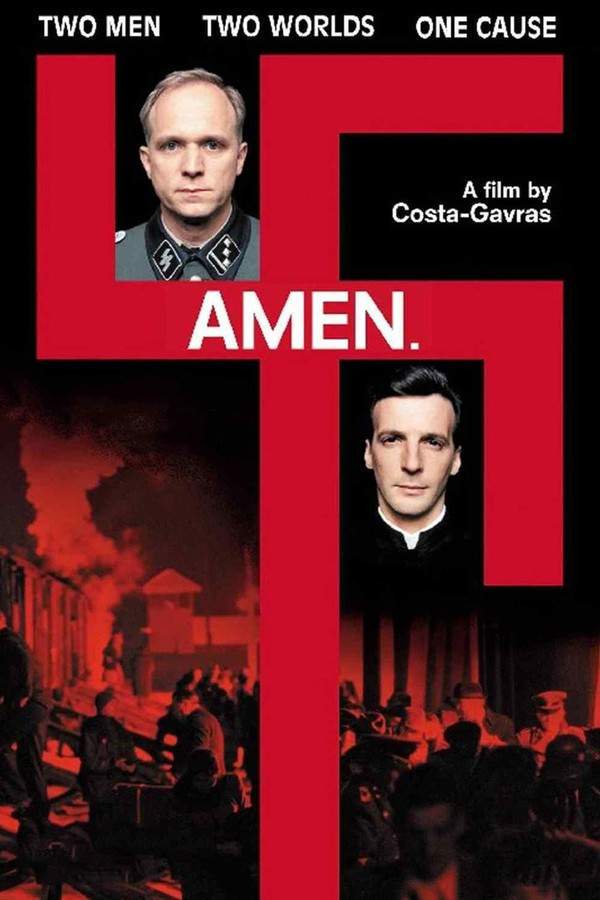
Amen. (2003) movie poster

Plot Summary

Amen. (2003) Plot Summary Explained

Release, runtime and language
2003 · 132 min · English
JustWatch #7,989 5
Directed by
Costa-Gavras
Starring
Ulrich Mühe, Mathieu Kassovitz, Ulrich Tukur

During World War II, Lieutenant Kurt Gerstein, a chemist in the German army, discovers a horrifying secret. Zyklon B, intended for water purification, is being used for the mass extermination of Jews. Deeply conflicted, he attempts to expose this atrocity, navigating a web of dangerous relationships with SS officers, influential Protestant leaders, and Vatican representatives in a perilous quest for justice and redemption.

On this page (6)
  1. 1 Where to watch
  2. 2 What happens: full plot
  3. 3 Plot questions answered
  4. 4 Movie threads
  5. 5 Movies like Amen.
  6. 6 Every angle

Where to watch

Where to Watch Amen. (2003)

Where can you watch Amen.? Stream, rent or buy it in the US, including on Fawesome, Kanopy and Apple TV Store: current JustWatch availability with up-to-date prices.

Streaming availability powered by JustWatch

Full plot summary · contains spoilers

What Happens in Amen.: Full Plot Summary

The whole story of Amen. (2003) explained, from the opening scene to the final frame: every key event, every twist and what it all adds up to. Read it as a quick recap before the sequel, to check a scene you missed, or to finally understand what really happened.

During the tumultuous times of World War II, Kurt Gerstein, a Waffen-SS officer working at the SS Hygiene Institute, invents processes aimed at purifying water and eliminating vermin. However, his shock intensifies when he discovers that his chemical formula, designed to combat typhus through a hydrogen cyanide blend known as Zyklon B, is being repurposed to exterminate Jews and other "undesirables" in horrific extermination camps. Determined to take action, Gerstein seeks to inform Pope Pius XII about the horrific gassings occurring, yet he is disheartened by the tepid response from the Catholic authorities.

The one individual who shows empathy is Riccardo Fontana, a young Jesuit priest. Together, they strive to raise awareness of the plight faced by Jews across Europe. Despite Fontana's fervent appeals, including an attempt to reach the Pope, the Vatican issues only a muted condemnation of Hitler’s regime.

Eventually, Gerstein journeys to Rome, yearning to meet the Pope directly, but he is barred from access. The situation escalates as the Germans seize control of Rome, rounding up Italian Jews for deportation to death camps. Fontana desperately implores the Pope to personally intervene at the train station to halt the deportations, but the Pope, fearing repercussions for Christians under Nazi oppression, declines. Heartbroken, Fontana dares to wear the Jewish Star-of-David badge, voluntarily boarding the train designated for deported Jews. Upon his arrival at the camp, Fontana faces interrogation by a sinister figure known only as the Doctor, who, despite knowing the war's outcome and Fontana's religious standing, allows him to remain with the Jews and put in harrowing work at the crematorium—ultimately ordering Fontana to be gassed.

In a poignant twist, Gerstein desperately attempts to rescue Fontana, but the priest refuses to abandon his brethren. The Doctor escorts Gerstein out as Fontana and countless others face their grim fate. They drive past German soldiers exhuming and burning bodies from mass graves, and the Doctor inquires if Gerstein has any connections to facilitate his escape from Germany. Returning home, Gerstein compiles irrefutable evidence of the Nazi atrocities and presents them to the Allies. Yet, despite their acknowledgment, he is arrested. The grim irony culminates when, after reviewing the charges, he is found hanging in his cell. Meanwhile, the Doctor, seen conversing with a Cardinal in Rome, petitions for assistance in fleeing, asserting, > “I’m a doctor, just a physician,” and gains affirmation for his escape to Argentina.

Last updated: November 15, 2024 at 18:46

Was this helpful?

Plot questions answered

Amen. Plot Explained: Your Questions Answered

The questions people ask most about Amen. (2003): what happens in the confusing scenes, why the characters do what they do, the twists, hidden details and what the ending means. Each answer contains spoilers.

Q1

Why did Kurt Gerstein, an SS officer, try to expose the Nazi genocide?

Gerstein was a chemist at the SS Hygiene Institute who invented a hydrogen cyanide formula to combat typhus and eliminate vermin. When he discovered that his formula (Zyklon B) was being repurposed for mass extermination of Jews in concentration camps, he experienced profound moral horror. Despite his SS membership, he sought to inform Pope Pius XII about the gassings, believing the Church could intervene to stop the atrocities.

Foreshadowing: Earlier scenes show Gerstein taking pride in his work purifying water and combating disease, making his later discovery of the murder weapon he created deeply ironic.

  • kurt gerstein
  • ss officer
  • zyklon b
  • conscience
  • moral dilemma
Q2

Why did Pope Pius XII refuse to publicly intervene against the Holocaust?

The Vatican issued only muted condemnations of Hitler's regime. Pope Pius XII feared that a strong public stance would provoke Nazi retaliation against Catholics in Germany and occupied territories. When Gerstein traveled to Rome seeking a direct audience with the Pope, he was barred from access. Later, when Fontana begged the Pope to personally intervene at the train station to halt Jewish deportations, the Pope declined, prioritizing the safety of Rome's Catholic population over direct action.

Foreshadowing: The earlier muted responses from Vatican representatives establish the Church's cautious stance before the Pope's final refusal.

  • pope pius xii
  • vatican
  • holocaust intervention
  • catholic church
  • rome
Q3

What happened to Riccardo Fontana at the concentration camp?

Upon arrival at the death camp, Fontana was interrogated by a sinister figure known only as 'the Doctor.' Despite knowing Fontana was a Jesuit priest and aware the war was lost, the Doctor allowed him to remain with the Jewish prisoners rather than executing him immediately. Fontana was forced into harrowing labor at the crematorium before ultimately being gassed to death.

Foreshadowing: Fontana's earlier decision to wear the Jewish Star-of-David and board the deportation train foreshadows his fate among the victims he chose to stand with.

  • riccardo fontana
  • jesuit priest
  • concentration camp
  • doctor
  • gassing
Q4

Why was Kurt Gerstein arrested after presenting evidence to the Allies?

After witnessing the horrors at the camp and being escorted away by the Doctor, Gerstein returned home and compiled irrefutable evidence of Nazi atrocities. He presented this documentation to the Allies, expecting action. Instead, he was arrested by the Nazis. After reviewing the charges against him, Gerstein was found hanging in his cell, the tragic irony of a whistleblower silenced by the very regime he tried to expose.

Foreshadowing: The timeline shows Gerstein learning Fontana refused to escape, witnessing the exhuming and burning of bodies, then returning home to gather evidence, each step leading inevitably to his capture.

  • kurt gerstein arrested
  • allies evidence
  • nazi arrest
  • suicide prison
Q5

Who was the Doctor at the concentration camp and why did he spare Fontana initially?

The Doctor was a sinister SS medical officer who conducted interrogations at the death camp. Although he recognized Fontana's religious identity and knew Germany was losing the war, he allowed the priest to remain with the Jewish detainees rather than killing him outright. This was not mercy, the Doctor compelled Fontana into brutal labor at the crematorium before eventually ordering him to be gassed. After the war, the Doctor exploited his medical status to secure escape to Argentina, asserting 'I'm a doctor, just a physician' to a Cardinal in Rome.

Foreshadowing: The Doctor's role is established early in the camp sequence as the interrogator who holds life-or-death power over arrivals.

  • ss doctor
  • concentration camp
  • interrogation
  • escape argentina
  • fontana
Q6

Why did Riccardo Fontana voluntarily board the train to the death camp?

When German forces seized control of Rome in July 1943 and began rounding up Italian Jews for deportation, Fontana made a deliberate choice to demonstrate solidarity with the persecuted. He wore the Jewish Star-of-David badge and voluntarily boarded the train designated for deported Jews. This act reflected his belief that he could not stand by while his Jewish brothers and sisters faced extermination, even though he had the opportunity to escape.

Foreshadowing: Earlier scenes show Fontana's persistent efforts to convince the Vatican to take stronger action, establishing his deep commitment before this ultimate sacrifice.

  • riccardo fontana
  • jewish star
  • voluntary deportation
  • solidarity
  • rome roundup
Q7

How did the Doctor escape to Argentina after the war?

The Doctor, who orchestrated much of the horror at the camp and personally ordered Fontana's death, sought escape as Nazi Germany collapsed. He conversed with a Cardinal in Rome and exploited his medical credentials to secure assistance. By claiming 'I'm a doctor, just a physician,' he gained affirmation for his escape route, ultimately fleeing to Argentina where he evaded justice for his crimes.

Foreshadowing: The Doctor's earlier inquiry to Gerstein about connections to facilitate his escape establishes his priority of self-preservation throughout the narrative.

  • doctor escape
  • argentina
  • nazi escape routes
  • cardinal
  • vatican complicity
Q8

Why did Kurt Gerstein believe the Pope could stop the Holocaust?

Gerstein sought to inform Pope Pius XII about the gassings occurring in extermination camps, hoping the Pope could leverage his immense moral authority and political influence to stop the atrocities. As the leader of the Catholic Church, Gerstein believed the Pope's condemnation would create diplomatic pressure on Nazi Germany. However, his hopes were dashed by the Vatican's tepid response and his inability to secure a direct meeting with the Pope.

Foreshadowing: The timeline shows Gerstein's initial hope at the Vatican contrasted with his growing despair as Church responses remained inadequate.

  • kurt gerstein
  • pope pius xii
  • vatican intervention
  • hollywood
  • religious authority
Q9

What was Kurt Gerstein charged with by the Nazis?

Gerstein was arrested for his efforts to expose Nazi atrocities. After presenting evidence of the Holocaust to the Allies, the Nazi regime charged him with crimes, ironically, the very system he served and attempted to expose turned his own evidence against him. He was found hanging in his cell, officially ruled a suicide, though the circumstances remain ambiguous given the regime's practice of eliminating dissidents.

Foreshadowing: Earlier timeline events show Gerstein's escalating efforts: discovering the truth, meeting Fontana, attempting Vatican intervention, witnessing the camp horrors, and finally compiling evidence, all leading to this inevitable betrayal.

  • kurt gerstein charges
  • nazi regime
  • prison death
  • trial
  • whistleblower
Q10

Why did Riccardo Fontana refuse to escape with Gerstein?

When Gerstein learned of Fontana's situation at the camp, he desperately attempted to rescue him. However, Fontana refused to abandon his fellow prisoners, declaring his solidarity with the Jews facing extermination. He chose to remain with those he had joined, demonstrating loyalty to the community he had chosen to stand with, even as death approached.

Foreshadowing: This decision echoes Fontana's earlier voluntary boarding of the deportation train, consistent with his established character of choosing solidarity over self-preservation.

  • fontana rescue refused
  • loyalty
  • prisoners solidarity
  • death camp

Movie threads

More Movies Like Amen., by Mood & Story

Curated lists built around what makes Amen. tick: the same mood, the same kind of story or the same emotional payoff. Each list explains why these movies belong together.

Movies about futile resistance against bureaucracy like Amen.

Stories of individuals fighting institutional indifference in a race against moral collapse. If you were gripped by the desperate struggle in Amen., this section features other films where a lone voice tries to expose a terrible truth against a backdrop of institutional inaction. These movies share a theme of moral urgency clashing with political and bureaucratic failure, creating a uniquely frustrating and tragic viewing experience.

  • morally urgent
  • desperate
  • frustrating
  • tragic
  • sobering
  • oppressive
  • Tone: bleak, desperate, morally conflicted
  • Pacing: steady, methodical
Why these movies?

The story pattern: Narratives in this thread typically follow a linear, investigative path. A protagonist uncovers a horrific secret or injustice and embarks on a quest to expose it, navigating complex hierarchies and appealing to various authorities. The conflict is not against a single villain but against the impersonal machinery of a system that prioritizes order, protocol, or self-preservation over truth and justice, leading to a tragic outcome for the whistleblower.

Why they belong together: These films are grouped together because they share a specific narrative structure of futile resistance and a uniformly bleak tone. They explore the psychological toll of fighting a losing battle against overwhelming systemic power, resulting in stories that are morally urgent, emotionally heavy, and ultimately sobering in their depiction of individual powerlessness.

Heavy historical dramas with moral dilemmas like Amen.

Grim films that force viewers to confront impossible choices within dark chapters of history. For viewers seeking the profound ethical weight of Amen., this collection features films set against real-world atrocities where characters face gut-wrenching moral choices. These stories are sobering explorations of guilt, responsibility, and the human capacity for both good and evil in the face of historical horror.

  • grim
  • sobering
  • tragic
  • morally complex
  • oppressive
  • thought-provoking
  • Tone: grim, sobering, tragic
  • Pacing: steady, deliberate
Why these movies?

The story pattern: The narrative pattern involves placing a fundamentally decent, or at least conflicted, character within a horrific historical context—often a war or genocide. The story focuses on their internal struggle as they witness or are complicit in atrocities, wrestling with the choice between self-preservation, duty, and moral action. The journey is typically one of escalating horror and psychological disintegration, rather than heroic triumph.

Why they belong together: These movies are united by their grim historical settings, their focus on complex moral and ethical questions, and their unflinching, sobering tone. They prioritize emotional and intellectual weight over narrative convenience, leaving the viewer with a sense of tragic reflection rather than closure. The pacing is often steady, allowing the full gravity of the situation to sink in.

If you liked this

Movies Like Amen.

Similar movies to Amen.: the same genre, themes or kind of story. Each one comes with its own plot summary, timeline and ending explained.

Browse all movie summaries

Every angle

Amen. (2003) Explained: Plot, Timeline & Characters

Everything about Amen. in one place: what happens in the plot summary, the timeline in chronological order, the characters and meaning and a spoiler-free summary. What's After the Movie adds the cast, box office and post-credit scenes.

Coming soon on iOS and Android

The Plot Explained Movie Summary App

Plot summaries, endings explained and timelines on your phone. Catch up on any movie in minutes, save your favorites and never miss a twist again.

Be the first to know when we launch. Your email stays private, always.

Learn more about the app