Plot Explained Spoilers guaranteed!
Plot Explained

Browse by genre

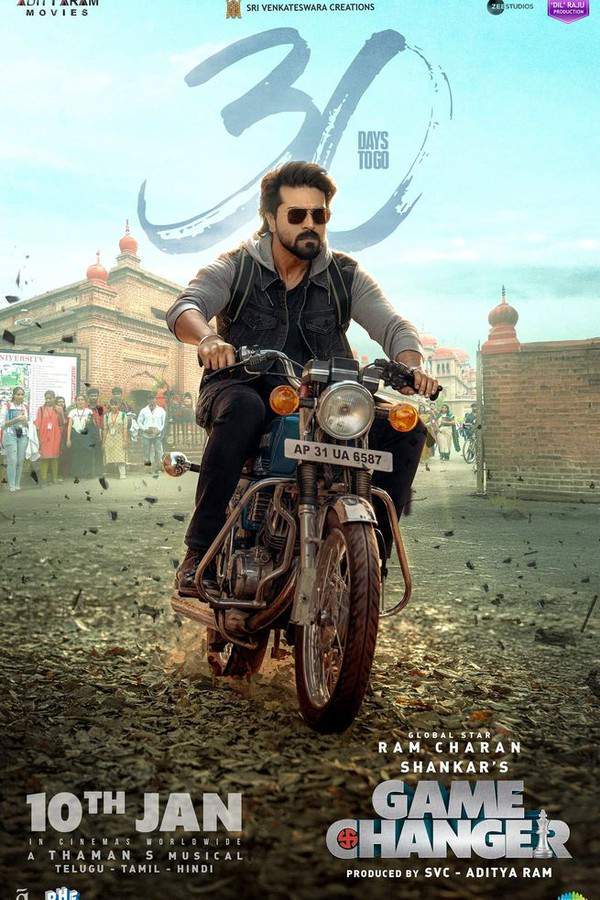
Game Changer (2025) movie poster

Ending Explained

Game Changer (2025) Ending Explained – Final Scene & Meaning

Release, runtime and language
2025 · 2 h 45 m · Telugu
Echo score 49
Starring
Ram Charan, Kiara Advani, Vennela Kishore, Jayaram, Brahmanandam

An honest IAS officer's fight against a corrupt political system through fair and transparent elections.

On this page (6)
  1. 1 What happens at the end
  2. 2 Final events in order
  3. 3 Ending questions answered
  4. 4 Movie threads
  5. 5 Movies like Game Changer
  6. 6 Every angle

Ending explained · contains spoilers

What Happens at the End of Game Changer?

How Game Changer (2025) ends, what the final scene means, which earlier moments set it up and how to read the ending if the film leaves it open. The full ending explained, with every spoiler.

Throughout the film, Ram Nandan’s journey from an angry young man to a dedicated IAS officer committed to justice forms the core of the story. As the film reaches its climax, we see Ram Nandan fighting against the corruption and the greed of Bobbili Mopidevi, who is portrayed as the main villain. The election process becomes chaotic—Bobbili Mopidevi tries to rig the election by smashing voting machines, aiming to prevent Ram Nandan from winning. The back-and-forth culminates in a violent showdown, where Ram Nandan, having learned to control his anger, chooses not to kill Bobbili Mopidevi despite his provocation. Instead, he lets him go, showcasing his growth and adherence to his principles. The film ends ambiguously, with no definitive resolution about who officially becomes the chief minister. The election results are left unresolved, and the final scenes focus on the confrontation rather than a clear victory. This open-ended conclusion emphasizes the ongoing struggle for justice and power, leaving the audience to interpret whether Ram Nandan’s restraint will lead to a just victory or if the political battle will continue beyond the film's end. Ultimately, the ending underscores the film’s message about integrity and the moral challenges faced by those fighting corruption, with a narrative conclusion that invites viewers to reflect on whether true change is achieved or if the cycle of power and corruption simply persists.**

Last updated: June 25, 2025 at 08:44

Was this helpful?

The last 4 events

How Game Changer Ends: The Final Events in Order

The last events of Game Changer (2025) in chronological order, the run-up to the ending explained above. The complete timeline has all 12 events, scene by scene.

Open the full timeline
  1. Sabha's revelation about Ram's parentage

    Sabha reveals to Ram that he is the biological son of Appanna, the founder of Abhyudhyam Party, and recounts how Sathyamoorthy and Mukundha betrayed Appanna. Ram learns about the separation from Parvathy and the truth behind his past.

    When
    shortly after the funeral
    Where
    Meeting with Sabha
  2. Reunion with Parvathy and election eligibility

    Ram reconnects with Parvathy and contemplates leadership, but Mopidevi refuses to withdraw his complaint, making Ram ineligible for the CM post. Ram is suspended as the power struggle continues and Mopidevi takes the throne, prompting IAS officers nationwide to demand his reinstatement.

    Where
    Government offices / state
  3. Election Commission role and safeguarding the vote

    Ram is appointed as Election Commission Officer, with elections set in two months, curbing Mopidevi's ability to push through policy changes. He foils attempts to rig the vote by destroying machines and ensures the ballots reach the counting center safely.

    When
    two months before elections
    Where
    Election Commission / counting center
  4. The electable ending: Praja Abhyudhyam rises

    In the credits, the revived Praja Abhyudhyam Party, inspired by Appanna's original principles, wins by a landslide and Ram is elected Chief Minister of Andhra Pradesh. The arc closes with Ram stepping into the role and a new political era beginning.

    When
    after elections
    Where
    Andhra Pradesh

Ending questions answered

Game Changer Ending: Your Questions Answered

The questions people ask most about the ending of Game Changer (2025): what the final scene means, how the twist works, what happens to each character and how to read the ending. Each answer contains spoilers.

Q1

Why does Ram Nandan let Bobbili Mopidevi go instead of killing him?

Ram Nandan chooses not to kill Bobbili Mopidevi because he has learned to control his anger throughout his journey as an IAS officer. This decision showcases his growth from an angry young man into someone who adheres to principles of justice rather than seeking revenge. By letting his adversary go, Ram Nandan demonstrates that he fights corruption through proper channels, not violence.

Foreshadowing: Earlier scenes establish Ram Nandan's struggle with anger and his commitment to justice, which makes his restraint in the climax a natural culmination of his character arc.

  • ram nandan
  • bobbili mopidevi
  • anger
  • growth
  • principles
  • justice
Q2

Who wins the election and becomes chief minister?

The film does not reveal who wins the election or becomes chief minister. The election results are deliberately left unresolved, with the final scenes focusing on the confrontation between Ram Nandan and Bobbili Mopidevi rather than showing the outcome of the voting. This ambiguity is a key element of the ending.

  • election
  • chief minister
  • results
  • victory
Q3

What does the ambiguous ending mean?

The ambiguous ending emphasizes that the struggle for justice and power in the political system is ongoing. It leaves the audience to interpret whether Ram Nandan’s decision to spare Bobbili Mopidevi will lead to a just victory, or if the cycle of corruption will simply continue. The open conclusion invites reflection on whether true systemic change is actually achieved.

Foreshadowing: The film’s recurring theme of systemic corruption throughout suggests the ending is meant to reflect the reality that fighting such deep-rooted problems rarely ends with a clear victory.

  • ambiguous ending
  • interpretation
  • corruption
  • justice
  • systemic change
Q4

What is the significance of Ram Nandan not killing the villain?

Ram Nandan’s choice not to kill Bobbili Mopidevi represents his complete transformation as a character. It proves he has moved beyond seeking vengeance and instead chooses to fight corruption through integrity and moral principles. This moment reinforces the film’s message that true justice requires restraint and adherence to democratic processes.

Foreshadowing: The film builds toward this moment by showing Ram Nandan’s internal struggle with anger and his evolution as an IAS officer committed to fair elections.

  • ram nandan
  • bobbili mopidevi
  • villain
  • killing
  • moral choice
  • transformation
Q5

Does Ram Nandan become chief minister in the end?

Whether Ram Nandan becomes chief minister is not clarified in the ending. The film leaves his political fate uncertain, choosing instead to focus on his moral victory and the confrontation with Bobbili Mopidevi. The unresolved election results suggest his future remains ambiguous.

  • ram nandan
  • chief minister
  • political future
Q6

Why are the election results not shown in the ending?

The election results are deliberately withheld to emphasize that the battle against corruption is far from over. By not showing who wins, the film suggests that the outcome matters less than the ongoing struggle for integrity in the political system. This narrative choice reinforces the theme that systemic change is complex and never truly finished.

  • election results
  • resolution
  • political system
Q7

What happens to Bobbili Mopidevi at the end?

Bobbili Mopidevi is left alive after the confrontation with Ram Nandan. He is allowed to leave, defeated in his attempt to rig the election through violence and intimidation. However, his ultimate fate, whether he faces legal consequences or continues to wield power, remains unclear, contributing to the ending’s ambiguity.

  • bobbili mopidevi
  • villain
  • fate
  • defeat
Q8

What is the film’s message about fighting corruption through the ending?

The ending conveys that fighting systemic corruption requires integrity, patience, and restraint rather than violence or vengeance. Ram Nandan’s decision to spare Bobbili Mopidevi shows that true change comes through moral conviction and democratic processes. However, the ambiguous outcome suggests that such battles are ongoing and rarely result in definitive victories.

Foreshadowing: The film’s depiction of Bobbili Mopidevi’s attempts to rig the election illustrates the extent of corruption Ram Nandan faces.

  • corruption
  • integrity
  • moral message
  • systemic change
  • political battle
Q9

How does Ram Nandan’s character arc resolve in the ending?

Ram Nandan’s character arc resolves through his transformation from an angry young man seeking revenge to a principled IAS officer who chooses restraint over violence. His decision not to kill Bobbili Mopidevi demonstrates that he has internalized his commitment to justice. While his political future remains uncertain, his moral victory is clear, he has stayed true to his principles despite extreme provocation.

Foreshadowing: Earlier scenes establish Ram Nandan’s struggle with anger and his determination to fight corruption through fair elections.

  • ram nandan
  • character arc
  • growth
  • transformation
  • principles
Q10

What happens with the voting machines during the climax?

During the climax, Bobbili Mopidevi attempts to rig the election by smashing voting machines to prevent Ram Nandan from winning. This act of desperation represents the extreme measures corrupt politicians will take to maintain power. The confrontation that follows leads to the final showdown between Ram Nandan and the villain.

  • voting machines
  • rigged election
  • election fraud
  • climax
Q11

Is the ending meant to be hopeful or pessimistic about justice?

The ending strikes a balance between hope and realism. While Ram Nandan achieves a moral victory by adhering to his principles, the unresolved election results and ambiguous future suggest that the fight against corruption remains ongoing. The film encourages viewers to believe in integrity while acknowledging that systemic change is difficult and uncertain.

  • hope
  • justice
  • optimism
  • realism
  • interpretation

Movie threads

More Movies Like Game Changer, by Mood & Story

Curated lists built around what makes Game Changer tick: the same mood, the same kind of story or the same emotional payoff. Each list explains why these movies belong together.

Systemic Crusader Thrillers like Game Changer

A lone hero wages a high-stakes war against deep-rooted institutional corruption. If you enjoyed Game Changer's story of a lone fighter against corruption, you'll find similar tension in these movies. This thread gathers high-stakes thrillers where individuals risk everything to expose and dismantle corrupt systems, featuring intense action and powerful moral dramas.

  • tense
  • gripping
  • angry
  • inspiring
  • powerful
  • dramatic
  • Tone: dark, tense, inspiring
  • Pacing: fast, relentless
Why these movies?

The story pattern: The narrative follows a principled individual who uncovers a layer of corruption so deep that challenging it puts their life and livelihood at risk. The story escalates through a series of confrontations, betrayals, and reveals, testing the hero's resolve as they methodically fight a seemingly unwinnable battle, often achieving a hard-won but significant victory.

Why they belong together: These films are grouped by their core conflict: the monumental struggle of one person against a powerful, entrenched system. They share a tone of righteous anger, a pacing that builds relentless tension, and a focus on the emotional and physical toll of being a crusader for change.

Emotionally Heavy Political Dramas like Game Changer

Personal tragedy and high-stakes politics collide in these complex, powerful stories. For viewers who liked the deep personal stakes and tragic family secrets in Game Changer, this thread compiles movies where political intrigue is deeply intertwined with heavy emotional drama. Discover stories where the fight for power is also a fight for personal justice and healing.

  • tragic
  • dramatic
  • powerful
  • gripping
  • tense
  • emotional
  • Tone: dark, tragic, powerful
  • Pacing: fast, dramatic
Why these movies?

The story pattern: The plot is driven by a dual engine: a public, high-stakes political conflict and a private, deeply painful personal history. Revelations about the past—such as family secrets or traumatic losses—directly fuel the protagonist's motivations in the present, weaving a complex web where every political move carries significant emotional weight.

Why they belong together: This thread connects films that balance a complex political plot with a heavy emotional core. The similarity lies in the fusion of a fast-paced, high-intensity thriller structure with deeply tragic character backstories, resulting in a powerful and impactful viewing experience.

If you liked this

Movies Like Game Changer

Similar movies to Game Changer: the same genre, themes or kind of story. Each one comes with its own plot summary, timeline and ending explained.

Browse all movie summaries

Every angle

Game Changer (2025) Explained: Plot, Ending, Timeline & Characters

Everything about Game Changer in one place: what happens in the plot summary, the timeline in chronological order, the characters and meaning, the ending explained and a spoiler-free summary. What's After the Movie adds the cast, box office and post-credit scenes.

Coming soon on iOS and Android

The Plot Explained Movie Summary App

Plot summaries, endings explained and timelines on your phone. Catch up on any movie in minutes, save your favorites and never miss a twist again.

Be the first to know when we launch. Your email stays private, always.

Learn more about the app