





Plot Explained Spoilers guaranteed!
Plot Explained

Browse by genre

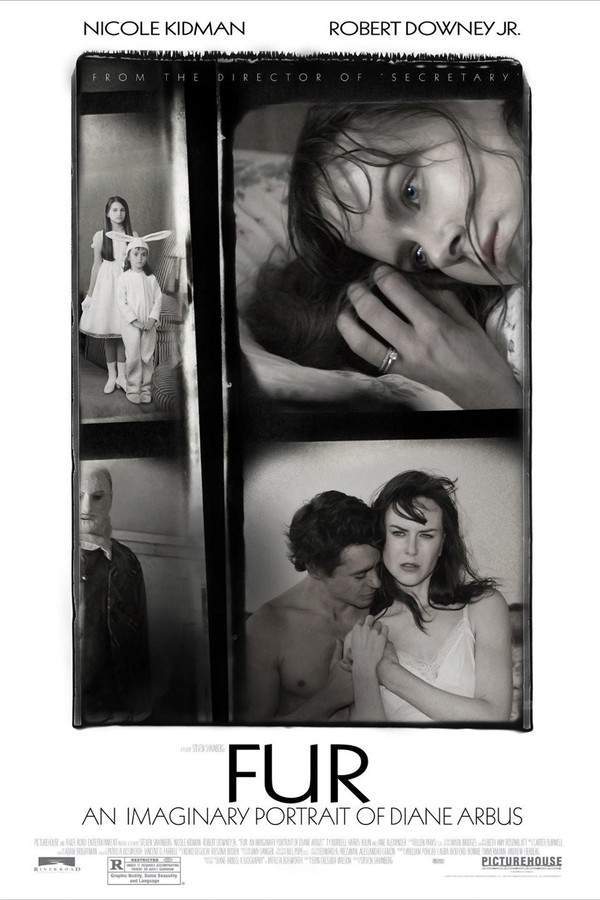
Fur: An Imaginary Portrait of Diane Arbus (2006) movie poster

Characters & Themes

Fur: An Imaginary Portrait of Diane Arbus (2006) Characters, Setting & Themes Explained

Release, runtime and language
2006 · 122 min · English
Directed by
Steven Shainberg
Starring
Robert Downey Jr., Nicole Kidman

In 1950s New York, Diane Arbus, a photographer feeling constrained by her privileged background, encounters a captivating stranger. This meeting ignites a creative transformation, pushing her to explore and capture the essence of the human condition. She begins a journey to develop her distinctive photographic style, focusing on unconventional subjects and challenging societal norms through her art.

On this page (8)
  1. 1 Where to watch
  2. 2 Characters explained (3)
  3. 3 Where & when it takes place
  4. 4 Themes & meaning (3)
  5. 5 Character & meaning questions
  6. 6 Movie threads
  7. 7 Movies like Fur: An Imaginary Portrait of Diane Arbus
  8. 8 Every angle

Where to watch

Where to Watch Fur: An Imaginary Portrait of Diane Arbus (2006)

Where can you watch Fur: An Imaginary Portrait of Diane Arbus? Stream, rent or buy it in the US, including on Amazon Video, Apple TV Store and Fandango At Home: current JustWatch availability with up-to-date prices.

Streaming availability powered by JustWatch

3 main characters · contains spoilers

Fur: An Imaginary Portrait of Diane Arbus Characters Explained: Who Is Who

The main characters of Fur: An Imaginary Portrait of Diane Arbus (2006), heroes and villains: what drives them, how they change over the course of the story and what each of them reveals about the film's bigger ideas.

  • Diane Arbus

    played by Nicole Kidman

    Diane Arbus is portrayed as a woman caught in the constraints of her privileged upbringing, yearning for authenticity and purpose. Her encounters with Lionel introduce her to a vibrant world of societal outcasts, igniting her passion for photography and personal freedom.

    • 👩‍🦰 Artist
    • 🌟 Explorer
    • 💔 Romantic
  • Lionel Sweeney

    played by Robert Downey Jr.

    Lionel Sweeney represents the outcast, struggling with Hypertrichosis and societal rejection. His genuine vulnerability and artistic spirit captivate Diane, enabling her to explore her repressed emotions and inspiring her artistic passion.

    • 🧔 Outsider
    • 🎨 Artist
    • 💔 Tragic
  • Allan Arbus

    Allan Arbus is Diane's husband, who embodies the archetype of the supportive yet ultimately oblivious partner. His character is pivotal in the narrative, as he represents the constraints Diane feels, both as a wife and an artist.

    • 👨‍💼 Husband
    • 🌈 Supportive
    • 😟 Unaware

Last updated: October 22, 2024 at 19:43

Was this helpful?

Setting

Where and When Does Fur: An Imaginary Portrait of Diane Arbus Take Place?

The setting of Fur: An Imaginary Portrait of Diane Arbus (2006): the year and time period, the places and locations, and how they shape the characters, the mood and the tension of the story.

Time period

1958

The year 1958 was marked by significant cultural shifts in America, particularly relating to personal freedoms and artistic expression. This period saw the emergence of new movements that embraced individualism and challenged traditional societal expectations, which resonate deeply in Diane's journey.

Location

New York City, nudist colony

New York City serves as the primary backdrop for the film, representing the affluent yet confining lifestyle Diane Arbus experiences. The nudist colony highlights a stark contrast, showcasing a world of freedom and self-expression, where societal norms are challenged.

  • 🏙️ City
  • 🏖️ Beach

Last updated: October 22, 2024 at 19:43

Was this helpful?

3 major themes

Fur: An Imaginary Portrait of Diane Arbus Meaning: Themes & Message Explained

What is Fur: An Imaginary Portrait of Diane Arbus (2006) really about? The emotional, social and philosophical themes the film keeps returning to, its symbolism and the message beneath the surface.

  • Self-Discovery

    The theme of self-discovery is central to Diane's journey as she navigates her suppressed artistic desires and entanglements with Lionel. Through her encounters with societal outcasts, she begins to realize her own identity and passions, transforming from a restricted housewife into an assertive artist.

  • Forbidden Love

    Diane's complex relationship with Lionel encapsulates the essence of forbidden love, filled with emotional turmoil and societal boundaries. Their connection reveals intimate vulnerabilities, illustrating the heartache that accompanies deep but complicated affections.

  • Artistic Expression

    Artistic expression emerges as a key theme, particularly as Diane begins to embrace her photography. Her journey with Lionel inspires her to document the lives of those on society's fringes, leading her to find her voice and redefine her artistic identity.

Last updated: October 22, 2024 at 19:43

Was this helpful?

Character & theme questions

Fur: An Imaginary Portrait of Diane Arbus Characters & Meaning: Your Questions Answered

The questions people ask about Fur: An Imaginary Portrait of Diane Arbus (2006): who the characters really are, their relationships, what the symbols mean, where it takes place and what the movie is really about. Each answer contains spoilers.

Q1

Where is the movie set?

The film takes place primarily in New York City during the 1950s. This setting represents Diane Arbus's affluent yet confining lifestyle. A key contrasting location is a nudist colony, which showcases a world of freedom and self-expression where societal norms are challenged.

  • new york city
  • 1950s
  • nudist colony
  • setting
  • locations
Q2

When does the story take place?

The movie is set in 1958, a period marked by significant cultural shifts in America relating to personal freedoms and artistic expression. This era saw the emergence of new movements that embraced individualism and challenged traditional societal expectations, which resonate deeply with Diane's journey.

  • 1958
  • time period
  • 1950s
  • era
  • historical context
Q3

Who is Diane Arbus in the film?

Diane Arbus is portrayed as a woman caught in the constraints of her privileged upbringing, yearning for authenticity and purpose. Her encounters with Lionel introduce her to a vibrant world of societal outcasts, igniting her passion for photography and personal freedom. She transforms from a restricted housewife into an assertive artist.

  • diane arbus
  • protagonist
  • photographer
  • nicole kidman
Q4

Who is Lionel Sweeney?

Lionel Sweeney is a man struggling with Hypertrichosis, a condition causing excessive hair growth, which has led to societal rejection. His genuine vulnerability and artistic spirit captivate Diane, enabling her to explore her repressed emotions and inspiring her artistic passion. He represents the outcast who helps Diane find her voice.

  • lionel sweeney
  • hypertrichosis
  • robert downey jr
  • outcast
Q5

Who is Allan Arbus?

Allan Arbus is Diane's husband, representing the supportive yet ultimately oblivious partner. His character embodies the constraints Diane feels, both as a wife and an artist. He represents the conventional life Diane is seeking to escape as she pursues her artistic identity.

  • allan arbus
  • husband
  • marriage
  • supportive partner
Q6

What is the theme of self-discovery about?

Self-discovery is central to Diane's journey as she navigates her suppressed artistic desires and relationship with Lionel. Through her encounters with societal outcasts, she begins to realize her own identity and passions, transforming from a restricted housewife into an assertive artist seeking authenticity.

  • self-discovery
  • identity
  • transformation
  • artistic journey
Q7

What does the forbidden love theme explore?

Diane's complex relationship with Lionel encapsulates forbidden love, filled with emotional turmoil and societal boundaries. Their connection reveals intimate vulnerabilities, illustrating the heartache that accompanies deep but complicated affections between two people from vastly different worlds.

  • forbidden love
  • emotional turmoil
  • relationship
  • societal boundaries
Q8

How does artistic expression feature in the film?

Artistic expression emerges as Diane begins to embrace her photography fully. Her journey with Lionel inspires her to document the lives of those on society's fringes, leading her to find her voice and redefine her artistic identity. The film depicts her transformation into the distinctive photographer she became known as.

  • artistic expression
  • photography
  • creative liberation
  • artistic identity
Q9

What is the significance of the nudist colony?

The nudist colony serves as a stark contrast to New York City's affluent society. It represents a world of freedom and self-expression where societal norms are challenged. This setting symbolizes the self-acceptance and authenticity Diane seeks, as she witnesses people living without the pretensions of conventional society.

  • nudist colony
  • freedom
  • self-expression
  • society norms
Q10

What is the tone and mood of the film?

The film has a predominantly melancholic tone, driven by Diane's suffocation within her privileged life and her poignant connection to Lionel. The pacing is slow, emphasizing character introspection and a gradual, almost dreamlike unfolding of Diane's transformation. The emotional weight deals with serious themes of alienation and desire while balancing them with creative liberation.

  • tone
  • mood
  • melancholic
  • introspection
  • emotional
Q11

What is the relationship between Diane and Lionel?

Diane and Lionel form a deep, transformative connection that sparks her artistic revolution. He represents the marginalized figures she will later photograph, while she offers him acceptance and recognition. Their bond is both romantic and philosophically significant, as it catalyzes her departure from conventional society toward her unique artistic vision.

  • diane arbus
  • lionel sweeney
  • relationship
  • connection
  • transformation

Movie threads

More Movies Like Fur: An Imaginary Portrait of Diane Arbus, by Mood & Story

Curated lists built around what makes Fur: An Imaginary Portrait of Diane Arbus tick: the same mood, the same kind of story or the same emotional payoff. Each list explains why these movies belong together.

Movies about artistic awakening like Fur: An Imaginary Portrait of Diane Arbus

Characters break free from societal cages to find their true creative voice. If you enjoyed the journey of self-discovery in Fur: An Imaginary Portrait of Diane Arbus, explore these movies about characters finding their artistic voice. These films often feature themes of breaking free from societal expectations, exploring forbidden love, and the bittersweet price of creative freedom, set against evocative period backdrops.

  • yearning
  • contemplative
  • sensual
  • claustrophobic
  • dreamlike
  • lonely
  • Tone: melancholic, contemplative
  • Pacing: slow, character-driven
Why these movies?

The story pattern: The narrative follows a protagonist trapped in a comfortable but unfulfilling life. An external catalyst—often a person from the fringes of society—ignites a profound internal change. The story unfolds as a slow, character-driven exploration of their artistic emergence, culminating in a bittersweet resolution where creative empowerment is achieved alongside personal loss.

Why they belong together: These movies are grouped by their shared focus on the transformative power of art as a means of escape and self-realization. They blend a melancholic tone with a sensual, contemplative mood, often set in repressive time periods. The central conflict is internal—the struggle between duty and desire—leading to a powerful, character-defining arc.
Movies about melancholic outsider bonds like Fur: An Imaginary Portrait of Diane Arbus

Slow-burn stories of intense, transformative bonds between societal misfits. For viewers who appreciated the poignant connection between Diane and Lionel in Fur, this collection features movies about transformative relationships between outsiders. These slow-paced, character-driven dramas explore forbidden love, societal alienation, and the deep yearning for understanding, all with a melancholic and sensual atmosphere.

  • melancholic
  • lonely
  • yearning
  • sensual
  • dreamlike
  • contemplative
  • Tone: melancholic, yearning
  • Pacing: slow, contemplative
Why these movies?

The story pattern: The plot revolves around the intense, transformative relationship between two lonely souls—one often from a conventional world, the other from the margins. Their connection is built on a shared sense of otherness and a yearning for authenticity. The narrative unfolds slowly, focusing on emotional intimacy rather than plot, and typically ends on a bittersweet note, leaving the characters forever changed.

Why they belong together: These films share a specific emotional and tonal blend: a slow, contemplative pace, a core melancholic mood, and a focus on the powerful, often tragic, dynamics of outsider love. They prioritize mood and character revelation over complex plotting, creating a immersive, emotionally resonant experience centered on the beauty and pain of unconventional bonds.

If you liked this

Movies Like Fur: An Imaginary Portrait of Diane Arbus

Similar movies to Fur: An Imaginary Portrait of Diane Arbus: the same genre, themes or kind of story. Each one comes with its own plot summary, timeline and ending explained.

Browse all movie summaries

Every angle

Fur: An Imaginary Portrait of Diane Arbus (2006) Explained: Plot, Timeline & Characters

Everything about Fur: An Imaginary Portrait of Diane Arbus in one place: what happens in the plot summary, the timeline in chronological order, the characters and meaning and a spoiler-free summary. What's After the Movie adds the cast, box office and post-credit scenes.

Coming soon on iOS and Android

The Plot Explained Movie Summary App

Plot summaries, endings explained and timelines on your phone. Catch up on any movie in minutes, save your favorites and never miss a twist again.

Be the first to know when we launch. Your email stays private, always.

Learn more about the app