Plot Explained Spoilers guaranteed!
Plot Explained

Browse by genre

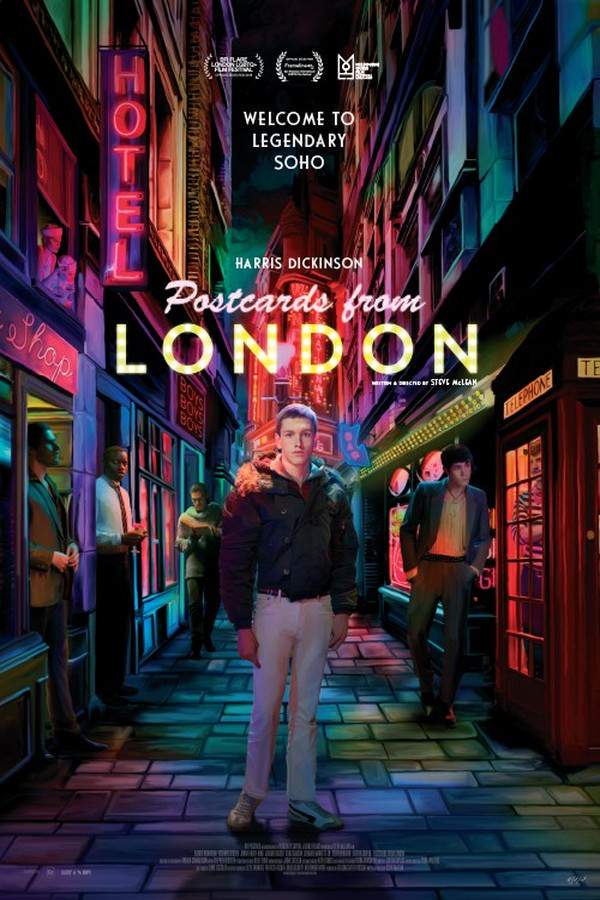
Postcards from London (2018) movie poster

Plot Summary

Postcards from London (2018) Plot Summary Explained

Release, runtime and language
2018 · 90 min · English
Echo score 52
JustWatch #26,487 4
Directed by
Steve McLean
Starring
Jonah Hauer-King, Harris Dickinson, Stephen Boxer, Alessandro Cimadamore, Jerome Holder, Leemore Marrett Jr.

In the heart of Soho, aspiring artist Jim Dickinson finds himself drawn to a group of male escorts known as The Raconteurs, seeking inspiration for his work. Immersed in their unconventional lifestyle, Jim experiences Stendhal Syndrome, a condition that heightens his emotional and artistic sensitivity. As he grapples with the intense beauty and pain surrounding him, he must confront whether this newfound vulnerability will lead to artistic triumph or personal breakdown.

On this page (6)
  1. 1 Where to watch
  2. 2 What happens: full plot
  3. 3 Plot questions answered
  4. 4 Movie threads
  5. 5 Movies like Postcards from London
  6. 6 Every angle

Where to watch

Where to Watch Postcards from London (2018)

Where can you watch Postcards from London? Stream, rent or buy it in the US, including on Kanopy, Tubi TV and Amazon Video: current JustWatch availability with up-to-date prices.

Streaming availability powered by JustWatch

Full plot summary · contains spoilers

What Happens in Postcards from London: Full Plot Summary

The whole story of Postcards from London (2018) explained, from the opening scene to the final frame: every key event, every twist and what it all adds up to. Read it as a quick recap before the sequel, to check a scene you missed, or to finally understand what really happened.

As the National Gallery's 16th-century masterpiece by Titian commands attention, Jim, embodying small-town innocence, finds himself irresistibly drawn to its artistic allure. Losing consciousness in awe of the painting, this incident catapults him into a journey of self-discovery through the vibrant streets of SoHo. Here, he encounters a compassionate barmaid who affectionately calls him an "angel-faced innocent," and a group of intriguing characters, including David, Jesus, Marcello, and Victor, who introduce him to their unconventional world of entertaining wealthy patrons as raconteurs.

As Jim dives headfirst into this new life, his immersion in the cultural arts escalates, influenced significantly by the evocative paintings of Caravaggio. His experiences go beyond art appreciation; he becomes entwined in the complexities of the sex trade, even establishing his own viewing booth. Among his eclectic patrons is an author who shares his reverence for Caravaggio’s artistry. During a pivotal encounter, Jim is magically transported into a canvas, playing the role of Christ while the client provides sage advice: > "Enjoy your youth."

The sensitivity of Jim becomes even more evident as he takes on the fantasy of an old gentleman, reenacting scenes from Ancient Rome as Saint Sebastian. Overwhelmed by guilt, he refunds the fee, yet soon his allure as a muse spreads throughout SoHo. Noticing his unique charisma, Max, an artist in search of inspiration, invites Jim to model for him. After several months, Jim's presence revitalizes Max's career, resulting in an extraordinary piece of art.

However, as Jim’s fame rises, so do concerns over his frequent fainting. David and the group encourage him to seek a doctor's advice, leading to a diagnosis of Stendhal Syndrome—a condition that envelops him in artistic euphoria. This phenomenon is vividly illustrated when the doctor presents The Musicians by Caravaggio, causing another trance inducing fainting episode. Transported back to 1595 Rome, Jim finds himself in the company of his friends as they spring to life from the painting. Caravaggio himself tenderly rebukes their idle chatter, connecting with Jim in a profound manner before vanishing into his work. Awakening from this reverie, Jim speaks with an intimate understanding of the artist, demonstrating the transformative power of art.

As Jim continues to oscillate between consciousness and artistic dreams, he morphs into different personas, becoming intertwined with the presence of Max. In a reflective exchange with a perceptive client, Jim contemplates his heightened sensitivity to art—an awareness fractured by the sudden arrival of Paul, a figure from his past cloaked in bitterness over their shared history in the same clandestine profession.

Paul’s revelations prompt Jim to contemplate the monetization of his emotional responses to art. With a proposal to harness Jim's empathetic abilities to discern genuine art from the counterfeit, Paul tantalizingly suggests they could secure significant rewards. Their fateful meeting culminates in a burgeoning connection enriched with the potential of opportunity.

Days unfold with Paul orchestrating tests to exploit Jim's exceptional talent, but internal conflicts arise as Jim grapples with a sense of shame tied to his gift. Once united in camaraderie, Jim's loyal companions now harbor feelings of betrayal towards him.

Amidst a backdrop of aspirations, newcomers jump at the chance to profit from Jim's growing reputation in the art world. Meanwhile, Paul and the doctor champion Jim's unusual abilities as valuable services deserving of financial reward. Yet Jim's life remains a cycle of artistic brilliance entwined with physical weakness; he often succumbs to exhaustion and fainting spells. In a moment of care, the barmaid advises him to cherish his fleeting luck.

As Jim traverses this intricate landscape of emotions and creative endeavors, the original troupe of raconteurs embarks on a search for a new partner. Simultaneously, Jim begins channeling his own artistic vision, intent on forging a representation of beauty that resonates uniquely with his spirit.
Last updated: November 18, 2024 at 21:20

Was this helpful?

Plot questions answered

Postcards from London Plot Explained: Your Questions Answered

The questions people ask most about Postcards from London (2018): what happens in the confusing scenes, why the characters do what they do, the twists, hidden details and what the ending means. Each answer contains spoilers.

Q2

What is Stendhal Syndrome and how does it affect Jim?

Stendhal Syndrome is a condition that causes overwhelming emotional and physical reactions to art, leading to fainting and trance-like states. For Jim, it means every significant artistic encounter, particularly Caravaggio's works, can trigger episodes where he becomes absorbed into the artwork itself. The doctor diagnoses him after his frequent fainting spells, explaining that his heightened sensitivity is both a gift and a medical condition that drains his physical energy.

  • stendhal syndrome
  • diagnosis
  • art euphoria
  • fainting
  • caravaggio
Q3

How does Jim get transported into paintings?

Jim's Stendhal Syndrome triggers these surreal transports. When exposed to powerful artwork like Caravaggio's paintings, he enters a trance that physically places him inside the canvas. In these moments, he becomes part of the painting's scene, playing Christ in one encounter, or being transported to 1595 Rome among Caravaggio's contemporaries. These visions represent his deep emotional and psychological immersion in art.

  • caravaggio
  • painting vision
  • trance
  • christ
  • 1595 rome
Q4

Why does Jim refund the fee after the Saint Sebastian fantasy?

Jim feels overwhelming guilt after acting out the Saint Sebastian fantasy for an elderly patron. Despite the client's enjoyment, Jim's moral compass, still tied to his innocent background, triggers a refund. This moment shows his internal conflict between the transactional nature of his new life and his inherent sensitivity, which makes him emotionally vulnerable to each encounter.

  • saint sebastian
  • guilt
  • refund
  • patron
  • sensitivity
Q5

Who is Paul and why does he want to exploit Jim's abilities?

Paul is a figure from Jim's past who also worked in the clandestine profession. He recognizes that Jim's Stendhal Syndrome gives him an extraordinary ability to discern genuine art from forgeries through pure emotional response. Paul proposes monetizing this talent, seeing financial opportunity in Jim's vulnerability. Their relationship represents the film's exploration of exploitation, Paul frames it as opportunity while essentially preying on Jim's emotional sensitivity.

  • paul
  • exploitation
  • art forgery
  • monetizing emotion
  • tests
Q6

Why do Jim's friends feel betrayed by him?

Jim's original companions, David, Jesus, Marcello, and Victor, feel betrayed because he begins working separately with Max the artist and Paul, prioritizing his own artistic journey and financial opportunities over the communal lifestyle they shared. As Jim's fame rises through modeling and his unique abilities attract wealthy clients, the group perceives him as abandoning their shared world for personal gain, creating tension between his artistic aspirations and his relationships.

  • david
  • raconteurs
  • betrayal
  • max
  • friends
  • fame
Q7

What does Jim experience when he's transported to 1595 Rome?

When viewing Caravaggio's The Musicians, Jim enters a vivid vision of 1595 Rome. He encounters the figures from the painting coming to life, and Caravaggio himself appears, tenderly rebuking their idle chatter while connecting with Jim in a profound way before vanishing back into his work. This encounter represents the peak of Jim's artistic transcendence, where he gains intimate understanding of the creative process and the artist's perspective.

  • caravaggio
  • 1595 rome
  • the musicians
  • painting
  • vision
  • transcendence
Q8

Why does Jim decide to start creating his own art?

Jim decides to channel his own artistic vision after months of being a muse for others. His experiences, being transformed into various artistic subjects, witnessing Caravaggio's world, and understanding art from within, inspire him to become a creator rather than merely a subject. This marks his transition from passive participant to active artist, seeking to represent beauty through his own perspective rather than remaining objectified by others.

  • jim artist
  • creative journey
  • muse
  • own art
  • beauty
  • vision
Q9

What does the client mean when he tells Jim to 'enjoy your youth'?

When Jim is transported into a painting as Christ, the client provides this advice during their surreal encounter. The phrase carries dual meaning: it's both a reminder of fleeting time and the transient nature of Jim's beauty and youth as valuable commodities in his profession. It also foreshadows the film's melancholic tone, Jim's most valuable asset is his youthful sensitivity, which the art world and sex trade both exploit.

  • enjoy your youth
  • client advice
  • christ
  • fleeting youth
  • meaning
Q10

Is Jim being exploited or making his own choices?

The film presents an ambiguous answer to this question. Jim is clearly vulnerable due to his Stendhal Syndrome and innocence, which others like Paul seek to monetize. However, Jim also makes conscious decisions, to immerse himself in SoHo, to model for Max, to eventually create his own art. The narrative suggests he's both victim and agent, exploited yet finding genuine artistic transcendence through his experiences.

  • exploitation
  • agency
  • vulnerability
  • choice
  • consent

Movie threads

More Movies Like Postcards from London, by Mood & Story

Curated lists built around what makes Postcards from London tick: the same mood, the same kind of story or the same emotional payoff. Each list explains why these movies belong together.

Movies about artistic sensitivity like Postcards from London

Stories where the pursuit of beauty becomes a psychosomatic condition. If you liked the theme of Stendhal Syndrome in Postcards from London, explore these movies about artists whose intense sensitivity fuels their work and threatens their well-being. Discover similar stories where the creative process is a physically overwhelming experience.

  • dreamlike
  • introspective
  • sensual
  • yearning
  • aesthetic
  • overwhelmed
  • Tone: melancholic, introspective, dreamlike
  • Pacing: slow, contemplative
Why these movies?

The story pattern: Narratives in this thread typically follow an artist as they immerse themselves in a world of intense beauty or emotion, leading to a psychosomatic condition that fuels their art but endangers their mental stability. The journey is internal, focused on the struggle to translate profound feeling into creation.

Why they belong together: These films are connected by their central theme of artistic creation born from psychological and physical overwhelm. They share a focus on the artist's internal world, a melancholic or dreamlike tone, and a exploration of beauty as both inspiration and affliction.

Dreamy urban stories like Postcards from London

Slow-burn immersions into the sensual and melancholic side of a city. For viewers seeking the dreamy, melancholic vibe of Postcards from London, this section features movies with slow pacing and aesthetic visuals set within urban subcultures. Discover similar stories of characters navigating sensual, unconventional worlds in search of identity.

  • dreamlike
  • melancholic
  • sensual
  • aesthetic
  • urban
  • yearning
  • Tone: melancholic, sensual, bittersweet
  • Pacing: slow, lingering
Why these movies?

The story pattern: The narrative pattern involves a protagonist, often an outsider, being drawn into a specific, stylized urban milieu. The plot is less about external events and more about the protagonist's sensory and emotional immersion, leading to a personal transformation or crisis set against a backdrop of beauty and alienation.

Why they belong together: Movies in this thread share a specific mood mix: a slow, dreamlike pace; a focus on the aesthetics of an urban setting; a melancholic tone stemming from themes of alienation; and an exploration of worlds like sex work or art scenes.

If you liked this

Movies Like Postcards from London

Similar movies to Postcards from London: the same genre, themes or kind of story. Each one comes with its own plot summary, timeline and ending explained.

Browse all movie summaries

Every angle

Postcards from London (2018) Explained: Plot, Timeline & Characters

Everything about Postcards from London in one place: what happens in the plot summary, the timeline in chronological order, the characters and meaning and a spoiler-free summary. What's After the Movie adds the cast, box office and post-credit scenes.

Coming soon on iOS and Android

The Plot Explained Movie Summary App

Plot summaries, endings explained and timelines on your phone. Catch up on any movie in minutes, save your favorites and never miss a twist again.

Be the first to know when we launch. Your email stays private, always.

Learn more about the app