Plot Explained Spoilers guaranteed!
Plot Explained

Browse by genre

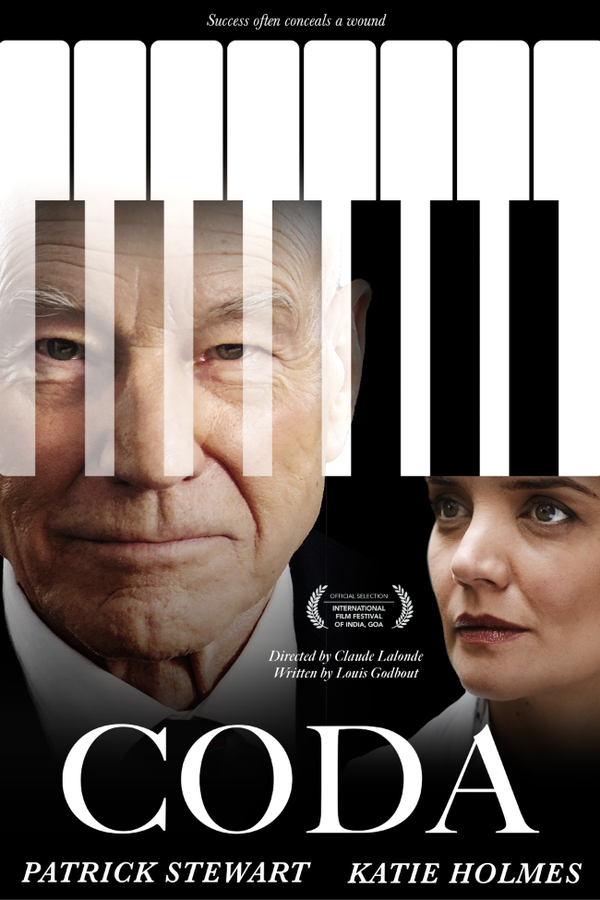
Coda (2020) movie poster

Plot Summary

Coda (2020) Plot Summary & Ending Explained

Release, runtime and language
2020 · 96 min · English
Echo score 69
Loading streaming availability…
Directed by
Claude Lalonde
Starring
Katie Holmes, Patrick Stewart, Letitia Brookes, Giancarlo Esposito, Don Anderson, Abdul Ayoola
Budget
$2.8M

A celebrated pianist, Jack struggles with debilitating stage fright that has ended his career. He encounters Eve, a vibrant and unconventional music critic, who challenges him to rediscover his passion and artistic drive. Through their connection, he is compelled to examine the sacrifices he’s made and the profound impact of art in overcoming personal obstacles.

On this page (7)
  1. 1 Where to watch
  2. 2 What happens: full plot
  3. 3 Plot questions answered
  4. 4 How it ends
  5. 5 Movie threads
  6. 6 Movies like Coda
  7. 7 Every angle
Loading streaming availability…

Full plot summary · contains spoilers

What Happens in Coda: Full Plot Summary

The whole story of Coda (2020) explained, from the opening scene to the final frame: every key event, every twist and what it all adds up to. Read it as a quick recap before the sequel, to check a scene you missed, or to finally understand what really happened.

Henry Cole is an acclaimed classical pianist at the twilight of his career. He returns to the stage after a long absence following the death of his wife, only to discover that his performance is marred by stage fright and overall mental instability. He barely escapes catastrophe as he suffers an anxiety attack on stage, running outside after finishing a number and smoking a cigarette.

At a post-recital press conference, he meets Helen Morrison, a music critic for The New Yorker. She wants to write a story about him and unsuccessfully asks for an interview. They meet again a few days later at Steinway Hall, where Henry suffers another episode while attempting to perform. Helen rescues him in extremis and earns his trust. Henry finally agrees to the interview.

Meanwhile, despite his agent's best efforts, Henry's mental condition declines steadily. His recitals become more and more perilous, thus jeopardizing his comeback tour and his much anticipated and publicized final concert in London.

Helen urges Henry to travel to Sils Maria in the Swiss Alps to hear another pianist she once knew, famous for the therapeutic effect of his interpretation of Beethoven's late piano sonatas. Once there, Henry's symptoms at first worsen, but he gradually finds solace through walks in nature, curious but empathetic encounters with strangers, and the music of Beethoven.

Last updated: February 25, 2026 at 08:21

Was this helpful?

Plot questions answered

Coda Plot Explained: Your Questions Answered

The questions people ask most about Coda (2020): what happens in the confusing scenes, why the characters do what they do, the twists, hidden details and what the ending means. Each answer contains spoilers.

Q1

Why did Henry Cole develop severe stage fright after his wife's death?

Henry's stage fright stemmed from the profound grief and mental instability following his wife's death. After a long absence from performing, his return to the stage exposed his unresolved emotional turmoil, triggering severe anxiety attacks that disrupted his performances and nearly caused a catastrophe during his comeback recital.

  • stage fright
  • grief
  • anxiety
  • mental breakdown
  • wife death
Q2

How did Helen Morrison help Henry during his performance at Steinway Hall?

When Henry experienced another episode while attempting to perform at Steinway Hall, Helen intervened and rescued him in extremis, earning his trust. Her quick action during his moment of crisis transformed their relationship and convinced Henry to finally agree to the interview she had been pursuing.

Foreshadowing: Their earlier meeting at the press conference established Helen as persistent and genuinely interested in Henry's story.

  • Helen Morrison
  • rescue
  • Steinway Hall
  • trust
  • music critic
Q3

Why was Henry initially reluctant to give an interview to Helen?

Henry's initial resistance to the interview reflected his growing distrust of the media and his overall fragility following his wife's death and mental decline. He preferred to remain guarded rather than expose his vulnerable state to public scrutiny.

Foreshadowing: His difficult post-recital press conference showed his discomfort with media attention.

  • interview
  • media
  • resistance
  • trust
  • privacy
Q4

Why did Henry's anxiety worsen when he first arrived in Sils Maria?

Upon arriving in Sils Maria, Henry's symptoms initially worsened because the unfamiliar alpine setting confronted him with new challenges. The acute anxiety made even simple movements feel arduous as he struggled to adjust to the drastically different environment while dealing with his underlying mental health issues.

Foreshadowing: The journey to Sils Maria was recommended as therapy, suggesting recovery would not be immediate.

  • Sils Maria
  • Switzerland
  • anxiety
  • Alps
  • adjustment
Q5

How did Beethoven's late piano sonatas help Henry's recovery?

Beethoven's late piano sonatas provided Henry with a concrete emotional anchor that calms his mind and deepened his belief in music's healing power. The renowned pianist's therapeutic interpretation in Sils Maria guided Henry toward steadiness, allowing him to reconnect with his passion for music and gradually overcome his stage fright.

Foreshadowing: Helen specifically recommended Henry hear this pianist for the therapeutic effect of these particular works.

  • Beethoven
  • late sonatas
  • therapy
  • healing
  • music
Q6

Why did Henry's mental condition continue to deteriorate despite his comeback attempt?

Henry's mental condition declined steadily because the pressure of public performances exacerbated his underlying grief and anxiety. Despite his agent Paul's efforts, the stress of the comeback tour and the anticipated final London concert became overwhelming, making his recitals increasingly perilous.

Foreshadowing: The initial anxiety attack during his comeback recital foreshadowed the continuing struggle ahead.

  • mental decline
  • comeback tour
  • agent
  • pressure
  • London concert
Q7

What was the significance of Henry's chess games with Felix?

The chess matches with Felix, the hotel porter, became a warm communal ritual that helped loosen Henry's defenses. This simple game and friendly conversation enabled him to reconnect with everyday life and contributed to a gradual reassessment of his identity as a performer beyond his public breakdowns.

  • chess
  • Felix
  • hotel
  • connection
  • everyday life
Q8

How did the change of scenery in Switzerland affect Henry's recovery?

The change to Sils Maria provided Henry with relief through walks in nature and curious but empathetic encounters with strangers. These small joys and the peaceful alpine environment helped calm his racing thoughts, creating the psychological space needed for his condition to improve.

Foreshadowing: Helen specifically suggested travel to a different setting as part of the therapeutic approach.

  • nature
  • Switzerland
  • healing
  • surroundings
  • calm
Q9

Why did Henry agree to travel to Sils Maria after initially resisting help?

Henry agreed to go to Sils Maria because Helen urged him and because he was desperate for relief from his worsening symptoms. The recommendation came from someone he now trusted after she rescued him, and he hoped the therapeutic environment and music would provide the breakthrough he desperately needed.

Foreshadowing: Helen's persistence and her rescue at Steinway Hall had already earned his trust.

  • Sils Maria
  • journey
  • Helen recommendation
  • hope
Q10

What triggered Henry's anxiety attacks during his recitals?

Henry's anxiety attacks were triggered by the psychological pressure of performing publicly after his long absence. The combination of grief over his wife's death, fear of failure, and the weight of public expectations caused severe mental instability that manifested as panic attacks on stage.

Foreshadowing: The summary establishes his wife's death as the catalyst for his mental decline.

  • anxiety attacks
  • triggers
  • performance pressure
  • grief
  • fear

Ending explained

What Happens at the End of Coda?

How Coda (2020) ends, in short: the final scene, the last twist and what it means for the characters. The full ending explained, with every spoiler, lives on its own page.

Read the full ending explained

The ending of "CODA" emphasizes the importance of understanding and acceptance beyond physical hearing. Throughout the film, Ruby’s family communicates through sign language, and Ruby acts as their bridge to the hearing world. When Ruby prepares to audition for Berklee College of Music, her family initially struggles with the idea of her leaving and pursuing her dreams. After a heated argument, Ruby decides to put her ambitions on hold to support her family, especially as they face financial hardships and legal obstacles related to their fishing business.

At the family’s fall concert, Ruby performs beautifully, but her parents are unaware of her singing because they cannot hear her. The emotional power of the scene is heightened when Frank places his hand on Ruby’s neck as she sings, feeling the vibrations of her voice—this moment beautifully illustrates that emotional connection can transcend physical differences like deafness. Frank’s realization that he can physically feel Ruby’s music deepens their bond, allowing him to understand what her singing truly means to her.

Continue reading the ending (1 more paragraphs)

Later, Ruby travels to Boston to audition for Berklee, giving a stunning performance that convinces the college of her talent. Her family, recognizing her dedication and talent, decides to support her without feeling threatened by her leaving. They accept her dreams before the audition results are announced, symbolizing their growth and unconditional love. When Ruby receives her acceptance, she prepares to leave for college, but she also leaves a piece of herself with her family in Gloucester. The film ends with her stepping into a new chapter, having achieved her dream but always carrying a part of her family’s love and support with her. The ending highlights the idea that true understanding and connection go beyond words, emphasizing that love and family can be felt deeply—even in silence.

Coda ending explained in full

Movie threads

More Movies Like Coda, by Mood & Story

Curated lists built around what makes Coda tick: the same mood, the same kind of story or the same emotional payoff. Each list explains why these movies belong together.

Artistic crisis stories like Coda

Stories where professional collapse leads to finding new creative purpose. If you enjoyed Coda's exploration of artistic breakdown and renewal, this thread features movies about creative professionals rediscovering their purpose through personal connection. These stories share themes of performance anxiety, creative blocks, and finding new artistic meaning.

  • melancholic
  • introspective
  • anxious
  • solitary
  • hopeful
  • reflective
  • Tone: melancholic, hopeful
  • Pacing: slow, character-driven
Why these movies?

The story pattern: The narrative follows creative professionals who hit rock bottom professionally – often due to mental health issues like stage fright or burnout – and find healing through relationships or rediscovery of their craft. The journey focuses on overcoming internal obstacles rather than external conflicts.

Why they belong together: These films share a focus on artistic identity as central to character development, exploring how creative crises can lead to personal growth. They balance melancholy with hopeful redemption arcs centered around art and healing.

Movies about healing connections like Coda

Stories where broken individuals find wholeness through challenging relationships. If you liked how Coda shows a struggling artist finding healing through an unconventional relationship, this thread features movies where broken characters form transformative bonds. These stories explore how challenging connections can lead to personal growth and recovery.

  • hopeful
  • challenging
  • transformative
  • emotional
  • reflective
  • redemptive
  • Tone: bittersweet, therapeutic
  • Pacing: steady, relationship-focused
Why these movies?

The story pattern: The narrative pattern involves a protagonist at their lowest point emotionally or professionally who encounters someone unconventional – often initially seen as difficult or incompatible – whose challenging perspective becomes essential to their healing journey.

Why they belong together: These films share a specific relationship dynamic where healing comes not from comfort but from being challenged. The connection often starts with friction but evolves into essential support for overcoming personal obstacles.

If you liked this

Movies Like Coda

Similar movies to Coda: the same genre, themes or kind of story. Each one comes with its own plot summary, timeline and ending explained.

Browse all movie summaries

Every angle

Coda (2020) Explained: Plot, Ending, Timeline & Characters

Everything about Coda in one place: what happens in the plot summary, the timeline in chronological order, the characters and meaning, the ending explained and a spoiler-free summary. What's After the Movie adds the cast, box office and post-credit scenes.

Coming soon on iOS and Android

The Plot Explained Movie Summary App

Plot summaries, endings explained and timelines on your phone. Catch up on any movie in minutes, save your favorites and never miss a twist again.

Be the first to know when we launch. Your email stays private, always.

Learn more about the app