Plot Explained Spoilers guaranteed!
Plot Explained

Browse by genre

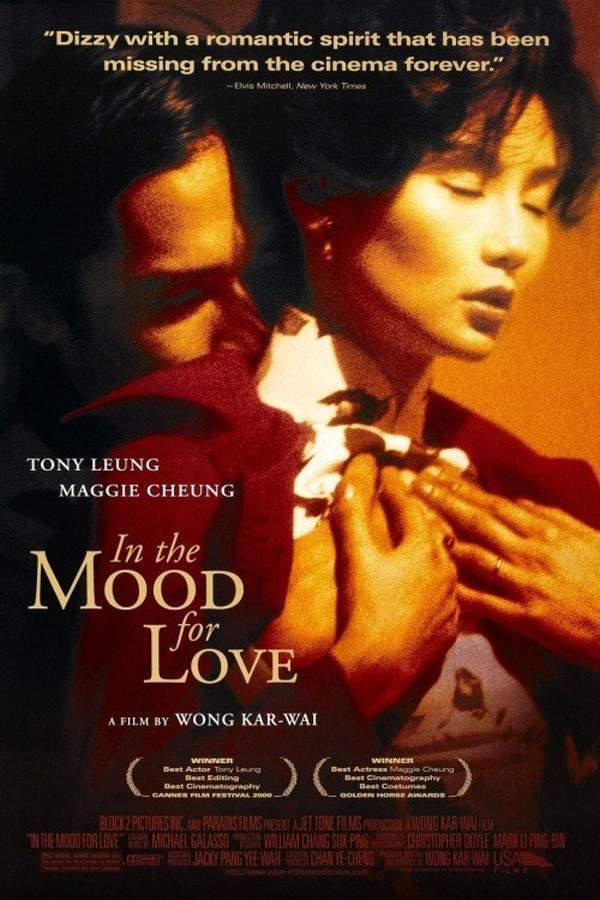
In the Mood for Love (2001) movie poster

Plot Summary

In the Mood for Love (2001) Plot Summary Explained

Release, runtime and language
2001 · 98 min · Chinese
Loading streaming availability…
Directed by
Kar Wai Wong
Starring
Tony Leung Chiu Wai, Maggie Cheung

In 1960s Hong Kong, Chow Mo-wan and Su Li-zhen, both recently moved into the same apartment building, develop a connection after discovering their spouses are having an affair. As they investigate the betrayals, a deep and complex relationship blossoms between them, filled with unspoken feelings and longing. They navigate the intricacies of their emotions while bound by social constraints and the unspoken rules of the era, leading to a poignant exploration of love, loss, and regret.

On this page (5)
  1. 1 Where to watch
  2. 2 What happens: full plot
  3. 3 Plot questions answered
  4. 4 Movie threads
  5. 5 Every angle
Loading streaming availability…

Full plot summary · contains spoilers

What Happens in In the Mood for Love: Full Plot Summary

The whole story of In the Mood for Love (2001) explained, from the opening scene to the final frame: every key event, every twist and what it all adds up to. Read it as a quick recap before the sequel, to check a scene you missed, or to finally understand what really happened.

In 1962, amidst the vibrant backdrop of British Hong Kong, two Shanghainese expatriates find themselves living in adjoining apartments. Chow Mo-wan, a dedicated journalist, and Su Li-zhen (Mrs. Chan), a hardworking secretary at a shipping company, share more than just close quarters; they both endure the absence of spouses who are frequently caught up in their work. The meddlesome yet welcoming presence of their landlady, Mrs. Suen, along with their lively mahjong-playing neighbors, often leaves Chow and Su to their own devices.

Initially, their interactions are minimal and built out of necessity. However, the situation takes a turn as they uncover the shocking truth: their spouses are entangled in a romantic affair. This revelation pulls them closer, sparking an idea to retrace how the affair began. In a moment of artistic collaboration, Chow invites Su to join him in writing a martial arts serial. As they embark on this creative journey, their growing connection does not go unnoticed, prompting Chow to book a secluded hotel room for their work.

As hours turn into days, they gradually confront the undeniable feelings developing between them. When an opportunity arises for Chow to take a job in Singapore, he reaches out to Su, hoping she will join him. Unfortunately, fate intervenes, and Su arrives too late to accompany him on this new adventure.

Fast forward to Singapore, where Chow shares a poignant story with a friend about the olden days—how secrets were whispered into hollows in trees and buried with mud. It is here that Su unexpectedly shows up at his apartment, yet remains silent when she calls. The realization of her visit dawns on Chow only when he discovers a cigarette butt marked with lipstick in his ashtray, a bittersweet reminder of her presence.

Three years pass, and fate continues to weave its complex tapestry. Su seeks out Mrs. Suen, who plans to emigrate to the United States, asking if her apartment is still up for rent. Meanwhile, Chow returns to Hong Kong, hoping to catch up with his previous landlords, the Koos, who have since moved to the Philippines. Inquiries about Su’s family reveal that a woman and child have taken up residence next door, leaving him with a sense of unfinished business.

Amidst the backdrop of the Vietnam War, Chow finds himself in Cambodia, where at the historic Angkor Wat, he encounters a monk. In a moment of introspection, he whispers his secrets into a hollow in the wall, sealing it with mud—symbolizing the unvoiced emotions that linger between him and Su.

Last updated: November 15, 2024 at 16:09

Was this helpful?

Plot questions answered

In the Mood for Love Plot Explained: Your Questions Answered

The questions people ask most about In the Mood for Love (2001): what happens in the confusing scenes, why the characters do what they do, the twists, hidden details and what the ending means. Each answer contains spoilers.

Q1

Why don't Chow and Su get together despite falling in love?

Chow and Su both feel a deep connection, but they refuse to act on their feelings because they believe doing so would make them just as unfaithful as their own spouses. Their sense of moral propriety and fear of becoming the people they despise keeps them apart. The film suggests that love alone isn't enough when weighed against social ethics and personal integrity.

Foreshadowing: From the moment they discover their spouses' affair, both characters are haunted by the idea that pursuing their own romance would betray their own principles.

  • chow mo-wan
  • su li-zhen
  • love
  • relationship
  • social constraints
  • infidelity
Q2

Why does Chow accept the job in Singapore?

Chow takes the journalism job in Singapore because it represents a genuine career opportunity and a way to escape the painful reminders of his failing marriage. However, he also hopes Su will join him, seeing it as a chance for them to start fresh away from the gossip and judgment of their Hong Kong social circle.

Foreshadowing: The seeds of departure are planted early when Chow books the hotel room, his restlessness and desire for change is evident.

  • singapore
  • job
  • chow mo-wan
  • leaving
  • career
Q3

Why does Su miss saying goodbye to Chow?

Su arrives at the ferry terminal too late to catch Chow because she hesitates at the last moment, unable to fully commit to leaving with him. This hesitation reflects her internal conflict between following her heart and adhering to her moral code. The timing of her arrival is tragically perfect, she gets there just after he's left.

Foreshadowing: Their earlier conversations about propriety and restraint foreshadow her inability to make this final choice.

  • missed connection
  • farewell
  • su li-zhen
  • timing
Q4

What does Chow do at Angkor Wat at the end of the movie?

At Angkor Wat in Cambodia, Chow whispers his secrets, the unspoken words and feelings he's carried for Su, into a hollow in the temple wall, then seals it with mud. This symbolic act represents his attempt to find closure and bury his unexpressed love. He's finally releasing what he could never say aloud during their time together.

Foreshadowing: Earlier in Singapore, Chow tells a friend about the childhood tradition of whispering secrets into tree hollows, establishing this as a meaningful ritual.

  • angkor wat
  • cambodia
  • secret
  • closure
  • ritual
  • ending
Q5

What happens to Su after the years pass?

Three years after Chow leaves, Su approaches Mrs. Suen (who is emigrating to America) to ask if her old apartment is still available for rent. This shows Su's lingering attachment to the past and her connection to Chow, they both return to the same building seeking something familiar, though their timing remains misaligned.

Foreshadowing: Their parallel actions of returning to the same place demonstrate the magnetic pull they still have toward each other even years later.

  • apartment
  • mrs suen
  • return
  • time passage
  • su li-zhen
Q6

What does the cigarette butt with lipstick mean?

When Su visits Chow's Singapore apartment but leaves without speaking, Chow later discovers a cigarette butt with her lipstick mark in his ashtray. This small, tangible evidence confirms she was there, turning his suspicion into certainty. It's a bittersweet reminder of her presence and her continued silence, her love is evident but remains unspoken.

Foreshadowing: The scene mirrors their entire relationship: closeness followed by restraint, presence followed by absence.

  • cigarette
  • lipstick
  • su visit
  • evidence
  • singapore apartment
Q7

Why is there a woman and child living next door when Chow returns?

When Chow returns to Hong Kong and asks about Su's old apartment, he's told a woman and child now live there. This suggests Su moved away, possibly to be with her husband or to start a new life. The detail adds to the film's themes of absence and the passage of time, showing that while physical spaces remain, the people connected to them have changed.

Foreshadowing: The earlier scene of Su asking about renting the apartment establishes her ambivalence about staying connected to the past.

  • woman
  • child
  • apartment
  • return
  • chow hong kong
Q8

What is the significance of the secret-telling tradition Chow mentions?

Chow tells a friend about an old custom where people whisper secrets into hollows in trees and bury them with mud, sealing the words forever. This tradition becomes the thematic key to the ending at Angkor Wat. It represents the film's central idea: some feelings are too painful or forbidden to speak, so they remain buried, an act of both preservation and release.

Foreshadowing: This story directly anticipates Chow's final act at Angkor Wat, where he literally performs this ritual.

  • secret
  • tree hollow
  • tradition
  • burial
  • meaning
Q9

What happens to Chow and Su's spouses after the affair is discovered?

The film never explicitly shows what happens to Chow's wife or Su's husband after their affair is exposed. Both Chow and Su simply endure their pain in isolation. Their spouses remain off-screen throughout, representing the absent influences that initially bring Chow and Su together but whose ultimate fate remains irrelevant to the core emotional story.

Foreshadowing: The very absence of their spouses emphasizes that the film is about Chow and Su's relationship, not about confronting the infidelity.

  • spouses
  • affair
  • wife
  • husband
  • ending
Q10

Why is the movie so slow-paced and what is the point?

The slow pacing reflects the film's themes of longing, restraint, and the passage of time. Every lingering shot and quiet moment captures the weight of unspoken emotions. The pace isn't about plot, it's about atmosphere and feeling. Wong Kar-wai wants viewers to experience the same patience and yearning that the characters feel, making the eventual payoff of emotion more powerful.

Foreshadowing: The opening scenes establish the deliberate tempo through quiet moments of waiting and solitary activities.

  • pacing
  • slow
  • atmosphere
  • wong kar-wai
  • meaning
Q11

Why don't Chow and Su ever reunite or get closure?

Their lack of reunion is deliberate, the film suggests that some connections exist precisely because they were never consumated. Reunion would require them to abandon their principles, and the film argues that their restraint is what makes their love profound. The ambiguity reflects real life: not every story resolves, and sometimes the lack of closure is the most honest ending.

Foreshadowing: Their parallel returns to Hong Kong without actually meeting demonstrates this pattern of near-misses.

  • reunion
  • closure
  • ending
  • resolution
  • regret

Movie threads

More Movies Like In the Mood for Love, by Mood & Story

Curated lists built around what makes In the Mood for Love tick: the same mood, the same kind of story or the same emotional payoff. Each list explains why these movies belong together.

Movies of restrained melancholy and unspoken longing like In the Mood for Love

Stories of profound love and loss held behind a veil of social propriety. If you enjoyed the quiet, aching emotions of In the Mood for Love, explore similar films. This collection features movies where profound longing and romantic melancholy are expressed through subtlety and restraint, often bound by social conventions.

  • melancholic
  • longing
  • restrained
  • poignant
  • nostalgic
  • quiet
  • Tone: melancholic, poignant, bittersweet
  • Pacing: slow, deliberate, atmospheric
Why these movies?

The story pattern: Narratives in this thread revolve around emotional restraint. Characters grapple with powerful feelings—often love, desire, or regret—but are constrained by circumstance, duty, or societal expectations. The plot is driven by internal conflict rather than external action, building to a poignant, often bittersweet conclusion that emphasizes the beauty and pain of what remains unfulfilled.

Why they belong together: Movies are grouped here for their shared focus on internal emotion conveyed through subtlety. They possess a melancholic tone, deliberate pacing, and a visual style that evokes nostalgia and longing. The experience is less about dramatic plot and more about the resonant, quiet space between characters.


Atmospheric slow-burn character studies similar to In the Mood for Love

Character-driven stories where mood and setting are as important as the plot. For viewers who appreciated the immersive, atmospheric quality of In the Mood for Love, this thread highlights movies with a similar pace and focus. Discover character-driven stories where the environment and mood are central, unfolding slowly to create a deep, resonant experience.

  • slow burn
  • atmospheric
  • character driven
  • contemplative
  • dreamlike
  • nuanced
  • Tone: reflective, dreamlike, nuanced
  • Pacing: slow, immersive, lingering
Why these movies?

The story pattern: The narrative pattern is one of gradual revelation. Instead of a complex plot, the story unfolds through careful observation of characters in their environment. The central conflict is often internal or interpersonal, explored through small moments and significant glances. The setting—whether a specific time period or a detailed location—acts as a silent character, shaping the emotions and outcomes.

Why they belong together: These films are connected by their deliberate pacing, high attention to visual atmosphere, and a primary focus on character psychology. They share a 'slow-burn' quality that invites reflection and values emotional authenticity over narrative twists, creating a deeply immersive and contemplative viewing experience.

Every angle

In the Mood for Love (2001) Explained: Plot, Timeline & Characters

Everything about In the Mood for Love in one place: what happens in the plot summary, the timeline in chronological order, the characters and meaning and a spoiler-free summary. What's After the Movie adds the cast, box office and post-credit scenes.

Coming soon on iOS and Android

The Plot Explained Movie Summary App

Plot summaries, endings explained and timelines on your phone. Catch up on any movie in minutes, save your favorites and never miss a twist again.

Be the first to know when we launch. Your email stays private, always.

Learn more about the app