Plot Explained Spoilers guaranteed!
Plot Explained

Browse by genre

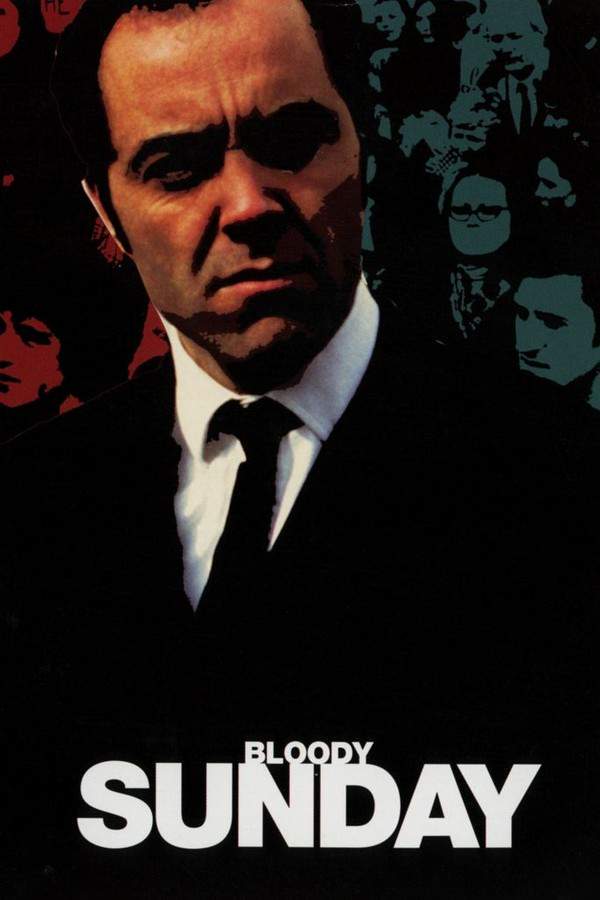
Bloody Sunday (2002) movie poster

Timeline

Bloody Sunday (2002) Timeline Explained – Every Event in Order

Release, runtime and language
2002 · 107 min · English
Directed by
Paul Greengrass
Starring
James Nesbitt, Nicholas Farrell, Tim Pigott-Smith

In Northern Ireland, a civil rights protest for equal rights takes a tragic turn on January 30, 1972, an event known as Bloody Sunday. As British soldiers open fire on the unarmed crowd, civil rights leader Ivan Cooper finds himself at the center of the escalating violence. The incident results in 13 deaths and numerous injuries, profoundly impacting the region and sparking widespread outrage.

On this page (5)
  1. 1 Events in order (14)
  2. 2 Timeline questions answered
  3. 3 Movie threads
  4. 4 Movies like Bloody Sunday
  5. 5 Every angle

14 events in order · contains spoilers

Bloody Sunday Timeline: Events in Chronological Order

Every key event of Bloody Sunday (2002) in order, scene by scene, with when and where it takes place. Use it to untangle flashbacks, time jumps and parallel storylines, to refresh your memory before the sequel or to find the exact scene you are thinking of.

  1. Ivan Cooper's March Organization

    Ivan Cooper, a member of the SDLP, begins to organize a significant march aimed at advocating for civil rights in Northern Ireland. This march is part of a broader effort to combat Unionist rule and British oppression, marking an important moment for the civil rights movement.

    When
    January 1972
    Where
    Derry
  2. Ban on Parades and Marches

    In response to increasing tensions in Northern Ireland, the British Army imposes a ban on all parades and marches. This decision adds a layer of intimidation as the scheduled date of the civil rights march approaches, heightening the stakes for all involved.

  3. Military Presence in Derry

    As march day arrives, British troops line the streets of Derry, creating a charged atmosphere of fear and aggression. This military presence is intended to deter the marchers while signaling the British Army's readiness for confrontation.

    When
    January 30, 1972
    Where
    Derry
  4. Marchers Join for Peace

    Thousands gather for the march, including women and children, demonstrating a united front for civil rights. Jerry, an ordinary Irishman, joins the procession, filled with hope and commitment to the cause despite the evident dangers.

    When
    January 30, 1972
    Where
    Derry
  5. Tensions Rise Amidst the March

    As the peaceful demonstration unfolds, a faction of young marchers diverges towards fortified checkpoints, leading to a confrontation with British forces. Despite Ivan Cooper's efforts to maintain non-violence, rocks are hurled, escalating tensions on both sides.

    When
    January 30, 1972
    Where
    Derry
  6. British Response to Provocation

    In a swift reaction to perceived provocation, the British Army employs water cannons and rubber bullets to quash dissent. The deployment of tear gas further shifts the atmosphere from peaceful protest to chaos and violence, leading to injuries among the marchers.

    When
    January 30, 1972
    Where
    Derry
  7. Death of Protesters

    As the situation spirals out of control, the marchers experience the unthinkable when two Irish protesters are killed amidst the turmoil. This shocking incident underscores the brutal reality of the confrontation and transforms the event into a tragedy.

    When
    January 30, 1972
    Where
    Derry
  8. Ivan Advocates for Non-Violence

    In a desperate plea to restore order, Ivan Cooper addresses the crowd, urging them to adhere to non-violence despite the escalating violence around them. His commitment to peace highlights the stark contrast between the protesters' intentions and the military's aggressive tactics.

    When
    January 30, 1972
    Where
    Derry
  9. Indiscriminate Firing by British Forces

    British troops begin to fire indiscriminately into the crowd, resulting in tragic casualties among the innocent marchers. Confusion reigns as individuals attempting to aid the wounded become victims themselves, turning a peaceful protest into a horrifying massacre.

    When
    January 30, 1972
    Where
    Derry
  10. Aftermath of the Shooting

    As the gunfire ceases, the grim reality of the violence emerges, with numerous casualties confirmed. Soldiers scramble to manage the situation, attempting to justify their actions while the media captures the horrifying aftermath of the events.

    When
    January 30, 1972
    Where
    Derry
  11. Jerry's Fatal Injury

    Amidst the chaos, Jerry sustains severe injuries and desperately requires medical help. However, army roadblocks impede his path to treatment, tragically leading to his death from his wounds later on, further amplifying the tragedy of the day's events.

    When
    January 30, 1972
    Where
    Derry
  12. Hospital Scene

    Ivan arrives at the overwhelmed hospital to witness the stark reality of the tragedy, with thirteen dead and many injured. The heartbreaking scene illustrates the devastating impact of the day's violence on the community and civil rights movement.

    When
    January 30, 1972
    Where
    Derry
  13. British Authorities' Claims

    In an attempt to downplay their actions, British authorities misleadingly assert that Jerry's body was booby-trapped, seeking to shift blame away from the military's lethal response. This maneuver is perceived as a tactic to distort the truth behind the tragedy.

  14. Impact on the Civil Rights Movement

    Ivan declares that the tragic events have not only decimated the civil rights movement but have inadvertently empowered the IRA, igniting a chain of violent consequences for Northern Ireland. The repercussions of that day will resonate throughout the region for years to come.

Last updated: November 15, 2024 at 20:41

Was this helpful?

Timeline questions answered

Bloody Sunday Timeline Explained: Your Questions Answered

When does it happen, and why in that order? The questions people ask about the chronology of Bloody Sunday (2002): time jumps, flashbacks, cause and effect between scenes and the correct order of events, each answered with spoilers.

Q1

Why did British soldiers open fire on the unarmed marchers?

British soldiers opened fire after a faction of young marchers diverted towards fortified checkpoints and threw stones at the military. General Ford had authorized troops to aggressively make arrests and use deadly force in response to any perceived Irish provocation. The situation escalated when water cannons, rubber bullets, and tear gas failed to disperse the crowd, leading to indiscriminate firing into the unarmed civilians.

Foreshadowing: Earlier in the film, Ford is shown believing the Irish are potential troublemakers and orders a pincer movement to encircle the marchers.

  • british soldiers firing
  • paratroopers
  • gunfire
  • massacre
Q2

Who ordered the pincer movement during the march?

General Ford, a senior British commander, arrived in Derry to oversee operations and authorized the strategic pincer movement designed to encircle the marchers. This military maneuver was part of a broader order to aggressively make arrests and use deadly force against any Irish provocation.

Foreshadowing: The film establishes Ford's mindset early on, portraying him as viewing the Irish as potential troublemakers before the march even begins.

  • general ford
  • pincer movement
  • british command
  • military orders
Q3

Why did some marchers diverge towards the fortified checkpoints?

A faction of young marchers broke away from the main demonstration and headed toward heavily fortified British checkpoints, leading to a direct confrontation with British forces. Despite Ivan Cooper's efforts to redirect them back to the peaceful route, the young marchers threw stones, which escalated tensions and provided the British with a pretext for using force.

Foreshadowing: The buildup shows growing frustration among younger protesters with the pace of the civil rights movement.

  • young marchers
  • stones
  • checkpoints
  • provocation
Q4

What happened to Jerry after he was wounded?

Jerry was severely injured during the indiscriminate firing and desperately needed medical attention. However, army roadblocks prevented him from reaching a hospital in time. He tragically succumbed to his injuries, with the British later falsely claiming his body was booby-trapped to mislead the public about the events.

Foreshadowing: The timeline builds tension around Jerry's fate as the shooting escalates and chaos fills the streets.

  • jerry
  • wounded
  • death
  • army roadblocks
  • medical attention
Q5

Why did British authorities claim Jerry's body was booby-trapped?

British authorities claimed Jerry's body was booby-trapped as a calculated cover-up to justify their lethal response and shift blame away from the military's actions. This false assertion was intended to mislead the public about what happened during the massacre, as the truth, the shooting of unarmed civilians, would have been damning.

Foreshadowing: After the shooting, British soldiers scramble to justify their actions while media cameras capture the aftermath.

  • booby trap
  • cover-up
  • british authorities
  • justification
  • lie
Q6

How did the events of Bloody Sunday impact the IRA?

Ivan Cooper stated that the British had not only devastated the civil rights movement but had unwittingly gifted the IRA a monumental victory. The massacre provided the IRA with significant propaganda and recruitment material, as the visual evidence of British soldiers gunning down unarmed civilians galvanized violent resistance and shifted public opinion toward more militant approaches.

Foreshadowing: The film shows Ivan's concern that the violence would push people toward the IRA despite his efforts to keep them away from the march.

  • ira
  • recruitment
  • propaganda
  • political consequences
  • violence
Q7

Why did Ivan Cooper want the IRA to stay away from the march?

Ivan Cooper insisted that the IRA stay clear of the march because he was committed to a completely peaceful demonstration. He believed that non-violence was the only legitimate way to secure civil rights and independence, and that any IRA presence would give the British Army a pretext to suppress the protest as a terrorist threat.

Foreshadowing: Throughout the film, Ivan repeatedly advocates for non-violence as he addresses the crowd and coordinates with fellow SDLP members.

  • ira
  • ivan cooper
  • peaceful protest
  • non-violence
  • sdlp
Q8

What happened to the two Irish protesters killed before the main shooting?

Before the mass shooting, two Irish protesters were killed during the escalating confrontation when British forces deployed tear gas and rubber bullets. These deaths marked the first casualties of the day and signaled the rapid deterioration from a peaceful protest to violent conflict, setting the stage for the massacre that followed.

Foreshadowing: The timeline shows tensions rising as young marchers diverge and rocks are thrown at British forces.

  • two protesters
  • killed
  • tear gas
  • first deaths
Q9

How many people died as a result of Bloody Sunday?

Thirteen people died immediately when British paratroopers opened fire on the crowd, and one additional victim later succumbed to his injuries 4½ months later, bringing the total death toll to fourteen. Fourteen others were injured in the massacre.

Foreshadowing: The hospital scene at the end confirms the exact numbers as Ivan arrives to witness the overwhelmed medical staff.

  • death toll
  • casualties
  • thirteen dead
  • fourteen injured
Q10

Why did the British Army ban all parades and marches?

The British Army imposed a ban on all parades and marches in response to escalating tensions in Northern Ireland. This prohibition was meant to prevent public demonstrations and maintain order, but it also added an atmosphere of intimidation and heightened the stakes for the civil rights movement, which defied the ban by proceeding with the Derry march.

Foreshadowing: The timeline establishes the ban early as a key factor that makes the march organization both courageous and dangerous.

  • ban
  • parades
  • marches
  • british army
  • prohibition
Q11

Why did British forces use water cannons and rubber bullets?

British forces deployed water cannons and rubber bullets in response to the stones thrown by the young marchers who had diverted toward fortified checkpoints. This was intended to disperse the crowd and restore order, but the escalation continued with tear gas, leading to the deaths of two protesters and ultimately providing justification in the soldiers' minds for the indiscriminate firing that followed.

Foreshadowing: The confrontation at the checkpoints shows the chain of escalation from stones to rubber bullets to live fire.

  • water cannon
  • rubber bullet
  • tear gas
  • escalation
  • crowd control
Q12

What role did Ivan Cooper play in organizing the march?

Ivan Cooper, a Member of Parliament for the SDLP, was the pivotal figure in organizing the Northern Ireland Civil Rights Association march in Derry. He spearheaded the campaign to raise awareness and fight for civil rights equality, coordinated the logistics, distributed pamphlets encouraging women and children to participate, and ultimately witnessed the massacre that followed his peaceful demonstration.

Foreshadowing: The opening establishes Ivan as the central organizer whose political motivations drive the entire narrative.

  • ivan cooper
  • sdlp
  • civil rights march
  • organizer
  • mp

Movie threads

More Movies Like Bloody Sunday, by Mood & Story

Curated lists built around what makes Bloody Sunday tick: the same mood, the same kind of story or the same emotional payoff. Each list explains why these movies belong together.

Intense historical docudramas like Bloody Sunday

Intense, fast-paced films that plunge you directly into a real-world political tragedy. Movies like Bloody Sunday that recreate a specific, tragic historical event with high intensity and documentary-style realism. These films are for viewers seeking powerful, fast-paced, and emotionally heavy dramatizations of real-world political violence and injustice.

  • grim
  • urgent
  • tense
  • harrowing
  • somber
  • angry
  • Tone: dark, bleak, urgent
  • Pacing: fast, relentless
Why these movies?

The story pattern: The narrative typically follows a straightforward, linear timeline that builds relentless tension towards a known, catastrophic outcome. The journey is less about surprise and more about the visceral experience of witnessing a system or event collapse into chaos, often centered on a key figure caught in the turmoil.

Why they belong together: These movies are grouped by their commitment to historical immersion, their high-stakes tension derived from real events, and their shared goal of creating a visceral, angry, and educational viewing experience about political failure and human cost.
Bleak political tragedies like Bloody Sunday

Stories where peaceful protest is met with overwhelming, systemic violence. If you liked Bloody Sunday, explore other movies about political injustice and state violence where peaceful movements are met with overwhelming force. These films share a dark tone, heavy emotional weight, and a focus on the catastrophic human cost of ideological conflict.

  • angry
  • somber
  • tense
  • grim
  • oppressive
  • despairing
  • Tone: dark, angry, somber
  • Pacing: fast, escalating
Why these movies?

The story pattern: The plot follows a predictable but powerful downward spiral: a cause is established, tension escalates, and the state's response shifts from control to catastrophic violence. The story emphasizes the futility of the initial protest in the face of overwhelming power, leaving characters and viewers with a sense of anger and unresolved loss.

Why they belong together: They are united by their core theme of systemic injustice, their focus on the crushing of idealism by violent authority, and their resulting emotional tone of anger, sorrow, and bleakness. The pacing is often urgent, reflecting the escalation towards an inevitable tragedy.

If you liked this

Movies Like Bloody Sunday

Similar movies to Bloody Sunday: the same genre, themes or kind of story. Each one comes with its own plot summary, timeline and ending explained.

Browse all movie summaries

Every angle

Bloody Sunday (2002) Explained: Plot, Timeline & Characters

Everything about Bloody Sunday in one place: what happens in the plot summary, the timeline in chronological order, the characters and meaning and a spoiler-free summary. What's After the Movie adds the cast, box office and post-credit scenes.

Coming soon on iOS and Android

The Plot Explained Movie Summary App

Plot summaries, endings explained and timelines on your phone. Catch up on any movie in minutes, save your favorites and never miss a twist again.

Be the first to know when we launch. Your email stays private, always.

Learn more about the app