Plot Explained Spoilers guaranteed!
Plot Explained

Browse by genre

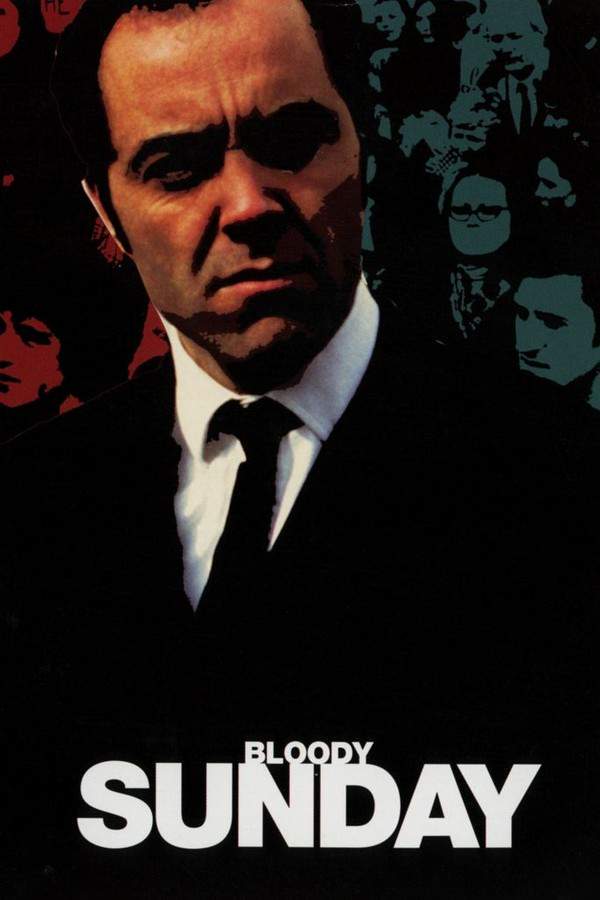
Bloody Sunday (2002) movie poster

Characters & Themes

Bloody Sunday (2002) Characters, Setting & Themes Explained

Release, runtime and language
2002 · 107 min · English
Directed by
Paul Greengrass
Starring
James Nesbitt, Nicholas Farrell, Tim Pigott-Smith

In Northern Ireland, a civil rights protest for equal rights takes a tragic turn on January 30, 1972, an event known as Bloody Sunday. As British soldiers open fire on the unarmed crowd, civil rights leader Ivan Cooper finds himself at the center of the escalating violence. The incident results in 13 deaths and numerous injuries, profoundly impacting the region and sparking widespread outrage.

On this page (7)
  1. 1 Characters explained (3)
  2. 2 Where & when it takes place
  3. 3 Themes & meaning (3)
  4. 4 Character & meaning questions
  5. 5 Movie threads
  6. 6 Movies like Bloody Sunday
  7. 7 Every angle

3 main characters · contains spoilers

Bloody Sunday Characters Explained: Who Is Who

The main characters of Bloody Sunday (2002), heroes and villains: what drives them, how they change over the course of the story and what each of them reveals about the film's bigger ideas.

  • Ivan Cooper

    played by James Nesbitt

    Ivan Cooper is a passionate and determined Member of Parliament who champions the civil rights movement in Northern Ireland. He is portrayed as an idealistic leader, striving for non-violence amidst a highly charged political climate. His commitment to justice drives him to organize the fateful march, embodying the spirit of resilience against oppression.

    • 📢 Leader
    • ✊ Activist
  • Jerry

    Jerry is depicted as an ordinary Irishman whose simplicity belies his deep commitment to the cause of civil rights. His relationship with his girlfriend highlights his humanity amid the chaos. Jerry's tragic fate serves as a reminder of the personal costs of political strife and the impact of systemic violence on everyday individuals.

    • 👤 Ordinary Citizen
    • 💔 Tragic Hero
  • General Ford

    played by Tim Pigott-Smith

    General Ford represents the military authority overseeing the British response to the march. His perception of the Irish as potential troublemakers leads to tragic consequences. He embodies the rigidity of military protocol over diplomatic dialogue, illustrating the disconnect between leaders and the individuals they govern.

    • 💼 Authority
    • ⚔️ Military

Last updated: October 22, 2024 at 19:06

Was this helpful?

Setting

Where and When Does Bloody Sunday Take Place?

The setting of Bloody Sunday (2002): the year and time period, the places and locations, and how they shape the characters, the mood and the tension of the story.

Time period

January 30, 1972

The early 1970s in Northern Ireland was a period marked by intense political strife and social unrest known as the Troubles. This era witnessed a struggle over national identity, with violent clashes between opposing factions. Bloody Sunday, in particular, became a defining moment, leading to increased tensions and a shift in public opinion regarding the civil rights movement.

Location

Derry, Northern Ireland

Derry, a city in Northern Ireland, is known for its rich history and vibrant culture. The city gained international attention during the Troubles, particularly for the events of Bloody Sunday, which highlighted the tensions between Nationalists and Unionists. Its landscape features historical architecture, and the iconic City Walls that date back to the 17th century.

  • 🏙️ City
  • 🇬🇧 United Kingdom

Last updated: October 22, 2024 at 19:06

Was this helpful?

3 major themes

Bloody Sunday Meaning: Themes & Message Explained

What is Bloody Sunday (2002) really about? The emotional, social and philosophical themes the film keeps returning to, its symbolism and the message beneath the surface.

  • Civil Rights

    The theme of civil rights is central to 'Bloody Sunday,' as it explores the struggle for equality and justice amidst systemic oppression. The film illustrates the determination of individuals like Ivan Cooper, who rally for fundamental rights and freedoms. The tragic events showcase the tragic consequences that can arise when peaceful protests confront violent authority.

  • Violence

    Violence plays a pivotal role, representing the brutal reality of the conflict in Northern Ireland. The film depicts how a peaceful demonstration devolves into chaos and death, underscoring the devastating impact of militarized responses to civil unrest. This theme serves as a poignant reminder of the dire outcomes of escalated tensions.

  • Media & Propaganda

    The influence of media and propaganda emerges as a critical theme in the aftermath of the events. The British Army's attempts to control the narrative and obscure the truth highlight the power dynamics at play. This theme emphasizes the responsibility of media in shaping public perception and the consequences of misinformation during periods of conflict.

Last updated: October 22, 2024 at 19:06

Was this helpful?

Character & theme questions

Bloody Sunday Characters & Meaning: Your Questions Answered

The questions people ask about Bloody Sunday (2002): who the characters really are, their relationships, what the symbols mean, where it takes place and what the movie is really about. Each answer contains spoilers.

Q1

Where is Bloody Sunday set?

The movie is set in Derry, a city in Northern Ireland. Derry is notable for its 17th-century City Walls and was a focal point of conflict during the Troubles. The story centers on the peaceful civil rights march that took place in the city's Bogside area on January 30, 1972.

  • derry
  • northern ireland
  • location
  • bogside
  • settings
Q2

What time period does the movie cover?

Bloody Sunday takes place on January 30, 1972, during the early 1970s era known as The Troubles in Northern Ireland. This period was marked by intense political strife between Nationalists and Unionists, with violent clashes over questions of national identity and civil rights.

  • 1972
  • january 30
  • the troubles
  • time period
  • 1970s
  • northern ireland history
Q3

What were The Troubles in Northern Ireland?

The Troubles was a period of intense conflict in Northern Ireland from the late 1960s through the 1990s. It involved violent clashes between Catholic Nationalists seeking unification with the Republic of Ireland and Protestant Unionists who wanted Northern Ireland to remain part of the United Kingdom. The civil rights movement emerged as Nationalists demanded equal rights and an end to discrimination.

  • the troubles
  • conflict
  • nationalists
  • unionists
  • civil rights
  • northern ireland
Q4

What is the main theme of civil rights in Bloody Sunday?

Civil rights is the central theme, depicting the struggle for equality and justice amid systemic oppression in Northern Ireland. The film shows how peaceful protests for fundamental rights and freedoms were met with violent authority. Ivan Cooper and other organizers rally for non-violent demonstration, only to face tragic consequences when British soldiers open fire on unarmed civilians.

  • civil rights
  • equality
  • justice
  • protest
  • march
  • ivan cooper
  • oppression
Q5

How does the film portray violence?

The film depicts violence as a brutal reality of the conflict, showing how a peaceful demonstration devolves into chaos and death. The militarized response to civil unrest leads to devastating outcomes, 13 civilians killed and numerous injured. The portrayal emphasizes the tragic consequences when military authority prioritizes protocol over dialogue and civilian safety.

  • violence
  • massacre
  • british army
  • soldiers
  • death
  • civilians
  • brutality
Q6

What theme of media and propaganda does Bloody Sunday explore?

Media and propaganda emerges as a critical theme in the aftermath, as the British Army attempts to control the narrative and obscure the truth about what happened. The film highlights how misinformation and cover-ups shaped public perception, emphasizing the power dynamics between authorities and civilians, and the media's responsibility in reporting truth during conflict.

  • media
  • propaganda
  • cover-up
  • truth
  • british army
  • narrative
  • misinformation
Q7

Who is Ivan Cooper in the film?

Ivan Cooper is a Member of Parliament portrayed by James Nesbitt who champions the civil rights movement in Northern Ireland. He is depicted as an idealistic leader committed to non-violent protest despite the charged political climate. His determination drives him to organize the fateful march, embodying resilience against oppression and becoming central to the film's depiction of the day's events.

  • ivan cooper
  • james nesbitt
  • mp
  • civil rights leader
  • organizer
  • politician
Q8

Who is General Ford in Bloody Sunday?

General Ford (played by Tim Pigott-Smith) represents the British military authority overseeing the response to the march. He perceives the Irish crowd as potential troublemakers, leading to the tragic decision to deploy soldiers. Ford embodies the rigidity of military protocol over diplomatic solutions, illustrating the dangerous disconnect between military leaders and the civilians they govern.

  • general ford
  • tim piggott-smith
  • british army
  • military authority
  • soldiers
  • commander
Q9

Who is Jerry in Bloody Sunday and what happens to him?

Jerry is depicted as an ordinary Irishman whose simple demeanor masks his deep commitment to the civil rights cause. His relationship with his girlfriend highlights his humanity amid the political chaos. Jerry's tragic fate serves as a poignant reminder of the personal costs of political strife, how everyday individuals become victims of systemic violence and political decisions beyond their control.

  • jerry
  • civilian
  • victim
  • ordinary man
  • personal cost
Q10

Why is Bloody Sunday historically significant?

Bloody Sunday became a defining moment of The Troubles, profoundly impacting the region and sparking widespread outrage. The incident resulted in 13 deaths and numerous injuries among unarmed civilians. It led to increased tensions, shifted public opinion regarding the civil rights movement, and contributed to the escalation of violence that would continue for decades. The event remains one of the most notorious days in Northern Ireland's modern history.

  • historical significance
  • 13 dead
  • impact
  • the troubles
  • outrage
  • consequences
  • northern ireland
Q11

What is the overall tone and style of Bloody Sunday?

The film maintains a uniformly dark and bleak tone without humor, romance, or mitigating optimism. Its fast pacing propels the narrative from a peaceable protest into a state-sanctioned massacre with little respite. The storytelling is largely linear, following the day's events chronologically, while the emotional weight comes from graphic depictions of the violence and the profound injustice of the tragedy.

  • tone
  • style
  • bleak
  • dark
  • documentary style
  • drama
  • historical film

Movie threads

More Movies Like Bloody Sunday, by Mood & Story

Curated lists built around what makes Bloody Sunday tick: the same mood, the same kind of story or the same emotional payoff. Each list explains why these movies belong together.

Intense historical docudramas like Bloody Sunday

Intense, fast-paced films that plunge you directly into a real-world political tragedy. Movies like Bloody Sunday that recreate a specific, tragic historical event with high intensity and documentary-style realism. These films are for viewers seeking powerful, fast-paced, and emotionally heavy dramatizations of real-world political violence and injustice.

  • grim
  • urgent
  • tense
  • harrowing
  • somber
  • angry
  • Tone: dark, bleak, urgent
  • Pacing: fast, relentless
Why these movies?

The story pattern: The narrative typically follows a straightforward, linear timeline that builds relentless tension towards a known, catastrophic outcome. The journey is less about surprise and more about the visceral experience of witnessing a system or event collapse into chaos, often centered on a key figure caught in the turmoil.

Why they belong together: These movies are grouped by their commitment to historical immersion, their high-stakes tension derived from real events, and their shared goal of creating a visceral, angry, and educational viewing experience about political failure and human cost.
Bleak political tragedies like Bloody Sunday

Stories where peaceful protest is met with overwhelming, systemic violence. If you liked Bloody Sunday, explore other movies about political injustice and state violence where peaceful movements are met with overwhelming force. These films share a dark tone, heavy emotional weight, and a focus on the catastrophic human cost of ideological conflict.

  • angry
  • somber
  • tense
  • grim
  • oppressive
  • despairing
  • Tone: dark, angry, somber
  • Pacing: fast, escalating
Why these movies?

The story pattern: The plot follows a predictable but powerful downward spiral: a cause is established, tension escalates, and the state's response shifts from control to catastrophic violence. The story emphasizes the futility of the initial protest in the face of overwhelming power, leaving characters and viewers with a sense of anger and unresolved loss.

Why they belong together: They are united by their core theme of systemic injustice, their focus on the crushing of idealism by violent authority, and their resulting emotional tone of anger, sorrow, and bleakness. The pacing is often urgent, reflecting the escalation towards an inevitable tragedy.

If you liked this

Movies Like Bloody Sunday

Similar movies to Bloody Sunday: the same genre, themes or kind of story. Each one comes with its own plot summary, timeline and ending explained.

Browse all movie summaries

Every angle

Bloody Sunday (2002) Explained: Plot, Timeline & Characters

Everything about Bloody Sunday in one place: what happens in the plot summary, the timeline in chronological order, the characters and meaning and a spoiler-free summary. What's After the Movie adds the cast, box office and post-credit scenes.

Coming soon on iOS and Android

The Plot Explained Movie Summary App

Plot summaries, endings explained and timelines on your phone. Catch up on any movie in minutes, save your favorites and never miss a twist again.

Be the first to know when we launch. Your email stays private, always.

Learn more about the app