Plot Explained Spoilers guaranteed!
Plot Explained

Browse by genre

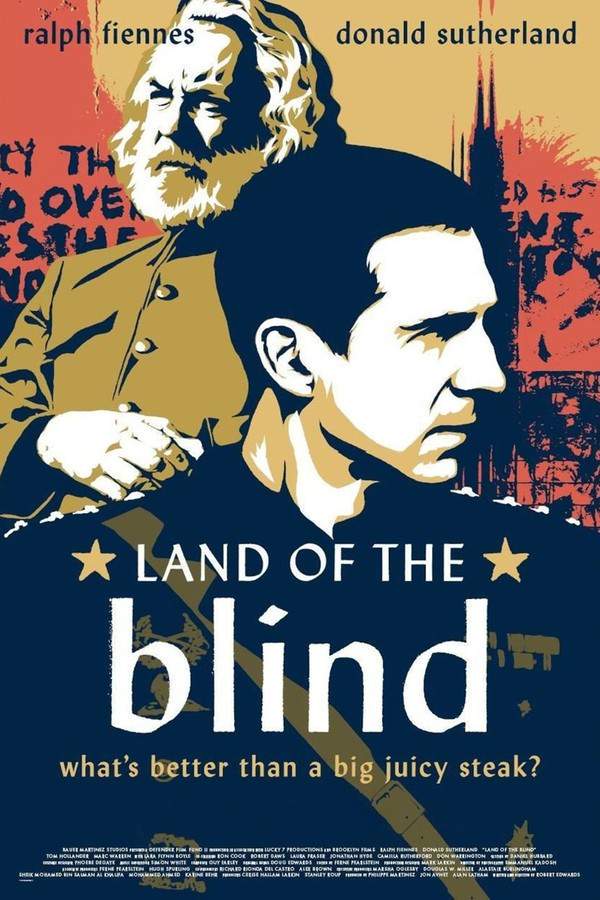
Land of the Blind (2006) movie poster

Plot Summary

Land of the Blind (2006) Plot Summary Explained

Release, runtime and language
2006 · English
JustWatch #7,110 135
Directed by
Robert Edwards

In a dystopian future where personal freedoms are nonexistent, security guard Joe finds himself drawn into a dangerous plot. He joins forces with Thorne, a compelling and radical terrorist, to challenge the oppressive rule of the ruthless Maximilian II. Their rebellion sparks a chain of events with far-reaching and destructive repercussions, forcing them to confront the true cost of fighting for what they believe in.

On this page (6)
  1. 1 Where to watch
  2. 2 What happens: full plot
  3. 3 Plot questions answered
  4. 4 Movie threads
  5. 5 Movies like Land of the Blind
  6. 6 Every angle

Where to watch

Where to Watch Land of the Blind (2006)

Where can you watch Land of the Blind? Stream, rent or buy it in the US, including on Amazon Prime Video, Fawesome and Hoopla: current JustWatch availability with up-to-date prices.

Streaming availability powered by JustWatch

Full plot summary · contains spoilers

What Happens in Land of the Blind: Full Plot Summary

The whole story of Land of the Blind (2006) explained, from the opening scene to the final frame: every key event, every twist and what it all adds up to. Read it as a quick recap before the sequel, to check a scene you missed, or to finally understand what really happened.

Maximilian II, infamously known as Junior, holds an iron grip over a nation rife with chaos and uncertainty. This self-centered and vengeful monarch harbors two main obsessions: indulging in his personal extravagances and meticulously controlling his country’s film industry, which churns out a seemingly nonsensical array of mediocre action-adventure titles, such as Out For Vengeance 4. It’s heavily suggested that Junior’s unabashed indulgences are amplified by the influence of his striking yet merciless wife, Josephine, alongside the violence instigated by anti-government terrorists.

Enter Joe, a seasoned prison warder laboring in the grim facility where John Thorne is initially held. Throughout this time, Thorne endures the harsh deprivations of his environment, suffering relentless beatings from guards while scratching revolutionary messages on the cell walls using his own refuse. As Joe begins to understand Thorne’s tenacious spirit and keen intellect, he finds himself developing an admiration for the man, despite being at odds with his radical beliefs. Acknowledging the growing dissent among the populace, Maximilian makes a bold move by freeing Thorne from his cell, intending to reshape him into a selfish politician rather than a revered hero.

As fate would have it, Joe’s own ambitions lead him to ascend to the inner circle of guards in Maximilian’s opulent palace, along with a coveted position in the elite military ranks. Witnessing Junior's depraved instincts up close, Joe clandestinely enables Thorne and his followers to infiltrate the heart of the palace while Junior and Josephine engage in their disgraceful revelries. In a swift and brutal act, Thorne eliminates the pair, seizing power and reigning over the nation with an iron fist, echoing the tyranny of his predecessor.

Under Thorne's new totalitarian regime, Joe finds himself complicit in the merciless quelling of dissent. Yet, as the realization dawns that his former ally has transformed into a tyrant as oppressive as Junior, Joe stands resolute in his refusal to accept the new order. This act of defiance results in his forced transfer to a re-education camp, where he must confront the harsh truths of his reality and the grim consequences of his prior complicity.

As the unending torment persists, Joe's determination remains unbroken—he steadfastly refuses to sign a loyalty oath that would seal his fate. A haunting visitation from Thorne serves only as a cruel reminder of their past camaraderie, as Joe's earnest attempts to reconnect are met with chilling indifference. Compounding the misery is a barrage of vicious gossip circulating through the facility, peddling insidious rumors of a secret conspiracy brewing among the prisoners. A once-friend, now reduced to a shell of his former self, spews a tide of baseless accusations designed to undermine Joe's reputation and integrity.

With interrogators intensifying their probing questions, Joe finds himself spiraling through a disorienting maze of blurred realities and fragmented memories. It is within this surreal vortex that a shocking realization emerges: Joe's entire persona as a valorous hero or fearsome commando has been nothing but an elaborate deception. In truth, he was a mere soldier who had completed a standard two-year tour of duty.

As Joe's grasp on reality begins to fracture, his tormentors assume the guise of specters from their shared past, mocking him with bemusing riddles and infuriating contradictions. A haunting refrain, > "What is better than a big juicy steak?" – reverberates through the air, with its punny answer reinforcing the grave dangers of moral obligation. Throughout this tumultuous sequence, it remains ambiguous whether Joe's replies stem from the depths of mental torment or the nonsensical outpourings of a paranoid mind. One indisputable truth emerges, however: his profound silence serves as a resounding testament to the unyielding nature of human resolve amidst heart-wrenching cruelty.

As the waters of Thorne’s bath become tinted with the blood of betrayal, one of his once-trusted allies delivers the fatal strike. The revolutionary government collapses swiftly, its foundations rocked by deceit. In the shadows, Junior's relatives and nephew—who had previously fled the turmoil—quietly resurface, having spent their exile orchestrating a counter-revolutionary coup with foreign assistance. The former commander of the camp sheds his tattered fatigues for a pristine white coat, absolving himself of any accountability for the atrocities committed under his supervision. A tortured colleague, who once accused Joe of conspiracy, is rewarded with a government position, his assurances to negotiate Joe's release tempered by the sensitivities surrounding Maximilian's assassination, a deed he claims to have orchestrated. For toppling the old regime while resisting the new tyrant, Joe finds himself ensnared in a prison cell, a perpetual victim of circumstance.

Years tick by, shifting like grains in an hourglass, until Joe is discovered in a stark white cell, remaining almost oblivious to his daughter's sporadic visits. It remains uncertain whether he has succumbed to madness or maintains lucidity, his apparent detachment possibly a strategic façade to cope with the crushing weight of his situation. Alternatively, this visitor may merely be an actress playing the role of his daughter, crafted to shatter any remaining fragments of his tenuous grasp on reality. As she departs, revealing the cell as a shabby apartment within a dilapidated complex, the truth dawns: Joe's imprisonment is not a byproduct of political oppression, but rather a calculated maneuver by a regime intent on maintaining dominion over him.
Last updated: November 19, 2024 at 18:17

Was this helpful?

Plot questions answered

Land of the Blind Plot Explained: Your Questions Answered

The questions people ask most about Land of the Blind (2006): what happens in the confusing scenes, why the characters do what they do, the twists, hidden details and what the ending means. Each answer contains spoilers.

Q1

Why did Maximilian release John Thorne from prison?

Maximilian released Thorne deliberately, believing he could transform the revolutionary into a corrupt politician who would serve the regime's interests. Junior thought he could co-opt Thorne's charisma and influence to quell dissent, underestimating Thorne's genuine revolutionary convictions and leadership capabilities.

Foreshadowing: Earlier, Thorne is shown scratching revolutionary messages on his cell walls, demonstrating his unwavering commitment to overthrowing the regime.

  • maximilian
  • john thorne
  • release
  • prison
  • strategy
Q2

Why did Joe help Thorne infiltrate the palace?

Joe had risen to become part of Maximilian's inner guard and witnessed the tyrant's depraved behavior firsthand. Having developed admiration for Thorne during his imprisonment and seeing an opportunity to rid the nation of Junior's oppression, Joe enabled the infiltration believing Thorne would bring genuine change.

Foreshadowing: Joe's growing admiration for Thorne while working as a prison warder established their connection and Joe's disillusionment with the regime.

  • joe
  • thorne
  • palace
  • infiltration
  • coup
Q3

Why did Thorne become as oppressive as Maximilian?

Thorne's transformation represents the film's central theme that revolutions inevitably replace one tyrant with another. Upon seizing power, Thorne ruled with iron fist, echoing Junior's tyranny. This mirrors the cyclical nature of totalitarian regimes and suggests Joe's idealism in supporting the coup was fundamentally misguided.

Foreshadowing: Maximilian's strategy to release Thorne as a corrupt politician hints that power corrupts regardless of intent.

  • thorne
  • tyrant
  • maximilian
  • oppression
  • revolution
Q4

Why did Joe refuse to sign the loyalty oath at the re-education camp?

Joe refused because signing would mean betraying his moral principles and accepting Thorne's new regime as legitimate. After witnessing both Maximilian and Thorne rule as oppressors, Joe's refusal represented his final act of resistance, even though it condemned him to continued torture.

Foreshadowing: Joe's earlier disillusionment with Thorne's regime set the stage for his defiant stance.

  • joe
  • loyalty oath
  • re-education camp
  • resistance
  • torture
Q5

What was the 'big juicy steak' question in the psychological torture scene?

The riddle 'What is better than a big juicy steak?' appeared during Joe's intense psychological torment, with the answer being 'The death of a big juicy king' (playing on 'king' and 'steak'). This wordplay reflected the guards' attempts to break Joe mentally while referencing the political assassinations he witnessed, the deaths of both Maximilian and Thorne's regime.

Foreshadowing: This scene follows Joe's refusal to sign the loyalty oath, escalating the regime's psychological warfare.

  • big juicy steak
  • riddle
  • psychological torture
  • wordplay
  • death of king
Q6

Was Joe actually a hero or commando, or was that a deception?

Joe's identity as a valorous hero or fearsome commando was revealed to be an elaborate deception. In reality, he was merely a soldier who had completed a standard two-year tour of duty. The fabricated heroic persona was likely constructed during his psychological interrogation to either break him down or manipulate his sense of self.

Foreshadowing: Joe's backstory as a simple prison guard who rose to palace power already suggested a more modest origins than the heroic narrative implied.

  • joe
  • hero
  • commando
  • soldier
  • deception
  • identity
Q7

Was Joe's daughter real or an actress?

The film deliberately keeps this ambiguous. The visits could represent Joe's deteriorating mental state, a cruel manipulation by his captors to further break his reality, or genuinely be his daughter. The revelation that his cell was actually a shabby apartment in a dilapidated complex raises questions about whether any of his perceived reality was genuine.

Foreshadowing: The earlier scenes of psychological torment, where Joe's tormentors appeared as specters from his past, set up the blurred reality of the ending.

  • daughter
  • actress
  • real
  • visit
  • prison
  • ambiguity
Q8

Why is Joe still imprisoned at the end despite the regime falling?

Joe's continued imprisonment was not merely political oppression but a calculated strategy by the regime to maintain control over him. His status as someone who helped topple Maximilian while resisting Thorne made him a dangerous symbol. Keeping him imprisoned, whether physically or psychologically, ensured his silence and prevented him from becoming a figurehead for future resistance.
Foreshadowing: Joe's position as someone who witnessed both regimes' crimes made him a liability to whoever held power.

  • joe
  • imprisonment
  • regime
  • control
  • silence
  • power
Q9

How did Thorne die and what happened to his government?

Thorne was betrayed and killed by one of his own allies while in his bath, his water turning red with blood. His revolutionary government collapsed swiftly as allies turned into foes. Maximilian's relatives and nephew, who had fled during the turmoil, returned with foreign support to orchestrate a counter-revolutionary coup, bringing the cycle of regime change full circle.

Foreshadowing: The phrase 'the waters of Thorne's bath become tinted with the blood of betrayal' earlier signaled Thorne's violent end.

  • thorne
  • death
  • betrayal
  • bath
  • government
  • collapse
Q10

Why did Joe become complicit in Thorne's atrocities before resisting?

Joe's complicity stemmed from his belief that Thorne's revolution would bring positive change. After helping install Thorne as ruler, Joe found himself executing the new regime's orders, including quelling dissent. Only when Thorne's tyranny became undeniable did Joe resist, but by then he was already entangled in the system's crimes, illustrating how ordinary people become complicit in oppression through incremental compromise.

Foreshadowing: Joe's ambition to rise in the palace ranks already showed his willingness to operate within corrupt systems.

  • joe
  • complicity
  • thorne
  • atrocities
  • resistance
  • moral decline

Movie threads

More Movies Like Land of the Blind, by Mood & Story

Curated lists built around what makes Land of the Blind tick: the same mood, the same kind of story or the same emotional payoff. Each list explains why these movies belong together.

Dystopian Allegories of Failed Revolution like in Land of the Blind

Stories where a rebellion for freedom begets a new and equally brutal tyranny. If you appreciated the cynical political commentary of Land of the Blind, this collection features movies like it that explore how rebellions can spiral into new forms of oppression. Discover similar bleak stories about the cycle of tyranny, moral ambiguity, and the tragic cost of political upheaval.

  • dystopian
  • cynical
  • political
  • tragic
  • unsettling
  • oppressive
  • Tone: dark, cynical, tragic
  • Pacing: steady, methodical
Why these movies?

The story pattern: Narratives in this thread typically follow a protagonist, often an everyman or a true believer, who joins a cause to overthrow a corrupt regime. The initial victory is hollow, as infighting, corruption, or the leader's own thirst for power transforms the revolution into a mirror image of the system it destroyed. The story arc is a downward spiral from hope to disillusionment.

Why they belong together: These movies are grouped by their shared thematic core: a profound skepticism toward political change and a focus on the cyclical nature of power. They share a dark, oppressive tone, a heavy emotional weight centered on betrayal, and often conclude with bleak or bittersweet endings that underscore the futility of the struggle.

Psychological Descent stories with oppressive systems like in Land of the Blind

Character studies of individuals psychologically dismantled by unforgiving institutions. Fans of Land of the Blind's harrowing portrayal of psychological manipulation will find more movies like it here. This section gathers stories where characters are mentally broken by powerful, unforgiving systems, exploring themes of identity loss, torture, and the fragility of the human mind under extreme pressure.

  • psychological
  • unsettling
  • disorienting
  • claustrophobic
  • paranoid
  • brutal
  • Tone: dark, unsettling, disorienting
  • Pacing: steady, deliberate
Why these movies?

The story pattern: The narrative pattern is an inward-focused collapse. A character, initially whole or complicit, is trapped within a system designed to break wills and control minds. Through methods like gaslighting, torture, or re-education, their reality becomes blurred, their identity crumbles, and they emerge—if at all—as a hollowed-out version of their former self.

Why they belong together: These films are united by their immersive and distressing exploration of psychological torment. They share a high-intensity, heavy emotional weight, and an unsettling, paranoid mood. The pacing is often steady or slow-burn, methodically building dread as the character's mental state deteriorates within the confines of their prison, whether physical or ideological.

If you liked this

Movies Like Land of the Blind

Similar movies to Land of the Blind: the same genre, themes or kind of story. Each one comes with its own plot summary, timeline and ending explained.

Browse all movie summaries

Every angle

Land of the Blind (2006) Explained: Plot, Timeline & Characters

Everything about Land of the Blind in one place: what happens in the plot summary, the timeline in chronological order, the characters and meaning and a spoiler-free summary. What's After the Movie adds the cast, box office and post-credit scenes.

Coming soon on iOS and Android

The Plot Explained Movie Summary App

Plot summaries, endings explained and timelines on your phone. Catch up on any movie in minutes, save your favorites and never miss a twist again.

Be the first to know when we launch. Your email stays private, always.

Learn more about the app