Plot Explained Spoilers guaranteed!
Plot Explained

Browse by genre

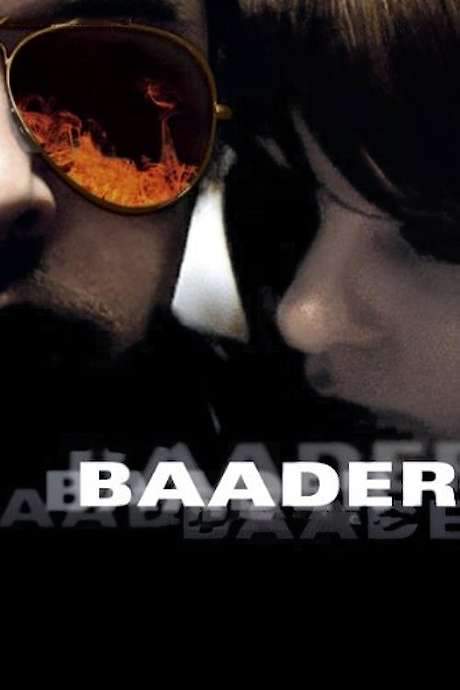
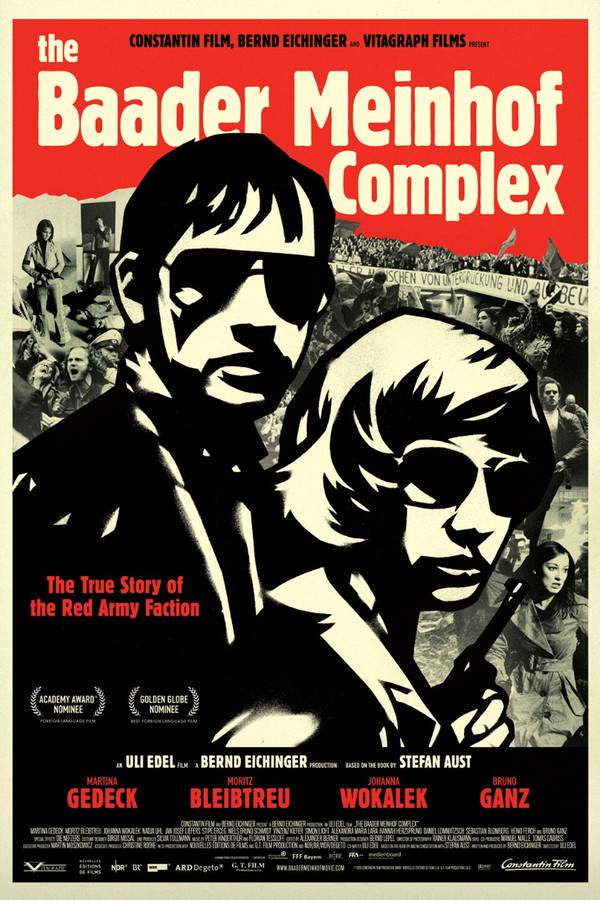
The Baader Meinhof Complex (2009) movie poster

Plot Summary

The Baader Meinhof Complex (2009) Plot Summary Explained

Release, runtime and language
2009 · 150 min · English
JustWatch #34,301
Directed by
Uli Edel
Starring
Martina Gedeck, Johanna Wokalek, Moritz Bleibtreu, Nadja Uhl

Fueled by a legacy of Nazism and resentment towards American influence, a radical group emerges in 1970s Germany. Andreas Baader, Ulrike Meinhof, and Gudrun Ensslin lead a violent insurgency against what they consider fascism. As the group’s actions escalate, police chief Horst Herold wages a relentless pursuit, struggling to understand the motives behind their increasingly desperate and destructive actions. The conflict tests the boundaries of justice and the human cost of political extremism.

On this page (7)
  1. 1 Where to watch
  2. 2 What happens: full plot
  3. 3 Plot questions answered
  4. 4 The book behind the movie
  5. 5 Movie threads
  6. 6 Movies like The Baader Meinhof Complex
  7. 7 Every angle

Where to watch

Where to Watch The Baader Meinhof Complex (2009)

Where can you watch The Baader Meinhof Complex? Stream, rent or buy it in the US, including on Amazon Prime Video, Fawesome and Hoopla: current JustWatch availability with up-to-date prices.

Streaming availability powered by JustWatch

Full plot summary · contains spoilers

What Happens in The Baader Meinhof Complex: Full Plot Summary

The whole story of The Baader Meinhof Complex (2009) explained, from the opening scene to the final frame: every key event, every twist and what it all adds up to. Read it as a quick recap before the sequel, to check a scene you missed, or to finally understand what really happened.

The narrative unfolds on a nude beach in Germany during the late 1960s, as we are introduced to Ulrike Meinhoff, a well-respected journalist alongside her family. The tension escalates when Meinhoff and her husband attend a party where she reads an article detailing the injustices of the Iranian Government. The arrival of the Shah of Persia in Berlin incites a rally that splits the crowd; some people protest against the regime, while others express their support. As the protest intensifies, it turns violent, with Iranian backers clashing against innocent German protesters, resulting in injuries and even a fatality.

In a subsequent scene, Meinhoff engages in a heated debate on television, defending the protesters as she advocates for their cause, a broadcast that catches the attention of Gudrun Ensslin, another passionate activist. Ensslin articulates her beliefs about the corruption of American Imperialism to her parents, all while Meinhoff discovers her husband in an affair.

Next, we meet Andreas Baader, the leader of a revolutionary group who labels themselves the Red Army Faction (RAF). Their audacious beginnings include orchestrating a bombing in a department store, igniting a series of demonstrations and protests, particularly among the youth in West Germany, led by Rudi Dutschke. The stakes rise when Dutschke narrowly survives an assassination attempt by someone linked to the Springer Group, which has ties to the government, resulting in an uproar at the group's headquarters.

The narrative progresses with Meinhoff eavesdropping on her parents' astonished discussions about Ensslin's radical actions. During a visit to Ensslin in jail, Meinhoff learns of her unwavering commitment to opposing the German State. We also encounter Peter Boock, an activist who suffers brutal treatment in jail; soon, the RAF finds a home base for their operations.

Amidst political turmoil, Baader and Ensslin undertake a journey to Italy in 1970, where they consult with their lawyer regarding their return to Germany, acquiring weapons and money to fuel their revolution. Upon their return, they crash at Meinhoff’s residence, declaring their intent to rectify the political landscape or perish in the effort. A gripping moment occurs when Baader is arrested during a routine traffic stop, prompting Ensslin to orchestrate his escape in an audacious plan accompanied by Meinhoff.

The publicized escape labels Baader, Ensslin, and Meinhoff as terrorists, prompting their escape to Jordan for military training. However, tensions among the group escalate, particularly with Meinhoff's partner, who opts to abandon the revolutionary cause. Following their training, they execute a series of bank heists, gaining infamy and support among the German populace. The film captures this crucial turning point, as their actions ignite a series of violent confrontations with the police, leading to fatalities during a botched robbery.

The narrative soon pivots to the drastic measures taken by the German government, leading to the RAF members’ imprisonment and isolation. The somber events of the Munich Olympic Games underscore the violent reality of their cause. As the story continues, the remaining members, now facing dire consequences, attempt a hunger strike to advocate for their treatment as political prisoners, further highlighting the grave situation within the prison system.

Amid palpable tension, Holger Meins, a fellow member, succumbs to neglect as he dies in confinement. The story continues with failed attempts at liberation, missed opportunities for trials, and the group's deteriorating morale. The film further reveals the psychological struggles Meinhoff faces, culminating in her tragic death under suspicious circumstances, which is ruled a suicide.

As the narrative reaches February 1976, the urgency for survival grips the members of the RAF. With plans of a mass kidnapping to secure their freedom, tensions rise. The tale crescendos into chaos as external pressures mount, leading to catastrophic betrayals and a bloody resolution that sees all RAF members in prison brutally murdered.

The haunting conclusion captures the grim legacy of the RAF, illustrating the inescapable cycle of violence as the next generation of revolutionaries carries the mantle forward, leaving a chilling impression about the lengths individuals will go to for their beliefs.
Last updated: November 08, 2024 at 00:00

Was this helpful?

Plot questions answered

The Baader Meinhof Complex Plot Explained: Your Questions Answered

The questions people ask most about The Baader Meinhof Complex (2009): what happens in the confusing scenes, why the characters do what they do, the twists, hidden details and what the ending means. Each answer contains spoilers.

Q1

Why did Ulrike Meinhoff join the Red Army Faction?

Ulrike Meinhoff was initially a respected journalist who became radicalized after witnessing police violence at a protest against the Shah of Persia in Berlin, where protesters were injured and killed. Her husband's affair and her growing anger at American imperialism and the German establishment drew her closer to Gudrun Ensslin, eventually leading her to abandon her family and join the RAF's violent cause.

Foreshadowing: Earlier, Meinhoff defends the Shah protesters on television, catching Ensslin's attention and setting her on the path toward radicalization.

  • ulrike meinhoff
  • red army faction
  • radicalization
  • terrorism
  • gudrun ensslin
Q2

Why did Gudrun Ensslin orchestrate Baader's escape?

After Andreas Baader was arrested during a routine traffic stop in Germany, Gudrun Ensslin devised a daring rescue plan because Baader was the leader and symbolic heart of the RAF. His imprisonment would have severely weakened the group, so Ensslin, accompanied by Meinhoff, executed the audacious escape that subsequently labeled all three as terrorists.

Foreshadowing: The timeline establishes Baader as the central leader of the revolutionary group, making his capture a critical threat to the RAF's existence.

  • gudrun ensslin
  • andreas baader
  • prison escape
  • red army faction
Q3

What was the Springer Group's connection to the Rudi Dutschke assassination attempt?

Rudi Dutschke, a prominent student protest leader, was shot by Josef K. who had links to the Springer Group, a major media conglomerate. Springer newspapers had been running aggressive campaigns against Dutschke and left-wing activists, and the assassination attempt triggered massive civil unrest across West Germany, further fueling radical movements.

Foreshadowing: The film establishes Dutschke as a leading voice of youth protests before the assassination attempt occurs.

  • rudi dutschke
  • springer group
  • assassination
  • student protests
  • media
Q4

Why did Meinhoff's partner leave the RAF?

Meinhoff's partner chose to abandon the revolutionary cause during their time in Jordan, likely due to the escalating violence and the increasing desperation of the group. This departure marked one of several internal rifts that would eventually contribute to the RAF's unraveling.

Foreshadowing: Tensions among the group escalate after their arrival in Jordan, foreshadowing internal divisions.

  • meinhoff partner
  • red army faction
  • internal conflict
  • jordan
Q5

How did Holger Meins die in prison?

Holger MeIns died in confinement as a result of neglect during the RAF's hunger strike protests. The German government responded to their demands for political prisoner status with harsh isolation conditions, and MeIns succumbed to the deteriorating conditions, becoming one of the first RAF members to die in prison.

Foreshadowing: The narrative establishes the brutal prison conditions and the group's hunger strike as a desperate attempt to gain political recognition.

  • holger meins
  • hunger strike
  • prison death
  • political prisoner status
Q6

How did Ulrike Meinhoff actually die?

Ulrike Meinhoff died in jail under suspicious circumstances in 1976, with her death officially ruled a suicide. However, the circumstances surrounding her death remain controversial, as she was found hanging in her cell while serving a life sentence for murder. Her death marked a devastating turning point for the remaining RAF members.

Foreshadowing: The film builds psychological tension around Meinhoff's deteriorating mental state during imprisonment.

  • ulrike meinhoff death
  • prison suicide
  • suspicious circumstances
  • red army faction
Q7

What was the RAF's mass kidnapping plan in 1976?

In February 1976, with their members imprisoned and dying, the remaining RAF members planned a mass kidnapping to secure their freedom. This desperate attempt to free their incarcerated comrades represented the group's final major operation before their ultimate collapse and brutal execution in prison.

Foreshadowing: The urgency for survival grips the RAF members as external pressures mount, leading to the catastrophic plan.

  • mass kidnapping
  • 1976
  • raf prison escape
  • terrorist operation
Q8

Why were all the RAF members murdered in prison?

The RAF members were brutally murdered in their cells as part of a bloody resolution involving catastrophic betrayals. The exact details remain complex, but the German authorities cracked down violently on the group, and the murders represented the final chapter of the RAF's existence, eliminating the original founding members.

Foreshadowing: The narrative foreshadows mounting external pressures and betrayals leading to the group's catastrophic end.

  • raf members murdered
  • prison massacre
  • betrayals
  • red army faction end
Q9

Why did the RAF members flee to Jordan after Baader's escape?

After their highly publicized escape from German authorities, Baader, Ensslin, and Meinhoff fled to Jordan to receive military training from Palestinian militants. This strategic move was intended to equip the RAF with the combat skills and weapons needed to wage a more effective revolutionary war against the German state.

Foreshadowing: The journey to Italy earlier establishes the RAF's international connections and their pursuit of military capability.

  • jordan training
  • red army faction
  • palestinian militants
  • weapons training
Q10

What caused the escalation from protests to bank heists?

After returning from Jordan with weapons and military training, the RAF transitioned from protests and bombings to armed bank heists to finance their revolution. These heists resulted in violent confrontations with police, leading to fatalities during botched robberies. The escalation marked a significant turning point that hardened government responses and intensified the conflict.

Foreshadowing: The trip to Italy established their acquisition of weapons and money to fuel armed operations.

  • bank heists
  • police violence
  • red army faction financing
  • armed robbery

Movie threads

More Movies Like The Baader Meinhof Complex, by Mood & Story

Curated lists built around what makes The Baader Meinhof Complex tick: the same mood, the same kind of story or the same emotional payoff. Each list explains why these movies belong together.

Movies about violent extremism like The Baader Meinhof Complex

Stories of passionate ideals curdling into chaotic and destructive action. If you were captivated by the intense portrayal of the Red Army Faction, explore other movies like The Baader Meinhof Complex that delve into the rise and fall of radical groups. This section features similar historical dramas and thrillers about ideological conflict, terrorism, and the grim consequences of political violence.

  • ideological
  • angry
  • tense
  • grim
  • urgent
  • desperate
  • Tone: dark, bleak, tense
  • Pacing: fast, urgent
Why these movies?

The story pattern: The narrative pattern typically follows a clear arc: a group forms around a shared grievance, their actions escalate from protest to terrorism, internal conflict and paranoia grow, and the story culminates in their inevitable downfall, often through death, imprisonment, or disillusionment, leaving a legacy of destruction.

Why they belong together: Movies are grouped here because they share a central focus on the transformation of ideology into violent action. They create a tense, grim atmosphere and feature a fast-paced, high-intensity plot driven by radical characters clashing with the state, resulting in a heavy, bleak emotional experience.

Gritty historical chronicles like The Baader Meinhof Complex

Documentary-style dramas that trace the relentless collapse of a radical cause. For viewers who appreciated the brutal realism and documentary feel of The Baader Meinhof Complex, this section collects movies with a similar gritty chronicle style. Discover other films that portray doomed political movements, historical conflicts, and crime stories with a fast pace, dark tone, and a sense of factual urgency.

  • grim
  • urgent
  • documentary-style
  • historical
  • tense
  • bleak
  • Tone: dark, oppressive, bleak
  • Pacing: fast, relentless
Why these movies?

The story pattern: These stories often unfold linearly, presenting a series of key events that build towards an inescapably bleak conclusion. The focus is less on individual deep character arcs and more on the group dynamics and the mechanistic progression of their fate, emphasizing the historical forces at play over personal redemption.

Why they belong together: These films are grouped by their shared cinematic approach: a fast-paced, high-intensity narrative with a dark, oppressive tone that feels like a historical record. They create a specific vibe of urgent, factual storytelling about a group destined for a grim end, resulting in a heavy emotional weight.

If you liked this

Movies Like The Baader Meinhof Complex

Similar movies to The Baader Meinhof Complex: the same genre, themes or kind of story. Each one comes with its own plot summary, timeline and ending explained.

Browse all movie summaries

Every angle

The Baader Meinhof Complex (2009) Explained: Plot, Timeline & Characters

Everything about The Baader Meinhof Complex in one place: what happens in the plot summary, the timeline in chronological order, the characters and meaning and a spoiler-free summary. What's After the Movie adds the cast, box office and post-credit scenes.

Coming soon on iOS and Android

The Plot Explained Movie Summary App

Plot summaries, endings explained and timelines on your phone. Catch up on any movie in minutes, save your favorites and never miss a twist again.

Be the first to know when we launch. Your email stays private, always.

Learn more about the app