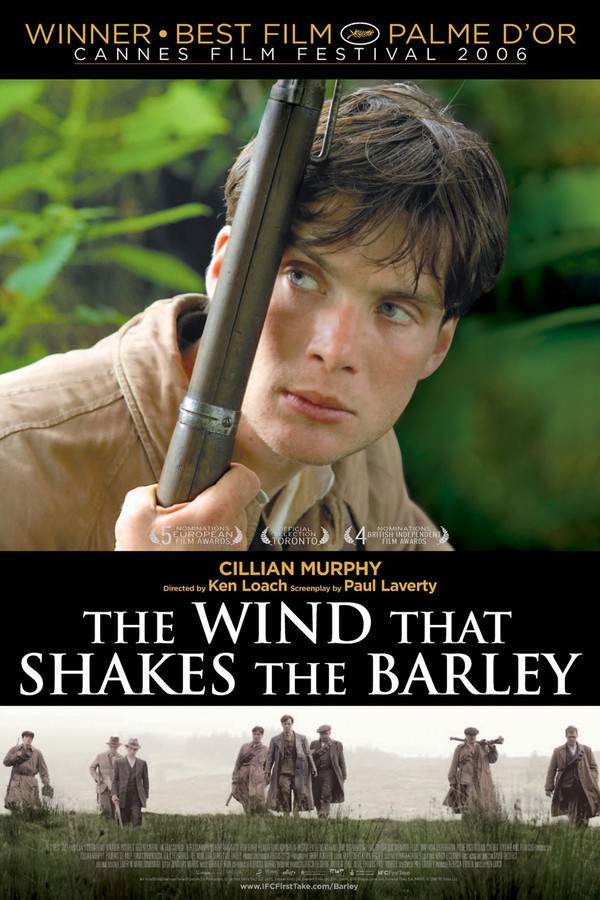
In 1920s Ireland, a doctor's plans to leave for London are disrupted by the escalating conflict with British forces. He joins his brother in the Irish Republican Army, fighting for independence. However, the brothers find themselves increasingly divided by differing beliefs and the devastating realities of war, testing their loyalty and the fragile hope for a free nation.
Find where to stream, rent, or buy The Wind That Shakes the Barley (2007) in the US with current JustWatch availability, up-to-date pricing, and platform listings for subscription, rental, and digital purchase options.
Warning: spoilers below!
Haven’t seen The Wind That Shakes the Barley yet? This summary contains major spoilers. Bookmark the page, watch the movie, and come back for the full breakdown. If you're ready, scroll on and relive the story!
Read the complete plot breakdown of The Wind That Shakes the Barley (2007), including all key story events, major twists, and the ending explained in detail. Discover what really happened, and what it all means.
In County Cork, Ireland, during the tumultuous year of 1920, Damien O’Donovan is on the verge of leaving his rural hometown to pursue a career in medicine at a hospital in London. However, his path takes a dramatic turn when he witnesses the brutal execution of his friend Micheál Ó Súilleabháin at the hands of the British Black and Tans for defying orders. This shocking event deeply unsettles him, prompting him to reconsider his decision to forsake his homeland. Although he initially resists the urging of friends to join the Irish Republican Army (IRA), saying the fight is futile, Damien ultimately chooses to stay and is inducted into the IRA’s local brigade led by his brother, Teddy (Liam Cunningham).
After training in the rugged mountains, the brigade embarks on a mission to storm the local Royal Irish Constabulary barracks for firearms, subsequently using these weapons to execute four Auxiliary members. Tensions escalate when Sir John Hamilton, a powerful Anglo-Irish landowner, employs one of his servants, Chris Reilly, to relay intelligence to the British authorities, leading to the arrest of the entire brigade. While incarcerated, Damien encounters Dan, a train engineer and union advocate, who shares his socio-political beliefs.
The saga intensifies as British officers subject Teddy to horrific torture, pulling out his fingernails when he refuses to divulge information about the IRA’s operations. In a twist of fate, a British soldier of Irish descent, Johnny Gogan, aids in their escape, although not all prisoners are freed. As the betrayal by Sir John and Chris is exposed, both men find themselves captured by the IRA. With Teddy recovering from his injuries, Damien is placed in a position of command. The situation worsens when news arrives that the remaining IRA prisoners have endured brutal torture followed by execution, compelling the brigade to act against their foes decisively.
Caught in a moral quandary, Damien ultimately finds himself in a position where he must execute Chris—his childhood friend—and Sir John, with the orders to eradicate the spies. Soon after, the brigade successfully ambushes an Auxiliary convoy, prompting a retaliatory assault by the British on the farmhouse of Damien’s love interest, Sinéad (Padraic Delaney), a member of Cumann na mBan. Sinéad endures a horrifying ordeal as her house is burned, resulting in a traumatic attack that sees her suffering physical harm.
The cultural landscape transforms after the signing of the Anglo-Irish Treaty, which offers Ireland Dominion status within the British Empire, yet sparks a division among the brigade. As the conflict intensifies between those advocating for the Treaty and those yearning for a fully independent Republic, the tension reaches a boiling point. Teddy argues for acceptance of the Treaty to secure peace, while Damien and Dan demand a more radical approach, advocating for the collective control of industry and agriculture.
With the establishment of the Irish Free State, Damien and his faction resist the new order and align with the Anti-Treaty IRA. The eruption of the Irish Civil War leads them to initiate guerrilla warfare against the Free State army, inciting fear in Teddy of possible British invasion if the republicans gain strength. As conflict escalates, tragedy strikes when Dan is killed, and Damien is apprehended during a raid, culminating in his death sentence.
As he awaits execution beside Teddy, who commands the firing squad, the brothers face an agonizing reckoning. Teddy, desperate to save Damien, implores him to betray his allies in exchange for amnesty and a life with Sinéad. Bruised by this proposition, Damien proudly refuses to “sell out” the Republic. In his final moments, he pens a heartfelt letter to Sinéad, reiterating his unwavering beliefs and quoting Dan’s poignant reflection: > “It’s easy to know what you’re against, quite another to know what you’re for.” Damien meets his fate at dawn, showing resolve and unyielding love for his country. In his grief, Teddy delivers Damien’s farewell to Sinéad, who, consumed by sorrow, lashes out in anger and heartbreak as she confronts the tragic reality of their divided lives.
Last updated: November 16, 2024 at 16:46
Explore frequently asked questions about The Wind That Shakes the Barley (2007) with spoiler-rich answers covering the full plot summary, major story beats, character motivations, hidden details, and ending meaning. This movie summary FAQ helps explain confusing scenes, plot twists, and narrative decisions in clear, searchable detail.
Damien decides to stay after witnessing the brutal execution of his friend Micheál Ó Súilleabháin by the British Black and Tans. The shocking violence completely shifts his perspective about abandoning his homeland for a medical career in London, compelling him to join the IRA instead.
Earlier, Damien had already been reconsidering his departure after seeing the violence inflicted on his neighbors.
Johnny Gogan is a British soldier of Irish descent who aids in the escape because he sympathizes with the Irish cause. Despite serving the British forces, his Irish heritage creates internal conflict, leading him to help the IRA prisoners. However, not all prisoners are freed during the escape.
This act demonstrates that not all British soldiers supported the Crown's violent tactics in Ireland.
The Anglo-Irish Treaty grants Ireland Dominion status within the British Empire, essentially creating the Irish Free State. This sparks fierce division among IRA members, Teddy argues accepting the Treaty secures peace, while Damien and Dan demand full independence and reject the compromise, leading to the Irish Civil War.
The treaty's terms were debated intensely throughout the film, showing different visions for Ireland's future.
Damien is ordered to execute Chris Reilly, his childhood friend, and Sir John Hamilton because they were revealed as spies who betrayed the IRA to British authorities. Their intelligence led to the arrest of the entire brigade. Despite the personal connection, the IRA orders their execution as traitors, forcing Damien into an agonizing moral decision.
Chris had been employed by Sir John Hamilton, who used him to relay intelligence to the British.
After the Irish Civil War erupts, Teddy fights for the Pro-Treaty Free State forces while Damien joins the Anti-Treaty IRA. When Damien is captured and sentenced to death, Teddy, now a commander in the Free State army, is placed in the tragic position of ordering the firing squad that executes his own brother.
The brothers' political divide had been building since the treaty debates, with Teddy advocating for acceptance and Damien refusing to sell out the Republic.
In his final moments, Teddy offers Damien amnesty if he betrays his Anti-Treaty comrades and agrees to live peacefully with Sinéad. Damien refuses, declaring he will not 'sell out' the Republic. He remains committed to his beliefs even at the cost of his life, viewing betrayal as unacceptable regardless of the personal cost.
Damien had always been portrayed as ideologically firm, and his refusal echoes his earlier rejection of compromise.
The British launch a retaliatory assault on Sinéad's farmhouse after the IRA successfully ambushes an Auxiliary convoy. Sinéad, who is a member of Cumann na mBan (the Irish republican women's organization), suffers a traumatic attack as her house is burned. This brutal act represents the British escalating violence against civilians tied to the republican movement.
The ambush earlier in the film provokes fierce British retaliation, targeting those connected to the IRA.
Sir John Hamilton, an Anglo-Irish landowner, employs his servant Chris Reilly to spy on the IRA and relay intelligence to British authorities. This betrayal leads to the arrest of the entire brigade. Later, when the betrayal is exposed, both Sir John and Chris are captured by the IRA and executed for their treachery.
The brigade's arrest follows directly from Chris's spying activities.
Dan, the train engineer and union advocate who shares Damien's political beliefs, is killed during the Irish Civil War. His death occurs as the conflict between the Anti-Treaty and Pro-Treaty factions escalates, representing the tragic human cost of the brothers' political division.
Dan and Damien had been ideological allies throughout the film, advocating for collective control of industry and agriculture.
British officers torture Teddy to extract information about IRA operations and locations. When he refuses to divulge any information, they pull out his fingernails in horrific fashion. This brutal torture occurs while the IRA prisoners are held together, further solidifying Damien's resolve to fight back against the British.
Teddy's refusal to talk demonstrates his commitment to the IRA cause, despite the extreme physical pain.
Damien joins the IRA immediately after witnessing Micheál Ó Súilleabháin being executed by British Black and Tans for defying orders. The traumatic execution of his friend shocks him into action, despite previously claiming the fight would be futile. He is inducted into the local brigade led by his brother Teddy.
This execution marks the turning point that transforms Damien from a passive observer into an active participant in the conflict.
After the IRA brigade successfully storms the Royal Irish Constabulary barracks to acquire weapons, they proceed to execute four British Auxiliary members. This act escalates the conflict significantly and demonstrates the IRA's willingness to use lethal force against Crown forces, marking a major escalation in their campaign.
The execution of Auxiliaries directly leads to heightened British retaliation throughout the film.
Before facing execution at dawn, Damien writes a heartfelt letter to Sinéad, reaffirming his unwavering beliefs and quoting Dan's poignant reflection: 'It's easy to know what you're against, quite another to know what you're for.' This letter represents his final testament and the enduring strength of his convictions.
Dan had expressed this sentiment earlier during the treaty debates, and it becomes Damien's guiding principle.
Discover curated groups of movies connected by mood, themes, and story style. Browse collections built around emotion, atmosphere, and narrative focus to easily find films that match what you feel like watching right now.
Films where familial bonds are shattered by the brutal logic of civil conflict.If you were moved by the tragic split between the brothers in The Wind That Shakes the Barley, explore these similar films. This collection features powerful dramas where civil wars and political revolutions tear families apart, testing loyalty and love against unwavering ideals.
Stories in this thread typically follow siblings, often brothers, who begin a conflict united by a common cause. As the struggle intensifies, their interpretations of justice, sacrifice, or the future diverge, turning them into adversaries. The narrative arc focuses on the emotional disintegration of their bond, culminating in a confrontation that highlights the personal cost of political strife.
These movies are grouped by their shared focus on the microcosm of family to represent the macrocosm of a nation's conflict. They share a heavy emotional weight, a bleak tone, and a consistent theme of betrayal born not from malice, but from conflicting, deeply-held convictions about a greater good.
Gritty, unflinching portrayals of the moral decay and sacrifice in fights for independence.For viewers seeking more movies like The Wind That Shakes the Barley that depict the harsh realities of resistance fighting. These films share a bleak tone, high intensity, and a focus on the personal and moral costs of warfare, often ending on a somber note of sacrifice and loss.
The narrative pattern follows idealistic individuals who are progressively hardened by the necessities of an underground war. The journey involves acts of violence, torture, and betrayal that erode their initial convictions. The story structure is often episodic, charting the escalation of conflict and the gradual loss of humanity in the pursuit of a cause, leading to a conclusion that questions the very victory achieved.
These films are united by their commitment to a realistic, often harrowing depiction of insurgency. They share a high intensity, a bleak tone, and a heavy emotional weight derived from witnessing the physical and psychological brutality inflicted upon characters. The pacing is typically steady, driven by the escalating stakes of the conflict.
Don't stop at just watching - explore The Wind That Shakes the Barley in full detail. From the complete plot summary and scene-by-scene timeline to character breakdowns, thematic analysis, and a deep dive into the ending - every page helps you truly understand what The Wind That Shakes the Barley is all about. Plus, discover what's next after the movie.
Track the full timeline of The Wind That Shakes the Barley with every major event arranged chronologically. Perfect for decoding non-linear storytelling, flashbacks, or parallel narratives with a clear scene-by-scene breakdown.
Discover the characters, locations, and core themes that shape The Wind That Shakes the Barley. Get insights into symbolic elements, setting significance, and deeper narrative meaning - ideal for thematic analysis and movie breakdowns.
Discover movies like The Wind That Shakes the Barley that share similar genres, themes, and storytelling elements. Whether you’re drawn to the atmosphere, character arcs, or plot structure, these curated recommendations will help you explore more films you’ll love.
The Wind That Shakes the Barley (2007) Scene-by-Scene Movie Timeline
The Wind That Shakes the Barley (2007) Movie Characters, Themes & Settings
The Wind That Shakes the Barley (2007) Spoiler-Free Summary & Key Flow
Movies Like The Wind That Shakes the Barley – Similar Titles You’ll Enjoy
Bloody Sunday (2002) Ending Explained & Film Insights
'71 (2015) Story Summary & Characters
Black '47 (2018) Spoiler-Packed Plot Recap
Belfast (2021) Story Summary & Characters
Michael Collins (1996) Full Summary & Key Details
Titanic Town (2000) Movie Recap & Themes
Black Irish (2007) Movie Recap & Themes
Arracht (2019) Ending Explained & Film Insights
The Irishman (1978) Plot Summary & Ending Explained
I See a Dark Stranger (1946) Complete Plot Breakdown
A Wind from the South (1955) Spoiler-Packed Plot Recap
Irish Destiny (1926) Spoiler-Packed Plot Recap
My Life for Ireland (1941) Spoiler-Packed Plot Recap
Who Has Seen the Wind (1977) Ending Explained & Film Insights
Beloved Enemy (1936) Spoiler-Packed Plot Recap