










Plot Explained Spoilers guaranteed!
Plot Explained

Browse by genre

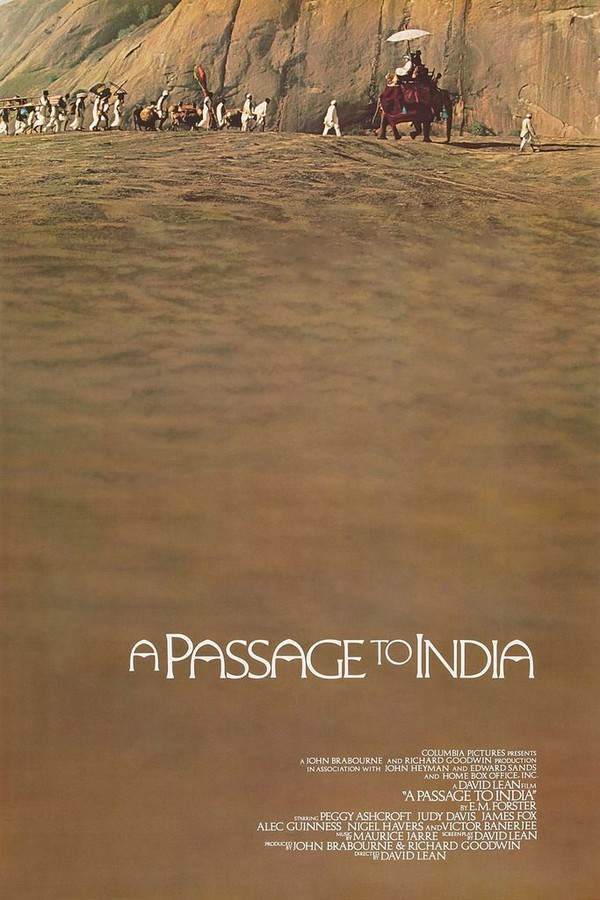
A Passage to India (1985) movie poster

Timeline

A Passage to India (1985) Timeline Explained – Every Event in Order

Release, runtime and language
1985 · 164 min · English
JustWatch #1,234 16
Directed by
David Lean
Starring
Alec Guinness, Richard Wilson, Peggy Ashcroft, Judy Davis, James Fox, Antonia Pemberton

In 1920s India, a meeting at a significant cave leads to a tense and impactful trial. When Adela Quested, an Englishwoman, accuses Indian doctor Aziz Ahmed of a serious offense, the resulting legal proceedings expose deep-seated prejudices and tensions between the British colonial rulers and the Indian population. The case threatens the delicate balance of their relationship, stirring up strong emotions and the potential for unrest throughout the region.

On this page (7)
  1. 1 Where to watch
  2. 2 Events in order (15)
  3. 3 Timeline questions answered
  4. 4 The book behind the movie
  5. 5 Movie threads
  6. 6 Movies like A Passage to India
  7. 7 Every angle

Where to watch

Where to Watch A Passage to India (1985)

Where can you watch A Passage to India? Stream, rent or buy it in the US, including on Amazon Prime Video, YouTube Free and Amazon Video: current JustWatch availability with up-to-date prices.

Streaming availability powered by JustWatch

15 events in order · contains spoilers

A Passage to India Timeline: Events in Chronological Order

Every key event of A Passage to India (1985) in order, scene by scene, with when and where it takes place. Use it to untangle flashbacks, time jumps and parallel storylines, to refresh your memory before the sequel or to find the exact scene you are thinking of.

  1. Adela's Journey Begins

    Adela Quested travels from England to the British Raj in India, accompanied by Mrs. Moore, the mother of her intended husband, Ronny Heaslop. This journey marks the beginning of Adela's quest for adaptation to a new life and culture in a foreign land.

    When
    1920s
    Where
    England
  2. Arrival in Bombay

    Upon reaching India, Adela and Mrs. Moore arrive in Bombay, where they prepare for a long and arduous journey of approximately 1,000 miles to the town of Chandrapore. Their arrival sets the stage for their exploration of the British-Indian dynamic in the region.

    When
    1920s
    Where
    Bombay
  3. Encounter with Collector Turton

    While traveling to Chandrapore, Adela and Mrs. Moore meet Collector Turton and his wife, who are part of the British community. This meeting introduces them to the hierarchical structure of British society in India and its segregation from the local population.

    When
    1920s
    Where
    On the way to Chandrapore
  4. Cultural Isolation Realized

    As they settle in Chandrapore, Adela and Mrs. Moore quickly recognize the stark isolation of the British from the Indian community during a time of rising independence sentiments. Adela's discomfort grows as she witnesses the prejudices and disdain with which Indians are treated by the British.

    When
    1920s
    Where
    Chandrapore
  5. Mrs. Moore Meets Dr. Aziz

    At a local mosque, Mrs. Moore meets Dr. Aziz, and their interaction fosters a connection that challenges the racial boundaries of the British Raj. Dr. Aziz is taken aback by her kindness, marking a pivotal moment in their understanding of each other.

    When
    1920s
    Where
    Local mosque in Chandrapore
  6. Introduction to Professor Godbole

    School superintendent Richard Fielding introduces Adela and Mrs. Moore to the eccentric Professor Narayan Godbole. This introduction opens the door for further cultural exploration and interaction with the local Indian community.

    When
    1920s
    Where
    Chandrapore
  7. Plans for Marabar Caves

    Aziz takes on the task of organizing an excursion to the Marabar Caves for Adela and Mrs. Moore, aiming to create a memorable experience. However, Ronny's disapproval of any interaction between his fiancée and the Indians complicates matters.

    When
    1920s
    Where
    Chandrapore
  8. Adela's Emotional Conflict

    After contemplating her relationship with Ronny following a reflective bike ride, Adela struggles with her feelings and ultimately decides to accept her engagement to him. This decision signifies her internal conflict regarding identity and belonging in India.

    When
    1920s
    Where
    Chandrapore
  9. Chaos at the Marabar Caves

    On the day of the excursion to the Marabar Caves, disarray ensues, resulting in a fragmented group. As Adela and Aziz venture deeper into the caves, an unsettling atmosphere begins to envelop them, foreshadowing the impending chaos.

    When
    1920s
    Where
    Marabar Caves
  10. Adela's Disorienting Experience

    Inside the caves, Adela becomes increasingly disoriented and panicked, leading her to flee in distress, abandoning Aziz and the group. The incident ignites a series of tumultuous events that will forever alter the relationships between the British and Indian communities.

    When
    1920s
    Where
    Marabar Caves
  11. Accusations Against Aziz

    In the wake of Adela's distress, Aziz faces wrongful accusations of a grievous act against her, threatening to shatter the fragile peace between the British and Indian populations. This sudden turn of events escalates tensions and highlights colonial prejudices.

    When
    1920s
    Where
    Chandrapore
  12. Mrs. Moore's Departure

    Mrs. Moore, amidst the turmoil, insists on Aziz's innocence but ultimately resolves to return to England, burdened by the escalating tensions. Her departure symbolizes the divide and her failed hopes for mutual understanding during her time in India.

    When
    1920s
    Where
    Chandrapore
  13. Adela's Introspection

    After retracting her condemnatory accusation under pressure, Adela embarks on a journey of introspection, grappling with her choices and the reality of her life in India. The harsh truth forces her to reevaluate her understanding of herself and her surroundings.

    When
    1920s
    Where
    Chandrapore
  14. Aziz's Vindication

    Following the trial and revelation of the truth, Aziz is ultimately vindicated, enabling him to step away from colonial ties and pursue a new beginning in Kashmir. This outcome not only restores his honor but also offers a glimpse of hope for reconciliation.

    When
    1920s
    Where
    Chandrapore
  15. New Beginnings

    In the aftermath, Fielding tends to Adela as she navigates her new reality, while also finding love with Stella Moore, Mrs. Moore's daughter from a later marriage. The narrative concludes with instances of reconciliation and a promise of understanding between Aziz and Fielding, symbolizing the potential for a new hope.

    When
    1920s
    Where
    Kashmir

Last updated: November 04, 2024 at 01:39

Was this helpful?

Timeline questions answered

A Passage to India Timeline Explained: Your Questions Answered

When does it happen, and why in that order? The questions people ask about the chronology of A Passage to India (1985): time jumps, flashbacks, cause and effect between scenes and the correct order of events, each answered with spoilers.

Q1

Why does Mrs. Moore leave India?

Mrs. Moore leaves India after the traumatic cave incident and subsequent trial. Despite believing in Aziz's innocence and insisting he is not guilty, the escalating tensions between the British and Indian communities become too overwhelming for her. She departs for England with a heavy heart, symbolizing her failed hopes for mutual understanding between the two cultures.

Foreshadowing: Earlier, Mrs. Moore had expressed disbelief at the prejudice against Indians she witnessed, foreshadowing her inability to remain in such a hostile environment.

  • mrs moore
  • departure
  • india
  • trial
  • aziz innocence
Q2

What happens to Aziz after the trial?

After being vindicated at trial, Aziz is fully cleared of all charges. He chooses to leave Chandrapore and moves to Kashmir to start fresh, distancing himself from the colonial British system that wrongfully accused him. This marks his complete break from colonial ties.

Foreshadowing: The wrongful accusation had already strained Aziz's relationship with the British community, making his departure a natural consequence.

  • aziz
  • vindication
  • trial
  • kashmir
  • move away
Q3

Why does Adela retract her accusation against Aziz?

Adela retracts her accusation under significant pressure. While the exact details of what happened in the caves remain ambiguous and traumatic for her, she eventually withdraws her condemnatory statement. This retraction, combined with the lack of evidence, leads to Aziz's eventual vindication.

Foreshadowing: Her earlier discomfort with the British treatment of Indians and her growing awareness of the colonial prejudice hinted at her eventual change of heart.

  • adela
  • retraction
  • accusation
  • caves
  • pressure
Q4

Why does Aziz go to Kashmir?

Aziz goes to Kashmir after being vindicated to escape the lingering prejudice and damaged reputation he suffered in Chandrapore. The false accusation permanently tainted his standing in the British-Indian community, and Kashmir represents a fresh start away from colonial influence.

Foreshadowing: The trial exposed the deep-seated colonial prejudices that made it impossible for Aziz to rebuild his life in Chandrapore.

  • aziz
  • kashmir
  • fresh start
  • new life
  • move away
Q5

What is Fielding's connection to Stella Moore?

Fielding, the school superintendent who befriended Adela and Mrs. Moore, eventually falls in love with Stella Moore, who is Mrs. Moore's daughter from a later marriage. After the events in Chandrapore, Fielding finds love with Stella, and he also cares for Adela as she navigates her new reality after being ostracized by the British community.

Foreshadowing: Fielding's friendship with Mrs. Moore and his genuine respect for Indian culture laid the foundation for his connection to her family.

  • fielding
  • stella moore
  • love
  • marriage
  • mrs moore daughter
Q6

Why does Ronny disapprove of Adela's interactions with Indians?

Ronny Heaslop, as city magistrate in Chandrapore and Adela's intended husband, represents the colonial British establishment. He reacts harshly to any interaction between Adela and Indians because he views such relationships as inappropriate and a threat to the racial hierarchy that maintains British authority in India.

Foreshadowing: Ronny's position as magistrate already placed him at the center of colonial power dynamics, making his disapproval inevitable.

  • ronny
  • disapproval
  • indians
  • colonial
  • british hierarchy
Q7

What causes the British-Indian tension after the cave incident?

The cave incident triggers explosive tensions because Aziz is wrongly accused of a serious crime against Adela, a British woman. This accusation threatens to shatter the fragile peace between the British colonial rulers and the Indian population. The subsequent trial becomes a flashpoint for all the underlying racial prejudices and political grievances accumulated during British rule.

Foreshadowing: Earlier scenes showing British isolation from Indians and Adela's discomfort with the prejudice established the powder keg that the false accusation ignites.

  • cave incident
  • tension
  • trial
  • false accusation
  • colonial prejudice
Q8

Why is Aziz vindicated at trial?

Aziz is vindicated because Adela retracts her accusation under pressure, and there is insufficient evidence to sustain the charges against him. The truth comes to light, allowing Aziz to be cleared of all wrongdoing. This outcome restores his honor but does not erase the damage to his reputation and relationships.

Foreshadowing: The lack of concrete evidence and Mrs. Moore's insistence on Aziz's innocence pointed toward his eventual vindication.

  • aziz
  • vindication
  • trial
  • cleared
  • not guilty
Q9

What happens to Adela after the trial?

After the trial and retracting her accusation, Adela finds herself marooned by her own British community. She undergoes significant introspection about her choices and the reality of her life in India. Fielding cares for her as she navigates this difficult reality, having been ostracized by the British community that once welcomed her.

Foreshadowing: Adela's earlier discomfort with British prejudice and her decision to reconsider her engagement hinted at her eventual isolation.

  • adela
  • aftermath
  • ostracized
  • fielding
  • introspection
Q10

Why do the British isolate themselves from Indians in Chandrapore?

The British community in Chandrapore maintains strict separation from the Indian population, reflecting the broader colonial policy of divide and rule. This isolation is rooted in racial prejudice and the belief in British superiority. Even visitors like Mrs. Moore and Adela quickly notice this stark segregation, which exists amidst the rising Indian independence movement.

Foreshadowing: Collector Turton's introduction and his interactions established the hierarchical structure that enforced this isolation.

  • british isolation
  • chandrapore
  • colonialism
  • segregation
  • prejudice

Movie threads

More Movies Like A Passage to India, by Mood & Story

Curated lists built around what makes A Passage to India tick: the same mood, the same kind of story or the same emotional payoff. Each list explains why these movies belong together.

Colonial Dramas of Social Injustice like A Passage to India

Stories where personal lives are torn apart by systemic prejudice. If you liked the tense exploration of colonialism and racial prejudice in A Passage to India, this section features movies with similar themes. Discover other serious historical dramas where cultural clashes and false accusations lead to impactful legal proceedings and social unrest.

  • tense
  • oppressive
  • serious
  • thought-provoking
  • unsettling
  • melancholic
  • Tone: tense, serious, thought-provoking
  • Pacing: steady, methodical
Why these movies?

The story pattern: These films typically follow a linear but potent structure: they establish a delicate cross-cultural relationship, which is then shattered by a dramatic incident of misunderstanding or accusation. The central conflict escalates into a public, often legal, ordeal that forces characters to confront their own biases and the inherent injustices of the system they inhabit. The resolution is often bittersweet, offering some form of justice but rarely true reconciliation.

Why they belong together: Movies in this thread are grouped by their shared focus on the psychological and social fallout of colonialism and systemic racism. They share a heavy emotional weight, a tense and serious tone, and a narrative driven by a pivotal event that acts as a catalyst for exposing societal fractures.

Psychological Slow Burn Dramas like A Passage to India

Where tension builds relentlessly from a single traumatic event. For fans of the methodical tension and heavy psychological pressure in A Passage to India. This section collects movies with a steady pace where a single debilitating incident creates sustained emotional strain, leading to a complex and impactful resolution.

  • slow burn
  • psychological
  • unsettling
  • tense
  • melancholic
  • thought-provoking
  • Tone: tense, unsettling, melancholic
  • Pacing: steady, deliberate slow burn
Why these movies?

The story pattern: The narrative pattern involves a carefully established normalcy that is disrupted by a pivotal, often ambiguous, event. The bulk of the story is then dedicated to the slow, painful unraveling of relationships and psyches in the wake of this trauma. The pacing is deliberate, focusing on character reactions and the growing weight of consequences rather than fast-paced action, culminating in a resolution that is psychologically resonant but seldom purely happy.

Why they belong together: These films are united by their shared approach to storytelling: a steady, deliberate pacing used as a tool to build high psychological tension. They prioritize emotional depth and character psychology over plot twists, creating a heavy, immersive, and often unsettling viewing experience.

If you liked this

Movies Like A Passage to India

Similar movies to A Passage to India: the same genre, themes or kind of story. Each one comes with its own plot summary, timeline and ending explained.

Browse all movie summaries

Every angle

A Passage to India (1985) Explained: Plot, Timeline & Characters

Everything about A Passage to India in one place: what happens in the plot summary, the timeline in chronological order, the characters and meaning and a spoiler-free summary. What's After the Movie adds the cast, box office and post-credit scenes.

Coming soon on iOS and Android

The Plot Explained Movie Summary App

Plot summaries, endings explained and timelines on your phone. Catch up on any movie in minutes, save your favorites and never miss a twist again.

Be the first to know when we launch. Your email stays private, always.

Learn more about the app