Plot Explained Spoilers guaranteed!
Plot Explained

Browse by genre

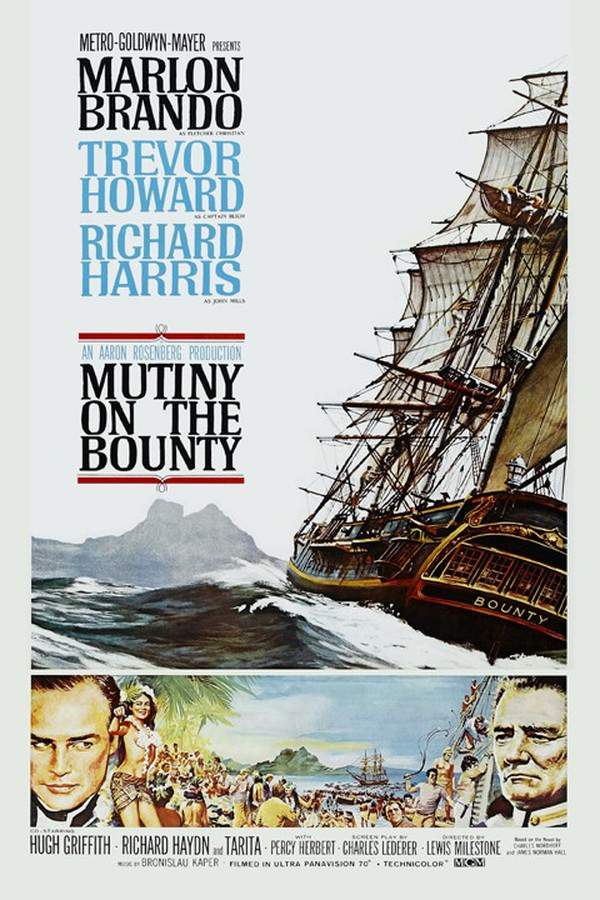
Mutiny on the Bounty (1962) movie poster

Plot Summary

Mutiny on the Bounty (1962) Plot Summary Explained

Release, runtime and language
1962 · 178 min · English
Loading streaming availability…
Directed by
Lewis Milestone, Carol Reed
Starring
Marlon Brando, Trevor Howard, Richard Harris, Hugh Griffith, Gordon Jackson, Richard Haydn
Budget
$19M

During a voyage from Tahiti, Captain Bligh's harsh and uncompromising command creates growing unrest among the crew of the HMS Bounty. Led by Fletcher Christian, the men find themselves increasingly at odds with Bligh’s oppressive leadership. What begins as simmering tension erupts into a full-blown mutiny, forcing Bligh and loyal crew members to embark on a perilous journey in a small boat while the mutineers seek refuge on a remote island.

On this page (7)
  1. 1 Where to watch
  2. 2 What happens: full plot
  3. 3 Plot questions answered
  4. 4 The book behind the movie
  5. 5 Movie threads
  6. 6 Movies like Mutiny on the Bounty
  7. 7 Every angle
Loading streaming availability…

Full plot summary · contains spoilers

What Happens in Mutiny on the Bounty: Full Plot Summary

The whole story of Mutiny on the Bounty (1962) explained, from the opening scene to the final frame: every key event, every twist and what it all adds up to. Read it as a quick recap before the sequel, to check a scene you missed, or to finally understand what really happened.

Based on a true story, The Bounty follows the journey of a British sailing ship commanded by Captain Bligh, who sets sail for Tahiti with the goal of collecting breadfruit plants for Jamaica. These plants were intended to provide the British with a versatile, nutrient-rich food source. The second-in-command, Lt. Christian, navigates the ship southward, initially aiming to round the Cape of Good Hope, Africa, and travel through the Indian and Pacific Oceans to reach the Tahitian islands.

However, under pressure to reach Tahiti quickly while the plants remain viable, Captain Bligh decides to expedite the journey by circumventing Cape Horn, South America, despite facing treacherous weather that hinders his progress. In a desperate move, he changes course to follow the original plan and heads towards Tahiti, but this detour causes further delays and means the ship will need to remain in Tahiti for up to six months until the plants can be transported.

Throughout the voyage, Bligh's management style becomes increasingly tyrannical as he subjected his crew and officers to harsh and often humiliating treatment. He justifies his tyrannical demeanor to his executive officer, Mr. Christian, by asserting that "fear is the only thing seamen understand," promoting an environment of cruelty. This unsettling behavior serves primarily to build tension leading up to the inevitable mutiny.

Upon arriving in Tahiti, where the crew enjoys a brief respite, Bligh orders Christian to curry favor with the local chief by engaging with his daughter. With their hold filled with a thousand breadfruit plants, the crew sets sail for Jamaica. Yet, Bligh's oppressive leadership continues as he restricts fresh water supplies to the crew to prioritize the plants' survival, leading to further discontent among the men.

As frustrations boil over, Christian rebels, seizing control of the ship, and makes the fateful decision to cast Bligh and several loyal crew members adrift, providing them only with limited supplies. Although Bligh eventually returns to England and faces a naval trial, he emerges without punishment, only receiving a reprimand.

Christian, now in command, makes a return to Tahiti, where he welcomes several natives aboard, embarking on a quest to find a safe haven. Their search leads them to the remote and uncharted Pitcairn Island. To prevent Christian from re-establishing ties with England and justifying the mutiny, three crew members set the ship ablaze. In a desperate attempt to extinguish the flames, Christian sustains severe burns. In a touching farewell, he passes away amid his crew, marking a tragic end to his tumultuous journey.
Last updated: November 02, 2024 at 12:02

Was this helpful?

Plot questions answered

Mutiny on the Bounty Plot Explained: Your Questions Answered

The questions people ask most about Mutiny on the Bounty (1962): what happens in the confusing scenes, why the characters do what they do, the twists, hidden details and what the ending means. Each answer contains spoilers.

Q1

Why does Captain Bligh treat his crew with such cruelty throughout the voyage?

Captain Bligh believes that "fear is the only thing seamen understand." He deliberately enforces harsh and often humiliating treatment on both his crew and officers, justified as necessary for maintaining discipline and command. His tyrannical management style intensifies as the voyage progresses, particularly when faced with delays and the pressure to deliver the breadfruit plants while they remain viable. This oppressive approach systematically erodes crew morale and creates the conditions that ultimately lead to rebellion.

Foreshadowing: Early in the voyage, Bligh's justifies his harsh treatment to Mr. Christian, establishing his philosophy that fear is the only language seafarers comprehend.

  • captain bligh
  • crew cruelty
  • tyranny
  • leadership
  • mutiny cause
Q2

Why does the Bounty change course to bypass Cape Horn instead of rounding the Cape of Good Hope?

Bligh decides to circumvent Cape Horn, the southern tip of South America, to reach Tahiti more quickly. The breadfruit plants needed to remain viable for transplanting in Jamaica, creating time pressure. However, this shortcut exposes the ship to treacherous weather near Cape Horn, causing further delays and forcing Bligh to revert to the original longer route. This detour adds significant time to the journey and means the crew must remain in Tahiti for up to six months waiting for optimal conditions to transport the plants.

Foreshadowing: The decision to take the shorter but more dangerous route sets up the delays that compound the crew's frustration.

  • cape horn
  • breadfruit
  • course change
  • weather
  • navigation
Q3

Why does Fletcher Christian decide to mutiny against Captain Bligh?

Christian's decision to mutiny comes after enduring cumulative oppressive treatment from Bligh throughout the voyage. Bligh's tyrannical leadership, combined with specific actions like restricting fresh water supplies to prioritize the breadfruit plants, creates unbearable conditions for the crew. The final trigger occurs when Christian can no longer tolerate the harsh treatment, leading him to seize control of the ship in rebellion against Bligh's authority.

Foreshadowing: Bligh's order for Christian to curry favor with the local chief by meeting his daughter demonstrates Bligh's manipulative use of his crew.

  • fletcher christian
  • mutiny
  • bligh
  • rebellion
  • crew unrest
Q4

How does the mutiny actually happen on the Bounty?

The mutiny reaches its peak when frustration among the crew boils over. Christian takes decisive action, seizing control of the ship from Bligh. Rather than executing Bligh, Christian makes the fateful decision to cast Bligh and several loyal crew members adrift in a small boat with only limited supplies. This approach allows Christian to take command of the Bounty while effectively removing Bligh from power without killing him.

Foreshadowing: The buildup of tension throughout the voyage, particularly Bligh's order that Christian curry favor with the chief, foreshadows Christian's willingness to defy authority.

  • mutiny
  • ship takeover
  • bounty
  • christian
  • bligh cast adrift
Q5

How does Captain Bligh manage to survive after being set adrift in a small boat?

Despite being cast adrift with minimal supplies, Bligh demonstrates remarkable seamanship and navigation skills. He successfully commands the small boat across thousands of miles of open ocean, managing to return to England. This extraordinary feat is a testament to his navigational abilities, though he faces a naval trial upon his return concerning his leadership during the voyage.

  • bligh survival
  • open boat
  • navigation
  • return to england
Q6

Why is Captain Bligh not punished at his naval trial after returning to England?

Despite the mutiny and his questionable leadership that contributed to the rebellion, Bligh faces a naval trial but emerges without serious consequences. He receives only a reprimand for his conduct, walking away essentially unscathed. This outcome reflects the complex political and naval circumstances of the time, where the mutiny was highly sensationalized but Bligh's official role in the disaster was not deemed worthy of severe punishment.

  • bligh trial
  • pardon
  • naval court
  • mutiny aftermath
Q7

Why do the mutineers burn the ship after settling on Pitcairn Island?

Three crew members set fire to the Bounty after Christian brings the ship to the remote, uncharted Pitcairn Island. Their motive is to prevent Christian from ever re-establishing ties with England and thereby revealing the mutiny's details or justifying their actions to the British crown. By destroying the ship, they eliminate the possibility of return and attempt to erase their connection to the mutiny, ensuring they remain hidden from authorities.

Foreshadowing: Christian's decision to return to Tahiti and then seek a remote refuge demonstrates his ongoing desire to find a safe haven away from British authority.

  • ship burning
  • pitcairn island
  • destruction
  • bounty burned
  • mutineers
Q8

How does Fletcher Christian die on Pitcairn Island?

During the chaotic attempt to extinguish the flames consuming the Bounty, Christian sustains severe burns from the fire. These injuries prove fatal. In a poignant final moment, Christian passes away surrounded by his crew, marking a tragic end to the man who led the most famous mutiny in naval history. His death by fire symbolizes the ultimate cost of his rebellion against authority.

Foreshadowing: The burning of the ship, which Christian attempts to save, directly leads to his fatal injuries.

  • christian death
  • pitcairn
  • burns
  • tragic end
  • mutiny leader
Q9

Why does Christian take the Bounty back to Tahiti after the mutiny?

After successfully removing Bligh from command, Christian assumes control of the Bounty and makes the strategic decision to return to Tahiti. From there, he welcomes several native islanders aboard the ship as he searches for a remote sanctuary where the mutineers can live beyond the reach of British authority. This decision leads them to discover the uninhabited Pitcairn Island, which becomes their final refuge.

  • christian tahiti
  • refuge
  • pitcairn search
  • mutineers escape
Q10

Why does Bligh restrict fresh water supplies to the crew during the voyage?

Bligh prioritizes the survival of the thousand breadfruit plants stored in the ship's hold over the crew's comfort. He restricts fresh water allocations to ensure enough resources remain available to keep the plants viable for transplantation in Jamaica. This decision further alienates the crew, who already resent Bligh's oppressive leadership, and contributes to the growing discontent that ultimately fuels the mutiny.

  • water restriction
  • breadfruit
  • crew suffering
  • bligh decisions
Q11

Why does Bligh order Christian to meet the chief's daughter in Tahiti?

Upon arriving in Tahiti, Bligh instructs Christian to curry favor with the local chief by engaging with his daughter. This is a deliberate political move to secure favorable relations with the local population, which would benefit the mission to collect the breadfruit plants. The order demonstrates Bligh's manipulative nature, using his officers for diplomatic maneuvering while maintaining his tyrannical grip on the crew.

  • tahiti
  • chief daughter
  • christian
  • bligh orders
  • diplomacy

Movie threads

More Movies Like Mutiny on the Bounty, by Mood & Story

Curated lists built around what makes Mutiny on the Bounty tick: the same mood, the same kind of story or the same emotional payoff. Each list explains why these movies belong together.

Movies about rebellion against tyranny like Mutiny on the Bounty

Stories where an oppressive leader pushes followers to the brink of mutiny. If you enjoyed the high-stakes conflict in Mutiny on the Bounty, explore these similar movies about oppressive leadership and desperate mutiny. These films feature intense confrontations, heavy emotional weight, and stories where characters are pushed to defy brutal authority for survival and justice.

  • oppressive
  • rebellious
  • tense
  • claustrophobic
  • desperate
  • unforgiving
  • Tone: tense, dark, grim
  • Pacing: variable, building to a climax
Why these movies?

The story pattern: These narratives follow a clear pattern: a domineering, often cruel leader creates a suffocating environment. Through a series of injustices, the tension steadily rises among the oppressed group until it culminates in a dramatic, often violent, act of defiance, forcing characters to face the severe consequences of their rebellion.

Why they belong together: Movies are grouped here based on their shared core conflict of an individual or group challenging a tyrannical power structure. They share a high-intensity, tense tone, a variable pacing that builds to a climactic confrontation, and a heavy emotional focus on the costs of resistance.

Claustrophobic survival stories like Mutiny on the Bounty

Confined groups unravel under pressure during perilous voyages or isolation. Fans of the tense, isolated atmosphere of Mutiny on the Bounty will appreciate these movies about groups fracturing under pressure. These films capture the feel of a confined journey where hardship forces desperate choices, exploring themes of survival, loyalty, and the grim reality of isolation.

  • claustrophobic
  • isolated
  • tense
  • desperate
  • grim
  • unraveling
  • Tone: tense, grim, desperate
  • Pacing: steady, rising dread
Why these movies?

The story pattern: The narrative focuses on a group forced into close proximity by a journey or circumstance. As hardships mount—be it a tyrannical leader, scarce resources, or an external threat—the social fabric tears. Alliances shift, trust evaporates, and characters are forced to make bleak choices for survival, often ending in tragedy or profound loss.

Why they belong together: These films are united by their setting as a pressure cooker for human drama. They share a claustrophobic and tense mood, a pacing that steadily increases dread, and a thematic focus on how extreme conditions test the limits of human decency and cooperation.

If you liked this

Movies Like Mutiny on the Bounty

Similar movies to Mutiny on the Bounty: the same genre, themes or kind of story. Each one comes with its own plot summary, timeline and ending explained.

Browse all movie summaries

Every angle

Mutiny on the Bounty (1962) Explained: Plot, Timeline & Characters

Everything about Mutiny on the Bounty in one place: what happens in the plot summary, the timeline in chronological order, the characters and meaning and a spoiler-free summary. What's After the Movie adds the cast, box office and post-credit scenes.

Coming soon on iOS and Android

The Plot Explained Movie Summary App

Plot summaries, endings explained and timelines on your phone. Catch up on any movie in minutes, save your favorites and never miss a twist again.

Be the first to know when we launch. Your email stays private, always.

Learn more about the app