Plot Explained Spoilers guaranteed!
Plot Explained

Browse by genre

The Message (1976) movie poster

Characters & Themes

The Message (1976) Characters, Setting & Themes Explained

Release, runtime and language
1976 · 178 mins · English
Loading streaming availability…
Directed by
Moustapha Akkad
Starring
Anthony Quinn, Johnny Sekka, Irene Papas, André Morell, Martin Benson, Robert Brown

Set in sixth‑century Mecca, the film dramatizes the birth of Islam as Prophet Muhammad receives his first divine revelation and, three years later, publicly declares his prophethood. Faced with opposition from Meccan rulers Abu Sufyan and his wife Hind, his early followers endure persecution and torture, yet Muhammad persists in his mission, underscoring the transformative impact of his message.

On this page (8)
  1. 1 Where to watch
  2. 2 Characters explained (11)
  3. 3 Where & when it takes place
  4. 4 Themes & meaning (3)
  5. 5 Character & meaning questions
  6. 6 Movie threads
  7. 7 Movies like The Message
  8. 8 Every angle
Loading streaming availability…

11 main characters · contains spoilers

The Message Characters Explained: Who Is Who

The main characters of The Message (1976), heroes and villains: what drives them, how they change over the course of the story and what each of them reveals about the film's bigger ideas.

  • Muhammad

    The Prophet who receives divine revelations and guides the early Muslim community through persecution, migration, and military engagements. He balances peaceful outreach with decisive action, shaping the movement’s religious and political direction. His leadership anchors the story as faith informs strategy and community building.

    • 🕊️ Prophet
    • 🧭 Leader
  • Hamza

    played by Anthony Quinn

    Muhammad’s brave uncle and a fierce defender of the fledgling community. He embodies steadfast loyalty and martial prowess, dying heroically in battle. His death marks a pivotal moment that tests and solidifies Muslim resolve.

    • 🗡️ Warrior
    • 🛡️ Protector
  • Bilal ibn Rabah

    played by Johnny Sekka

    The first muezzin, trusted companion, and a symbol of faith and equality. He delivers the call to prayer at key moments, embodying steadfast devotion to the new faith. His role highlights the emergence of communal rituals central to Islamic practice.

    • 🗣️ Orator
    • 🛡️ Revered
  • Hind bint Utbah

    played by Irene Papas

    A complex figure from Mecca who represents the resistance of pagan forces. Her arc mirrors the broader tension between old traditions and the rising Islamic order. She embodies the transformation of opposition into a pivotal narrative component of Meccan dynamics.

    • 🗡️ Opponent
    • 🛡️ Complex
  • Abu Sufyan

    played by Michael Ansara

    A Meccan leader who negotiates, fears retribution, and ultimately surrenders to the new order. His arc illustrates political pragmatism and shifting alliances during the conquest of Mecca. He becomes a symbol of transitional leadership in a changing city.

    • 🧭 Politician
    • 🛡️ Pragmatist
  • Khalid ibn al-Walid

    played by Michael Forest

    A Meccan general who converts to Islam and rises as a formidable military tactician. His conversion marks a turning point in the War-time strategy and the consolidation of the Muslim army. He represents pragmatic allegiance and leadership on the battlefield.

    • ⚔️ General
    • 🕊️ Convert
  • Abu Talib

    played by André Morell

    Muhammad’s protective uncle, whose support helps shield the Prophet in the early years. His stance reflects familial loyalty within the broader social framework of Mecca. He provides crucial support during a volatile period of hostility toward the new faith.

    • 🛡️ Protector
    • 👨 Uncle
  • Kisra (Kisra, Persian Emperor)

    played by Martin Benson

    The Sasanian emperor who is invited to acknowledge Islam, representing the political opposition of a distant empire. His position exemplifies the broader regional stakes of the nascent Islamic movement. The encounter underscores the geopolitical dimensions of religious expansion.

    • 👑 Emperor
    • 🧭 Political
  • Heraclius

    played by Ronald Leigh-Hunt

    The Byzantine Emperor who, as a rival power, receives Muhammad’s invitation. He embodies the challenges posed by major regional powers to a rising faith. His role highlights the cross-regional tension between empires and the new movement.

    • 👑 Emperor
    • 🗺️ Power
  • Ja'far ibn Abi Talib

    played by Neville Jason

    A leading early convert who represents the noble lineage of the Prophet’s circle. His leadership in Abyssinia reflects the solidarity of early Muslims under foreign protection. He plays a crucial part in the early survival of the community.

    • 🗣️ Leader
    • 🛡️ Refuge
  • Muqawqis

    played by Mohammed Tawfik

    Patriarch of Alexandria who interacts with the Muslim community during its expansion. He embodies the diverse responses of contemporary leaders to Islam’s rise. His stance illustrates the broader dynamics between Christian leadership and the new faith.

    • 👑 Patriarch
    • 🧭 Diplomat

Last updated: December 04, 2025 at 15:28

Was this helpful?

Setting

Where and When Does The Message Take Place?

The setting of The Message (1976): the year and time period, the places and locations, and how they shape the characters, the mood and the tension of the story.

Time period

Early 7th century CE

Events begin with Muhammad’s revelations in the early 610s CE and span through the rise of the Muslim community into the 630s CE. The timeline covers migration to Medina, notable battles, truces, and the eventual conquest of Mecca. It highlights a defining era of religious reform, sociopolitical upheaval, and the formation of a new cohesive community in a hostile regional landscape.

Location

Mecca, Medina, Abyssinia, Kaaba, Quba Mosque

The story unfolds primarily across Mecca and Medina in the Arabian Peninsula, with key moments in Abyssinia during the refugees’ period. Mecca serves as the urban center of trade and polytheistic worship, while Medina becomes the pivot for a growing Muslim community and the first mosque at Quba. The Kaaba and its surrounding sacred space are central to the conversion and consolidation of faith, culminating in the destruction of pagan idols. The journey between these places anchors the narrative arc from persecution to political-religious leadership.

  • 🏜️ Arabian Peninsula
  • 🕌 Sacred sites
  • 🏛️ Ancient cities

Last updated: December 04, 2025 at 15:28

Was this helpful?

3 major themes

The Message Meaning: Themes & Message Explained

What is The Message (1976) really about? The emotional, social and philosophical themes the film keeps returning to, its symbolism and the message beneath the surface.

  • Faith and Reform

    The film centers on Muhammad’s revelations and the rapid spread of the Quran, showing a community forming under pressure. It explores how faith can grow through perseverance, diplomacy, and moral leadership. The narrative emphasizes reform within a tribal society, balancing mercy with necessity in defense of the fledgling community. It also portrays the emergence of religious authority as a unifying force.

  • Conflict and Peace

    The plot juxtaposes war with strategic diplomacy, detailing battles like Badr and Uhud and the shifting dynamics of truces. It presents a portrayal of restraint and mercy during conquest, culminating in a relatively peaceful settlement in Mecca. The resolution emphasizes reconciliation, legal order, and the restructuring of power within the Arabian Peninsula.

  • Legacy and Unity

    The final sequence links historical events to a lasting global legacy, showcasing how the message expands beyond Arabia. It frames Islam as a universal community united by shared rites such as prayer and tawaf. The film’s closing montage connects past milestones to contemporary worship, underscoring continuity and unity across diverse Muslim communities.

Last updated: December 04, 2025 at 15:28

Was this helpful?

Character & theme questions

The Message Characters & Meaning: Your Questions Answered

The questions people ask about The Message (1976): who the characters really are, their relationships, what the symbols mean, where it takes place and what the movie is really about. Each answer contains spoilers.

Q1

Where does the story take place?

The film is set primarily in Mecca and Medina on the Arabian Peninsula, with key scenes in Abyssinia where early Muslim refugees sought protection. Mecca serves as the urban center of trade and polytheistic worship, while Medina becomes the home of the growing Muslim community and the first mosque at Quba. The Kaaba and its surrounding sacred space play a central role in the religious transformation depicted in the film.

  • mecca
  • medina
  • arabian peninsula
  • kaaba
  • setting
  • locations
Q2

What time period is depicted in the film?

The film depicts events from the early 610s CE when Muhammad received his first revelations, continuing through the migration to Medina in 622 CE and spanning into the 630s CE. It covers the formation of the Muslim community, major battles, truces, and the eventual conquest of Mecca. This places the story in the early 7th century during the birth of Islam.

  • 7th century
  • early 610s
  • migration
  • medina
  • hijra
  • historical era
Q3

What are the main themes explored in the film?

The film explores three major themes: Faith and Reform, showing how a new religious community forms under pressure through perseverance and moral leadership; Conflict and Peace, depicting battles like Badr and Uhud while emphasizing reconciliation during conquest; and Legacy and Unity, illustrating how the message expands beyond Arabia to create a universal community united by shared rites.

  • faith
  • reform
  • conflict
  • peace
  • legacy
  • unity
  • themes
  • religion
Q4

Who is Muhammad in the film?

Muhammad is portrayed as the Prophet who receives divine revelations and guides the early Muslim community through persecution, migration, and military engagements. He balances peaceful outreach with decisive action, shaping the movement's religious and political direction. His leadership anchors the story as faith informs strategy and community building.

  • muhammad
  • prophet
  • leader
  • religious leader
  • muslim community
Q5

Who is Hamza in the story?

Hamza is portrayed as Muhammad's brave uncle and a fierce defender of the fledgling Muslim community. Played by Anthony Quinn, he embodies steadfast loyalty and martial prowess. His heroic death in battle marks a pivotal moment that tests and solidifies the resolve of early Muslims.

  • hamza
  • uncle
  • warrior
  • anthony Quinn
  • battle
Q6

Who is Bilal and what is his role?

Bilal ibn Rabah is portrayed as the first muezzin and trusted companion of Muhammad, symbolizing faith and equality. Played by Johnny Sekka, he delivers the call to prayer at key moments, embodying steadfast devotion to the new faith. His role highlights the emergence of communal rituals central to Islamic practice.

  • bilal
  • muezzin
  • first muezzin
  • call to prayer
  • islamic ritual
Q7

Who are the main opponents of Muhammad in the film?

The primary opponents include Abu Sufyan, a Meccan leader who negotiates and fears retribution but ultimately surrenders to the new order, and his wife Hind bint Utbah, who represents the resistance of pagan forces. Their arcs illustrate the broader tension between old traditions and the rising Islamic order in Mecca.

  • abu sufyan
  • hind
  • meccan opposition
  • pagan
  • enemies
  • opposition
Q8

What role does Khalid ibn al-Walid play in the story?

Khalid ibn al-Walid is portrayed as a Meccan general who converts to Islam and rises as a formidable military tactician. His conversion marks a turning point in wartime strategy and the consolidation of the Muslim army. He represents pragmatic allegiance and leadership on the battlefield.

  • khalid ibn al-walid
  • general
  • conversion
  • military
  • tactician
Q9

How does the film portray conflict and resolution?

The film juxtaposes war with strategic diplomacy, depicting battles like Badr and Uhud and the shifting dynamics of truces. It presents restraint and mercy during conquest, culminating in a relatively peaceful settlement in Mecca. The resolution emphasizes reconciliation, legal order, and the restructuring of power within the Arabian Peninsula.

  • battles
  • badr
  • uhud
  • truce
  • reconciliation
  • conquest
  • mecca
Q10

What is the significance of the Kaaba in the film?

The Kaaba and its surrounding sacred space are central to the conversion and consolidation of faith depicted in the film. The destruction of pagan idols inside the Kaaba marks a pivotal moment in the religious transformation of Mecca, symbolizing the shift from polytheism to Islam.

  • kaaba
  • pagan idols
  • sacred site
  • mecca
  • temple
  • transformation
Q11

Why is Medina important in the story?

Medina becomes the pivot for a growing Muslim community and the site of the first mosque at Quba. It serves as the destination of the hijra (migration), providing a safe haven from persecution in Mecca. From Medina, the Muslim community organizes, gains political-religious leadership, and launches campaigns that ultimately lead to the conquest of Mecca.

  • medina
  • quba mosque
  • migration
  • hijra
  • muslim community
  • first mosque
Q12

What legacy does the film depict?

The final sequence links historical events to a lasting global legacy, showcasing how the message expands beyond Arabia. It frames Islam as a universal community united by shared rites such as prayer and tawaf. The film's closing montage connects past milestones to contemporary worship, underscoring continuity and unity across diverse Muslim communities worldwide.

  • legacy
  • global expansion
  • islamic community
  • contemporary worship
  • unity

Movie threads

More Movies Like The Message, by Mood & Story

Curated lists built around what makes The Message tick: the same mood, the same kind of story or the same emotional payoff. Each list explains why these movies belong together.

Epic Spiritual Journeys Against Persecution like in The Message

Stories of monumental figures facing brutal opposition for their beliefs. For viewers seeking movies like The Message, this section features grand historical epics about the origins of major faiths. If you liked the story of perseverance against overwhelming odds for a divine cause, you'll find similar spiritually resonant and dramatically intense films here.

  • epic
  • reverent
  • spiritual
  • triumphant
  • tense
  • dramatic
  • Tone: reverent, hopeful, dramatic
  • Pacing: steady, epic
Why these movies?

The story pattern: These narratives typically follow a linear progression from personal revelation to public declaration, escalating conflict with powerful opponents, and a final, hard-won victory that validates the protagonist's mission. The journey is defined by sacrifice, the resilience of early followers, and the transformative power of faith in the face of brutal oppression.

Why they belong together: Movies in this thread are grouped by their shared focus on foundational religious history, high-stakes depictions of persecution, a reverent tone, and an emotionally heavy yet ultimately hopeful and triumphant arc. They deliver a powerful, inspiring experience centered on faith's ultimate victory.
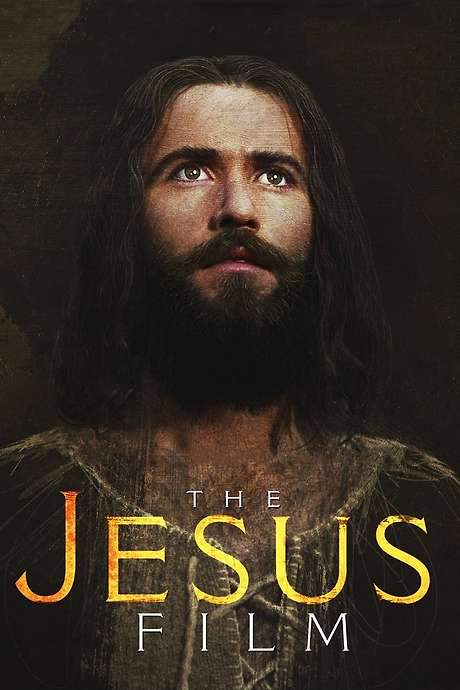
Heavy Dramas with a Steady, Hopeful Build like in The Message

Emotionally demanding stories that build steadily toward a hopeful resolution. If you appreciated the serious tone and steady pacing of The Message, this section highlights similar movies that are emotionally heavy yet hopeful. These films balance intense dramatic content with a narrative that builds reliably towards a positive resolution, perfect for viewers who like demanding but rewarding stories.

  • hopeful
  • dramatic
  • steady
  • triumphant
  • heavy
  • serious
  • Tone: hopeful, dramatic
  • Pacing: steady, deliberate
Why these movies?

The story pattern: The narrative pattern involves a linear progression through escalating challenges, where the stakes are consistently high. The pacing remains deliberate and steady, allowing the weight of the events to settle without rushing. The emotional journey is demanding, but the underlying hopeful tone ensures the story moves toward a cathartic and satisfying, rather than despairing, end.

Why they belong together: These films are united by their unique blend of high emotional weight and a steadfastly hopeful tone, combined with a steady, methodical pacing. This creates a specific viewing experience: serious and intense, yet ultimately uplifting and purpose-driven, rather than chaotic or nihilistic.

If you liked this

Movies Like The Message

Similar movies to The Message: the same genre, themes or kind of story. Each one comes with its own plot summary, timeline and ending explained.

Browse all movie summaries

Every angle

The Message (1976) Explained: Plot, Timeline & Characters

Everything about The Message in one place: what happens in the plot summary, the timeline in chronological order, the characters and meaning and a spoiler-free summary. What's After the Movie adds the cast, box office and post-credit scenes.

Coming soon on iOS and Android

The Plot Explained Movie Summary App

Plot summaries, endings explained and timelines on your phone. Catch up on any movie in minutes, save your favorites and never miss a twist again.

Be the first to know when we launch. Your email stays private, always.

Learn more about the app